
The Sermon Embedded in “Brave”

If any animated studio besides Pixar had made Brave, then the stitched up tapestry would have been enough. I don’t think I’m giving anything away with that sentence, but perhaps I will with this next one. Brave is a film about reconciliation. Check that. Brave is a wonderful film about reconciliation.

So many of the films that arrive at our movie theaters these days aren’t really about anything at all. They deliver pulse-pounding action or knee-slapping laughs, sure, but they are the cinematic equivalent of what MacBeth thinks of Life near the end of his Shakespearean tragedy. They are “tales told by…idiot[s], full of sound and fury, signifying nothing.”

Perhaps we want our films to signify nothing because we don’t want to be forced to think about them when we leave. Give us enough explosions or bare flesh or bathroom jokes and we’ll be happy. But wallop us with thematic content that encourages us to reflect on our own lives? That’s the property of indie films or documentaries or — gasp — sermons.

Of course, over the last 17 years, we have come to expect more from Pixar. And the amazing thing is that the company delivers again and again. While I’ll admit that Pixar has fallen prey to some of the sequelitis that has reached epidemic proportions in Hollywood, every one of their original properties is about something more than generating revenue for Disney.

The one that started it all, Toy Story, is about unselfishness and making friends. Finding Nemo shows the values of perseverance and never giving up. The Incredibles touts the importance of family. Wall-E is a scathing indictment of the negative trends of modern society. UP teaches that letting go of grief does not mean you let go of the love that activated the grief in the first place.

I know I skipped a bunch, but I’m writing this off the top of my head and it’s been a while since I’ve seen some of the others. I will say that every Pixar movie I’ve ever seen (and I think I’ve seen them all except for Cars 2) made me reflect on some aspect of my life in a way that a good sermon does.

And that brings us back to Brave. First, the film is gorgeous. Digital animation has reached such heights that I could have sworn that Pixar just flew a helicopter around the Scottish highlands to generate their backgrounds. Wow. Second, the story is at the same time fresh and original while being one of the oldest tales in the book. It starts as a straight up story about a princess who doesn’t want to get married to one of the icky suitors. But that’s just the jumping off point. Pretty soon into the movie, the story pivots into a tale of reconciliation between an estranged mother and daughter.

In a brilliant scene near the beginning of the film, the wizards at Pixar highlight the disconnect between the mother, Elinor, and daughter, Merida. Each has one side of the same conversation, but each is speaking their dialogue to someone else. After the inevitable big blowup between the two of them, Merida turns her mother into a bear using an ambiguous spell that a less-than-evil witch/entrepreneur concocts to change the mother’s fate. Over the course of the rest of the film, Elinor can’t speak because she’s a bear (a prim, proper bear, but a bear nonetheless). This allows her to listen and learn from the daughter she is always trying to teach. And Merida realizes that all of things that Elinor has taught her, which she has rebelled against, are truly for her (Merida’s) benefit.

And still Merida hangs all her hopes on stitching up the family tapestry. She thinks that simple gesture will break the spell. But as is the case with reconciliation, the gesture is less important than the exchange of confession and forgiveness. I don’t want to spoil the end of the film, but I left the theater reveling in the awesome power of reconciliation.

Thank you Pixar for another stellar film about something, and about something important. I hope everyone finds the hour and forty minutes it will take to sit through this one because it is worth it. Perhaps at the end of the film you will reflect on a relationship in your life that has become estranged. And you’ll find that the film has bucked the Hollywood trend and helped you take a first step in healing a rift in your own life.
The Seeds of the Kingdom

(Sermon for Sunday, June 17, 2012 || Proper 6B || Mark 4:26-34)

When I was nine or ten years old, I walked into the church across the street from our house really early on a particular morning. Ash Wednesday had always been one of my favorite days. I’m not sure why, but I think I liked going to school with the ashes scraped across my forehead – hence me being in church really early. As many of you know, my father is also a priest, and he met me in the church wearing all of his vestments. But no one else came for the service early that morning. However, as Jesus says, “When two or three are gathered in my name, I am there among them.” So we went ahead with the service, just my dad and me.

When the time came for the ashes, he put his thumb in the gritty, black stuff and scraped first a vertical and then a horizontal line across my forehead, making the sign of the cross. “Remember that you are dust and to dust you shall return,” he said. Then he knelt down and offered the little bowl with the ashes to me. I was surprised, but I put my own thumb in the gritty, black stuff and scraped the sign of the cross on his forehead. “Remember that you are dust and to dust you shall return,” I echoed with all the solemnity that my fourth-grade voice could muster.

Then we finished the service, he took me to school, and we went about our days, and we went about our lives. And about a decade later, my father and I realized that on that Ash Wednesday morning, God planted a seed in me, one so small that neither of us noticed the seed until the stalk started poking through the topsoil of my life.

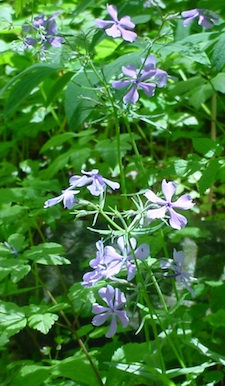
This seed was the mustard seed of God’s kingdom, the one that Jesus talks about in today’s parable from Mark’s account of the Gospel. Before we go any further, however, I want to dispel any notion that you may have that such a seed would only be planted in someone destined to be ordained as a priest. While some of the seeds of the kingdom that God planted in my life have germinated into my call to the priesthood, others have grown into my call to be Leah’s husband and to spread God’s love through our marriage. I hope other seeds that are still hidden in the soil will sprout into a call to parenthood. God sows within each of us, not just we few who wear the collar, the seeds that grow into a panoply of kingdom callings. Together, as our seeds stretch upwards into beautiful flowers and trees, we help God transform this planet once again into a garden of God’s kingdom.

I firmly believe that God has sown seeds so wildly, so expansively, that every person on this planet has the seeds of the kingdom nestled in the soil of their souls. The parable before the ones we heard this morning speaks to this belief. The sower doesn’t seem to mind that his seed lands, not just on the good soil, but on the road and on the rocky ground and among the thorns, as well. The sower doesn’t just plant in nice furrows in the prepared field, but across every surface, no matter how ready the ground is to receive the seed.

Because of God’s unrestrained scattering of seed, each of us surely has the seeds of the kingdom within us. But, as Jesus says, the seeds start out so small that we can barely see them. In fact, until the seeds have grown into visible plants, we won’t have much luck seeing them at all. But this is how the life of faith works – oftentimes, the moments when the seeds of the kingdom drop into our soil are as small as the seeds themselves. We miss these moments all too easily because they tend to be subtle and quiet. Or they tend to happen in the midst of really difficult and challenging circumstances. Or they tend to happen when we least expect them, when our soil is least ready for the seeds.

With God’s help, we can train ourselves to notice the seeds of the kingdom earlier and earlier in their development. Perhaps, you have a mustard seed that has grown into the full-fledged plant or perhaps you have a stalk peaking up from the ground. Move into a space of prayerful reflection and trace that plant back to the subtle, quiet moment when God scattered the seed in you.

Consider this example. God has given you the gift of teaching. Even though some of the students can be pains in the neck, you love going into the classroom everyday to teach. You feel that teaching is certainly a way that you respond to God’s call. Now, work your way back past your first year struggles, past your student teaching, past your high school days, and find yourself back in fifth grade when your favorite teacher in the whole wide world instilled in you a love of learning and a desire to teach. There’s the seed. God used the dedication and love of your fifth-grade teacher to plant the seed of the kingdom in you.

Here’s another example. God has given you the gift of cooking. Recently, you began helping at your church to prepare hundreds of meals every week for a local homeless shelter. You can feel in each stir of the pasta and each pour of the sauce that you are doing something in which God takes great joy. Now, work your way back past your joining the church, past all those experiments in the kitchen trying to perfect your pie dough, past that semester at culinary school, and find yourself in the kitchen with your mother on the day she finally let you spice her world famous chili for the first time. There’s the seed. God used your relationship with your mother, who passed on her culinary secrets to you, to plant the seed of the kingdom in you.

No matter how old or young we are now, God has planted seeds in us. Some have grown into the greatest of shrubs and the birds nest in their branches. These are the places where we can see God’s kingdom blooming into beautiful gardens around and within us. Other seeds are still nascent, still tucked in the soil waiting for the right moments to start their journey toward the sun. By tracing the plants we can see back to when they were invisible seeds, we can train ourselves to recognize the currently hidden seeds even sooner in their development. And when we do, we can join God in more active participation of their cultivation.

Every week in the Lord’s Prayer, we pray, “Thy kingdom come, thy will be done, on earth as it is in heaven.” The kingdom begins as tiny mustard seeds, which God scatters wildly into our very souls. As we live out our lives as followers of Jesus Christ, we become gardens of the kingdom, spreading the beauty of God wherever we go. The seeds are in each of us. The seeds are sprouting and growing and blooming each day. All we need do is notice.

Guitar Lessons

(Sermon for Sunday, June 3, 2012 || Trinity Sunday B || John 3:1-17)

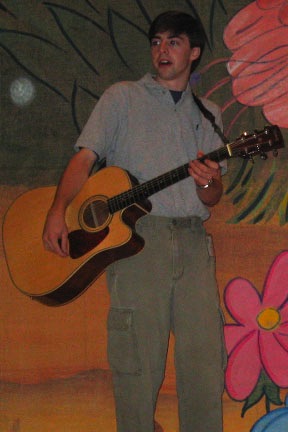
Playing at VBS in 2003 after my sophomore year of college. That was less than three years in to my guitar playing. It would have been seven or eight if I had never quit.

When I was in seventh grade, my parents bought me a three-quarter sized guitar and procured the services of a guitar expert to teach me the basics. At the first lesson, I learned the names of each of the six strings and how to play notes by plucking them. At the second lesson, I learned how to arrange my fingers on the strings so they made special shapes called chords. At the third lesson, I learned that I would have to practice if I wanted to improve my guitar playing. There was no fourth lesson.

You see, I was a bright kid, to whom pretty much everything came quite easily. I was a good athlete, so baseball and soccer were right up my alley. I really didn’t have to work much to make good grades in school. I had next to no challenges in any of my classes. And so when I was confronted with something that I couldn’t immediately master with no effort, I decided not to try. I put the guitar in the case, and the case sat unopened in my closet for years.

Now, as most of you know, I am a guitar player. So what happened? I picked up the instrument again my senior year of high school, and, being a tiny bit wiser than my seventh grade self, started practicing. I’ve been playing for over eleven years now, and I’m not half bad, but a wistful part of me always wonders how much better I would be at the guitar if I had not quit after three lessons back when I was thirteen years old.

My seventh grade self fell victim to a psychological epidemic that affects the vast majority of the population. Exactly one symptom characterizes this epidemic: people have difficulty agreeing to perform tasks that fall outside of their recognized competencies. This is still true for me: you’ve never seen me do ballet or fix the central heating in the church because these are two things that I don’t do very well. I have no training in either of these areas, and so the likelihood that I will agree to pirouette across a stage or put together an HVAC system is next to zero.

I’d be willing to wager that this fact of life is also true for you. I’m sure each of you could come up with a list of things you are unwilling to try because you know that you aren’t going to be good at them. You know that if you tried, failure would be in your future, and who wants to feel like a failure? And so the psychological epidemic keeps us from attempting new things and keeps us safely ensconced within the borders of our comfort zones.

For us this morning, the trouble comes when the list of things we are unwilling to try includes speaking openly about our faith in God. Why should this be any different from playing the guitar or doing anything else, you might ask? The simple answer is this: becoming an expert in guitar playing is possible. Becoming an expert on God is not.

Today’s Gospel reading teaches us this reality, which is an appropriate lesson on a day when we celebrate the mystery of the Holy Trinity. Nicodemus, a Pharisee and member of the Jewish council, fashions himself such a God expert. He comes to Jesus by night, and at the outset of their conversation, tries to display his knowledge of how God operates. “Rabbi,” says Nicodemus, “We know that you are a teacher who has come from God; for no one can do these signs that you do apart from the presence of God.”

Nicodemus’s “we know” sets him up as the so-called expert on God. The irony is that his statement is true. But Jesus isn’t interested in whether or not Nicodemus speaks correctly; Jesus is solely interested in moving this so-called expert into the unfathomable depths of God’s interaction with God’s creation. “No one can see the kingdom of God without being born from above,” says Jesus in response to Nicodemus’s opening remarks. Jesus’ statement is intentionally ambiguous. The words could mean “born from above or born again,” and I think Jesus means both. The very ambiguity of the phrase shows Jesus’ attempt to push Nicodemus out of his comfort zone where “we know” is his default position.

For his part, Nicodemus latches onto the more mundane of the two possibilities: “How can anyone be born after having grown old?” he asks. This response might sound a bit sarcastic, but at least the Pharisee, who has always been the expert answering questions, is now beginning to ask some of his own. The question is the small chink in the armor of Nicodemus’s expertise. Because of Nicodemus’s willingness to ask a question, Jesus sees that there is hope in showing him the expansiveness of all that this so-called expert does not know.

And, boy, does Jesus show him. Jesus opens Nicodemus’s mind and heart to the mystery of how God creates God’s people, and of how God moves in the world like the wind moving through the trees. When Jesus is done, Nicodemus’s opening “we know” now sounds laughably empty in comparison to the mysteries Jesus reveals to him. To begin to walk in and among these mysteries, Nicodemus must change his empty “we know” into an “I don’t know” full of desire and curiosity. And he takes the first tentative steps along this path with the sincerest question in the entire Gospel: “How can these things be?”

In just one conversation, Jesus shows Nicodemus that being an expert on God is not only not possible, but also not the best way to be in relationship with God. Only by acknowledging his lack of understanding can Nicodemus hope to begin to hear the sound of the wind blowing, this wind of the Holy Spirit that breathes life into creation. Nicodemus’s job is no longer to try to explain what makes God tick. Jesus gives him a new job: to bear witness to the mysterious movement of God in his life.

We see Nicodemus twice more over the course of the Gospel. In his next appearance, he puts one tentative foot outside his comfort zone when he reminds the rest of the council about their own rules when they want to put Jesus to death. And in his final appearance, we see that Nicodemus has fully embraced the new life that Jesus revealed to him. In broad daylight on the afternoon of the crucifixion, Nicodemus helps Joseph of Arimethea take Jesus from the cross and bury him in the tomb.

This so-called expert on God had his world turned upside down that night when he went to see Jesus. Jesus showed him that expertise is neither possible nor desired when relationship with God is concerned. There is not a person on this earth who is competent to talk about what makes God tick. While you and I might have difficulty agreeing to perform tasks that fall outside of our recognized competencies, we can take heart in the reality that Jesus released us from needing to be competent in this particular area. We will never be good at talking about God because God is far too glorious, far too mysterious and majestic for our puny words. But that shouldn’t stop us from trying. Releasing us from the need to be competent means that Christ rejoices in even our most halting attempts, in even the simplest expressions of feeling God’s love.

My prayer this morning is that each of us might feel released from the need to be competent when we have the opportunity to speak to someone else about our faith. Don’t be like my seventh grade self who gave up the guitar because he wasn’t an overnight expert. Rather, acknowledge that expertise has no domain where God is concerned. The simple word about how you feel God’s movement, spoken from the heart, is worth more than any treatise on the inner workings of the Holy Trinity. The halting word about not understanding God’s movement is worth more than all the “we knows” like the one Nicodemus speaks when he first encounters Jesus. The good news is that God uses our incompetencies as much, if not more, than our competencies. So I challenge you and I challenge myself: live into our incompetent ability to speak of God’s movement, and perhaps through our witness, someone new might start seeing God’s wind blowing through the trees.

I Can Carry You (May 25, 2012)

…Opening To…

Frodo heard a sweet singing running in his mind: a song that seemed to come like a pale light behind a grey rain-curtain, and growing stronger to turn the veil all to silver and glass, until at last it was rolled back, and a far green country opened before him under a swift sunrise. (J.R.R. Tolkien, The Fellowship of the Ring, Ch. VIII)

…Listening In…

[Frodo] raised his eyes with difficulty to the dark slopes of Mount Doom towering above him, and then pitifully he began to crawl forward on his hands. Sam looked at him and wept in his heart, but no tears came to his dry and stinging eyes. ‘I said I’d carry him, if it broke my back,’ he muttered, ‘and I will! Come, Mr. Frodo!’ he cried. ‘I can’t carry it for you, but I can carry you and it as well.’ (The Return of the King, Bk. 6, Ch. III)

…Filling Up…

We come to the end of the second season of Devo180 and we find ourselves at the foot of Mount Doom with Sam and Frodo. The ring was forged in the fires of the volcano and this is the only place where it can be destroyed. Against all odds, they have reached their destination, but at the foot of mountain – so close to the end – Frodo collapses. The ring’s weight and will are too much. The hunger, the thirst, the pain, the torment are all too much for him to bear. He has struggled this far, but he can go no farther.

And this is when Sam reaches the height of his own heroism. “I can’t carry it for you, but I can carry you,” he says. And Sam, himself hungry, thirsty, in pain, in torment, lifts Frodo onto his back. Tolkien narrates:

And then to his amazement he felt the burden light. He had feared that he would have barely strength to lift his master alone, and beyond that he had expected to share in the dreadful dragging weight of the accursed Ring. But it was not so. Whether because Frodo was so worn by his long pains, wound of knife, venomous sting, and sorrow, fear, and homeless wandering, or because some gift of final strength was given to him, Sam lifted Frodo with no more difficulty than if he were carrying a hobbit-child pig-a-back in some romp on the lawns or hayfields of the Shire. He took a deep breath and started off. (ROTK, Bk. 6, Ch. III)

I said on Tuesday that The Lord of the Rings is, in the end, a tale about friendship. This moment near the climax of the epic story confirms that assertion. Frodo has no strength. Sam has next to none. And still, Sam somehow lifts Frodo onto his back, Ring and all, and carries him. And the weight is barely a burden. He could have taken the Ring from Frodo’s inert body. He could have abandoned Frodo and stumbled out of the enemy’s territory and gone home. But he carries his friend and his friend’s burden instead. And he finds the burden to be lighter than all expectation.

The Ring symbolizes the desire for domination, but Sam’s selfless act of sacrifice nullifies the Ring’s power, if only for a moment. I think this is why Frodo is able to find that one last burst of energy a few pages later when he makes it to the fires. He seems all but dead at the base of the mountain, but Sam’s love and care revives him. Sam might not be able to carry the Ring, as he had for a few days after Frodo was captured, but he can carry Frodo.

Who in your life would carry you? Who would you carry? Who does God call us to carry? In all of these questions, there is one truth that cannot go unsaid – that no matter what our burdens, God will lift us up and put us on God’s back, so that we might find new strength, new vitality, new life.

…Praying For…

Dear God, thank you for another year of reflecting on your movement in my life and in the lives of all those to whom I am connected to through this devotional series. Help me to keep my eyes open for your presence all the days of my life. In Jesus Christ’s name I pray. Amen.

…Sending Out…

I leave this moment with you, God, knowing that you have gifted me with companions to take the journey with me.

Light and High Beauty (May 24, 2012)

…Opening To…

Frodo heard a sweet singing running in his mind: a song that seemed to come like a pale light behind a grey rain-curtain, and growing stronger to turn the veil all to silver and glass, until at last it was rolled back, and a far green country opened before him under a swift sunrise. (J.R.R. Tolkien, The Fellowship of the Ring, Ch. VIII)

…Listening In…

There, peeping among the cloud-wrack above a dark tor high up in the mountains, Sam saw a white star twinkle for a while. The beauty of it smote his heart, as he looked up out of the forsaken land, and hope returned to him. For like a shaft, clear and cold, the thought pierced him that in the end the Shadow was only a small and passing thing: there was light and high beauty for ever beyond its reach. (The Return of the King, Bk. 6, Ch. II)

…Filling Up…

The second to last day of this season of Devo180 brings us to the land of Mordor where the Shadows lie. Frodo and Sam have just escaped from the tower of Cirith Ungol, where the orcs had slain each while fighting over Frodo’s mithril coat. The two hobbits find themselves in enemy territory, where no good thing grows and where danger lurks around every corner. And to top it all off, as they move ever closer to Mount Doom (the only place where the ring can be unmade) the ring resists more and more, making ever step Frodo takes a challenge.

They have reached the bleakest days of their long journey. Everything around them is strange, foreboding, hostile, and dark. Could there possibly be any hope left?

Yes. The answer to that question is always “Yes.”

Sam looks up and sees a star twinkling high up in the sky – beyond the Shadow, beyond the reach of evil and malice. And Sam realizes in a flash of insight that “in the end the Shadow was only a small and passing thing: there was light and high beauty for ever beyond its reach.”

The thing about stars is that we can only see them on clear nights. They aren’t visible through clouds and they aren’t visible during the day (well, except that big one we call the sun). But they are always there whether or not we can see them. When Sam witnesses the white star twinkle, he remembers the truth that even the faintest of hopes is still hope, even as the faintest of flames gives off light.

…Praying For…

Dear God, you are constantly loving this creation into existence. Help me to remember that no hope is too small to contain your promise. In Jesus Christ’s name I pray. Amen.

…Sending Out…

I leave this moment with you, God, knowing that you have gifted me with companions to take the journey with me.

Wonder, Joy, and Fear (May 23, 2012)

…Opening To…

Frodo heard a sweet singing running in his mind: a song that seemed to come like a pale light behind a grey rain-curtain, and growing stronger to turn the veil all to silver and glass, until at last it was rolled back, and a far green country opened before him under a swift sunrise. (J.R.R. Tolkien, The Fellowship of the Ring, Ch. VIII)

…Listening In…

They all gazed at him. His hair was white as snow in the sunshine; and gleaming white was his robe; the eyes under his deep brows were bright, piercing as the rays of the sun; power was in his hand. Between wonder, joy, and fear they stood and found no words to say. At last Aragorn stirred. ‘Gandalf!’ he said. ‘Beyond all hope you return to us in our need! What veil was over my sight? Gandalf!’ (The Two Towers, Bk. 3, Ch. V)

…Filling Up…

The wizard Gandalf died defending the fellowship from the monstrous Balrog while the companions were fleeing from the mines of Moria. The fiend of flame and shadow took one step onto the bridge of Khazad-dûm and Gandalf smote the bridge with his staff. The narrow way collapsed and the Balrog fell, but not before ensnaring Gandalf with its whip and taking the wizard with it. The two fell an impossibly far way down. And that was the last the fellowship saw of Gandalf.

Until the moments before the quotation above, at least. Aragorn, Legolas, and Gimli come upon a traveler in the forest. They don’t recognize him at first, and they think he might be the evil wizard Saruman. But no. He is Gandalf, but not the Gandalf they remember. Not exactly. Aragorn wonders how his vision might have been so impaired as not to realize that Gandalf stands before him. The wizard, for his part, looks brand new – dazzling white and brilliant.

Sound familiar? It should because this scene mimics two different parts of the Gospel – the Transfiguration, in which Jesus becomes dazzling radiant before three of his disciples; and the Resurrection, in which the Risen Christ meets many of his followers but they don’t recognize him right away.

Now, I could stop there and just say, “How cool! Tolkien borrowed from the Gospel!” But I should probably say something else. So here it is. Notice what Tolkien says: “Between wonder, joy, and fear they stood and found no words to say.” I can’t think of a better description of how the disciples must have felt when they met the Risen Lord. Heck, I can’t think of a better description of how I feel when I stumble into God’s presence.

There’s wonder because we realize that luminous mystery abounds about us. There’s joy because we realize we are not alone. And there’s fear because we realize we’ll never fully understand the mystery. When we stumble into God’s presence, we find ourselves awash in all three of these states. And we find that we have no words that are deep enough for the experience.

…Praying For…

Dear God, you fill my life with wonder, you shower joy upon me, and you quiet my fears. Help me to proclaim your movement in my life with the words that you set on my heart. In Jesus Christ’s name I pray. Amen.

…Sending Out…

I leave this moment with you, God, knowing that you have gifted me with companions to take the journey with me.

Trust to Friendship (May 22, 2012)

…Opening To…

Frodo heard a sweet singing running in his mind: a song that seemed to come like a pale light behind a grey rain-curtain, and growing stronger to turn the veil all to silver and glass, until at last it was rolled back, and a far green country opened before him under a swift sunrise. (J.R.R. Tolkien, The Fellowship of the Ring, Ch. VIII)

…Listening In…

‘It is true that if these hobbits understood the danger, they would not dare to go. But they would still wish to go, or wish that they dared, and be shamed and unhappy. I think, Elrond, that it this matter it would be well to trust to their friendship than to great wisdom.’ (The Fellowship of the Ring, Bk. 2, Ch. 3)

…Filling Up…

Today is day two of five with The Lord of the Rings to close out another season of devotiONEighty. The four hobbits, with the help of the mysterious stranger Strider, succeed in making it all the way to Rivendell. The escape from several challenges on the way, but nothing that could prepare them for what is further on the road.

A council meets in Elrond’s house, and the council decides that the ring must be destroyed. Frodo accepts the burden to carry the ring once more, but he must need companions. The council decides that a company of nine is suitable to match the nine black riders that are hunting for the ring. With two spot to fill, Gandalf speaks the words above in support of Merry and Pippin, who might have been left behind otherwise.

What a wonderful thought Gandalf voices: “It would be well to trust to their friendship than to great wisdom.” Wisdom in this case says to send a few more stout warriors, the better to protect the ringbearer. But Gandalf councils against this. Rather, the friendship that the hobbits have for each other is fiercer than any warrior, stouter than any sword or armor.

The Lord of the Rings, in the end, is a tale about friendship. In our walks with God, we often talk of bearing one another’s burdens or of having fellowship with one another. But I don’t often hear of us talking about the friendships that we make because of our relationships with God. The old hymn sings: “What a friend I have in Jesus.” But do we really consider Jesus a friend? I imagine that many of us would think such a thing presumptuous at best.

But Jesus himself named his disciples his friends when they lived by his commandment to love one another. When we see friendship as a spiritual calling, we can walk through all sorts of new doors that God opens for us. Think of your closest friend. How does your friendship with that person support your relationship with God? How does your relationship with God support that friendship? Friendship is one of the greatest gifts that God has given us. We may not be privy to great wisdom, as Elrond is, but all of us can share in the gift of friendship.

…Praying For…

Dear God, thank you for the friends that you have given me to support me in my life with you. Thank you for the laughter, the joy, and the consolation they have brought to my life. Help me to do the same for them. In Jesus Christ’s name I pray. Amen.

…Sending Out…

I leave this moment with you, God, knowing that you have gifted me with companions to take the journey with me.

Butter Scraped Over Too Much Bread (May 21, 2012)

…Opening To…

Frodo heard a sweet singing running in his mind: a song that seemed to come like a pale light behind a grey rain-curtain, and growing stronger to turn the veil all to silver and glass, until at last it was rolled back, and a far green country opened before him under a swift sunrise. (J.R.R. Tolkien, The Fellowship of the Ring, Ch. VIII)

…Listening In…

‘Why, I feel all thin, sort of stretched, if you know what I mean: like butter that has been scraped over too much bread. That can’t be right. I need a change, or something.’ (The Fellowship of the Ring, Bk. 1, Ch. 1)

…Filling Up…

This week is the final week of devos for the 2011-2012 season. Devo180 will be on hiatus from Memorial Day through Labor Day, but other great content will be showing up on WheretheWind.com, so stay tuned. I began the second half of this season with a week of devos about a favorite film of mine, The Princess Bride. So I thought I’d end with another favorite, The Lord of the Rings, except I’d rather talk about the books than the films (which are also awesome, by the way). So without further ado, here’s the first of five days of reflections on our life with God as seen through the lens of J.R.R. Tolkien’s masterpiece.

The quotation in the “Listening In” section above takes place right at the beginning of the story when Bilbo and Gandalf are talking before Bilbo’s secretive departure from the Shire. Bilbo has just used the ring for the final time and now he struggles to leave it for Frodo, his nephew. The ring has power over him, has been exerting that power for decades – slowly, patiently – so when it comes right down to it, Bilbo is quite reluctant to let go of it.

The ring was forged as a means of domination and used for evil purpose. By the time Bilbo discovers it, the ring has been lost for hundreds of years, but it has not lost its design. Thus, it represents the willingness of the individual to control his or her own life completely and eternally. While this might not sound like a bad thing, the eventual trajectory of such a desire leads either to total isolation or to total domination (which brings us back to evil purpose again).

When Bilbo says that he feels like “butter scraped over too much bread,” he clearly states what it feels like when we attempt the fool’s errand of taking total control of our own lives. When we neither wish for nor invite God’s sustaining presence into our lives, we too can feel “all thin, sort of stretched.” How many times have you felt at the edge of collapse? In the days leading up to it, how much did you rely on God? If you’re anything like me, then not much.

The answer to finding the right amount of bread to scrape our butter over (to stay with the simile) is giving up the ring as Bilbo does; that is, giving up our need to control, to dominate, to be self-sufficient. The good guys in The Lord of the Rings are never alone and there’s a reason for that. We need each other. We don’t need the ring.

…Praying For…

Dear God, you are always present in my life no matter how often I ignore you. Help me to let go of my need to control and to be self-sufficient so that I may rely on others and on you way before I begin to burn out. In Jesus Christ’s name I pray. Amen

…Sending Out…

I leave this moment with you, God, knowing that you have gifted me with companions to take the journey with me.

Twelve Moments: the Conclusion (May 18, 2012)

…Opening To…

The liturgy of the Eucharist is best understood as a journey or procession. It is the journey of the church into the dimension of the Kingdom. (Alexander Schmemann)

…Listening In…

Eternal God, heavenly Father, you have graciously accepted us as living members of your Son our Savior Jesus Christ, and you have fed us with spiritual food in the Sacrament of his Body and Blood. Send us now into the world in peace, and grant us strength and courage to love and serve you with gladness and singleness of heart; through Christ our Lord. Amen. (The Post Communion Prayer)

…Filling Up…

One of the most common trials of the life of faith is putting up a great, big barrier between life inside the church and life outside of it. With this twelve part series, I have sought to show how the moments of our worship inside the church can inform and strengthen our walks with God outside the church.

Each moment of our worship is shot through with the presence of God. And do you know what? So is each moment of our lives. When we recognize God’s abiding presence in our lives outside the walls of the church, then we can worship God at all times. We can participate in God’s movement in this world.

The next time you attend a Sunday morning service, pay attention to each of the moments of the liturgy. Ask yourself what God is trying to teach you in those moments about your life as one of Jesus’ disciples. What are the priorities you are living by? How does your worship encourage you to change those priorities? How do you structure your life? What is your foundation? What anchors you? If the answer to these last two questions is not “my relationship with God,” then pray about how you can change your life so that you participate in your relationship with God more fully.

Worship will help you do that. It will help you structure and anchor your life in the One who breathes life into all creation. What a wonderful gift it is to be able to worship that One, to be able to commune with the God who both speaks creation into being and breathes life into our beings one breath at a time.

…Praying For…

Dear God, thank you for the opportunity to worship you and for your wisdom in helping me order my life around your movement in it. Help me to take your hand each day and walk in the paths that you show me. In Jesus Christ’s name I pray. Amen.

…Sending Out…

I leave this moment with you, God, nourished by the bread of life that you sent to the world, Jesus Christ your Son our Lord.

Preparing to Serve (May 17, 2012)

…Opening To…

The liturgy of the Eucharist is best understood as a journey or procession. It is the journey of the church into the dimension of the Kingdom. (Alexander Schmemann)

…Listening In…

The peace of God, which passes all understanding, keep your hearts and minds in the knowledge and love of God, and of God’s Son Jesus Christ our Lord; and the blessing of God Almighty, the Father, the Son, and the Holy Spirit, be amongst you, and remain with you always. Amen. (The Blessings, adapted from Philippians 4:7)

…Filling Up…

Our twelfth and final moment in the worship service comes after the prayer that concludes the Communion. The priest (or bishop if present) blesses the people, usually making the sign of the cross in the air. Many people in the congregation will “cross” themselves in response, but this isn’t necessary. If it isn’t part of your devotion then don’t feel compelled to follow suit. Crossing oneself is a physical sign of spiritual alignment. By touching the four “cardinal directions” of your body (North at the forehead, South at the navel, East and West at the shoulders), you motion with your physical body in order to orient your spirit toward God.

But I’m getting off track. The Blessing is the final prayer of the service. The service began with the promise of transformation in the symbol of the cross and ends with the blessing of God, which shows that transformation has begun. God’s blessing always leads to change in our lives, wonderful growth that we couldn’t possibly imagine.

The service concludes with the dismissal. “Go in peace to love and serve the Lord. Thanks be to God.” With the dismissal, we orient our bodies away from the altar and toward the door at the back of the church. The world outside awaits. Everything we did during the service has made us ready to enter the world as the people of God. The church is like a gym. You go there for exercise, but you play football on the field, not in the weight room.

…Praying For…

Dear God, you strengthen me in body, mind, and spirit through my worship of you. Help me to take all that I have learned in the service about ordering my life and apply it to my life outside the four walls of the church. In Jesus Christ’s name I pray. Amen.

…Sending Out…

I leave this moment with you, God, nourished by the bread of life that you sent to the world, Jesus Christ your Son our Lord.