Batter my heart, three-person’d God ; for you
As yet but knock ; breathe, shine, and seek to mend ;
That I may rise, and stand, o’erthrow me, and bend
Your force, to break, blow, burn, and make me new. (John Donne)
…Listening In…
From Paul, called by God’s will to be an apostle of Jesus Christ, and from Sosthenes our brother. To God’s church that is in Corinth: To those who have been made holy to God in Christ Jesus, who are called to be God’s people. Together with all those who call upon the name of our Lord Jesus Christ in every place— he’s their Lord and ours! Grace to you and peace from God our Father and the Lord Jesus Christ. (1 Corinthians 1:1-3; context)
…Filling Up…
This Lent, we are exploring our faith by running through the alphabet. Today, “X” is for Christ. Hold on a second, you say. You’re trying to pull a fast one, you say. I promise, I’m not. I needed a word that begins with “X,” and Christ is one – just not in English. In Greek, Christ looks like this: Χριστος. That first letter is the Greek letter “Chi,” which has adorned many a fraternity house, including the one I frequented in college but never joined.
In the early church, the first two letters of “Christ” became a sort of unofficial symbol for Christianity. The “Chi-Rho” was written with the “Rho” (which looks more like a modern “p” than “r”) inscribed within the “X.” In the year 313, these two letters had a hand in converting the Roman Empire to Christianity. The soon-to-be emperor Constantine received a vision telling him to draw the Chi-Rho on the shields of his troops. He did so, won the Battle of the Milvian Bridge, and signed the Edict of Milan soon after. This edict allowed Christians to practice their religion openly within the Empire, which formally adopted Christianity as the official religion several decades later.
That history lesson aside, the word “Christ” serves as both name and title for Jesus, in the same way that folks in the Middle Ages took their profession as their surname (Smith, Miller, Fletcher, Carter etc). “Christ” means “messiah” or “chosen one.” But in the popular view of the day, Jesus would never have been the person cast to fill this role, considering he was a peace activist, not a military hero. The latter was what the people expected. But it’s not what they got, sort of like when you opened up this Devo and expected a word that starts with X.
In the convention of the day, Jesus’ last name would have been “Bar-Joseph” (son-of-Joseph) or “of Nazareth.” But over time, his identity as messiah overrode his origin and his upbringing. In the same way, our identity is informed by our origin and upbringing, but it is not enslaved to them. We can find our roles; hopefully, these roles will resonate with God’s call in our lives. And then, that’s how people will know us.
…Praying For…
Dear God, you breathe identity into me and call me into your service. Help me to claim the person you would have me be so I can be the best servant I can be. In Jesus Christ’s name I pray. Amen.
…Sending Out…
I leave this moment with you, God, enlivened by your word, sustained by your grace, and filled with your love.
If we would follow Jesus we must take certain definite steps. The first step, which follows the call, cuts the disciple off from his previous existence. The call to follow produces a new situation. (Dietrich Bonhoeffer, The Cost of Discipleship)
…Listening In…
But the word of the Lord came to [Abram], “…No one but your very own issue shall be your heir.” He brought him outside and said, “Look towards heaven and count the stars, if you are able to count them.” Then he said to him, “So shall your descendants be.” (Genesis 15:4-5; context)
…Filling Up…
This Lent, we are exploring our faith by running through the alphabet. Today, “W” is for Word. The word “word” crops up over and over again in the Hebrew Scriptures (commonly called the Old Testament). Take Abram for example. God has promised him offspring of his own, but his wife is well past childbearing years, and she ain’t getting any younger. Feeling desperate, doubtful, defeated, Abram questions God. And at that moment, the “word of the Lord” comes to him and gives Abram the strength to believe that God will fulfill God’s promise.
You may ask: “How can mere words give Abram such strength? What if the promises are empty? Where’s the action to back up the talk?” Okay, so translators do the best they can to render the original languages of the Bible into English, but sometimes a Hebrew word is just too deep and complex for a single English word to suffice. In these cases, the English is like looking at a picture of a cake. The Hebrew is like taking a big bite of the cake itself.
Such is the case with the word “Word.” In Hebrew, the “Word” is not simply speech or writing on a page. The “Word” happens to people. The “Word” is an event, an encounter, an action that calls for further action. In the beginning when God created the heavens and the earth, God spoke creation into being: “God said, ‘Let there be light’ and there was light.” The Word of the Lord happened, and, as a result, creation came into existence. When the Word of the Lord happens to Abram, he finds the strength to go on trusting God in spite of all the reasons why God’s promise seems preposterous.
The Word can happen to us in this same way. In an encounter with the Word, we are aware that God continues to speak us into existence. And from existence into service. And from service into love. And from love into the transformation that happens when we follow Jesus Christ our Lord. You see, when the Word happens to us, we are changed. We may be changed minutely or momentously, but we are changed. We may be changed slowly or suddenly, but we are changed. We are changed into better lovers of God, better servants of other human beings, and better human beings ourselves.
…Praying For…
Dear God, you speak creation into existence and your Word sustains all life; help me to listen for that Word in my life so that I may be changed. In Jesus Christ’s name I pray. Amen.
…Sending Out…
I leave this moment with you, God, trusting that you never leave me, trusting that you are above, below, behind, before, beside, and within me.
If we would follow Jesus we must take certain definite steps. The first step, which follows the call, cuts the disciple off from his previous existence. The call to follow produces a new situation. (Dietrich Bonhoeffer, The Cost of Discipleship)
…Listening In…
Now we see a reflection in a mirror; then we will see face-to-face. Now I know partially, but then I will know completely in the same way that I have been completely known. (1 Corinthians 13:12; context)
…Filling Up…
This Lent, we are exploring our faith by running through the alphabet. Today, “V” is for Veil. Simply put, veils obscure vision. For example, a bride’s veil keeps the groom from seeing her clearly (which in turn leads to several of Shakespeare’s plots). For followers of Jesus Christ, the veil exists between our limited perception and God’s greater glory. We see a teeny tiny portion of the spectrum of light with our actual eyes, so it’s no wonder that our spiritual perception is similarly limited.
That’s where “revelation” comes in. Revelation is a translation of the word “apocalypse.” Now, before you start thinking that I’m talking about the end of the world, you should know that the word “apocalypse” doesn’t really have anything to do with the end times; however, that’s the linkage that exists in our present context. Here’s just a second of disentangling. “Apocalypse” literally means “to pull back a veil or curtain.” Revelation is about “revealing” what’s on the other side of the veil. Whether this revelation happened in the past, happens now, or will happen in the future is independent of the word “apocalypse.”
Okay, so our limited perception keeps us from seeing beyond the veil. There is some indefinable beauty on the other side, but we don’t really know what it is. The question then becomes: how do we know there is some indefinable beauty on the other side if we can’t see beyond the veil? Well, at some point or another, God pulled back the veil and gave us the gift of more expansive perception. Followers of Jesus believe this happened in the Incarnation, life, death, and Resurrection of Jesus Christ. Jesus Christ is the “revelation” of God. In the person of Jesus, God pulled back the curtain.
The veil still hangs in front of our faces. But it is not opaque. It is porous because the glory of God can’t help but penetrate it. This is why we have hope. The veil will be pulled back fully, and then we will know fully, even as we are fully known.
…Praying For…
Dear God, your glory cannot fit into the limited understanding that I have. But I pray that you keep revealing your love to me so that I can reveal it to others. In Jesus Christ’s name I pray. Amen.
…Sending Out…
I leave this moment with you, God, trusting that you never leave me, trusting that you are above, below, behind, before, beside, and within me.
If we would follow Jesus we must take certain definite steps. The first step, which follows the call, cuts the disciple off from his previous existence. The call to follow produces a new situation. (Dietrich Bonhoeffer, The Cost of Discipleship)
…Listening In…
Israel, listen! The LORD is our God, the LORD is one! Love the LORD your God with all your heart, all your being, and all your strength.(Deuteronomy 6:4-5; context)
…Filling Up…
This Lent, we are exploring our faith by running through the alphabet. Today, “U” is for Unity. Yesterday, we talked about “Trinity,” so it seemed only appropriate to follow that up with some talk about “unity.” (Plus, it conveniently starts with the next letter in the alphabet. “Unity” comes from the Latin word for “one.” If you’re from the United States, you’ve seen this Latin word your whole life — on our money. E Pluribus Unum reads the phrase: “Out of many, one.”
So, if the Trinity is a perfect relationship of three persons (read yesterday’s post if that’s confusing; and I’m not saying it will stop being confusing, by the way), then what can we say about the “Unity” of God? Well, judging by the Latin root, we can say God is One. The relationship among Father, Son, and Spirit is so perfect, so seamless, so integrated, that God isn’t three. God is One. The old adage is “Trinity of Persons, Unity of Being.”
God invites us to love and serve God in a similar integrated fashion. Note the verse above in the “Listening In” section. “The Lord is our God, the Lord is one,” says Moses. And the very next thing he says is, “Love the Lord your God with all your heart, all your being, and all your strength.” These two thoughts are connected — God’s “Oneness” and our internal unity.
So don’t just love God with a piece of yourself. Don’t compartmentalize by putting your relationship with God in an box on the shelf, which you take down only when you need something. Rather, love God with the whole of yourself, with you heart and being and strength — with the unity that is you.
…Praying For…
Dear God, you are the Mighty One who sustains the universe and the Intimate One who keeps me whole; help me to love you with my entire being and to dedicate myself wholly to you. In Jesus Christ’s name I pray. Amen.
…Sending Out…
I leave this moment with you, God, trusting that you never leave me, trusting that you are above, below, behind, before, beside, and within me.
If we would follow Jesus we must take certain definite steps. The first step, which follows the call, cuts the disciple off from his previous existence. The call to follow produces a new situation. (Dietrich Bonhoeffer, The Cost of Discipleship)
…Listening In…
The grace of the Lord Jesus Christ, the love of God, and the fellowship of the Holy Spirit be with you all. (2 Corinthians 13:13; context)
…Filling Up…
This Lent, we are exploring our faith by running through the alphabet. Today, “T” is for Trinity. Folks in churches often shy away from discussing the “doctrine” of the Trinity. The old joke is that the head pastor of the church always gets the assistant to preach on Trinity Sunday. A lot of folks just don’t get what to do with the doctrine of the Trinity.
The funny thing is this: folks have a problem with the Trinity precisely because they use the word “doctrine” to describe it. Yes, the Trinity was a big part of the doctrinal disputes of the early church. Yes, contrary understandings of the Trinity was a contributing factor that led to the split between the Eastern and Western churches. This history notwithstanding, the Trinity is not a doctrine. It is a relationship. The moment I made this switch in my mind, the Trinity became a much more present reality in my life.
The relationship of the Trinity is the way our limited human minds can begin to grasp the edge of the corner of an understanding about God. We call God “Father,” but father is a relational word. There cannot be a parent without a child. So we call God “Son.” Thus, there is a relationship between God within God. This relationship is the “Spirit,” the love that the Father and Son have for one another. Of course, God is one, so all of this is God.
We don’t have to understand how the Trinity “works” to understand that the relational nature of God has always been. Never has there been a time when God was “alone” because God was with God before anything else was created. This gives me hope because God’s relationship with God tells me how God’s relationship with me happens. I am never alone because God is with me. Or to say it more precisely, I am with God.
…Praying For…
Dear God, your love has been the foundation of this universe since before time began. Help me to access this love in the relationships that I have with others. In Jesus Christ’s name I pray. Amen.
…Sending Out…
I leave this moment with you, God, trusting that you never leave me, trusting that you are above, below, behind, before, beside, and within me.
If we would follow Jesus we must take certain definite steps. The first step, which follows the call, cuts the disciple off from his previous existence. The call to follow produces a new situation. (Dietrich Bonhoeffer, The Cost of Discipleship)
…Listening In…
As a result, the Jews were harassing Jesus, since he had done these things on the Sabbath. Jesus replied, “My Father is still working and I am working too.” (John 5:16-17; context)
…Filling Up…
This Lent, we are exploring our faith by running through the alphabet. Today, “S” is for Sabbath.
Ever since the seventh day of creation, the Sabbath has been a day set apart. God rested on that day from the labor of creation. The Fourth Commandment that Moses brought down the mountain from God directed the people of Israel to “Observe the Sabbath day and keep it holy.” Just as God rested on the seventh day, so was the Sabbath a day to rest from the labor of the week. Over time, a set of rules was established for what constituted “work” on the Sabbath. The number one criticism from Jesus’ opponents in the Gospel is that Jesus healed people on the Sabbath. Jesus “worked,” which is a no-no. Such is the case in John 5, from which the verse above is quoted after Jesus heals the man who had been sitting by the pool of Beth-zatha for 38 years.
True, by healing the man at the pool, Jesus did do work on the Sabbath. And true, he commanded the man to pick up his mat, which is also considered work. These are not mere technicalities. Jesus’ opponents are not mere tattletales. The Sabbath was and is sacred, and violating it was and is an offense. But while Jesus violates the letter of the existing Sabbath laws, he also deepens the spiritual meaning of Sabbath. When his opponents confront Jesus with his Sabbath infraction, Jesus says to them, “My Father is still working, and I also am working.” In effect, he is saying: my Father and I are still creating. The Sabbath is a time to pause and rediscover what it means to be created. Sabbath rest brings rest, reflection, and recreation.
Re-creation.
Taking time every week (it doesn’t necessarily have to be Saturday) for observing the Sabbath reconnects me to the God who is creating me. When I pause to reflect, I notice more readily God’s movement in my life. When I pause to rest, I realize that I am capable of taking much deeper breaths of the Spirit than my normal level of distraction permits. And when I pause to engage in re-creation, I find myself connecting with creation in such a way that the glory of the Creator can’t help but shine through. By taking time for Sabbath, I relocate myself within this constant creation and rejoice in knowing that God is far from through creating me.
…Praying For…
Dear God, without your constant creation, this universe would cease to be. Help me to participate in your creation by making time to take in all the ways you are moving in my life. In Jesus Christ’s name I pray. Amen.
…Sending Out…
I leave this moment with you, God, trusting that you never leave me, trusting that you are above, below, behind, before, beside, and within me.
(Sermon for Sunday, March 10, 2013 || Lent 4C || Luke 15:1-3, 11b-32)
“Return of the Prodigal Son,” Rembrandt
After I finish this opening bit of the sermon, I’m going to ask for a show of hands, so please listen to see if you remember this illustration from your youth. You arrive at school one day – perhaps you are a month or two into, let’s say, the seventh grade. That morning before school, you looked in the mirror and grimaced at the half dozen new pimples, which had colonized your forehead during the night. You tried to comb your bangs over the spots, but your hair just wouldn’t stay, so you resigned yourself to the fate of being called “pizza-face” all day. So you walk into the school wishing your forehead were in a less conspicuous area of your body, but you know it’s not, so instead you concentrate on making your entire self less conspicuous.
Halfway through the day, everything is going fine – better than expected even. No one has mentioned your acne; you really haven’t talked to anyone all day, except your best friend at lunch. But then on the way back to class, the day takes a turn. You and your classmates are waiting outside your fourth period room when someone brings up the hot TV show that everyone’s watching. (In my day, it was Dawson’s Creek, but I’m sure you can come up with one.) The show was on last night and something terribly important and life altering happened to the main character. Everyone’s discussing the episode and you just smile and nod, hoping against hope that no one asks your opinion because your mom doesn’t let you watch that show, but your classmates don’t know that and if they did, they’d have another reason to make fun of you.
But, of course, someone does ask, and you stammer out something generic about the show, but it’s obvious you don’t watch. Your classmates start laughing, and you can feel your face getting flushed, which only makes the pimples redder. You will the teacher to open the classroom door, but she doesn’t, so you race off to the bathroom to be alone with your shame.
So don’t be ashamed to admit it – show of hands, how many of you remember a day similar to this one back when you were in that Lord of the Flies–esque jungle known as middle school? …Yeah, that’s what I thought.
You want to know the worst thing about that feeling of shame from long ago? The feeling of shame is still there; hidden perhaps, but there. The context may be different. The constellation of catalysts may be more grown-up. But the disease of shame has – from a tender age – infected each and every one of us.
You can blame Adam and Eve if you like. They are the “Patient Zero” of this disease. After they eat the fruit of the tree, they notice their nakedness, so they cover themselves up with primitive garments. When God comes to them in the cool of the evening, Adam says, “I heard the sound of you in the garden, and I was afraid, because I was naked; and I hid myself.” Here we have the first documented case of the disease of shame. Adam and Eve hide from God because they are ashamed of their nakedness.
Shame, then, is the feeling that prompts us to want to hide – from God, from the world, and especially from ourselves. The disease of shame invades the secret places within us and then starts whispering incessantly: you aren’t good enough. You aren’t worthy. You are defective. How could you possibly think you measure up? And the worst of all: You are a mess and a failure. How could you possibly think God or anyone else could ever love someone as shameful as you?
I’m sure these debilitating thoughts were running through the mind of the younger son as he fed the pigs. In today’s Gospel lesson, Jesus tells the famous and beloved story of the young man who squanders his inheritance in a far off land. He is destitute when a famine hits, so he hires himself to a pig farmer. On those days when the hollowness of hunger is worst, he longs to eat the pigs’ slop. Jesus chose his details well, for there isn’t a much more shameful position than for a good Jewish boy to be anywhere near such unclean animals. Jews were never to eat pork, let alone touch the pig. And here is the younger son, cut off from his family, wallowing in the mud, hungry, unclean, and ashamed.
You can hear his shame whispering to him, can’t you? How could you possibly think your father will take you back as his son, you worthless swine? His shame convinces him that all of his mistakes, all of his bad choices, all of his ruinous living amount to too much for his father to forgive. Another whisper: How could you possibly be reconciled with all this disastrous baggage?
The younger son agrees with his shame and decides that his father would never bring him back into the family, but that maybe his father’s generosity would extend to hiring him on as a laborer. So he sets off for home. And then something happens that the younger son doesn’t expect, something that his shame had convinced him was impossible. When he is still a speck on the horizon, his father sees him coming and races to meet him. His father runs flat out, as if he can’t bear one more minute estranged from his son. When they meet, the son begins his prepared speech, but his father isn’t listening. He’s already preparing a welcome feast because his son was lost and is now found.
How many of us have let the voice of shame drive us into hiding? How many of us still have the disease of shame eating away at our capacity to give and to receive love? How many of us have let our shame convince us that we are unworthy of God’s attention? I’d hazard to guess that we’ve all been there, feeling like the pimply kid in seventh grade or like the younger son among the pigs.
Perhaps your shame starts whispering when you look at all your bills and realize your salary will barely cover them. Or when you can’t bring yourself to acknowledge the presence of the homeless man on the street in Boston. Or when you say something hurtful to your spouse during an argument. Or when your colleagues don’t think to invite you to lunch. Or when your date stands you up. Or when you look in the mirror.
Whatever the source of your shame, please believe that God our Father is running flat out to meet you in the midst of it. Your shame might tell you to hide. Your shame might tell you that you aren’t worthy of God’s effort. But your shame is lying to you. There is no shame big enough to scare God away. You will never be so defective that God stops desiring to repair you. You will never be so lost that God can’t find you. And when God finds you, you can participate with God in beating your shame into submission. With your shame healed, you might find you are willing to ask for help when trying to make ends meet. Or you might find yourself serving the homeless man at the Long Island Shelter. Or you might look in the mirror and see beauty rather than shame looking back at you.
So the next time your shame threatens to engulf you with its incessant negative whispering, look to the horizon. See the dawn break. See the sunlight racing toward you. And know that God has already run out to meet you in the midst of your shame. God has already enfolded you in a compassionate embrace. And God has already welcomed you back into God’s family, as a beloved child who was lost and has been found.
O Lord, you are my Lord and my God, and I have never seen you. You have made and remade me and bestowed on me all the good that I possess. (St. Anselm, Proslogion)
…Listening In…
After taking the bread and giving thanks, he broke it and gave it to them, saying, “This is my body, which is given for you. Do this in remembrance of me.” (Luke 22:19; context)
…Filling Up…
This Lent, we are exploring our faith by running through the alphabet. Today, “R” is for Ritual. This word gets a bad rap. More often than not, the word “empty” precedes it, as in “such and such was just empty ritual.” The connotation here is that ritual happens simply for show; there’s no depth or meaning in it because rote repetition has ground these things out.
Thankfully, the United States has a national pastime called baseball. And baseball proves once and for all that ritual, no matter how repetitive, is most certainly not empty. Every ballplayer has his own personal ritual when he comes up to bat. So-and-so spits on his batting gloves and slaps his hands together between each pitch. That other guy unfastens and refastens his batting gloves half a dozen times before stepping to the plate. A certain hurler walks once around the pitching mound in a clockwise direction before every delivery.
There is nothing empty about these rituals. What seem to baseball outsiders as odd idiosyncrasies, are to purists the signs of the undiluted nuance of the game. The players’ rituals help them focus on the incredibly difficult tasks of throwing a ball at nearly 100 mph to a spot about three inches square or hitting that same ball after tracking it through all four of the dimensions.
Ritual in church is far from empty, as well. The repetitive action we take each time we enter the sanctuary helps us to focus on what is important in our lives, namely the ways God is moving in those lives and the services God is calling us to perform. So, play ball. Er…I mean, thanks be to God!
…Praying For…
Dear God, you are the presence that blesses our ritual with meaning and purpose. Help me to find the focus that ritual provides so that I can discern how you would have me use my life in your service. In Jesus Christ’s name I pray. Amen.
…Sending Out…
I leave this moment with you, God, grateful for the word that you speak daily into my soul, the word that continues to create me and helps me to grow.
O Lord, you are my Lord and my God, and I have never seen you. You have made and remade me and bestowed on me all the good that I possess. (St. Anselm, Proslogion)
…Listening In…
For God alone my soul in silence waits; from him comes my salvation. He alone is my rock and my salvation, my stronghold, so that I shall not be greatly shaken. (Psalm 62:1-2; context)
…Filling Up…
This Lent, we are exploring our faith by running through the alphabet. Today, “Q” is for Quiet. Here’s something I didn’t know before researching today’s word. “Quiet” has its origins in a Middle English word that means “peace” in the sense of “not war.” There’s a book by a German soldier who fought in World War I called “Nothing New in the West” (In Westen nichts Neues) that, when translated into English in 1930 became “All Quiet on the Western Front.” During World War I, the German and Allied sides dug in across northern France for years with little movement either way, despite the appalling loss of life.
This understanding of “quiet” as the opposite of war (or to take it out of the military connotation, of noise or action) connotes that quiet is a lack of something. “Be quiet!” means “Stop talking!” “Quiet as a mouse” means “Making so little sound as to be nearly inaudible.” But quiet as a lack of something misses the profound something-ness that can be found when all is quiet. Being quiet doesn’t simply mean making no noise. Rather, being quiet means allowing silence to fill you so that distraction finds no purchase.
When we pray, one of the most effective things we can ask of God is to give our souls stillness, to quiet our minds, to bring peace to our hearts, so that we can simply be in the presence of God with neither agenda nor distraction. If you take a survey of the Psalms, a good number of them have a verse or two that asks God to do just this. So the next time you are running around doing about seventeen things at once, take a deep breath and bring yourself to a place of quietness. And then you may notice God filling you and bringing you stillness and peace.
…Praying For…
Dear God, you are the source of all good things that fill me up. Help me to be still and know that you are God. Help me to find a place of quiet within where I can go to find renewal and peace. In Jesus Christ’s name I pray. Amen.
…Sending Out…
I leave this moment with you, God, grateful for the word that you speak daily into my soul, the word that continues to create me and helps me to grow.
O Lord, you are my Lord and my God, and I have never seen you. You have made and remade me and bestowed on me all the good that I possess. (St. Anselm, Proslogion)
…Listening In…
Then Jesus began to teach his disciples: “The Son of Man must suffer many things and be rejected by the elders, chief priests, and the legal experts, and be killed, and then, after three days, rise from the dead.” (Mark 8:31; context)
…Filling Up…
This Lent, we are exploring our faith by running through the alphabet. Today, “P” is for Passion. In secular society, this word is most often used in one of these three contexts: (1) torrid celebrity love affairs that become tabloid-fodder; (2) the syllabi of motivational speakers; and (3) luxury car commercials. The word “passion” has come to mean a sort of heightened emotional state that drives the individual to do something.
Now, while this definition isn’t a bad one, it often misses the connotation that the etymology of the word brings out. “Passion” comes from a Latin word that means “to suffer.” In church, we tend to capitalize this word and use it when we talk about Jesus’ final week leading up to and including his crucifixion. The Passion (capital-P) comprehends the days of Jesus’ suffering at the hands of the chief priests and the scribes and the Romans and the crowds of people who just a few days before had welcomed him into Jerusalem as a hero.
But while Jesus certainly did suffer, we can also define his Passion with the more modern definition. He suffered out of love – not the torrid infatuation of the tabloids, but the self-sacrificial love of God. He suffered because it was his life’s destiny – not the cheap, “5 steps to finding your passion” of the motivational speaker, but the deep, abiding sense of a call from God. He suffered because his sacrifice was worth it – not the worth of transient comforts like the luxury car, but the worthiness of redeeming the sins of the whole world.
…Praying For…
Dear God, by your Son’s blessed Passion, he reconnected people for all time, including me, to the source of all passions. Help me to discern how I can deploy my own particular constellation of passions to serve you best. In Jesus Christ’s name I pray. Amen.
…Sending Out…
I leave this moment with you, God, grateful for the word that you speak daily into my soul, the word that continues to create me and helps me to grow.

 …Opening To…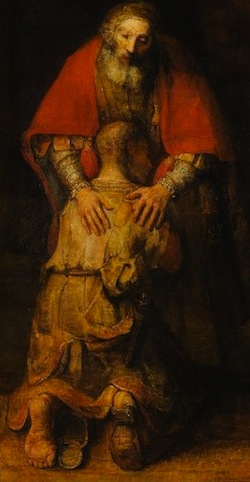
 Where the Wind...