
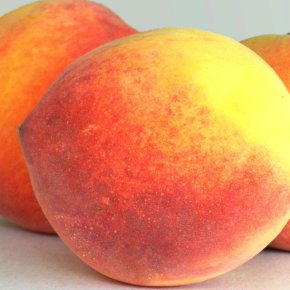
Sermon for Sunday, October 12, 2014 || Proper 23A || Matthew 22:1-14
 Today I’d like to do something a little different. Do you remember how, in math classes, your teacher told you to “show your work” in order to get full credit for answering a question? Well, this morning, I’m going to show my work as we go through this sermon together. Rather than just give you the end product of my Bible study, my struggles and false starts, and my attempts to listen to the Holy Spirit, I thought I’d pull back the curtain and show you some of the process.
I’ve decided to do this today for two reasons. First, the passage we just read from the Gospel according to Matthew is very difficult to encounter, so taking a step back and looking at it from a higher vantage point can be beneficial. Second, I never want to fall into the trap where I set myself up as such an unassailable expert in all things spiritual that, instead of inspiring you, I keep you from thinking you have the necessary skills to do what I do. Believe me, I am not an expert. I’m just a fellow disciple, who perhaps has a bit more specialized schooling than you might.
So think about this sermon as one that is really a step or two from the normal finished product. In it, we’ll explore together one way I like to study and interpret Biblical passages. My hopes are, by the end of this sermon, we will hear a word from God about today’s Gospel reading, and we will all be just a little bit more confident the next time we sit down to read the Bible. So without further ado, let me introduce you to a favorite acronym of mine: P.E.A.C.H. PEACH will lead us through five steps toward more fruitful Bible study. I commend these steps to you whenever you sit down to study our sacred texts. PEACH stands for Prayer > Encounter > Atmosphere > Charge > Humility.
We’ll start where any endeavor should: with Prayer. You might seek out a prayer specifically about reading the Bible, or you may write one for yourself to pray whenever you sit down to read. Or you may allow a new prayer to bubble up whenever you are getting ready to pick up your Bible. Perhaps your prayer might sound something like this:
“Dear God, thank you for prompting me to read the Bible today: please help me to be surprised by the generosity of your Word, to be patient in the face of everything I still don’t understand, to be enfolded by your grace as I read, and to be courageous as I bring your love with me from these pages out into the world; In Jesus Christ’s name I pray. Amen.”
After you pray, read your passage. Read it aloud. Read it slowly. Try to have an authentic Encounter with it. Don’t allow preconceived notions about how you think you should feel about the Bible ruin this authentic encounter. If the text makes you revolted, feel revulsion. If the text makes you question, feel confusion. If the text makes you peaceful, dwell in that peace.
Today’s parable from Jesus contains so much overt hyperbole that any emotion our encounter with it evokes will most likely be a strong version of that emotion. The parable begins innocently enough. We have a king, a sumptuous wedding banquet for the prince, and guests who decide they have better things to do. So far this sounds like several other parables Jesus tells. But then everything goes haywire. The realism of the story disintegrates when the would-be guests kill the invitation deliverers. And then when the king burns down their city. And then when the host throws the improperly dressed fellow not back out into the street but into “the outer darkness where there will be weeping and gnashing of teeth.”
I don’t know about you, but so far my authentic encounter with this story leans me toward discomfort, if not all out revulsion. It’s entirely possible that such a response is exactly what Jesus is going for. To look further into that, we turn to the next letter in PEACH. “A” is for Atmosphere.
The atmosphere of a reading is everything around it that helps it breath. This can mean a lot of different things where Bible study is concerned, but for our purposes, let’s say the atmosphere surrounding our reading is everything that happens within a couple of chapters of it in the Gospel. Backing up, we witness Jesus ride in humble triumph into Jerusalem on the back of a donkey. That means we are at the beginning of Jesus’ final week. We know what’s right around the corner, and by all accounts, so does Jesus. Jesus gets off the donkey, walks into the temple, overturns the tables of the moneychangers, and drives out all the sellers of sacrificial animals. This disruptive action probably seals his fate.
Jesus returns to the temple the next day, where the chief priests, Pharisees, and many others question him. He tells three consecutive parables, all having to do with inviting a new and unlikely set of people into the kingdom of heaven. The first parable (which we read two weeks ago) speaks of two sons, on who did the will of his father and one who didn’t. The second (which we read last week) speaks of wicked tenants who kill the son of the vineyard keeper. By this time, Jesus’ opponents realize he’s talking about them. But he’s not done. Now Jesus tells today’s parable, and the violence ratchets up again. With each story, Jesus gets more explicit and more graphic. After a few more verbal skirmishes, Jesus stops speaking in parables entirely and denounces the scribes and Pharisees openly. If chasing people out of the temple didn’t sign his death warrant, this indictment surely does.
The important thing to glean from our look at the atmosphere of our story is the constant ratcheting up of tension within Jesus’ parables. With each successive story, he makes his point more graphically so that no one mistakes his meaning – that those chosen to represent God among the people had failed in their duty and that God was welcoming all to become God’s representatives.
And this is where we find the “C” of PEACH. This is where we hear our Charge from God, the word God puts on our hearts during many prayerful, authentic encounters with scripture. In today’s passage, our charge comes when the king sends his messengers out to invite everyone they find in the street to attend the wedding. Everyone becomes a guest, no matter what. We hear our charge in this good news. Everyone is capable of being a guest at the heavenly banquet. Therefore, God invites us to treat all people – regardless of any reason we might have not to associate with them – as guests at God’s table, as people who bear the image and likeness of God in their souls. The more we treat each other as God’s honored guests, the more generosity, hospitality, and gratitude we will show one another. And not just each other, but everyone, for the wedding hall is filled with guests.
But this charge, which invites us to be radically welcoming, runs up against our last letter in PEACH. “H” is for Humility. The prayerful, authentic encounter with scripture often leads to unanswered questions and causes for further study somewhere down the road. The humble response when this happens is simply, “I don’t know.” Such is the case with me and the very strange paragraph about the fellow who doesn’t have a wedding robe. I confess I don’t know what to do with those few sentences. I have no answers, just questions, and so I strive to remain humble in the face of these cryptic words of Jesus, to admit I’m not in a place to hear them instead of throwing them out or explaining them away.
So there you have it. I invite you to try this process when you read the Bible. For fruitful study, try PEACH: Prayer, Encounter, Atmosphere, Charge, Humility. Without going through these steps this week, I would still be stuck in the discomfort of the passage and I would not have heard my charge, which I now share again with you. Everyone is a guest at God’s table. Far be it for us to bar the way. Instead, why don’t we go out “into the main streets and invite everyone we find there to the wedding banquet.”

 Because of my peculiar and very frustrating allergy, there’s one aisle of the grocery store I never travel down – the bread aisle. If you read the nutrition information on each and every plastic-wrapped and twist-tied loaf, you’ll find it contains soy flour, which means I can’t eat it. But there’s a happy byproduct of this limitation. Because I can’t eat the store bought loaves, Leah makes our bread from scratch. And, boy, is it good. I’ve watched her make it on several occasions. She starts by activating the yeast in warm water. She mixes the ingredients in the Kitchen Aid, counting the cups of flour aloud so she doesn’t put in too much. She let’s the dough hook work its kneading magic. She waits for the dough to rise, first in the mixer, and then, after forming the loaves, in the pans before putting them in the oven. The whole process takes the better part of a morning.
 I started writing this sermon at 5:30 in the morning last Wednesday. I was sitting on the floor in the living room with my eight-week old son sleeping fitfully on my lap. In the minutes preceding opening my laptop to write, I gave him a bottle in the stillness and darkness of the hour before dawn. Just enough light drifted in from the kitchen that I could see his face in the darkness. He was looking at me intently as he sucked down the bottle. I gazed back at him, and that’s when I felt it. I felt this impenetrable feeling of rightness, of completion. I felt “the glow.”
 My twins are not quite two months old, and yet I wonder when they will first look at the other and feel jealous. It might be my imagination, but I swear I’ve seen a barely perceptible glint in my daughter’s eye while she’s rocking away in the mechanical swing and I’m holding her brother – a barely perceptible glint of envy. Her eyes haven’t settled on a color yet, but I would swear in those few moments that they were green.
 Imagine with me the Apostle Peter in prison in Rome near the end of his life. He is talking to his cellmate, a new convert to the Way of Jesus Christ.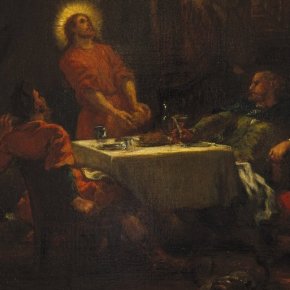
 “For when two or three are gathered together in my name, I am there among them.” I’ve always heard these famous words of Jesus as an astonishing promise, as a steadfast assurance that Christ is present in our midst no matter what. If you’ve ever been to a church gathering where only a few people showed up, I bet someone said, rather wistfully, “Well, when two or three are gathered…” I’ve said the same many times as a way to remind myself that what we’re doing when we gather as the church, as the body of those whose faith and action is motivated by the life, death, and resurrection of Jesus Christ, is important, no matter the size of the group.
 I’ll tell you all the truth: I’ve been struggling lately. The day the twins were born, about a month ago now, life took a dramatic turn. I knew this tectonic shift in life was going to happen, but I sure wasn’t prepared for it. At times over the past month, I have felt helpless. I have felt frantic. I have felt desperately inadequate. The learning curve for new parenthood is steep, and I’ve had to adjust my expectations about how fast I catch on. I’ve always been a quick study, but in this particular case, there’s no substitute for the exhausting daily grind of caring for the twins. I guess what I’m trying to say is that I knew it was going to be hard, but my definition of “hard” has never reached the superlative level of caring for multiple newborns.
 For as long as I can remember, my father has worn a cross beneath his clothing, resting on his skin close to his heart. So when my parents gave me a cross of my own to wear when I was in my early teen years, I was thrilled. I was going to be just like Dad, wearing my cross all the time, even in the shower! The trouble was I kept losing it. I couldn’t wear the cross all the time because I played soccer, and there was a “no jewelry” rule. So it would get lost in the depths of my soccer bag (which was not a place for the faint of heart). The chain broke once, but I managed to find the cross beneath the seat of my car. Then during my freshman year of college the chain broke again, and I lost the cross for good.
 Good morning! It’s good to be back after three weeks away. I know I’ve only been next door, but it seems like another world when newborns are filling all your waking (and the few sleeping) moments. I seriously thought about skipping this sermon entirely and just showing you baby pictures for the next ten minutes, but then I realized lemonade on the lawn might be a better venue for that. So, let’s get down to the sermon.
 Dear Baby Boy and Baby Girl,
