5 Years: Snapping Turtles

This June is the 5th anniversary of Wherethewind.com, and we are celebrating by looking back at some of the best of the last five years of this website. Today we have the first article in my two year relationship with EpiscopalCafe. Thanks to Jim and everyone else at the Cafe for giving me the chance to be part of the team. (Originally posted August 1, 2009)

Snapping turtles live in the muddy water underneath a dock that extends into Lake Kanuga. I know this because I have been slowly fattening them up with Wonderbread since I was eleven. I’m 26 now, and (while I’ve doubled my body mass in the intervening years) the turtles remain – stubbornly – about the size of my hand. All but one. There is the “Big One” that rises Kraken-like from the depths and that you only ever see out of the corner of your eye.

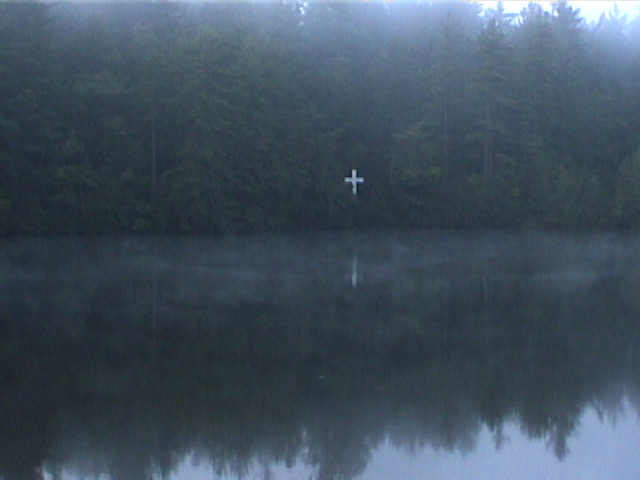
Misty crossFor years during the last glorious week of July, my friends and I have gone down to the water’s edge to feed the turtles. We used to sprint to the dock. Now we amble. Once there, we untwist our ordnance and pass out the sliced, carbohydrate projectiles. Some employ the patented tear-and-toss approach, which maximizes the number of pieces for the turtles to eat. Others drop whole slices of bread into the water and count the number of bites necessary to consume each piece.
Within seconds of the bread hitting the water, the turtles surface. Plop. Snap. The first breadcrumb disappears, and ripples are the only evidence the turtle was ever there. Plop. Snap. The second piece vanishes. Plop. Snap. We keep a weather eye out for the Kraken. Plop. Snap. There he is, the Big One, the Leviathan that God has made for the sport of it. Plop. Snap. No, it was just the way the light hit the water. Plop. Whoosh. Snap. Missed him again. Maybe next year. Plop. Snap. Plop. Snap. Plop. Snap.

The turtles propel themselves out of the depths, eyes on the dark spots on the surface. They trap the bread in their little, beaky mouths, and they dive again. They stay on the surface just long enough to snap up their sustenance before retreating to the darkness of the brackish shallows underneath the dock. After years of dropping bread to the turtles, I’ve realized that we do the same. We never stay topside in the sun for too long. We prefer the anonymity of the murk. We prefer to focus only on that bit of bread, a floating shadow above us. We prefer to surface only at feeding time, lest the daylight expose us to all the pesky problems of the world.

Now, I’m pretty sure that the above metaphor is thinly veiled enough that my impending addition of the Holy Eucharist to this discussion will seem both appropriate and timely. Here goes. All too often, we approach our worship with a Plop. Snap. mentality. For an hour and fifteen minutes on Sunday morning, we notice the Wonderbread falling from the sky, and we surface to snap up our fill. Then we dive until next week. Same time. Same place.

The trouble is twofold. First, the Wonderbread, heavenly manna, God’s grace – call it what you will – does not descend on us at predetermined times once a week. However, we condition ourselves to notice it only during those times we’ve set aside for God. We kneel at the altar rail. Plop. We lick the bread off our palms. Snap. In seven days time, we’ll commune again. In the six days in between, we are more than a little oblivious to the fact that God wants to commune with us every day. Indeed, we may say “daily,” but too often we mean, “Give us this day our weekly bread.”

Second, the surface is where the action is. The psalmist prays, “Out of the depths have I called to you, O Lord; Lord, hear my voice.” God’s grace pulls us out of these depths, out of the brackish water underneath the dock. We surface in the brightness of day. As our eyes adjust, we notice all the injustice and desperation and fear that the murk makes easy to ignore. And as we share the bread and cup, we remember that the Body we ingest connects us to the greater body of Christ in the world. Jesus says to his disciples, “ If you walk in the darkness, you do not know where you are going. While you have the light, believe in the light, so that you may become children of light.” Being children of light means remaining on the surface, knowing we share our lives in a larger community, and addressing those inequities that the light throws into sharp relief. We can accomplish none of these if we dive back to the depths – back to anonymity and ignorance – immediately after receiving our nourishment.

When we begin to notice the abundance of God’s grace around us, which pulls us to the light of the surface, we can break out of the cycle of the Plop. Snap. mentality. Silent ripples should not be the only signs that mark our ascent to the surface. Just as God blesses Abraham, God blesses us so we can be blessings in the world. God nourishes us with the bread of heaven so we can nourish others.

At the end of July this year, I will once again amble to the dock to feed the turtles. I will toss the bread into the water. Plop. Ever vigilant for signs of the Big One, I will watch the little, beaky mouths spear the soggy pieces. Snap. And I will pray to God that we can all remain on the surface, paddle there in the light of the sun, and serve our Lord.

You are my Child

I wrote this song for part of the sermon last Sunday, January 13, 2013. I based it on the line in the Gospel: “You are my Son, the Beloved, with you I am well pleased.” I believe that because we are God’s children by adoption through the Spirit, God says this to us as much as to Jesus. This song is written from God’s perspective, speaking the truth to us that God delights in us always. (See below for the lyrics.)

“You are my Child” Lyrics

You turned away so they could not see you cry;
Maybe tomorrow you’ll stand up to those guys
`Cause they picked you last for the football team
And made so much fun of your lifelong dream
To become a famous scientist some day.
You want to crawl home and go straight to bed
Because of all the hurtful things the bullies said,
And this is when I hope you hear me say:

Chorus:
You are my child, and I love you (yes, I do).
You might not believe me, but still it’s true,
I will never stop delighting in you
`Cause you are my child.

You slip your dress on and then you turn around;
Reflected back, your smile fades to frown.
You look at the models in the magazine,
And you realize you’ll never be a beauty queen
If you have to make your body look that way.
You stare into the mirror for a day or two,
And you can’t see the beauty staring back at you;
This is when I hope you hear me say: (Chorus)

You’ve gone to church on and off for several years,
But you have never quite shaken all your fears.
You’ve always been afraid you’re not good enough;
That’s why you put your faith in so much other stuff,
And feel a hole inside that grows each day.
But look inside and see me filling up that space
And know I long for you to look and see my face,
So raise your eyes, behold me as I say: (Chorus)

You cannot earn my love, nor can you lose it
I give it freely, all you need do is choose it. (Chorus)

The Vow

The following post appeared Saturday, March 5th on Episcopalcafe.com, a website to which I am a monthly contributor. Check it out here or read it below.

* * *

A couple of months before our recent wedding, my wife and I sat down with the Book of Common Prayer and turned to page 423. We read the header and the italicized rubrics, and then our eyes fell on those famous words: Dearly Beloved. “We’re really doing it?” she asked. “We’re really planning our wedding ceremony?”

“We really are,” I confirmed. We each held one side of the book as we leafed through the service, discussing music and readings and the people we might ask to participate. When we reached the end of the printed liturgy, she looked at me, confusion written on her face. “What’s wrong?” I asked.

“When do I get say ‘I do?’ ”

I stifled a chuckle, remembering that each of the brides I had counseled before their weddings had asked me the same question. From the days when brides, my wife included, draped white pillowcases from their hair and walked down imaginary aisles lined with dolls and stuffed animals, they had each dreamed of saying those two small words. When they discovered that “I do” doesn’t appear in the beautiful Episcopal liturgy, I had ten-minute mutinies on my hands. “What do you mean I don’t get to say ‘I do?’ I’m out of here. We’ll get married at the VFW hall and my cousin will get a temporary license to officiate and he’ll let me say, ‘I do.’ Come on, dear, we’re leaving.”

After of few minutes, though, they calmed down enough to listen to reason. Now, I don’t relish the thought of destroying the dreams of brides everywhere, so I try to be as sensitive as possible. But when my own bride-to-be wondered aloud about the lack of those two little words, I didn’t really know what to say. My standard pastoral line wouldn’t work on her because I’m not her priest. So instead, I patted her on the back and resisted the urge to say, “There, there.”

A few weeks later, we had our first premarital counseling session, and the priest suggested that we memorize our vows rather than have the officiant feed them to us line by line. We decided to take on the challenge. Each day from then on, we practiced the vows. We spoke them aloud, prompting each other when we hesitated and gently correcting each other when we mixed up the phrases. Over the course of a few weeks, we learned the words by heart.

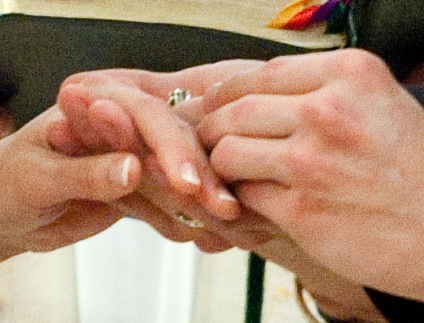
In the name of God, I, Adam, take you, Leah, to be my wife, to have and to hold from this day forward, for better for worse, for richer for poorer, in sickness and in health, to love and to cherish, until we are parted by death. This is my solemn vow.

These deep, rich words sunk into us as we learned them. They are now the bedrock of our marriage, and (I hope my wife agrees with me!) they are so much better than “I do.” These words make me wonder: how often in our lives do we vow something? We might give assurances that we’ll get the paperwork done or promise to pick someone up after school, but we don’t “vow” to do these things.

Vows don’t happen too often. Witnesses swear to tell the whole truth in court; government officials, new citizens, and military folks pledge to uphold the Constitution or obey officers. These are as close to “vows” as people make outside of the covenant of marriage. But the “solemn vow” of marriage is unique in society, and that makes it all the more special.

A vow is neither time nor place specific. It covers more than the limited scenario during which one might make a promise. Indeed, a vow is not promise, but the framework on which promises are hung. This is made explicit by the pairs of opposites that the couple speaks during the vows – better and worse, richer and poorer, sickness and health. The vow is the acknowledgment that life will never quite be the same as it was before that moment, no matter how long a couple might have been living together before marriage. When I vowed to take Leah to be my wife, I entered into a new type of existence, one in which I now (at long last) own the fact that I am not the most important person in my own life. I vowed to cherish her and to love her – come what may. I can think of no greater duty and no greater joy than to explore with her this new existence that our vow has opened to us.

This new existence begins with the vow – not two measly words – but a few sentences that change lives. And the vow begins with a few more words that are more important the all the rest: “In the name of God…” The vow would mean nothing if God were not part of it. Just as the vow is the framework for all promises, God is the framework for the vow. The new existence into which we entered a few weeks ago at our wedding happens with God’s name at the top of the page. It couldn’t be otherwise.

I know that it has only been a few weeks, and we aren’t planning on having children for a while; but I wonder if our future daughter will put a pillowcase on her head and walk down an imaginary aisle? She probably will. But hopefully, we will teach her not to look forward to saying, “I do.” Rather, we will teach her to dream about the deep, rich words: “This is my solemn vow.”

Four Bags of Saline

I first posted this Advent reflection on the site Day1.org, which is having a Advent/Christmas Blog tour.

* * *

On Tuesday afternoon, I contracted a viral infection that systematically began evacuating the contents of my stomach, intestines, gall bladder, and liver as quickly as possible. Every half hour I scurried from my fetal position on the couch back to the restroom where I’m sure the neighbors and the folks in the next county could hear my wretched retching. After about four hours of agony, my fiancé finally convinced me to go to the Emergency Room. Severely dehydrated, I accomplished the weak-kneed feat of maneuvering down the stairwell and out to the car, all the while clutching a white, plastic wastebasket like a shipwreck survivor clinging to a life preserver.

With my fiancé supporting me, I stumbled into the ER at about eleven at night. The woman behind the counter took my information and fitted me with a bar-coded bracelet. Another woman took my vital signs and then told me to take a seat in the waiting area. I don’t know how long we waited. My sense of time was reduced to half-hourly dashes to the restroom followed by several, sweat-drenched minutes sitting on the tile floor heaving with exhaustion. Sometime after my fourth trip to the restroom, a nurse mercifully called me back. I sat in a wheelchair as an orderly navigated me to a bed in the hallway of the overcrowded emergency department.

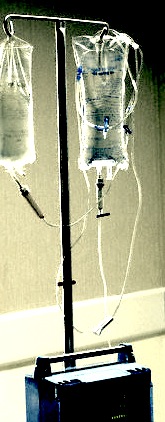
The nurse poked an IV tube into the back of my right hand and fed into my bloodstream the same anti-nausea medicine they give to chemotherapy patients. Then she hooked up a bag of saline, and I watched through half-lidded eyes as the saline began dripping from its elevated place into the tube. My fiancé read the words on the machine to me: 500 milliliters per hour. The equipment was making the saline drip at a proscribed rate – the bag would be empty in two hours. With the anti-nausea medicine suppressing my urge, I now had a new way to measure the time.

One empty bag of saline later, I was showing marked improvement. A little color had returned to my cheeks, and I was thirstier than I had ever been. The nurse allowed me ice chips and promised a popsicle later on if I continued to feel better. I crunched down a Styrofoam cup’s worth of ice and then collapsed back on the bed in the hallway. While I sucked on the ice chips, the nurse hung another bag of saline, and sped up the distribution of the liquid into my body. Now I was receiving 1000 milliliters an hour, or one full bag.

A second empty bag of saline later, I received the promised popsicle, and my fiancé correctly guessed the punch line to the truly horrendous joke stamped on the popsicle stick (How does thread get to school? On a spool bus). After I finished the popsicle, the nurse propped me back in the wheelchair for a ride to the radiology department for a chest x-ray. The doctor wanted to make sure that my gastric pyrotechnics hadn’t torn my esophagus. The short trip wore me out, and I dozed off and on through my third bag of saline, also pushed into me at 1000 milliliters an hour.

By the end of bag three, I just wanted to go home and crawl into my own bed away from the bright fluorescence and constant beeps and blips of the ER. My doctor had other plans, however, and instructed the nurse to hang a fourth bag of saline. This time, she turned off the machine controlling the dispersal of the IV into my arm. The bag would finish not in one hour or two like the other bags, which were “pushed” into me, but at the undefined rate of gravity.

I knew that eventually the fourth bag of saline would empty. I knew that I would be allowed out of the ER for the blissful comfort of my own bed and sleep uninterrupted by illness or beeping monitors. I just didn’t know when. This is the same quandary that the season of Advent invites us to explore. We don’t know when Jesus will return, but we know that he will return. Now, we live in a culture dependent on the constant, steady, and unwavering march of time. We punch in time cards at work. The train leaves the station at 7:12 sharp. The firm expects so many billable hours. Time is money. So when Jesus himself says, “But about that day and hour no one knows, neither the angels of heaven, nor the Son,* but only the Father,” his words run smack into our conception of time. How could we not know when something will happen? How could we not know when to begin our preparation for the big day?

By not putting a date and time on his return, Jesus pushes us to celebrate the much more important fact that his return will happen. He understands human nature too well. By initiating the expectation of return without a time frame, he delivers us the perfect set of variables to make us practice constant vigilance. When I knew the saline bag would run out in one hour, I had no need to watch it. The 1000 milliliters ticked by one after another in predictable, rhythmic progression. But when the nurse turned off the machine during the fourth saline bag, I had to keep looking up at it to see how quickly gravity was doing its work.

I knew the bag would empty, but I wanted to be sure I knew exactly when those last drops would fall so that I could leave the hospital. In the same way, during the season of Advent, we practice our awareness of God’s presence in our lives so that we can more readily identify the signs of Christ’s reign breaking into the world. During the season of Advent, I invite you to turn off the machines that push the IV. Let gravity take over. Know that the “when” is less important than the “what.” Jesus is coming; indeed, Jesus is always here, as well. When we worry less about the when, we can begin to see the presence of God happening all around us. So turn off your clocks. Forget marking off days in your Advent calendar. And just live with the grace-filled knowledge that Christ is coming.

It’s not easy being green

The following post appeared Monday, May 3rd on Episcopalcafe.com, a website to which I am a monthly contributor. Check it out here or read it below.

* * *

Every February of my college years, the entire student body suffered from a mass case of seasonal affective disorder. The campus of Sewanee is one of the top five most beautiful spots on the planet, but the beauty of the Domain was difficult to appreciate during that dreadful month. What neophytes mistook for simple fog, veterans of Sewanee winters knew was in reality a low-hanging raincloud that hovered over the campus, sapping students of the will to do anything besides curl up under a blanket and nap. The weather lasted for weeks, and when the sun finally broke through the clinging barrier, we students discovered our vigor once again, as if by some sudden leap in evolution, we had developed the ability to photosynthesize.

A version of this same seasonal affective disorder hits Episcopalians every year within a few weeks of Pentecost. We look out over the vast expanse of the upcoming liturgical calendar, and we see nearly a month of Sundays with seemingly no variation, with nothing peculiar to distinguish one day from the next. It’s a sea of green, and without the concurrence of wedding season, the Altar Guild would forget where the paraments are stored.

We call it the season after Pentecost – even the designation gives it the sound of an afterthought. At first glance, those legendary church year framers seem to have measured the year wrong. They only programmed six months! What’s there to do with the rest, those twenty-odd Sundays after Pentecost that stretch on interminably during the dog days of summer and into the heart of autumn? Truly, we blanche at the long months and wonder if the Holy Spirit has enough juice in those Pentecost batteries to get us to the first Sunday of Advent.

The other liturgical seasons are nice and short; indeed, no other season creeps into double digits. Epiphany gets the closest, sometimes reaching as high as nine (watch out 2011!), but it can’t quite get there. And the short seasons always (and satisfyingly) lead somewhere: Advent moves to Christmas Day; Christmas season to the Epiphany; Epiphany season to Ash Wednesday; Lent to Easter Day; Easter season to Pentecost. Each season is like crossing a river or lake to the next feast or fast on the other side. But the season after Pentecost is an ocean, and Christ the King Sunday is in the next hemisphere.

So what do we do to combat the spiritual lethargy that can result from so many Sundays of unvarying green vestments? Well, we could try to split it into more liturgical seasons. So, starting with the Sunday after Pentecost, we’d have the season of the Trinity until mid-August. Then, beginning on August 15th, we’d have the season of the Blessed Virgin Mary until the end of September. Then, we’d have Michaelmas until Advent. There: three more manageable seasons for us modern people with our tweet-sized attention spans.

While this divvying up of the calendar has a certain appeal (especially to all the Anglo-Catholics reading this), I doubt the Church would go for it. So, where does that leave us? Our churches are still stuck in six months of monotonous green! The seasonal affective disorder will attack. Parishioners will fall away! (I know, I know – mostly because of summer holidays, but just go with me on this whole long liturgical season thing.)

Instead of lamenting the six months of green, let’s use the green season to our advantage. Don’t completely shut down program for the summer. Rather, take your cue from the liturgical color. Spend time each week or each month discussing how both the church and the individual can become more environmentally friendly. Devote education time to the intersection between theology and environmental sustainability. Set goals for the parish to meet by the end of the season after Pentecost to reduce consumption. Go paperless for the entire season to cut down on waste. Move service times to earlier in the day and turn off the A/C. Encourage people to bike to church or carpool. Have a light bulb changing party and replace all the lights with CFLs (the curlicue ones). Check out websites like nccecojustice.org for more ideas.

By taking positive steps to live into God’s pronouncement that we are stewards of creation and by staying active through the long days of the season after Pentecost, we can stave off that seasonal affective disorder. Even when the liturgical color hasn’t changed in four months, each Sunday is still a celebration of our Lord’s resurrection. Every Sunday we worship God, who through the Word brought all creation into being. The best way to praise God for that mighty creative act is by preserving it so countless generations to come can also praise God for God’s creation.

It’s a good thing the Green Season is so long. There sure is a lot to do.

Better wine than before

If you are a regular reader of this blog, you know I never pass up a chance to talk about the Gospel according to John. This past Sunday’s Gospel text was John 2:1-11, which spurred this article published in the local paper.

* * *

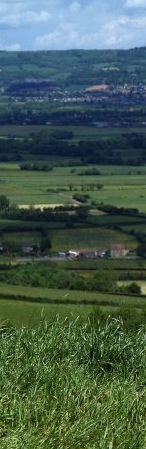
View from the Tor of Glastonbury. See what I mean about the grass?

On my wall, I have a collage of pictures from a college choir trip to England in 2005. In one picture, 15 friends and I are standing in front of the Tor of Glastonbury, a ruined tower on the top of a hill in Southern England. It’s a great picture—the four men and eleven women are all smiles because the late-spring sun is shining and because even the dullest blade of English grass is greener than the greenest blade of American grass. Recently, I looked at the picture and realized that fifty percent of the people in it have gotten married or engaged in the last four years. Whenever I get a new invitation or see wedding pictures on Facebook, a special kind of happiness grips me, a happiness reserved for such outward signs of God’s love as marriage.

In a Christian context, a marriage displays to the world the best attempt human beings can make at emulating the love of God. Marriage unites two people in a commitment (a better word may be “covenant”) to love and cherish one another so that the world is enriched by their love. Indeed, a couple truly meant to commit themselves to each other shows their love for God by loving one another. Because God’s love is so intimately involved, marriage is a calling, just like any other action taken on behalf of God. The celebration of this love, upon which the marriage is founded, is the wedding.

The wedding celebrates the union of two people in the love of God. How wonderfully appropriate, then, is it that Jesus first reveals his glory at a wedding feast. The location of this revelation reminds me that Jesus brings people back into union with God. This is one way to characterize his mission—he reunites me with every good thing I have lost through years of indifference and antipathy. By accepting the love of God in Jesus Christ, I find cause to celebrate the fact that, while I may have broken my relationship with God, God has never broken God’s covenant with me. The commitment God made to Abraham and his descendants finds new life in me when I discover the possibility of reunion with God through the love of Christ. Just like the wedding feast, this discovery necessitates celebration. But just like a marriage, this celebration can last a lifetime.

Imagine the beauty of a life lived in the full knowledge that God is committed to loving you. What would you do in response to that commitment? How would your life change? Jesus changes the water in the jars to wine, and not just any wine, but wine that is superior to what was originally served. In the same way, living into the covenant God has made with you brings change. You will be changed. You will become better wine than before. You will be a sign of the glory of God in the world. If this is not cause for celebration, nothing is.

When I attend the wedding of a friend, I always remember this story of Jesus at the wedding of Cana. His appearance at the wedding and the sign he performs to reveal his glory attune me to feeling the joy that spills over from the celebration in heaven when people on earth find the love of God in one another. When Jesus calls us into union with himself, we can share in the lifelong celebration of being Jesus’ disciples, the lifelong knowledge that we are becoming better wine than we were before, and the lifelong commitment to experience the love of God that continues to be present and active in the world.

Snapping turtles

The following post appeared Friday, July 31st on Episcopalcafe.com, a website I am very excited now to be a part of. Read the post here or below.

* * *

Snapping turtles live in the muddy water underneath a dock that extends into Lake Kanuga. I know this because I have been slowly fattening them up with Wonderbread since I was eleven. I’m 26 now, and (while I’ve doubled my body mass in the intervening years) the turtles remain – stubbornly – about the size of my hand. Misty crossAll but one. There is the “Big One” that rises Kraken-like from the depths and that you only ever see out of the corner of your eye.

For years during the last glorious week of July, my friends and I have gone down to the water’s edge to feed the turtles. We used to sprint to the dock. Now we amble. Once there, we untwist our ordnance and pass out the sliced, carbohydrate projectiles. Some employ the patented tear-and-toss approach, which maximizes the number of pieces for the turtles to eat. Others drop whole slices of bread into the water and count the number of bites necessary to consume each piece.
Within seconds of the bread hitting the water, the turtles surface. Plop. Snap. The first breadcrumb disappears, and ripples are the only evidence the turtle was ever there. Plop. Snap. The second piece vanishes. Plop. Snap. We keep a weather eye out for the Kraken. Plop. Snap. There he is, the Big One, the Leviathan that God has made for the sport of it. Plop. Snap. No, it was just the way the light hit the water. Plop. Whoosh. Snap. Missed him again. Maybe next year. Plop. Snap. Plop. Snap. Plop. Snap.

The turtles propel themselves out of the depths, eyes on the dark spots on the surface. They trap the bread in their little, beaky mouths, and they dive again. They stay on the surface just long enough to snap up their sustenance before retreating to the darkness of the brackish shallows underneath the dock. After years of dropping bread to the turtles, I’ve realized that we do the same. We never stay topside in the sun for too long. We prefer the anonymity of the murk. We prefer to focus only on that bit of bread, a floating shadow above us. We prefer to surface only at feeding time, lest the daylight expose us to all the pesky problems of the world.

Now, I’m pretty sure that the above metaphor is thinly veiled enough that my impending addition of the Holy Eucharist to this discussion will seem both appropriate and timely. Here goes. All too often, we approach our worship with a Plop. Snap. mentality. For an hour and fifteen minutes on Sunday morning, we notice the Wonderbread falling from the sky, and we surface to snap up our fill. Then we dive until next week. Same time. Same place.

The trouble is twofold. First, the Wonderbread, heavenly manna, God’s grace – call it what you will – does not descend on us at predetermined times once a week. However, we condition ourselves to notice it only during those times we’ve set aside for God. We kneel at the altar rail. Plop. We lick the bread off our palms. Snap. In seven days time, we’ll commune again. In the six days in between, we are more than a little oblivious to the fact that God wants to commune with us every day. Indeed, we may say “daily,” but too often we mean, “Give us this day our weekly bread.”

Second, the surface is where the action is. The psalmist prays, “Out of the depths have I called to you, O Lord; Lord, hear my voice.” God’s grace pulls us out of these depths, out of the brackish water underneath the dock. We surface in the brightness of day. As our eyes adjust, we notice all the injustice and desperation and fear that the murk makes easy to ignore. And as we share the bread and cup, we remember that the Body we ingest connects us to the greater body of Christ in the world. Jesus says to his disciples, “ If you walk in the darkness, you do not know where you are going. While you have the light, believe in the light, so that you may become children of light.” Being children of light means remaining on the surface, knowing we share our lives in a larger community, and addressing those inequities that the light throws into sharp relief. We can accomplish none of these if we dive back to the depths – back to anonymity and ignorance – immediately after receiving our nourishment.

When we begin to notice the abundance of God’s grace around us, which pulls us to the light of the surface, we can break out of the cycle of the Plop. Snap. mentality. Silent ripples should not be the only signs that mark our ascent to the surface. Just as God blesses Abraham, God blesses us so we can be blessings in the world. God nourishes us with the bread of heaven so we can nourish others.

At the end of July this year, I will once again amble to the dock to feed the turtles. I will toss the bread into the water. Plop. Ever vigilant for signs of the Big One, I will watch the little, beaky mouths spear the soggy pieces. Snap. And I will pray to God that we can all remain on the surface, paddle there in the light of the sun, and serve our Lord.

Three squares a day

My friend Paula, who writes the blog Welcoming Spirit, recently challenged her readers to take on a discipline for thirty days. I am a week into mine and I’ll tell you, it’s not going so well. You’d think a priest would be better at remembering to pray at meals. I mean, look at the Eucharistic meal — I pray for a solid five minutes before anyone gets to eat anything. But for some reason or other, I’m just not that disciplined at praying before my three squares a day.

Well, not “some reason or other.” Honestly, I know the reasons. When I lived at home with my parents, we had our dinnertime rites. We tried not to answer the phone, though the thirty second pause to listen for the machine made that rule laughably futile. We always put our napkins on our laps and kept our elbows off the table. And we always prayed. (My father usually tapped the person who unsuccessfully failed to make eye contact with him. If everyone succeeded, he led the prayer.)

Now that I live on my own and take most of my meals alone, I have yet to develop the discipline of thanking God for all of God’s blessings, of which the meal is a palpable reminder. I am one week into my intentional practice, and I am doing dreadfully. I’m two for two today, but over the course of the week, I can’t have remembered more than three out of ten. That average would be great if I were a baseball player, since no other job in the universe measures success at thirty percent.

But I’m not a baseball player. I’m a priest. I’m supposed to be the one who remembers to pray — 100% of the time. Prayers should be the first words that spring to my lips in the morning and the last ones to whisper out when I fall asleep. Prayer should be as natural as breathing, should happen with each of my breaths.

It doesn’t, God knows. Too often, I just forget to pray. Not the best example, I know. Neither were the disciples, and from them I take a measure of hope. They follow Jesus around, they hear his words, they cast out demons and heal the sick. But they only get it three out of ten times. They bicker about which is the greatest, they bar people’s access to Jesus, and they abandon him.

I’m not saying that the disciples’ example gives me a free pass. They mess up, they misunderstand, but Jesus stays in relationship with them. He even repairs his relationship with Simon Peter after this most adamant follower denies him three times. Peter, do you love me? You know I do, Lord. Then feed my sheep.*

Jesus has invested way too much time and energy in me to give up now. Indeed, his resurrection shows me that he’ll never give up on me, even after I die. Everyday, he invites me into a deeper relationship with him, and  I usually ignore the invitation. I prefer, instead, to wade in the shallow end, to make sure my feet can touch the bottom.

But there are those days — few and far between — that I acknowledge my apathy and ask God to help me float into the deeper waters. And I find the strength to accept the invitation.

As I write this, one of my favorite songs from my college years is playing on my Itunes. The chorus of Jennifer Knapp’s “Hold Me Now” goes like this: “I’m weak, I’m poor. I’m broken, Lord, but I’m yours. Hold me now.”

My apathy and forgetfulness about praying before meals (among other things) stem from my grasping, prideful illusion that I need not rely on God. Perhaps, deep down, I don’t really believe that God will claim me if I’m weak or poor or broken. But that’s not how God operates. Nothing I do will elevate me past weakness or paucity or brokenness. Only when I allow God to hold me in the palm of God’s hand can I find strength. Only when I take part in the relationship into which Jesus calls me can I find abundance. Only when I let go the illusion can I see the reality of God making me whole.

Praying before meals may seem like a small step, but it is an essential one. It creates a pattern, a practice, a discipline. If I remember to pause even three times a day to thank God for God’s presence in my life, then perhaps my illusory self-reliance will begin to fall away. Perhaps I’ll remember that God has blessed me to be a blessing to others. Perhaps I’ll hear Jesus ask, “Adam, do you love me?”

And I’ll be able to say, “You know I do, Lord.”

Then feed my sheep.

Footnotes

* John 21:15-17

Voices

Sometimes, when I’m praying with a small group — say, the ladies at Morning Prayer whom I have mentioned before — I stop speaking aloud and listen instead. Starting with the woman closest to me, I try to pick out each voice.

Our Father, who art in heaven, she begins. Her voice is measured, calm, the sound of warm milk being poured into a glass for a child who can’t fall asleep. Hallowed be thy name. I imagine her voice checking off ingredients as she pulls baking powder and brown sugar from her cupboard. Her apron has a floury hand print below the pocket, into which she replaces the battered heirloom of a recipe card. I can taste the flaky crust of her apple pie.

And to Think That I Saw It on Mulberry Street, by Dr. Seuss, 1937

Thy kingdom come, thy will be done. I shift my focus to the dear heart across the aisle. Her voice is honey and love, the sound of grass on a hillside when you’re having a picnic and have to weigh down the napkins with the salt and pepper shakers. On earth as it is in heaven. I imagine her voice reading Dr. Seuss and Shel Silverstein to laughing children who sit cross-legged on mats and never want naptime to come. At the end of each page, she makes sure all of the children have seen the pictures. I laugh, too, when the airplane drops confetti near the end of ” And to Think that I Saw It on Mulberry Street.”

Give us this day our daily bread. I strain to hear the woman next to her. Her voice is soft but durable, the sound of late afternoon rain watering patchwork fields and seeping into the clay. And forgive us our trespasses, as we forgive those who trespass against us. I imagine her speaking comfort in the ICU, her words keeping time with the pinging heart monitor. She holds a frail hand in both of hers, careful not to disturb the needle and tape and gauze and drip-drip of the IV bag. I stand in the doorway with my stomach in my throat and watch her care.

And lead us not into temptation. The last lady is easy to pick out because she is always a few words ahead of everyone else. Her voice is crystal, weightless, the sound of water splashing out of a bucket as it is rises haltingly from the depths of a stone-lined well. But deliver us from evil. I imagine her voice distributing presents on Christmas morning after all the adults have gotten coffee and hot-cross buns. She thanks her grandchildren for their gifts of pipe cleaner and popsicle stick ornaments. I wait for her to call my name and shake a present in my direction.

My focus dissipates, and I join the four woman for the conclusion. For thine is the kingdom, and the power, and the glory, forever and ever. Our voices mix into one voice — warm milk and rain, windswept grass and splashing water, and my voice, which always sounds strange to me when I hear it on a recording. We raise that voice as one to the One that gave us voice. And after our Amen we fall silent.

And we listen.