
Sermon for Sunday, February 2, 2025 || The Feast of the Presentation || Luke 2:22-40
Today is a special feast day in the church. We call today the Feast of the Presentation, and this feast celebrates the event in the life of Jesus when Mary and Joseph brought their infant son to the Temple in Jerusalem to present him to the Lord and make a sacrifice. Today, I’d like to focus on the practice of presenting something to God in this sacred worship space. I’m going to speak abstractly for the second half of this sermon, so let me start with the concrete moment in the service that we call The Presentation.

“WheretheWind.com Sermon” on your podcast app of choice.
Following the Peace, we move to the part of the service known as the Offertory. Here’s what the stage directions in the Book of Common Prayer say: “Representatives of the congregation bring the people’s offerings of bread and wine, and money or other gifts, to the deacon or celebrant. The people stand while the offerings are presented and placed on the Altar.”
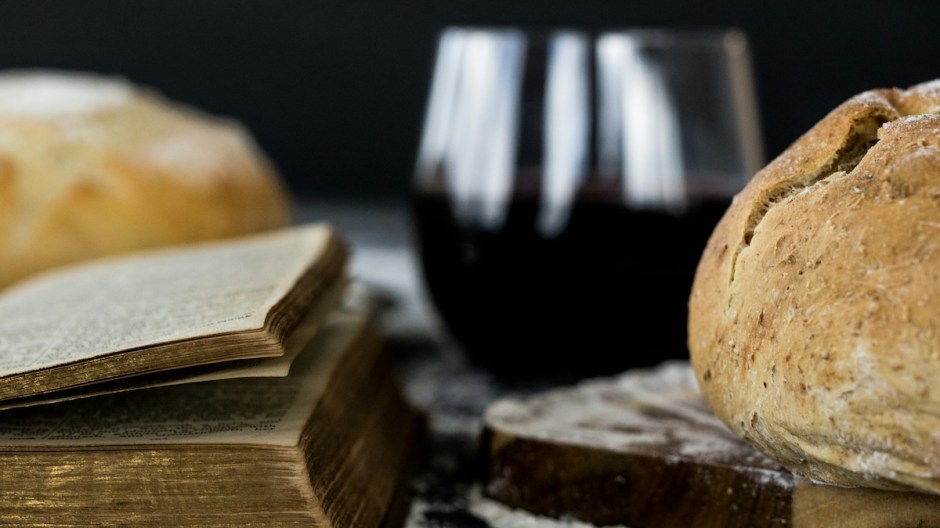
The last phrase of this in all important: “The offerings are presented and placed on the Altar.” I invite you to watch me after the ushers bring the collections plate forward later in the service. You will see me lift the collection plates into the air, our financial gifts to the mission of God symbolizing all the material wealth we give back to God in God’s service. Then I lift up the bread and wine, both of which spring from a pair of gifts: the bounty of the earth and the human ingenuity that turns the bounty into sustenance.
We place these gifts on the altar for a reason. The altar is just a table until we employ it for a sacred purpose. Any table can become an altar when used to set things apart as holy. I’ve celebrated holy communion on card tables, picnic tables, and on those rolling tables that fit over hospital beds. Each of those tables was an altar not because it was inherently an altar but because we were using it as one. The same is true of the bread and wine. Any bread and any wine can be presented for use at Holy Communion. The type of bread and vintage of wine are immaterial, though the fact that we have a dedicated group of bread bakers who pray their way through the baking does invest a special added sacredness to our worship. That said, like the table that becomes an altar, the actions of thanking God for bread and wine, blessing them, inviting the Spirit to dwell in them, and sharing them with one another make the bread and wine sacred.
I wanted to spend the first half of this sermon talking through this liturgical theology because everything I just said about the material gifts we present at the altar rings true about everything else we bring with us when we come to the altar rail. As the person entrusted by you to speak the prayer of consecration and place the sacred bread in your outstretched hands, I have had to do a lot of soul-searching this week in preparation to bring myself to the altar. In these days of elation for some and terrifying turmoil for others, I have dwelt with a flurry of intense emotions. I have tried to understand how I might present them to God at the altar with the faith that the Holy Spirit could transform all that is in me into a lifegiving expression of God’s love in these tumultuous times.
So for the second half of this sermon, I am going to share with you five emotions that I am presenting to God at the altar today. I do not expect that you will identify with all five of these in your own experience. If you don’t identify with them, then I invite you still to listen with the ears of empathy and a heart of compassion. And if you want to talk with me later about the feelings that I am sharing, then I will commit to bringing the same ears and heart to the conversation. No matter what, the altar rail is wide enough for us all to kneel together before God, reach out our hands, and trust that those empty hands will be filled with the enlivening presence of Christ.
In this week of soul-searching, I noticed that my first emotion is confusion. So many things are changing so fast in our society that it’s easy to throw up my hands and retreat into the insulated position that my identity affords me. Today, I am presenting my confusion to God at the altar and asking God for a quiet mind and the space for silence and contemplation.
My second emotion is outrage. I feel anger over injustices that scapegoat the most vulnerable to feed a narrative of grievance. I feel this anger and it feels good in a way because anger by itself pretends to be action. Today, I am presenting my outrage to God at the altar. I’m asking the Spirit to transform my anger from an amorphous, targetless wildfire into the slow-burning fuel of righteousness. I’m embracing the yearning that anger places within me – the life-giving desire to bring all people into right relationship with one another and with our righteous God. Lastly, I’m praying for the will to burn this fuel in my actions to protect the vulnerable, repair unjust systems, and engage in the hard work of reconciliation.
My third emotion is pain. I feel the weight of a hurting world pressing down on me, the hunger of starving children that I can’t feed, the helplessness of refugees that I can’t welcome. The pain in the world has always been there, but it’s growing and growing, and all I want to do is go catatonic due to overwhelm. So today, I am presenting my pain to God at the altar. I’m asking the Spirit to dwell in the midst of my pain and transform it. I’m asking for the faith to believe that pain is love that won’t quit when times get tough and that I don’t have to bear the weight of the world by myself. If I hold any tiny corner of the world, I only do it because God is holding me, like a stuffed animal in a toddler’s arms who is in turn being held tenderly by a loving parent. Yes, I share responsibility for the pain in the world, which means God charges me with helping to alleviate that pain. But I never take on this responsibility alone.
My fourth and fifth emotions go together. They are the counter-melody to confusion, anger, and pain. They are hope and joy. Despite the dissonant mix of elation and terrifying turmoil swirling around our society, I’m trying to remember that joy lives just a little bit deeper inside us than suffering. I’m trying to remember that hope is not the denial of reality but the embrace of every lifegiving thing that holds despair at bay. Today, I am presenting my hope and my joy at the altar. I’m asking the Holy Spirit to sustain these holy gifts within me, these gifts that exist as indefatigable green shoots in the winter of any trial or trauma.
As we celebrate the Feast of the Presentation this morning, I invite you to look deep inside yourselves as you approach the altar. What specific element of your current state of being is crying out for you to present it to God? What within you needs the indwelling of the Holy Spirit so you might find a lifegiving expression of it to share with the world? No matter what, we are the Body of Christ, gathered together to love one another and participate in God’s mission of healing and reconciliation. So come, present yourselves, and be present to whatever the Holy Spirit offers you as you reach out your hands.
Photo by Nathan Dumlao on Unsplash.
 Where the Wind...
Thank you. This is beautiful and powerful.
Elizabeth Barker Ring Leadership and Program Consultant South Freeport, Maine