Sermon for Sunday, September 24, 2023 || Proper 20A || Matthew 20:1-16
This is one of those Gospel passages that leads to some very…spirited…discussions at Bible studies. There’s just something about this parable that rubs people the wrong way. We get all hung up on the fact that the various groups of workers in the vineyard don’t seem to be getting treated fairly. Some only work one hour, and they get the same pay as those who worked twelve hours! What?! We get stuck on that way of reading the parable and miss the larger point that Jesus is making. We miss the point that the generous vineyard owner keeps coming out and welcoming people into the vineyard all day long and treats even those who only had the opportunity to work one hour as if they had worked all day. That’s what the kingdom of heaven is like, says Jesus.
Jesus says some pretty strange stuff in the Gospel. At least this stuff is strange when we try to fit it into the way the world is instead of allowing these strange things to help us imagine a better world, a new world made more beautiful by the love, peace, and justice of God.
We try to ignore the strangeness because it’s Jesus saying these things, and we’ve had two thousand years to get used to them. But if we cast ourselves back into the sandals of those folks piled on the shore beside the sea, those folks listening to this weird, yet charismatic and compelling itinerant preacher, we hear the strangeness anew. And we realize that Jesus speaks like this because he’s trying to get people to shift their perspective, to see that new, more beautiful world.
This sermon is about the spiritual discipline of beginning again. In our lives of faith, God invites us to cultivate the posture of the beginner, no matter where we are on our spiritual journeys. The capacity to begin again is so important because it keeps us filled with curiosity and wonder as we approach each day of our lives. In today’s second lesson, Paul says, “If anyone is in Christ, there is a new creation: everything old has passed away; see, everything has become new!”
I’ve always loved this verse, and even more when you take out the few words the English translation added to conform it to our grammar. What it really says is, “If anyone is in Christ – New Creation!” It’s as if Paul is so excited to talk about newness that he can’t get the words out fast enough. This new creation is not a single instance of newness. That would be a replacement, like changing out the air filters in your car. No, this new creation is a continual refreshment, a constant renewal of our spirits as we walk with God throughout our lives.
Sermon for Sunday, November 8, 2020 || Proper 27A || Matthew 25:1-13
I spent Election Day saying “thank you” to people, and it completely changed me. Going into November 3rd, I was a ball of raw nerves and tension and indigestion and fear. And while much of my tension remains, I found myself breathing a little easier despite the lack of immediate electoral clarity. I was even able to manage a four-hour chunk of sleep on Election Night. I had been praying for the election – for safety, especially, and for the process to run its course smoothly. I had been praying for those who are most vulnerable in our society, whose lives change more dramatically than mine does depending on who is in power. I had been praying for myself, for sleep, for peace, for patience. And still I was a ball of tension going into last Tuesday.
Sermon for Sunday, September 15, 2019 || Proper 19C || Luke 15:1-10
This is a sermon about being lost and being found. Every time I read and re-read the Gospel lesson for today this past week, my heart kept drawing me to the same words: “Which one of you, having a hundred sheep and losing one, does not leave the ninety-nine in the wilderness and go after the one that is lost until he finds it?” My heart just bursts with joy at those last four words: “Until he finds it.” These four words speak to the tenacious, undeterred nature of the shepherd who keeps looking and keeps looking until he finds the lost sheep.
Have you ever been lost? Of course you have. The question today is, have you ever been found? Let me leave that question hanging here in the air and share with you a quick story from the file labeled “Stupid Things Adam Did as a Child.”
Today I’d like to talk about humility. And we’ll start at the low point of the story I just read. The younger son has squandered all his resources, and a famine has driven him to hire himself out in such a way that simply perpetuates his destitution. In the parable, Jesus places the son there in the mud among the pigs, longing to eat their slop. And in this moment of distress and clarity, Jesus tells us, the younger son “came to himself.” In other words, there in the mud, the son received the gift of humility, which allowed him to view his situation with new eyes and new possibilities.
Sermon for Sunday, September 18, 2016 || Proper 20C || Luke 16:1-13
There was a group of fabulous philosophers active in the middle decades of the twentieth century. Born and raised in Liverpool, England, their names spread quickly throughout the world, and their words continue to influence people to this day. One of their early well-known treatises speaks the same message as Jesus’ words this morning. They write:
Say you don’t need no diamond ring and I’ll be satisfied Tell me that you want the kind of thing that money just can’t buy I don’t care too much for money, money can’t buy me love.
These lines of the Beatles #1 hit bring the song to a very different conclusion than you might expect from hearing the beginning. The first two verses say, in part: “I’ll buy you a diamond ring… I’ll get you anything… I’ll give you all I’ve got to give if you say you’ll love me too.”Continue reading “Can’t Buy Me Love”→
Sermon for Sunday, November 9, 2014 || Proper 27A || Joshua 24:14-25; Matthew 25:1-13
Last Wednesday, I was visiting Gene and Judy Roure at home as Judy continues recovering from surgery. I arrived right after lunch and we were having a pleasant conversation when something unforeseen happened. My eyes started to close. I couldn’t help it. I made a conscious effort to keep them open as we talked, but you know if you ever try that tactic, your body just assumes you’re using reverse psychology. I knew the lack of sleep Leah and I have been experiencing would catch up to me eventually, but I sure didn’t want it to happen during a pastoral visit! So I did the only thing I could think to do: I asked Gene and Judy if it would be okay to close my eyes for five minutes while sitting in the terribly comfortable rocking chair in their living room. Being the lovely and gracious people they are, they readily said, “Yes.” I put my head back and let my eyes do what they desperately wanted to do. I shut them and slept for five glorious minutes.
So when I read the end of today’s Gospel lesson, all I can do is chuckle half-heartedly. Jesus sums up the rather strange parable of the ten bridesmaids by saying: “Keep awake therefore, for you know neither the day nor the hour” of the coming of the kingdom of heaven. Keep awake, he says. But if there’s one thing I’ve learned in the last three months since the twins were born, it’s this: trying to keep awake makes you really sleepy.
Even the bridesmaids in the story don’t keep awake. All ten of them — the wise and the foolish — get drowsy and fall asleep when the bridegroom is delayed. They all wake up at midnight, but only the five wise ones have enough oil in their lamps to see the bridegroom coming. These details of the parable make Jesus’ summary sound a little off. Rather than “keep awake” shouldn’t he say, “tend your light” or “keep your lamp lit?” If this parable were one of those stories on a standardized test, one of the questions might be, “Which title best describes this story?” If my choices included both “keep awake” and “tend you light” I think I’d choose the latter. But Jesus chooses the former.
(As an aside, I don’t think Jesus would have been a very good standardized test taker, what with his penchant for answering people’s questions in wildly creative and unexpected ways.)
Whether or not the testing board would accept Jesus’ answer of “keep awake,” that’s the one he gives. This leaves us in the position of reconciling the content of the parable with Jesus’ odd summary. What about tending our lights leads to “keeping awake?”
First of all, we mustn’t take Jesus’ summary literally. Obviously, we can’t survive if we stay awake all the time. If we don’t sleep, eventually we go insane. (There’s a great Star Trek: The Next Generation episode about that, by the way.) So if we can’t literally keep awake all the time, how do we live into Jesus’ instruction? At Wednesday’s visit with Gene and Judy, my eyes started closing of their own accord because of my physical exhaustion. But there are plenty other types of exhaustion that lead us to close our eyes and ignore our part in bearing witness to the coming kingdom of heaven.
There’s emotional exhaustion. You carry the burdens of so many others on your heart. You worry. You fret. You can’t help vicariously feeling their pain, and it overwhelms you. There’s the exhaustion of crises. Everything in this world seems to be going haywire. Famine, poverty, war, discrimination, disease. You can’t even watch the news anymore because the compounding crises overwhelm you. There’s the exhaustion of resources. You give and you give, and there’s always more need. It never stops and the direness of the need overwhelms you. You start to see a pattern here. When we feel overwhelmed, we get tired. We just want to close our eyes and enter the blissful ignorance of sleep. So we disengage. We fail to keep awake.
And this is where tending our lights comes into play – because there’s another term for disengagement and failure to keep awake. It’s called “burn out.” Show of hands: how many of us have used the phrase, “I feel so burned out right now,” at some point in our lives? Being like the wise bridesmaids in the parable means keeping oil in our lamps so they don’t burn out. After all, it’s a whole lot easier keeping a fire burning than it is to light a new one.
Burn out happens when we exhaust our supply of oil and have no way to replenish it. You take on too many responsibilities and pretty soon juggling all of them is the biggest responsibility you have. You start to wonder if there’s any way for a day to be more than twenty-four hours. To stick with our metaphor, you’re burning the candle at both ends and your fuel ain’t gonna last much longer. Burn out is inevitable. And when it comes, you don’t necessarily stop. You might continue your breakneck pace with no fuel until you enter freefall and crash land in the desert.
So tending our lights means making good choices about what to spend our oil on, so we don’t exhaust it. If we choose everything, then nothing gets the attention it deserves, we never achieve the excellence that focus instills, and, more to the point, we burn out. But by carefully and intentionally choosing where to place our energy, we keep the oil burning in the lamp longer, and, in a happy coincidence, our choices can lead to replenishment of the oil.
Let’s take Joshua’s speech to the people of Israel for example. At long last they have occupied the Promised Land, and now Joshua puts a choice before them: “Choose this day whom you will serve.” The choices are the Lord, the God of their ancestors or the false gods of their neighbors in their new home. Joshua makes his choice clear: “As for me and my household, we will serve the Lord.”
This is the first choice Joshua puts before the people. And it is the first choice that confronts us each morning when we wake up. Who will you serve today? The Lord, who calls us to be lamps shining with the light of the kingdom, or the false gods that litter our lives with the junk of the world and scream in our ears words like “more” and “now.” When we wake up in the morning and answer “The Lord,” then all the other choices we make that day will be built on the sure foundation of the God who yearns for us to be shining versions of ourselves. This yearning leads to us burning bright, not burning out.
When we tend our lights to burn brightly, we first choose to serve God each morning. Then, with God’s help, we decide how best to move through the day so that our own personal flourishing contributes to the flourishing of the world and the coming of the kingdom. Rather than taking on too much, we focus on those passions, which God gives us the gifts to pursue. Rather than being overwhelmed by crises and need and emotional entanglement, we say, “I can make a difference,” and then we shine our lights into particular dark corners of this world that we can, in fact, help to brighten.
Today, I invite you, I urge you, to make the active, conscious, and intentional choice to serve the Lord. With this choice made, see how God helps guide your other choices so that your lamp stays lit and so that you keep awake to the coming kingdom of heaven. We’ve all been burned out before. Some of us might be on the edge of burn out right now. When you feel yourself approaching that edge, just stop. Stop and focus on your own light. How much oil is left? Can you really sustain the pace you’ve set or will the fuel run out before the race is run? Tend you light by overhauling your choices. First choose the Lord. Then ask God to guide you to make choices that will replenish your oil so your light will grow all the brighter. And with this fierce conflagration shining inside you, you will awaken to the coming kingdom of heaven.
Sermon for Sunday, October 12, 2014 || Proper 23A || Matthew 22:1-14
Today I’d like to do something a little different. Do you remember how, in math classes, your teacher told you to “show your work” in order to get full credit for answering a question? Well, this morning, I’m going to show my work as we go through this sermon together. Rather than just give you the end product of my Bible study, my struggles and false starts, and my attempts to listen to the Holy Spirit, I thought I’d pull back the curtain and show you some of the process.
I’ve decided to do this today for two reasons. First, the passage we just read from the Gospel according to Matthew is very difficult to encounter, so taking a step back and looking at it from a higher vantage point can be beneficial. Second, I never want to fall into the trap where I set myself up as such an unassailable expert in all things spiritual that, instead of inspiring you, I keep you from thinking you have the necessary skills to do what I do. Believe me, I am not an expert. I’m just a fellow disciple, who perhaps has a bit more specialized schooling than you might.
So think about this sermon as one that is really a step or two from the normal finished product. In it, we’ll explore together one way I like to study and interpret Biblical passages. My hopes are, by the end of this sermon, we will hear a word from God about today’s Gospel reading, and we will all be just a little bit more confident the next time we sit down to read the Bible. So without further ado, let me introduce you to a favorite acronym of mine: P.E.A.C.H. PEACH will lead us through five steps toward more fruitful Bible study. I commend these steps to you whenever you sit down to study our sacred texts. PEACH stands for Prayer > Encounter > Atmosphere > Charge > Humility.
We’ll start where any endeavor should: with Prayer. You might seek out a prayer specifically about reading the Bible, or you may write one for yourself to pray whenever you sit down to read. Or you may allow a new prayer to bubble up whenever you are getting ready to pick up your Bible. Perhaps your prayer might sound something like this:
“Dear God, thank you for prompting me to read the Bible today: please help me to be surprised by the generosity of your Word, to be patient in the face of everything I still don’t understand, to be enfolded by your grace as I read, and to be courageous as I bring your love with me from these pages out into the world; In Jesus Christ’s name I pray. Amen.”
After you pray, read your passage. Read it aloud. Read it slowly. Try to have an authentic Encounter with it. Don’t allow preconceived notions about how you think you should feel about the Bible ruin this authentic encounter. If the text makes you revolted, feel revulsion. If the text makes you question, feel confusion. If the text makes you peaceful, dwell in that peace.
Today’s parable from Jesus contains so much overt hyperbole that any emotion our encounter with it evokes will most likely be a strong version of that emotion. The parable begins innocently enough. We have a king, a sumptuous wedding banquet for the prince, and guests who decide they have better things to do. So far this sounds like several other parables Jesus tells. But then everything goes haywire. The realism of the story disintegrates when the would-be guests kill the invitation deliverers. And then when the king burns down their city. And then when the host throws the improperly dressed fellow not back out into the street but into “the outer darkness where there will be weeping and gnashing of teeth.”
I don’t know about you, but so far my authentic encounter with this story leans me toward discomfort, if not all out revulsion. It’s entirely possible that such a response is exactly what Jesus is going for. To look further into that, we turn to the next letter in PEACH. “A” is for Atmosphere.
The atmosphere of a reading is everything around it that helps it breath. This can mean a lot of different things where Bible study is concerned, but for our purposes, let’s say the atmosphere surrounding our reading is everything that happens within a couple of chapters of it in the Gospel. Backing up, we witness Jesus ride in humble triumph into Jerusalem on the back of a donkey. That means we are at the beginning of Jesus’ final week. We know what’s right around the corner, and by all accounts, so does Jesus. Jesus gets off the donkey, walks into the temple, overturns the tables of the moneychangers, and drives out all the sellers of sacrificial animals. This disruptive action probably seals his fate.
Jesus returns to the temple the next day, where the chief priests, Pharisees, and many others question him. He tells three consecutive parables, all having to do with inviting a new and unlikely set of people into the kingdom of heaven. The first parable (which we read two weeks ago) speaks of two sons, on who did the will of his father and one who didn’t. The second (which we read last week) speaks of wicked tenants who kill the son of the vineyard keeper. By this time, Jesus’ opponents realize he’s talking about them. But he’s not done. Now Jesus tells today’s parable, and the violence ratchets up again. With each story, Jesus gets more explicit and more graphic. After a few more verbal skirmishes, Jesus stops speaking in parables entirely and denounces the scribes and Pharisees openly. If chasing people out of the temple didn’t sign his death warrant, this indictment surely does.
The important thing to glean from our look at the atmosphere of our story is the constant ratcheting up of tension within Jesus’ parables. With each successive story, he makes his point more graphically so that no one mistakes his meaning – that those chosen to represent God among the people had failed in their duty and that God was welcoming all to become God’s representatives.
And this is where we find the “C” of PEACH. This is where we hear our Charge from God, the word God puts on our hearts during many prayerful, authentic encounters with scripture. In today’s passage, our charge comes when the king sends his messengers out to invite everyone they find in the street to attend the wedding. Everyone becomes a guest, no matter what. We hear our charge in this good news. Everyone is capable of being a guest at the heavenly banquet. Therefore, God invites us to treat all people – regardless of any reason we might have not to associate with them – as guests at God’s table, as people who bear the image and likeness of God in their souls. The more we treat each other as God’s honored guests, the more generosity, hospitality, and gratitude we will show one another. And not just each other, but everyone, for the wedding hall is filled with guests.
But this charge, which invites us to be radically welcoming, runs up against our last letter in PEACH. “H” is for Humility. The prayerful, authentic encounter with scripture often leads to unanswered questions and causes for further study somewhere down the road. The humble response when this happens is simply, “I don’t know.” Such is the case with me and the very strange paragraph about the fellow who doesn’t have a wedding robe. I confess I don’t know what to do with those few sentences. I have no answers, just questions, and so I strive to remain humble in the face of these cryptic words of Jesus, to admit I’m not in a place to hear them instead of throwing them out or explaining them away.
So there you have it. I invite you to try this process when you read the Bible. For fruitful study, try PEACH: Prayer, Encounter, Atmosphere, Charge, Humility. Without going through these steps this week, I would still be stuck in the discomfort of the passage and I would not have heard my charge, which I now share again with you. Everyone is a guest at God’s table. Far be it for us to bar the way. Instead, why don’t we go out “into the main streets and invite everyone we find there to the wedding banquet.”
Sermon for Sunday, July 13, 2014 || Proper 10A || Matthew 13:1-9, 18-23
Okay, to start off: I’m not going to preach this morning about my rapidly approaching fatherhood. But I just want to point out God’s divine sense of humor in us reading in the Hebrew Scripture a story about the birth of twins. Rather, this morning, I’m going to preach about God’s persistence and God’s extravagance. To do this, I’d like to talk about the second of my three days of Godly Play training.
In Godly Play, Jesus’ parables reside in golden boxes, and on this second day of training, the leader invited the students to pair up and choose a box. Now, I don’t remember if I chose the parable of the sower or if the parable of the sower chose me, but either way, my partner and I opened our golden box to reveal a long piece of brown felt, three types of ground depicted on wooden cutouts, some tiny birds, and a sower with arm sweeping up from his satchel of grain.
We laid out the parable and started learning how to tell it in Godly Play style. We rolled out the long piece of felt underlay and slowly placed the types of ground on it. In Godly Play, everything happens slowly and deliberately. You take each piece out of the box, hold it, look at it, and draw the children into the story through your own focus and intentionality. Well, at that day of training, as I had just learned this theory, I was extra careful to move slowly, deliberately, and intentionally. I studied each piece as I removed it from the golden box. I held the sower. I held the birds. I held the rocky ground. I held the thorny soil. I held the good soil.
At the end of my first rehearsal of the story, all I could think was this: “Why waste so much seed?” Out of four types of ground, only one yielded grain. A mere 25 percent of the seed was successfully planted. The rest was stolen by birds or scorched in the sun or choked by thorns. What kind of sower would waste three-quarters of his seed?
Turns out, God is that kind of sower. Our God is a God of abundance, of surpassing love and extravagant grace. God scatters the seed of God’s word everywhere in creation and within the hearts of all people. What might seem like waste to us who are so often concerned with the scarcity of things, to God the scattering of seed among all things is simply standard operating procedure. The word of God is eternal. The word of God is never going to be exhausted. Thus, God can scatter as much of the seed of the word wherever God wants with no care given to it ever running out.
The prophet Isaiah proclaims such a reality when he speaks this word from God: “For as the rain and the snow come down from heaven, and do not return there until they have watered the earth, making it bring forth and sprout, giving seed to the sower and bread to the eater, so shall my word be that goes out from my mouth; it shall not return to me empty, but it shall accomplish that which I purpose, and succeed in the thing for which I sent it” (55:10-11).
So if God’s word accomplishes that for which God sent it, what of the seed that seems to be wasted? What of the seed that fell on the path, on the rocky ground, and among the thorns? These questions were on my mind as I continued preparing the parable of the sower for presentation at Godly Play training. But it wasn’t until I was putting away the parable for the final time that God gave me the gift of a small insight. I had already put the sower, the birds, and the types of ground back into the golden box. All that was left was the long strip of brown felt, the simple underlay for the other pieces. I sat there staring at it.
In a parable story, the felt underlay exists mostly to give shape to the other pieces. But as the first thing you pull from the golden box when you begin a story, the underlay can also serve as a warm-up activity to fire the imaginations of the children. “ ‘I wonder what this could be?’ you say,” as you turn the felt over in your hands, looking at both sides before smoothing it out on the floor. It’s a chocolate bar, a child might offer. It’s a brown snake. It’s a belt for a giant.
But as I sat there staring at the brown underlay all alone, I said, “I wonder what this could be?” and the answer came back, “It could be me.”
The brown felt upon which I placed the different kinds of ground could be any of – is each of us. Each of us, at various moments in our lives, has been the path upon which the birds came and ate. We have been the rocky ground. We have been the thorns. And hopefully, at some points, now or in the past or future, we have been the good soil. Thus, the kinds of ground upon which God’s seed falls are not different people, but different moments in the lives of each individual person.
Sometimes we receive the word with apathy and allow the birds to eat it up. Sometimes we dedicate ourselves with renewed fervor, only to have the fire burn hot and quick and die as soon as it started. Sometimes we allow the cares of the world to drown out the whispers of the abiding promises of God. And sometimes…sometimes we are receptive to God’s word, and the seed sprouts up abundantly.
I said at the beginning of this sermon that it would be about God’s persistence and God’s extravagance. Have you noticed them yet? The sower could plant the seed only in the good soil, but instead the sower flings it far and wide, trusting that even on challenging ground, the seed makes some impact. This is God’s extravagance – an expansive gesture of love and grace on the receptive and unreceptive alike.
And what of God’s persistence? Well, to extend the metaphor of the parable, the birds eat up the seed only to deposit it somewhere else. The seeds that die by scorching sun and choking thorn still sink into the loam to fertilize the ground. Thus, none of the seed is wasted; even the seed that falls outside the good soil can accomplish the purpose for which God cast it in the first place. Likewise, when you and I are at places in our lives when we are not exhibiting traits of good soil, God still casts seed upon us, knowing that even a hint of the word can make an impact, however small. Each seed cast upon us when we are unreceptive prepares us to become good soil at some future time. God yearns for us to be good soil, but God can wait because God is persistent.
As you take stock of your current relationship with God, ask God what kind of ground you are right now. What steps can you take to partner with God to till your soil into the kind receptive to God’s word? Trust that God continues to shower seed upon you because of God’s extravagant grace and persistent love no matter how many rocks or thorns stand in the way. The good news is this: sooner or later, in this life or the next, God’s word will take root in each of us because the sower will never run out of seed.








 Last Wednesday, I was visiting Gene and Judy Roure at home as Judy continues recovering from surgery. I arrived right after lunch and we were having a pleasant conversation when something unforeseen happened. My eyes started to close. I couldn’t help it. I made a conscious effort to keep them open as we talked, but you know if you ever try that tactic, your body just assumes you’re using reverse psychology. I knew the lack of sleep Leah and I have been experiencing would catch up to me eventually, but I sure didn’t want it to happen during a pastoral visit! So I did the only thing I could think to do: I asked Gene and Judy if it would be okay to close my eyes for five minutes while sitting in the terribly comfortable rocking chair in their living room. Being the lovely and gracious people they are, they readily said, “Yes.” I put my head back and let my eyes do what they desperately wanted to do. I shut them and slept for five glorious minutes.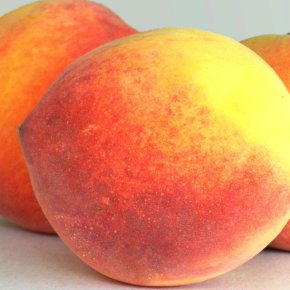
 Today I’d like to do something a little different. Do you remember how, in math classes, your teacher told you to “show your work” in order to get full credit for answering a question? Well, this morning, I’m going to show my work as we go through this sermon together. Rather than just give you the end product of my Bible study, my struggles and false starts, and my attempts to listen to the Holy Spirit, I thought I’d pull back the curtain and show you some of the process.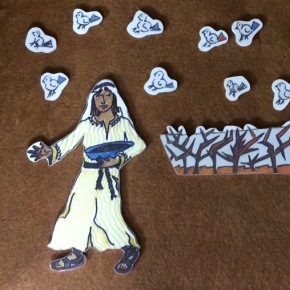
 Okay, to start off: I’m not going to preach this morning about my rapidly approaching fatherhood. But I just want to point out God’s divine sense of humor in us reading in the Hebrew Scripture a story about the birth of twins. Rather, this morning, I’m going to preach about God’s persistence and God’s extravagance. To do this, I’d like to talk about the second of my three days of Godly Play training.
 Where the Wind...