Christmas Sonnets

ChristmasSonnetsOne

The greatest story ever told began
When God breathed deep and bade the light to shine;
Creation burst from Love and Word, then ran
Away and grasped at purpose less divine
Than God would wish or yearn for it. For God
In foolish wisdom wove with freedom’s thread
And gave creation chances to be flawed,
If chance there were to choose the Lord instead.
This freedom came to earth when Eden’s dust
Was poured in human form, but right away
The fruitless choice was made, and broken trust
Turned Eden’s joyful hues to shades of gray.
The freedom God had granted first abused,
When fear and shame were learned and love refused.

Two

With love refused, sad separation reigned:
We littered earth with broken covenants
And chose dark paths to walk and then complained
To God that we were lost beyond all sense.
In longing God would call us to return,
And for a fickle time we would repent.
The cycle thus unleashed: we’d grasp then spurn
The love of God, but God would not relent.
We showed no willingness to come to God
So God in mercy chose to come to us,
As shepherd, comforting with staff and rod,
To teach us sheep again to love and trust.
As love so often does, this love began
When Mary felt a tremor ‘neath her hand.

Three

Her hand leapt up to shield her dazzled eyes
When Gabriel, awash in radiance,
Appeared to her, and much to his surprise,
He saw no fear in Mary’s countenance.
Confusion showed instead on Mary’s face:
She wondered how she ranked as favored one
When her humility would grant no place
As high, yet humble love would bear the Son.
Now God entrusted Mary to decide
If God’s design to walk upon the earth
Would flow through Mary’s womb, thus God relied
On human freedom to approve the birth.
But God chose well: the humble maid said, “Yes,”
And through her love this broken world was blessed.

Four

The world was blessed one night in David’s town,
But so few saw the miracle arrive
That we might wonder whether it came down
At all, or if it simply failed to thrive.
The savior people sought was not a child,
Who nestles helpless at his mother’s breast.
They sought a fighter who like Samson piled
The bodies of the foes he sent to rest.
They sought a soldier who like David led
His troops to bloody victory with ease.
They sought a muscle-bound Messiah bred
To root out rank imperial disease.
So when the unexpected came that night
The people waiting all ignored the light.

Five

The light was fading fast in Bethlehem
When Joseph, hand in hand with Mary, passed
the final house, which closed its doors to them
Like all the rest had done that day. At last
The months of waiting ended with a burst
Of pain that echoed through the darkling gloom;
She knew the birth would now be unrehearsed
And cried to Joseph, “Please go find a room.”
But Joseph would not leave her in the street,
So heaving Mary to his arms he veered
Off down a dusty trail and heard the bleat
Of sheep and goats, and knew a stable neared.
For once, thank God, a door stood open wide,
And breathless, weak, the couple dropped inside.

Six

The couple dropped inside a stable stall,
And Joseph gathered up the fresher hay
While anxious Mary paced from wall to wall
Until the urge to push would not delay.
The universe contracted to the here,
The now, the pain, the prayer, the ancient swell,
The final push, the crystal cry so clear,
The Word made flesh was born — Emmanuel.
The universe expanded once again
As light ascending from within the child,
Reflected in the nighttime sky, and then
The light ignited in a star most wild.
The brilliance shone on heaven and on earth,
Proclaiming God-with-us, the Savior’s birth.

Seven

The Savior’s birth took place, yet no one heard
Until the herald angels praised his name
To shepherds (“lowlife rabble,” many slurred),
And yet for outcasts such as these He came.
When eastern wisdom read the star’s good news,
The magi journeyed west toward the flame;
But Herod welcomed them with bloody ruse,
And yet for immigrants like these He came.
For all creation was the Savior born:
Yet not for wealth, nor fortune, nor for fame,
But for the broken, lost, abandoned, scorned,
And Yes — what Joy — for you and me He came.
The greatest story ever told endures
Oh God, keep telling it till we are yours.

Say “Yes”: A Christmas Pageant

Performed at St. Mark’s in Mystic, CT on Sunday, December 21, 2014
SayYesThis version of the Christmas pageant employs two sets of main characters, one younger and one older. The older versions sit on stools flanking the main action. They stand up to deliver their monologues. During the monologues the younger versions pantomime the action and speak at the end of each speech.

Prologue

NARRATOR

Before the universe existed, there was God. There was no time and no space, but there was God. Then God spoke and Creation came to be. One of the things God created was freedom, which was the ability to say “yes” or “no” of your own free will and not be compelled to answer one way or the other. God yearned with all of God’s heart that the Creation God made would say “yes” to a deep relationship with God its creator. But more often than not, parts of that Creation said, “No.” People said, “No.” We said, “No.”

Saying “No” to relationship with God led people down some dark paths. They dominated each other instead of serving each other in love. Fear ruled the day. And yet God did not give up. God decided to send God’s own Son into this wayward Creation to show us the path back to the God who never broke the relationship like we had done. All God needed was someone to say, “Yes.”

Scene 1: The Annunciation

While the OLDER MARY speaks her monologue, YOUNGER MARY and GABRIEL pantomime their conversation.

OLDER MARY

Until that day, nothing had ever happened to me. I grew up like everyone else in my town. I worked my father’s farm with my brothers and sisters. I watched the sun set. I watched the sun rise. That was life. Even getting engaged to be married to Joseph was just another day. It was expected. I always did what was expected.

Then Gabriel appeared to me, and every day since has been more unexpected than the last. He told me not to be afraid, but there was no need. His presence wasn’t frightening. It was exciting. From the moment he spoke, I felt a quickening in my gut, a hum, a desire finally to discover the person I longed to be.

The angel told me of the son I would have, the heir of David’s throne, the flesh and blood of the Most High God. It all sounded impossible. But Gabriel said nothing is impossible for God. I thought for a moment: I’ve never done anything in my life. I’ve never been anywhere. I’m not special in any way. Why would God choose me?

And that’s when it hit me. God chose me because God knew I would say…

YOUNGER MARY

Yes.

Scene 2: Joseph’s Dream

NARRATOR

Mary said, “Yes,” to the angel. She said, “Yes,” to God’s dream for her life, and that dream became a reality. And as the dream was growing inside her, the angel made another stop.

YOUNGER JOSEPH is fast asleep when GABRIEL stands over him pantomiming speaking.

OLDER JOSEPH

My namesake was a great interpreter of dreams. He saved Egypt during a seven-year famine. He saved his own family, too. I always wondered what it would be like to have that kind of gift. Then one night I found out. My dream didn’t need interpretation, however, because the angel stood before me plain as day, and when he spoke, the words tasted true.

Everyone around me, society at large, even my own father, urged me to get rid of Mary, to dismiss her quietly so as not to cause a fuss. But I couldn’t bring myself to do it. Then the angel told me why. Somehow I knew, even before the angel told me, that the child was special. I didn’t have the words to describe the way I felt until the angel called my son, “Emmanuel.”

GABRIEL departs, and YOUNGER JOSEPH rises from sleep. He join YOUNGER MARY and puts his hand on her pregnant belly.

OLDER JOSEPH

Yes, the joy I felt came from that place, that place of nearness. When I looked at Mary and felt the baby kick, I knew…

YOUNGER JOSEPH

God is with us.

Scene 3: Arrival in Bethlehem

As the NARRATOR speaks, YOUNGER MARY and YOUNGER JOSEPH make their way to Bethlehem.

NARRATOR

Mary spent the first few months of her pregnancy with her cousin Elizabeth. But as the time drew near for the baby to be born, the Empire called for a counting of all the people in their territories. Joseph had to go to Bethlehem to be registered because his ancestors hailed from there. Mary went with him.

OLDER MARY

The waves of pain began weeks before Jesus was born. At first I thought I was going into labor, but Elizabeth assured me it was normal. I learned to live with them, even though they got worse as the day drew near. But that first night in Bethlehem, a different pain hit me, and I knew it was time.

YOUNGER MARY AND YOUNGER JOSEPH pantomime the story being told: breaking into the room, being surrounded by ANIMALS.

OLDER JOSEPH

In desperation, I broke into the backroom of a house to get us out of the cold. The owner’s animals were huddled there. It stunk to high heaven, but at least it was warm. When Mary started to cry out in pain, I thought that we were done for, that the people of the house would drive us back into the night.

The FARMER comes in with a rake. Then the MIDWIFE enters.

OLDER MARY

But they didn’t. The farmer came in brandishing a threshing rake, but he took in what was happening right away and called for his wife. We asked if we could stay, and she said, “Yes.” Turns out she was a midwife. What a blessing from God. Joseph was beside himself. He didn’t know what to do. But she calmed him down, directed him.

OLDER JOSEPH

She put a blanket in my hands and guided them.

OLDER MARY

One last thunderous wave of pain washed through me, and then…

YOUNGER JOSEPH holds the BABY JESUS in his arms.

OLDER JOSEPH

I held my son Jesus in my arms. I held God. And I knew God was holding me.

Scene 4: The Shepherds

The SHEPHERDS and SHEEP cluster in the center aisle.

NARRATOR

The light of the world shining from the baby wasn’t the only light shining that night. In the fields outside Bethlehem, dawn seemed to be breaking impossibly early.

The ANGELS and GABRIEL stand on the first pew and pantomime talking to the SHEPHERDS.

OLDER SHEPHERD

The light grew slowly at first, so we didn’t notice anything out of the ordinary. But then the field was awash in brilliance. It was like an eclipse in reverse. But what I remember more than the light was the song. The angels sang a song of peace. Of peace! How could you sing a song of peace in such a war-torn age? And yet that is what they did.

The SHEPHERDS and SHEEP walk to the Nativity scene and join it. The ANGELS gather around behind the Nativity scene.

We went to find the One of whom the angels sang. And we found him in the dirt, among the animals just like my own children were born. The song of the angels rang in my mind and I sang it for the baby, a lullaby of peace for the Prince of Peace. And I knew he was one of us. And he was here…

YOUNGER SHEPHERD

To make us more like him.

Scene 5: The Magi

The MAGI begin their trek slowly from one side aisle of the church around the back and up the other side aisle. At the side of the church near the lectern, the MAGI meet HEROD, who pantomimes a conversation.

NARRATOR

Not only did Jesus’ own people seek him out. Immigrants from a far off land arrived guided by a star in the heavens. They first met King Herod in Jerusalem, but they knew Herod was not the king they sought.

The MAGI move to the main group and present their gifts.

OLDER MAGUS

We had been searching the stars for a sign of the One who was to come. And when we found the celestial body streaking westward we knew we had to follow. We didn’t know where it would lead. What we didn’t expect, though, was for it to lead us not only across the desert, but deeper into our own hearts. When we met our true King the first time, we felt the inadequacy of the gifts we had brought – the gold, the frankincense, the myrrh. The infant gazes at us, into us, into our hearts. And we knew the gift he truly wanted. And so I gave him not just a box of gold…

YOUNGER MAGUS

I gave him myself.

Epilogue

The OLDER CHARACTERS move to join their YOUNGER SELVES.

NARRATOR

And so God sent God’s only Son to teach people to use their freedom to remain open to God, to say “Yes” to that deep relationship. A few decades later, he would die for his convictions. But then he rose again to show that nothing, not even death, can separate us from God’s love.

OLDER MAGUS

So when you are searching for God…

OLDER JOSEPH

Know that God is always with us…

OLDER SHEPHERD

And when the Prince of Peace calls to you…

OLDER MARY

Say “Yes.”

*  *  *

The Players

(*=tiny speaking part; **=big speaking part)

Little Children
SHEEP
ANIMALS
ANGELS
(BABY JESUS)

Children/Tweens
GABRIEL
YOUNGER MARY*
YOUNGER JOSEPH*
SHEPHERDS (1*)
(HEROD)
FARMER
MIDWIFE
MAGI x3 (1*)

Tweens/Teens
OLDER MARY**
OLDER JOSEPH**
OLDER SHEPHERD**
OLDER MAGUS**
NARRATOR**

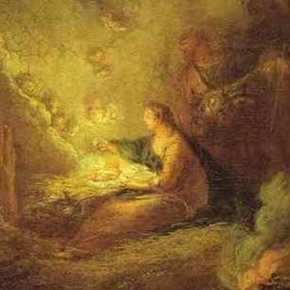
*Artwork: detail from “Birth of Christ” by Antoine Pesne (1745)

Magnify the Lord

(Sermon for Sunday, December 23, 2012 || Advent 4C || Luke 1:39-55)

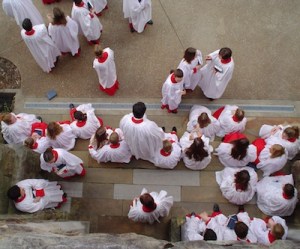
choirWhen I was in college, I never had time to watch TV or play sports or go on wild spur-of-the-moment car trips. I was too busy singing. The University Choir rehearsed four times a week and sang every Sunday morning during the church service. When I joined freshman year, I could barely piece two correctly pitched notes together, but the choir director, God bless him, would take anyone who was willing, including me. Four years and hundreds upon hundreds of hours of singing later, my voice managed to match pitch most of the time, and hey, it didn’t sound too bad.
The choir spent more time on one particular song than any other, a song that has found a special place in my heart. We sang the song once a month at the service of Choral Evensong, and every month we sang a different arrangement. But each arrangement had the same words, and those words always began with “My soul doth magnify the Lord, and my spirit hath rejoiced in God my Savior.”

These are the opening lines of Mary’s song, the Magnificat. We always sang them with the Elizabethan translation (with all the doths and haths) because the best musical versions are set to the old text. I must have sang 20 or 25 different settings during my time at Sewanee, and with each one, a single image from this opening line delved into me and settled deep within. I’d like to share that image with you this morning.

“My soul doth magnify the Lord,” sings Mary. What happens when you use a magnifying glass, like a microscope, perhaps? Say we are back in freshman biology lab and the instructor passes around a tray of slides. You and I (you all are my lab partner for this illustration, by the way)…You and I take one of the slides and pass the tray on to the group beside us. Next you take our pipette and squeeze one tiny drop of clear liquid onto the slide. We hold the slide up to the light and squint. We see nothing but a bit of water on glass.

But then I place the small pane of glass underneath the microscope, and you put your eye to the lens. You click into place the scope marked “30x magnification” and fiddle with the focus dial.  And what was a moment ago just a drop of clear liquid is now a squirming mass of single-celled organisms, each dancing and stroking its way through the ocean that is the drop of water. How could we miss so much life happening in miniature? How could we ever think the drop of water was simply empty, clear liquid?

When we magnify, we take something difficult to see, and we make it more visible. “My soul doth magnify the Lord,” sings Mary. Mary’s soul is the magnifying lens, and she trains her soul on the God who has blessed her with the Christ in her womb. This brings up two questions. First, if God is so big, then why does God need magnification? Second, what is this “soul” Mary uses as her magnifying glass?

Well, to answer the first question, I’ll admit the whole microscope metaphor breaks down when we bring God into it. But the need for magnification persists because, let’s face it, sometimes God is hard to see. How many of us have ever had a time when we looked for God and found next to no evidence of God’s presence? How many of us have cried out to God and felt like our cries have fallen on deaf ears? This past week, in the wake of the Newtown shooting, how many of us have asked the question, “Where is God in all of this?”

It’s so close, so raw that we have no answer for this question—at least, not right now. We have only glimpses. We can only catch God out of the corner of our eye. We can only nibble around the edges of sense. In a month or two, or in a year or ten, I have hope that we will look back on this week and say, “Oh, that’s where you were, God. You were right there all along.” But right now, we have trouble seeing God. And so we need magnification. “My soul doth magnify the Lord,” sings Mary.

The soul is our magnifying glass, which begs the question: what is the soul? Now, this question is a whole other sermon – or possibly a multi-volume dissertation – so we’ll be brief. Please excuse the poetic language I’m about to employ – poetry is really the only way to speak briefly of such things as the soul.

Our souls are the places within us that are continually in contact with God, whether we are aware of the connection or not. The constancy of this connection happens because the soul is the piece of eternity around which God shapes each one of us. Each piece of eternity resonates with the eternal nature of God. The nature of God is also creative, which is why each piece of eternity comes wrapped in a unique, newly created person. The soul, then, is the deepest part of us, the one that makes us who we are and the one that connects us to God. This soul is the lens for our magnification. “My soul doth magnify the Lord,” sings Mary.

When Mary sings this, she signals both her joy that she is in God’s midst and also her willingness to partner with God to make God more fully known. God could easily be fully and visibly present to each of us all the time, but I wonder if the reason God is not lies in God’s desire to make our souls resonate even more fully with God. This resonance happens when we participate in God’s act of making God known, when we make God visible to other people, when we magnify the Lord.

Because the soul is the piece of each of us where our individuality resides, God has given each of us a unique way to magnify God’s presence. Perhaps yours is your passion for ministry with people who have no homes. Perhaps yours is your devotion to your children’s wellbeing. Perhaps yours is your singing voice or your ability to listen to other people’s fears or your overwhelming capacity to see the goodness in all people. Each of these gifts rises up from the cores of our beings, from our souls, and through them we magnify the Lord.

So in the next couple of days, as we celebrate the Incarnation of God’s greatest gift to us, the birth of our Lord Jesus Christ, I invite you to spend some time in conversation with God and perhaps also with a trusted confidant. Ask how your own particular soul might best serve to magnify the Lord. Ask what special gift God packaged with your own unique piece of eternity. Ask how your life can be a reflection of Christ’s Incarnation.

“My soul doth magnify the Lord,” sings Mary. So do each of ours. Thanks be to God.

The Heart’s Square Footage

(Sermon for Sunday, January 1, 2012 || Feast of the Holy Name || Luke 2:15-21; Philippians 2:5-11)

At the end of this sermon, I’m going to invite you to make a New Year’s resolution, but don’t worry because you only have to fulfill the resolution for a week, which I think is the standard longevity of such things anyway.

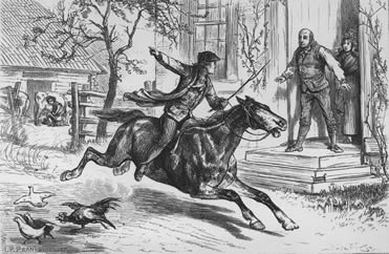
But first I have a couple of wondering questions that this morning’s Gospel calls to mind. We read that the shepherds “made known what had been told them about this child.” I’m wondering to whom did they make this known? I’m really curious. Did they run through Bethlehem Paul Revere style (“The messiah is coming! The messiah is coming!”)? Did they go to the local census bureau and tell them to add another Israelite to the rolls? Did they go to the religious leaders and tell them that their hopes had been fulfilled?

In fine Godly Play style, I’m just going to let that first question hang in the air while I pose a second one. I’m wondering what kind of reaction the shepherds received. Luke tells us “all who heard [the shepherds’ testimony] were amazed at what the shepherds told them.” But “amazed” is neither a positive nor a negative word. As far as the shepherds are concerned, I suspect that they received quite a few responses that went along the lines of: “That’s amazing; ridiculous, but amazing.” Others probably said, “Get off my front stoop, you mangy shepherds.”

In the end, the narrative gives us single answers to both these wondering questions. While the shepherds surely told a wide array of people and received a wide array of amazed responses, we are privy to only one, and that is Mary’s. The shepherds burst in on the exhausted new parents with their witness to the angel’s words about the infant. The angel had said, “I am bringing you good news of great joy for all the people: to you is born this day in the city of David a Savior, who is the Messiah, the Lord.” The shepherds proclaim this good news to Mary and Joseph. And “Mary treasure[s] all these words and ponder[s] them in her heart.”

Notice what is happening here with Mary’s response to the shepherds’ news. For nine months, since the angel appeared to her on that fateful day, Mary has carried within her the Incarnate Word. She has nurtured in her womb the physical embodiment of God’s good news to the world. She has felt the Son of God kick. Then, on the night we celebrated last week, she delivers him. Jesus is born to the rest of the world, and Mary’s womb is empty once again.

And yet, even though her womb is now empty, is her body void of the Word of God? Thanks to the shepherds: No. They bring the first message of the Gospel back to Mary, and she fills herself with the good news. She treasures their words in her heart as she had so recently treasured the Word in her womb.

Each of us bears the Gospel inside of us. The good news of Jesus Christ is treasure hidden in our hearts waiting to be shared. But our hearts are also home to all of the boxes and baggage and bulk that accumulate over lifetimes of focusing our attention away from the things that really matter, away from God and loving relationships. Our hearts are storage units for all of our misplaced priorities, inflated egos, broken promises, habituated distrust, forgotten loyalty, and shackling fears. These things clutter our hearts and leave less room for the good news of Jesus Christ to dwell.

Mary’s brave agreement to carry the Christ child makes a space within her, and God fills her emptiness with the embodiment of this good news. In today’s passage from the Letter to the Philippians, Paul tells us of another emptying, one that the Word made flesh accomplished in order to inhabit Mary’s womb. Paul says of Jesus: “Though he was in the form of God, [he] did not regard equality with God as something to be exploited, but emptied himself, taking the form of a slave, being born in human likeness.”

The Greek word translated “something to be exploited” might be better translated as “something to be grasped” or even “something to be hoarded.” Even though he was in the form of God, Jesus let go of his station. Even though he was part of all the might and majesty and magnificence of God, he did not hoard them. Even though he shared the most precious thing in the universe — equality with God — he shared himself with us by emptying himself; by taking on the form of a slave; by filling Mary’s empty womb and being born in human likeness.

All this happened because Jesus was willing to let go of his grasp on his divine form. All this happened because Jesus refused to hoard the incomprehensible harmony of light and love and grace that is our God. All this happened because Jesus emptied himself. And Jesus emptied himself to fill Mary’s emptiness, to fill our emptiness.

So the question is: how empty are we? How much space within our hearts is left for the good news of Jesus Christ to fill?

If you’re anything like me, then the boxes and baggage and bulk take up a majority of your heart’s square footage. But we can begin to clear away this accumulation by resonating with Jesus’ own self-emptying and echoing Mary’s assent to be filled with God. The resulting emptiness is unlike any other instance of emptiness out there. This is not the emptiness of a bare pantry or a sock drawer on laundry day. This is purposeful emptiness, holy emptiness. This holy emptiness makes room for the grace of God to expand within us. Our internal storage units, once the depositories for those misplaced priorities and shackling fears, transform into the sanctuaries they were always meant to be. The emptier we become, the greater is our opportunity to discover true fullness.

This wonderful paradox is at the heart of our life of faith. As we begin the slow process of self-emptying, we realize that God has been at work in us all along: breaking down the boxes, removing the baggage, and shaving off the bulk. When we, like Mary and Jesus, empty ourselves, we find ourselves ready to respond to God. We are eager to serve others. We are prepared to give of ourselves because we know the fullness of God expanding within us has no bounds.

I invite you to join me in a New Year’s resolution this week. Each night before you go to sleep, focus your mind and heart in prayer. Identify something in your life that is taking up too much square footage within you, that is cluttering your heart. Perhaps this something is trouble at work or doubt about your financial future or concern for a loved one. Give this something to God in prayer. Ask God to inhabit the space vacated by this offering. Do this every night. Each time give something else to God. Practicing this holy emptiness will allow more space for the good news of Jesus Christ to breathe and move and dance within you. Soon you will empty yourself of enough clutter to notice that God has been at work in you from the beginning, and you will be able to dance along.