We come this morning –
Like empty pitchers to a full fountain,
With no merits of our own.
O Lord – open up a window of heaven,
And lean out far over the battlements of glory,
And listen this morning. (James Weldon Johnson)
…Listening In…
Listen, I’m telling you a secret: all of us won’t die, but we will all be changed— in an instant, in the blink of an eye, at the final trumpet. (1 Corinthians 15:51-52; context)
…Filling Up…
This Lent, we are exploring our faith by running through the alphabet. Today, “A” is for ashes.
“Ashes to ashes, dust to dust,” the priest says as he or she scrapes two lines of grit on the forehead. Two lines of soot, of the debris that’s left after the fire is gone. Now, the fire consumes, but it does not annihilate. The fire converts the material fuel into energy and burns with heat and light. When it dies out, the ash remains. The ash is the remnant of the material, the leftover stuff that did not change from matter into energy.
This is the symbol of the beginning of Lent, the season in which we recall all the ways we have fallen short of our callings as human beings, in which we recall why we need Christ in the first place. The two lines of ash make a cross, a device of torture and death that Christ changed into a symbol of hope and life. The keyword here is change.
The fire changes the fuel into energy and leaves the ashes. We take those ashes and make the sign of the cross on our foreheads. In the same way, walking with Christ changes us. We burn with the light of Christ. We burn with the energy that Jesus infuses into our lives. This burning separates all the pieces of us that God can use from the ash of selfishness, pride, and domination. Through the mercy and grace of God, as we burn, we leave behind this ash and we are changed.
…Praying For…
Dear God, you provide the spark that gets our fires going. Help me to burn brightly for you and to participate with you in the removing of the ash from my life. In the name of Jesus Christ I pray. Amen.
…Sending Out…
I leave this moment with you, God, taking hope in the overarching reality that you are the Alpha and the Omega, the beginning and the end.
(Sermon for Sunday, March 13, 2011 || Lent 1, Year A || Matthew 4:1-11)
At dinnertimes growing up, I was often accused of having “a hollow leg.” I kept piling mashed potatoes on my plate and polishing them off and by the time I was on my third helping, my grandmother would be commenting on the vacancy in my lower extremities. In eighth grade, I weighed all of 85 pounds soaking wet, and still, I could put away the food. It has to be going somewhere, my relations would say. “He must have a hollow leg.”
"Close Encounters of the Third Kind" (1977)
During my overly literal early years, this commentary on my anatomy confused me terribly. Both of my legs seemed full of bone, ligaments, and muscle tissue. How could I have a hollow leg? And even if I did, wouldn’t the appendage fill up with mashed potatoes over the course of a few meals? Over time, I learned about metaphor and imagery, so I stopped wondering about the mutant connection between my stomach and leg. Then sophomore year of high school and my growth spurt hit simultaneously. My already ravenous appetite doubled, and my mother began saying that I had not one, but two hollow legs.
Every day, I filled myself up with carbs and fruit and sweets and the odd vegetable. And the next day, I had to fill up again. My hollow legs got longer, which was a good thing, considering all the food I was packing into them. My metabolism was so high that I often found myself parked in front of the refrigerator half an hour after dinner looking for a post-prandial snack.
In our society, we consume as if we have not only hollow legs, but hollow arms and hollow torsos, not to mention, hollow heads. We fill ourselves up with fast food and fast cars, all the while buying stuff that we tell ourselves we need, but we really don’t. We fill ourselves up with anxiety over making sure our lives and livelihoods are secure, all the while ignoring the vast majority of people who will never have security. We fill ourselves up with the sensational, yet banal, details of the lives of the rich and famous, all the while daydreaming about what we would do if the paparazzi followed us into a restaurant.
We fill ourselves up by hoarding stuff, by worrying about our security, by coveting fame. We fill ourselves up until there’s no room left within us for anything that we ourselves didn’t squash in there, until there’s no room left within us for God.
In the Gospel reading this morning, the Holy Spirit leads Jesus into the wilderness immediately following his baptism. After more than a month in the wilderness, Jesus meets the devil. And the devil can’t pass up such a juicy opportunity for temptation.
“See that rock over there,” says the tempter. “I bet you could turn that rock into bread and fill yourself up.”
“See the ground way below,” says the tempter. “I bet you could jump and be secure in the arms of angels who would never let you hurt even your foot.”
“See the kingdoms spread all over the world,” says the tempter. “I bet you’d be the most famous ruler of those kingdoms who ever lived if you first swore fealty to me.”
These three attempts at temptation are the industry standard. Worrying about getting stuff, getting security, and getting fame – they’ve worked for centuries, thinks the devil. Surely, they will work on this Jesus fellow. Not to mention, Jesus has been out in this wilderness for forty days. I’ve got him right where I want him, thinks the devil. Surely, the industry standard temptations about stuff, security, and fame will work on a guy who has been living out in the elements alone with no food for forty days!
Of course, the industry standard temptations fail. Jesus isn’t worried about getting stuff or being secure or finding fame. Why not? Well, the easy answer is that Jesus is the Son of God and therefore more than a match for temptation. But that’s not much help to you and me, so try this on for size. Rather than being a benefit to the devil in the devil’s attempted temptation, Jesus’ forty days in the wilderness actually help not the tempter, but Jesus himself.
You see, Jesus wasn’t just killing time during those forty days. He wasn’t twiddling his thumbs waiting for the devil to turn up. Jesus was fasting.
A fast is a way to make a space, to open up a hole within ourselves. A fast is an active and difficult denial of something that has influence over us (traditionally food, though fasts certainly are not limited to that area). When we fast, we forego the things that we usually use to fill us up, the things that we depend on to keep us going. And when we cease to fill ourselves up with all the junk of the world or all the anxiety about our own security or all our envy of the famous – when we cease to fill ourselves up with these things, we make room within ourselves for God.
Fasting intentionally opens up a hole for God to fill. When Leah and I moved into our new place a few weeks ago, we had boxes piled up all over the living room and dining room floors. But each day, we unpacked a bit and tidied up a bit, and now, we can walk around the house unhindered by all our stuff. This is what fasting does for us. When we clear away the rubbish that has piled up in our interior selves, we make a space for God to come in and dwell. And the more interior square footage we devote to God, the better we will be able to listen and respond to God’s movement in our lives.
This is just how Jesus fends off the devil in the wilderness. After forty days of fasting, he’s not empty, but full – full of God. Notice that each time the devil attempts a temptation, Jesus dredges up from within himself words of scripture that speak to the believer’s relationship with God.
“Bread alone can’t sustain you,” Jesus says. “But every word that God speaks gives sustenance to creation.”
“I’m not going to jump off the temple,” Jesus says. “I don’t need to test God to trust God.”
“I’m not going to bow down to you,” Jesus says. “I serve God, and only God instills in me the desire to worship.”
Jesus combats the industry standard temptations of stuff, security, and fame. He beats off the tempter by filling himself up with God. And he fills himself up with God by emptying himself through fasting. During our own forty days this Lent, how will we make spaces within us for God? How can we clear away the rubbish so that God can move in and walk around? We can make a start by choosing to fast.
If you tend to fill yourself up with stuff you don’t really need, then don’t buy anything beyond basic necessity. If you tend to fill yourself up with worry about the security of your livelihood, then stop and pray when you find anxiety setting in. If you tend to fill yourself up with desire to live as the rich and famous do, then skip the grocery aisle magazine racks and E! Entertainment Television for the next six weeks.
As you deny yourself the things that normally fill you up, actively invite God to enter the newly cleared space. Choose to fast. Clear away the rubbish, hollow out your insides, and give God a place to fill.
Americans are rarely a self-reflective people. We have eyes only for result and effect, caring little for process and cause. We seek to assign blame, caring little for our own culpability. We repeat the mistakes of the past, caring little for the lessons those mistakes teach. Never look back. Never let ‘em see you bleed. Never stop to think or the world will pass you by.
Living in this results-driven world is, at the same time, both exceedingly difficult and quite easy. It’s difficult because true joy, the fuel for any fruitful life, is a scarce commodity. Joy happens during not after, and in a results-oriented society, the during is dismissed as superfluous. But this dismissal is why the results-driven life is also quite easy. You crop half of life away. The journey becomes unimportant: only the destination matters. How easy would a test be if you only had to score a 50% to pass?
Self-reflection makes life hard, but it also allows us to recognize that joy abounds, poised to infuse our lives with meaning. Because we are such poor practitioners of self-reflection and because our culture tells us not to take time for such a revealingly honest enterprise, we need a swift kick in the trousers to boot us from the grasping current of the results-driven half-life.
In the Church, this swift-kick-in-the-trousers is called the season of Lent. “Lent” is an old translation of the Latin word quadragesima, which simply means “forty days.” Forty days is a significant period of time in the Bible: Noah, Moses, and Elijah all had forty days of something –flooding, fasting, sitting around with God on the mountaintop. Jesus spent forty days in the desert, during which Satan tempted him. Begun this year on February 25 (on the fast the church names “Ash Wednesday”) Lent continues until the day before Easter. Historically, the season of Lent was the period of time that people used to prepare for baptism, which took place at the Great Vigil of Easter on Easter Eve.
During these forty days that bring us to Easter, we examine our lives and discern how attuned to God’s movement we are. We pray for God to create in us clean hearts and renew right spirits within us, as Psalm 51 says. We rededicate ourselves to following Christ and wonder how last year’s dedication faded away. We slow down and turn our thoughts inward. How have my actions and inactions contributed to the brokenness in the world? To what have I enslaved myself? Where is my joy and freedom? Do I really want to follow Christ?
When we enter this period of self-reflection, when we honestly answer questions such as these, it often becomes apparent just how skin deep and results-oriented we’ve become. The season of Lent helps us see the error in statements such as “It’s only cheating if you get caught” and “The ends justify the means.” Living a full life – not a half-life of results only – means valuing the moral fortitude that counters wanton opportunism and caring about how things are accomplished, not just that they are. Observing Lent means taking a hard look at ourselves and borrowing enough strength from God to be capable of seeing those festering things that we usually ignore. Then we borrow enough faith from God to know that God will help us change and will reawaken within us those faculties of hope and love that have long lay dormant.
I invite you to turn your gaze inward during this season of Lent and discover the true joy that comes from a full life lived in the love of God.
* This post began its life as an article in my local newspaper.
For many years, I became queasy at the thought of having ashes scraped across my forehead — not because they are a reminder of my own mortality, not because I dislike being called to repent, but because I couldn’t square the action with Jesus’ command in the Gospel for the day. In the middle of the Sermon on the Mount, Jesus takes to task those who do things merely for show rather than for dedicated spiritual discipline. “Beware of practicing your piety before others in order to be seen by them,” he says. Don’t sound a trumpet when you give alms. Don’t pray ostentatiously on street corners so others will see you. Don’t disfigure your face when you fast. Give alms, pray, and fast in secret, “and your father who sees in secret will reward you.”
Don’t disfigure your face. These words stuck in my mind while walking to the altar rail, while watching the priest’s trembling thumb touch the powder, while feeling the gritty scrape first vertical then horizontal on my forehead, like sooty sandpaper. Why are we disfiguring our faces when Jesus just told us not to?!
I was preparing a children’s sermon when I realized I had it all wrong. As far back as I can remember, I had not seen the ashes as anything other than a disfigurement, a liturgically pretentious sign that I was a pious person. Everything changed when I tried to explain Lent to a group of five-year-olds.
“Did you know that you have a cross on your forehead,” I asked, arching my eyebrows as high as they could go. They all looked back at me with those funny, squinched up faces that kids make when they are quizzical. Several shook their heads emphatically. “It’s true,” I said, “but the cross on your forehead is invisible.”
That got their attention. They began looking at each other’s foreheads. I continued, “When you were baptized, a priest took some oil and made a cross right here” — I demonstrated on myself — “and said, ‘You are sealed by the Holy Spirit in Baptism and marked as Christ’s own forever.’
“That cross is still there, but you can’t really see it. It’s a reminder that you belong to God and that God loves you very much.” They nodded, open-mouthed. “Today is a special day because today we are going to use some special dust to make that cross appear on your foreheads again.”
On Ash Wednesday, we don’t disfigure our faces so others can see how pious we are. In fact, it’s just the opposite. By making visible again the cross that we received at Baptism, we acknowledge our impiety, our lack of repentance, our apathy to the suffering in the world. The renewed visiblity of our baptismal crosses indicts us for our indifference to our baptismal promises.
We look in the mirror and see a pair of lines, crude charcoal calligraphy. And we remember what it means to be a follower of Christ, to be sealed by the Holy Spirit and marked as Christ’s own forever. We remember that we have only a limited time on this earth to make a difference in the lives of those we meet, to show forth the love and light of God to a world too familiar with darkness. Disfigurementhappens when we rub the ashes away and forget that there is still a cross written on our foreheads.
On Ash Wednesday we make that cross visible, if but for a brief time. This small, crudely drawn cross reminds us of another cross, the one that Jesus calls his followers to pick up when they decide to follow him. All too often, this cross also fades into invisibility, a wooden victim of our lethargy and misplaced priorities. During the season of Lent, we are given the opportunity to discern how to make that cross visible again.

 …Opening To…
 But this dismissal is why the results-driven life is also quite easy. You crop half of life away. The journey becomes unimportant: only the destination matters. How easy would a test be if you only had to score a 50% to pass?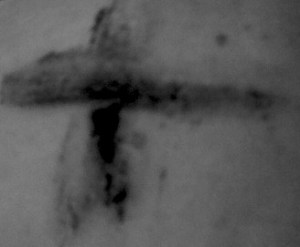
 Where the Wind...