Industry Standard Temptation

Sermon for Sunday, March 9, 2014 || Lent 1A || Matthew 4:1-11

If you asked a certain subset of people to describe in one word how they relate to you, what might that word be? Your child might say, “Daddy” or “Mommy.” Your wife might say, “Husband.” Your husband might say, “Wife.” Your boss might say, “Employee.” But there’s one description that tends to override all the others, especially here in the United States. That description is the one given you by the Marketing Department. That description is “Consumer.”

5guys(featured)We consume about a quarter of the world’s energy, and yet we make up only one twentieth of the world’s population. Several of our most popular ways to die involve over-consumption of food or drink or drugs. I mean, have you seen how they deliver French fries at the restaurant Five Guys? They fill a cup with a fairly generous, but not outrageous, serving and then dump three or four more scoops into your bag! Who could possibly eat all those fries?

In our society, we fill ourselves up with fast food and fast cars, all the while buying stuff that we tell ourselves we need, but we really don’t. We fill ourselves up with anxiety over making sure our lives and livelihoods are secure, all the while ignoring the vast majority of people who will never have security. And we fill ourselves up with the sensational, yet banal, details of the lives of the rich and famous, all the while daydreaming about what we would do if the paparazzi followed us into a restaurant.

We fill ourselves up by hoarding stuff, by worrying about our security, by coveting fame. We fill ourselves up until there’s no room left within us for anything that we ourselves didn’t squash in there, until there’s no room left within us for God.

In the Gospel reading this morning, the Holy Spirit leads Jesus into the wilderness immediately following his baptism. After more than a month in the wilderness, Jesus meets the devil. And the devil can’t pass up such a juicy opportunity for temptation.

“See that rock over there,” says the tempter. “I bet you could turn that rock into bread and fill yourself up.”

“See the ground way below,” says the tempter. “I bet you could jump and be secure in the arms of angels who would never let you hurt even your foot.”

“See the kingdoms spread all over the world,” says the tempter. “I bet you’d be the most famous ruler of those kingdoms who ever lived if you first swore fealty to me.”

These three attempts at temptation make up the industry standard. Worrying about getting stuff, getting security, and getting fame – they’ve worked for centuries, thinks the devil. Surely, they will work on this Jesus fellow. Not to mention, Jesus has been out in this wilderness for forty days. I’ve got him right where I want him, thinks the devil. Surely, the industry standard temptations about stuff, security, and fame will work on a guy who has been living out in the elements alone with no food for forty days!

Of course, the industry standard temptations fail. Jesus isn’t worried about getting stuff or being secure or finding fame. Why not? Well, the devil has misinterpreted Jesus’ time in the wilderness. Rather than being a benefit to the devil in the tempter’s scheme, Jesus’ forty days in the wilderness help not the tempter, but Jesus himself.

You see, Jesus wasn’t just killing time during those forty days. He wasn’t twiddling his thumbs waiting for the devil to turn up. Jesus was fasting.

A fast is a way to make a space, to open up a hole within ourselves. A fast is an active and difficult denial of something that has influence over us (traditionally food, though fasts certainly are not limited to that area). When we fast, we forego the things that we usually use to fill us up, the things that we mistakenly depend on to keep us going. And when we cease to fill ourselves up with all the junk of the world and all the anxiety about our own security and all our envy of the famous – when we cease to fill ourselves up with these things, we make room within ourselves for God.

Fasting intentionally opens up a hole for God to fill. When we clear away the rubbish that has piled up in our interior selves, we make a space for God to come in and dwell. And the more interior square footage we devote to God, the better we will be able to listen and respond to God’s movement in our lives.

This is just how Jesus fends off the devil in the wilderness. After forty days of fasting, he’s not empty, but full – full of God. Notice that each time the tempter goes on offense, Jesus dredges up from within himself words of scripture that speak to the believer’s relationship with God.

“Bread alone can’t sustain you,” Jesus says. “But every word that God speaks gives sustenance to creation.”

“I’m not going to jump off the temple,” Jesus says. “I don’t need to test God to trust God.”

“I’m not going to bow down to you,” Jesus says. “I serve God, and only God instills in me the desire to worship.”

Jesus combats the industry standard temptations of stuff, security, and fame. He beats off the tempter by filling himself up with God. And he fills himself up with God by emptying himself through fasting. During our own forty days this Lent, how will we make spaces within us for God? How can we clear away the rubbish so that God can move in and walk around? We can make a start by choosing to fast.

If you tend to fill yourself up with stuff you don’t really need, then promise not to buy anything beyond basic necessity and you may find basic necessity is more than enough. If you tend to fill yourself up with worry about the security of your livelihood, then stop and pray when you find anxiety setting in and you may find new sources of blessing. If you tend to fill yourself up with desire to live as the rich and famous do, then skip the grocery aisle magazine racks and you may find enough fame within your own close circle.

As you deny yourself the things that normally fill you up, actively invite God to enter the newly cleared space. Choose to fast. Clear away the rubbish, hollow out your insides, and give God a place to fill.

True Purpose

Sermon for Sunday, February 23, 2014 || Epiphany 7A || Matthew 5:38-48

dolphin“Be perfect, therefore, as your heavenly Father is perfect.” Sounds like a tall order, doesn’t it? Sounds like naïve idealism at worst and hopeless hyperbole at best. Sounds like one more command of Jesus that we could never live up to. I mean, it’s hard enough turning the other cheek and walking the extra mile and loving our enemies, but now he wants us to be perfect on top of all of that? Doesn’t he understand that to be perfect there could never have been a time when one wasn’t already perfect? Doesn’t he understand that one cannot become perfect? Either you are or you’re not…and we’re…not.
I don’t mean to be sound discouraging right off the bat, but I bet that many of you were thinking something along those lines after I finished reading the Gospel. Like dutiful Episcopalians, you still said, “Praise to you, Lord Christ” in response to my, “The Gospel of the Lord.” But I’m sure some of you were thinking instead: “What in the world do you mean, Lord Christ?”

Let’s face it. Sometimes Jesus says things that we don’t understand. Sometimes he says things that make us uncomfortable. And sometimes he says exactly the thing we need to hear, the words our hearts have been longing for. Every so often, he scores a hat trick – he’ll say something we don’t understand that makes us feel uncomfortable, and yet those same words end up being precisely what we need to hear.

Such is the case, I think, with these words: “Be perfect, therefore, as your heavenly Father is perfect.” Let’s stick with these words for the rest of this sermon, despite our possible discomfort, and perhaps in the end we will hear them with new ears.

English translations of the Bible going back to the King James Version in the early 1600s have used the word “perfect” to render the original Greek. The trouble is the Greek word is better translated, not as “perfection,” but as “maturation” or “culmination” or “completeness” or “fulfillment.”

Try this translation on for size: “Be complete, find wholeness, therefore, as your heavenly Father is the source of all wholeness.” Sounds a little more doable, doesn’t it?

Or how about this one: “Be fulfilled in your true purpose, as your heavenly Father is the culmination of all true purposes.”

When we render Jesus words like this, we hear not a command, but a desire, a deep yearning of our Lord for us. Jesus isn’t commanding us to “be perfect” like you might command a dog to roll over. No. Jesus is offering us a vision of the life he invites us to take part in.

“Be fulfilled in your true purpose, as your heavenly Father is the culmination of all true purposes.”

This vision – this invitation, really – is Jesus’ dream of bringing humanity back into full communion with God. Somewhere along the path, humanity forgot its true purpose. Humanity forgot what God designed it to do and be. Humanity forgot, and we are the legacy of this forgetting. All that is wrong with civilization – from the global (environmental degradation, war, poverty, hunger) to the personal (domestic strife, substance abuse, body images issues) – all that is wrong with civilization can trace its roots back to people deliberately or unintentionally failing to fulfill the purpose God gave us.

This purpose is simple: love God and love each other. The other includes the person in the next booth at the restaurant, the person on the street with the cardboard sign, the person across the ocean in the refugee camp, not to mention the earth we walk on and everything else that calls this earth home. And the love I’m talking about here is not simply emotional fondness. Here love is multifaceted: love is the catalyst for service, love is the connection between the server and the served, and love is the affection generated in the act of serving, which perpetuates a virtuous cycle. When we look on the other as a subject to be loved, and not as an object to be possessed, we take a step toward the true purpose that God instilled in us along with God’s image and likeness.

When we participate in Jesus’ vision “to be perfect,” we rediscover this true purpose and we find fulfillment in the love we share and the actions such love spurs. And I promise you God delights in this fulfillment in the same way God delights in the dolphin that soars out of the water or the tree that grows straight and tall and bears radiant, delicious fruit. God delights in us always, but we reflect that delight when we live into the true purpose for which God created us.

Here’s what I mean. Have you ever had a moment when you realized you were exactly where you were supposed to be? You took a step outside your body and a thought struck you like a bolt of lightning that your whole life was preparing you for this one, singular moment.

Perhaps you were in the delivery room breathing along with your wife. Her hand squeezed yours so hard that you thought every bone in your fingers was crushed. Finally, at long last, the baby arrived and you gathered the tiny life into your arms and he opened his eyes. They were brown flecked with gold just like yours. And in that moment, you realized your whole life was hurtling forward to that day, to that room, to that new heart beating next to yours. The love you felt in that moment was the fulfillment of your true purpose. It was your perfection.

Perhaps you were deployed to Afghanistan, to one of the forward posts, just you and a dozen other troops in a small fort on a hill in the middle of nowhere. One day you were out on patrol and without warning the wind was full of enemy fire. The staff sergeant next to you took a bullet to the leg in the first wave. It sliced through his artery and the blood flowed too fast. You were pinned down behind a crumbling wall, but still you fashioned a tourniquet from your backpack strap. You flung him over your shoulder, and disregarding the rounds whizzing by, you hiked back to base. He lost the leg but kept his life. And during that hike, you realized your whole life was hurtling forward to that day, to that service, to that comrade-in-arms who needed your help. The service you gave in that moment was the fulfillment of your true purpose. It was your perfection.

Perhaps you can think of a moment like that in your own life. Perhaps you can remember a moment when you realized your whole life was hurtling to that day, to that place, to that person, to that love and service bursting to be fulfilled.

Now wouldn’t it be extraordinary if those moments were the norm and not the exception? When we recognize and step into Jesus’ vision for us, we discover more and more how God is charting the trajectory of our lives, how God is creating opportunities for us to fulfill our true purpose – to love God and love each other.

So be perfect, therefore, as your heavenly Father is perfect. Be fulfilled in your true purpose, as your heavenly Father is the culmination of all true purposes. Love God. Love each other. And start to notice how God is preparing you for each moment of your life – each moment in which we have the opportunity to love, to serve, to be true to the purpose for which we were designed.

*Art Credit: Lomvi2, commons.wikimedia.org

What Kind of Life?

Sermon for Sunday, February, 16, 2014 || Epiphany 6A || Deuteronomy 30:15-20; Matthew 5:21-37

whatkindoflifesquareWhen I was a little kid, I wanted to grow up to be a fireman. Well, a fireman and a garbage man. Well, a fireman, a garbage man, and a baseball player. Well, a fireman, a garbage man, a baseball player, and a paleontologist. I wanted to be a baseball playing, dinosaur-fossil finding, fire fighting trash collector. And you know what? That didn’t happen. Something even better happened. I got to be someone whose job it is to walk with people during the most important moments of their lives and point out God’s movement in those moments. I got to be a priest. And I got to be your priest.

But getting back to my childhood’s occupational dreams, I can tell you one absolutely essential thing about them, which is this: My parents never quashed them. They never told me to stop dreaming. They never told me I was being silly or that I couldn’t, in fact, be a baseball playing, dinosaur-fossil finding, fire fighting trash collector. Instead, they encouraged me to reach for the stars and to fuel my dreams with all the fodder of my boundless imagination. When so-called “reality” set in years later, I didn’t feel betrayed by this encouragement, as one might expect; rather, the early training in dreaming big helped me retain the capacity to imagine more and better possibilities than so-called “reality” presented.

Such a capacity involves consciously making choices about what kind of life you want to live. Do you want to live a small life boxed in by the scarcity inherent in subscribing only to the notion of the currently possible? Or do you want to live a full life unbounded due to the abundance inherent in trusting in the creativity of our God? What kind of life do you want to live?

This is the question that both Moses and Jesus address today in our readings from the book of Deuteronomy and the Gospel according to Matthew. And this is the question they challenge us with today. What kind of life do you want to live?

Moses has stood on the mountaintop and looked on the vista of the Promised Land. But he knows he himself will never get there. He’s about to die, but before he does, he has a few more words to say to the people of Israel who have been walking with him through the desert for forty years. These words make up the book of Deuteronomy: Moses’ last speech, the last piece of the law, the restatement of the Ten Commandments and more, and these words today, in which Moses gives the people a choice:

“See, I have set before you today life and prosperity, death and adversity,” he says. “…I call heaven and earth to witness against you today that I have set before you life and death, blessings and curses…” And then Moses, with all the fervor of someone who knows his time is short and his words precious, implores the people, saying: “Choose life so that you and your descendants may live, loving the LORD your God, obeying him, and holding fast to him.”

Well, we know those people and their descendants had a, shall we say, checkered history with this choice. Sometimes they listened to Moses’ final invitation, but more often than not, they didn’t. The rest of the Hebrew Scriptures trace the trajectory of this choice and of God’s constant and persistent calls through the prophets to renew it and once again “choose life.”

When Moses issued the original invitation before his death, he was speaking about all the fullness of life with God and one another that the Law was designed to promote. But over the centuries, people interpreted and reinterpreted the Law into smaller and smaller boxes. By the time of Jesus, the Law of Moses had been parsed to within an inch of its life. The people, against whom Jesus spoke, had gotten lost in the minute details of the Law and forgotten its original intent to promote the fullness of life, the dream that God always had for God’s people.

And so we watch Jesus ascend the mountain, sit down, and begin a long sermon. He speaks of blessings for people not normally considered blessed (what we call the “Beatitudes”). He speaks of the salt of the earth and the light of the world. And then he says something curious, which we read last week. He says this: “Do not think that I have come to abolish the law or the prophets; I have come not to abolish but to fulfill.”

To fulfill the law. To complete it. To make it what it was always designed to be. In his fulfillment of the law, Jesus takes one step past Moses’ original choice. For Jesus, the choice isn’t simply between life and death because he has already chosen life for each of us. His choice is what kind of life.

And now we hear Jesus offer examples of the kinds of life we might lead. In each one, he takes a piece of the law and expands it, deepens it. Not just “do not murder,” but also, be reconciled to those you are estranged from. Not just “do not commit adultery,” but also, act with virtue and fidelity in all things. Remain in relationship rather than looking for easy outs. Speak truthfully always rather than trying to convince people through deceptive oaths.

In each example, Jesus offers two paths to choose: division or reconciliation? Depravity or virtue? Isolation or relationship? Dishonesty or truth? Each choice builds the kind of life we lead. Our lives can be small – empty of meaningful relationships, bursting with regret, littered with the collateral damage of strife, envy, and enmity. Or our lives can be full of all the good things God yearns to share with us – the abundance of lives lived with and for others, the joy of trusting and being trustworthy, the simple grace of acting virtuously.

Just a quick aside—I know Jesus’ language seems awfully harsh, and, in reality, it is. But we have to remember that he lived in a world where punishments included actually having body parts chopped off and where divorces could be handed out for baking mishaps. While some of his words might be hard for us to digest, the seriousness of his tone and the weight of the message can still sink in.

This message offers us the expansive dream that God invites us to be a part of – the kind of dream where someone might actually grow up to be a baseball playing, dinosaur-fossil finding, fire fighting trash collector. Or more to the point, the kind of dream where someone might actually choose the abundance of reconciliation, virtue, positive relationship, and trust.

If we are to take a step today to not only choose life, but choose the abundant life that Christ offers us, what might we do? Let’s start with a baby step. A mentor of mine, the Rev. Dr. David Lose, suggests this: think of two relationships you currently have. One should be the most wonderful, fruitful, mutual, and loving relationship of your life. The other should be one that’s on the brink of failure because of neglect or hurt feelings or betrayal. Take both of these relationships to God in prayer. Ask God to help you see what sustains and strengthens the first one. Why is that relationship important to you? What about it do you have to thank God? For the second relationship, don’t try to place blame, but instead hold the other person up in prayer to God. Offer God the brokenness of the relationship as something that can’t be mended without God’s help. What actions and choices can you make to move that second relationship to better health?

As you pray about these two relationships, remember the choice that Jesus puts before us today. What kind of life do you want to lead? A life full of reconciliation, virtue, uplifting relationships, and trust? A life of abundance? Yes, all that and more. A life of dreams that are so big that only God can contain them.

God’s Glass

Sermon for Sunday, February 9, 2014 || Epiphany 5A || Isaiah 58:1-9a

Before I became a rector, I rarely had the opportunity to preach two sermons in a row. At my last church, my rector and I alternated, and we only got two in a row if the other was on vacation. So I’ve never really had much of a chance to preach a sequel to a sermon. But today, that’s exactly what I plan to do. So, just in case you weren’t here last week, let’s recap.

Previously on The Sermon at St. Mark’s, we listened in to Simeon’s lullaby as he held the infant Christ and named him the “light to enlighten the nations.” I invited you to join me in a mission: to bear witness to the light of Christ and to be vessels of that same light. To see the light and to be the light. We finished the sermon with three words to help us remember this mission: Christof’s command to “cue the sun” from the film The Truman Show.

We also went through a few small examples of what being the light might look like: being friendly in the grocery line, standing up for a victim of bullying, welcoming someone to church. Of course, I didn’t mean to diminish what it means to be the light of Christ by offering such small examples; rather, by the accumulation of small actions, we discover the light shining brighter around us and forth from us.

And here’s where, if this sermon were a television show, the screen would go black for a moment and we’d be in new territory. Is everyone with me? Great.

We’ll get back to those three small examples from last week in a bit, but first here’s the opening action sequence of the new episode to get everyone hooked.

GlassSo – did you know you are made of glass? It’s true! Now, of course, I don’t mean that you’re made of glass in the idiomatic way; it’s not that you’re easily offended or that your baseball career was cut short because you have a “glass arm.” Nor do I mean made from actual glass that once was sand.

Those caveats aside, you and I are made of glass. God spun the molten glass onto that hollow rod and blew, shaped, and molded each us into being. If somehow you were to scour clean all the layers of accumulated grime – all our misplaced priorities, all our missed chances, all our grubbing and selfishness – then you would uncover God’s glass. Indeed, each of us is transparent beneath the grime of everything that separates us from God (which, by the way, is another way to say “sin”).

With God’s help, we can scour clean some of that grime to come closer to being the transparent people God always envisioned, people who are windows through which the light of God shines. First, we need to celebrate the beautiful truth that we are, in fact, God’s glass; that we are, in fact, the vessels of God’s light we mentioned last week; that we are, in fact, the light of the world, as Jesus claims in today’s Gospel reading.

Second, we acknowledge that our glass is covered in grime. It has lost much of its transparency. The light is shining, but the window is obstructed. We cause some of this grime through our actions and inactions. Some of the grime accumulates simply because we are mindlessly complicit in the big and little sins of the world. The rest happens due to apathy, lethargy, and complacency; we haven’t cleaned in a while, so the window gets dirty.

So first we celebrate that we are God’s glass and then we confess that we do not emit nearly as much light as we are designed to do. Third, we participate with God in the act of scouring. This calls for attention, dedication, and practice – not to mention elbow grease. But I assure you there is no greater goal in this life than to be a window through which God’s glory shines. Truth, reconciliation, love, blessing – all the good things in this life and the next spring from this goal.

The prophet Isaiah knew this. He saw in today’s first reading an accumulation of grime due to a willful misinterpretation of the meaning of fasting. First he accuses his generation of going through the motions of fasting – the outward appearance that seems all well and good but is really covering up the light. His accusation comes in the form of several rhetorical questions, for which the silent answer is a resounding “NO!”

“Is such the fast that I choose,
a day to humble oneself?
Is it to bow down the head like a bulrush,
and to lie in sackcloth and ashes?
Will you call this a fast,
a day acceptable to the LORD?”

Notice that this certainly sounds like a textbook fast. I’m sure people in Isaiah’s day felt like they were on the right track with such outward signs. But Isaiah sees this as more grime accumulating, rather than more light shining. A fast, he says, should be a way to uncover the window beneath the grime. A fast, he says should look like this:

Is not this the fast that I choose:
to loose the bonds of injustice,
to undo the thongs of the yoke,
to let the oppressed go free…
Is it not to share your bread with the hungry,
and bring the homeless poor into your house;
when you see the naked, to cover them…

When we participate with God in this kind of life-affirming service, the grime wipes away and the window is revealed again. And, as Isaiah’s next words say:
“Then your light shall break forth like the dawn.”

We are God’s glass. We are covered with grime. But we have every opportunity to partner with God to scour away the grime and shine as God always intended us to do. Recall those three small examples we talked about last week: the grocery line, gym class, and church. Three small examples of partnering with God to shine as light in this dark world.

Let’s look at them again and give them a little more weight. The first was: “In the line at the grocery store when you choose not to be annoyed that the person ahead of you is taking too long.” It’s really just a minor inconvenience after all. Most of the things that send us towards negativity and broken relationships start as minor inconveniences. But by choosing not to be annoyed, by choosing instead to shine with God’s light and let the oh-so-tempting anger pass, we can allow God to turn inconvenience into blessing.

The second has happened every year since the invention of P.E.: “In gym class when you stand up for the kid who’s being laughed at because he can’t climb the rope.” Is this not a child’s first attempt at standing against oppression and injustice? Is this not an elementary school version of Isaiah’s true fast?

And the third, appropriate for this morning: “At church when you see a new face in your pew and you exchange a kind word of welcome.” I can’t think of a better way to be a window of God’s light than to cultivate a welcoming spirit, both here in the safety of our church home and out in the wilds of the world.

Turning inconvenience into blessing. Standing against oppression and injustice. Cultivating a welcoming spirit. These are merely three ways that we partner with God in scouring away the accumulated grime that keeps us from shining. And in so doing we help God’s kingdom shine even brighter here on earth. We can accomplish each of these ways and so many, many more in the small actions of the day and in the big events of our lives if we apply our attention, dedication, and elbow grease to the practice of being God’s glass.

So celebrate that we are, each of us, windows that God has designed to shine God’s light through. Confess that we do not emit nearly as much light as we are designed to do. And participate with God in the act of scouring, in the daily call to return to transparency. “Then,” as the prophet Isaiah says, “your light shall break forth like the dawn.”

*Art Credit: Kelly Cookson, commons.wikimedia.org

Cue the Sun

Sermon for Sunday, February 2, 2014 || The Presentation || Luke 2:22-40

sunriseThis past Thursday morning, Leah and I awakened early to watch the sun rise over the water. We sat on our bed in the house on Groton Long Point looking east, away over the tip of Fishers Island as the velvet dark blue of night softened, as the dawn fire kindled on the horizon, as the stars faded from view – all except one stubborn star up and to the right. With each passing minute the glorious scene displayed before us took on more and more depth and color and vibrancy. The skeletal trees stood out in silhouette, their branches arcing in all directions. The waterfront houses transformed from indistinct rectangles to homes with windows, shutters, and weathered shingles. And the water – the water caught the nascent light, which gilded the crest of each small wave, turning the water from blue to gold and shimmering brighter every minute.

When the sun finally broke over the low clouds, the light of day was fully upon us, and we reveled at the beauty of all we could see out the window, of God’s virtuosity on display in creation, all illumined by the light of morning sun. During the night, we could have gazed out that same window and imagined what the trees and houses and water looked like. By the silver light of the sliver moon, we might have been able just to pick out the shapes of the structures and known the water was there by the dark mass in the distance. But not until the dawn broke in the morning could we truly see the majesty before us and take a few minutes to appreciate it and thank God for such wondrous artistry.

You see, when the sun rose, we weren’t looking at the light itself; we were looking at everything the light illumined – the gilded waves, the quaint New England homes, the backhoe I failed to mention earlier. Indeed, we can’t really see light at all. Rather, because of light, we see everything else. We don’t see light; we see by light.

So keep this image of the dawn breaking over the ocean in your minds as we turn to today’s reading from the Gospel according to Luke. Today is a special day, a feast day of the church year. Some feasts – like Easter – always happen on Sundays and others, like today’s, trump the normal Sunday schedule whenever their particular date on the calendar falls on a Sunday. Today we celebrate the event when Jesus’ parents presented their infant son to the Lord at the temple in Jerusalem, according to the law of Moses.

Luke is the only Gospel writer to include this tale. It’s possible he wouldn’t have included it at all if everything had gone as expected, but since we’re talking about Jesus, of course, everything doesn’t go as expected. In the temple, Mary and Joseph meet two people who have been waiting for something for a long time. These two elders, Simeon and Anna, don’t quite know what they are waiting for, but they are in tune with the Holy Spirit, who beckons them forward to meet the Holy Family.

Simeon gathers Jesus into his arms and sings a lullaby of praise, which the Book of Common Prayer renders like this:

Lord, you now have set your servant free
to go in peace as you have promised;
For these eyes of mine have seen the Savior,
whom you have prepared for all the world to see:
A Light to enlighten the nations,
and the glory of your people Israel.

When Simeon gazes into the face of the infant Jesus, he sees the Light of Christ with his own two eyes and he knows – he finally knows – what he’s been waiting for all these years. With the Light of Christ shining on him, Simeon looks into the future and sees the same kind of beauty, the same kind of virtuosic majesty that Leah and I witnessed in the dawn breaking over the ocean and gilding the waves. Simeon both sees the baby Jesus and sees by the light shining forth from this luminous being before him, this light which enlightens the nations.

We, too, see by this Light of Christ if we allow ourselves to look with the same kind of eyes that Simeon and Anna have, the kind of eyes that see through the lens of the Holy Spirit. Not only that, but we ourselves can be that light of Christ, as well, because as his followers we reflect his light, as the moon reflects the light of the sun.

As this is my first sermon with you, we don’t know each other yet. We start today and, thanks be to God, we will have many years to deepen our relationships – with each other and together with God. I debated how much biographical information to provide during this sermon, and I decided on very little, preferring other venues for such sharing. But I would like to offer this one piece: what I feel God is calling me to do with my life, the life I now get to share with you.

Like Simeon and Anna, God calls me to witness to the Light of Christ breaking through the clouds of this world. And God calls me to be a small piece of the Light of Christ, so that by my words and actions, others may see God’s presence shining throughout this creation. This is my mission, and I hope you will share it with me. I hope it will become our mission. It may seem lofty or too demanding, and it can be.

But more often than not, we live such a mission not in grand gestures like the sun rising over the ocean, but in small ones like gathering a baby into our arms and singing a lullaby. We live the mission to be vessels of God’s light when we are mindful during in the small moments of each day:

In the line at the grocery store when you choose not to be annoyed that the person ahead of you is taking too long;

In gym class when you stand up for the kid who’s being laughed at because he can’t climb the rope;

At church when you see a new face in your pew and you exchange a kind word of welcome.

These small moments gather together, like the minute by minute lightening of the sky at dawn, and soon the sun is shining, soon the light of Christ is spilling from you and landing on everyone around you. This is our mission: to see the light and to be the light.

Near the end of the film, The Truman Show, the main character has discovered that his entire life has been a lie, a scripted life caught on camera for the world’s viewing pleasure, and so he tries to escape. What he doesn’t know is that he’s living in a dome so massive it can be seen from outer space. Even the weather and the movement from day to night are controlled from a room at the top of the dome. When Truman escapes, the entire cast of the town mobilizes to find him, but it’s night in the dome and they can’t see a thing. So Christof, the mad genius creator of the show, says three little words: “Cue the sun.”

And in the middle of the night, the fake sun rises to illumine the search party, a daybreak hours before dawn is supposed to come. Now while Christof might be a misguided man with dubious motives, I invite you to remember those words. Pair them with the words of Simeon, whose eyes see the savior called to be a “light to enlighten the nations.” When you need a reminder that you are, in fact, a vessel of God’s light, remember the shimmering dawn gilding the waves. And ask God to cue the sun/son so you can see what God would have you see. When you are faced with a situation in which you need help being your best self, ask God to cue the sun/son so you can see how best to be God’s light.

Our mission is to see the light of Christ and to be the light of Christ in this world. So I pray, “Dear God – in my life, in each of our lives, and in our life together – cue the sun.”

Baptism 101

Sermon for Sunday, January 12, 2014 || Epiphany 1A || Matthew 3:13-17

Before I get into the meat of this sermon, I hope you will indulge me with a moment of personal privilege. This is my final sermon at St. Stephen’s Episcopal Church. We’ll still be together next Sunday morning, but I won’t be standing in front of you following the Gospel reading like I am now – on the record, as it were. From the bottom of my heart, please allow me to express my deepest gratitude to you for the last four years. They have been the best four years of my life, in no small part because of your welcome of Leah and me into your midst, your love and partnership, and your fervent desire to serve God here and beyond those doors. May you continue to shine with the light of God’s love, to bear witness to God’s healing power, and to welcome every soul who walks across that threshold. With every fiber of my being, I say, “Thank you.”

baptismglassSince this is my last sermon, it seems only fitting that today I’ll be talking about a beginning. In a few minutes, we will reorient our worship to the south side of the church. We will stand around that behemoth stone basin over there. (As an aside, I have no idea how our font didn’t sink the ship that carried if here from England all those centuries ago.) Anyway, we will stand around the stone basin, say prayers over the water, and baptize little Kaylee. But before we do, let’s have a quick session of Christianity 101: An Introduction to Baptism. It seems only fitting to do this on a day when we will witness a baptism and when we’ve just read about Jesus’ own baptism by John in the River Jordan.

So what’s really going on in baptism? The traditional understanding tells us that baptism serves as the initiatory rite of the church and marks the cleansing of our sins. Now neither of these definitions is wrong (let me be clear), but I think if we stop there we will be prone to misunderstanding. We need to dig a little deeper. Here’s one thing to remember about baptism, and this will be on the test (there’s no test): the sacrament of baptism affirms and celebrates a state of being that already exists. The action of baptizing doesn’t create anything new; rather, the sacrament marks our participation in something God is already doing.

Here’s what I mean. At the end of the baptism service, we will welcome Kaylee saying: “We receive you into the household of God. Confess the faith of Christ crucified, proclaim his resurrection, and share with us in his eternal priesthood.” However, by virtue of Kaylee being born in the image and likeness of God, she is already a member of God’s family. She is already part of God’s household. Thus, her baptism is an affirmation and celebration of a state of being she already possesses. Today we will celebrate her membership in God’s family so that we can see the deep truth of God’s reality: that we are all members of that family.

Participating in this deep truth is what makes baptism one of the sacraments of the faith. If you’ve taken a confirmation class or CCD in the Roman Catholic Church, then you might remember the classic definition of a sacrament: An outward and visible sign of an inward and spiritual grace. Another way to put this is that sacraments are windows through which God gives us the gift of viewing the true and eternal reality of God’s movement in creation. Sacraments take ordinary, everyday things – water and bread, for example – and use them to reveal extraordinary holiness hidden in plain sight.

When we baptize Kaylee, the hidden will be revealed for a moment, and we will see the unconditional love of God embracing a soul who has never done a thing to earn that love. And we will learn once again that we can do nothing to earn it either. We can only respond to God’s unconditional love in our lives.

If Kaylee has done nothing to earn God’s love, then neither has she done anything to reject it, so you might be wondering why we baptize to cleanse sins, which you’ll recall was the second part of our traditional understanding of baptism. Once again, we are affirming and celebrating a state of being that already exists.

The word “baptism” sounds all fancy until you dig down to its roots. “Baptism” simply means “to wash.” If you were off to take a shower (and you happened to be a speaker of ancient Greek) you might use the verb from which we get the word “baptism.” When we bathe, we scrub away all the dirt and sweat and grime that accumulates during our day-to-day lives. We have to bathe regularly because we get dirty regularly. But we baptize only once because baptism is a celebration that our sins are forgiven – not just the ones we already committed but all of our sins past and future, everything that has, does, or will separate us from God. When we wash in the waters of baptism, we join God’s reality in progress, a reality in which nothing in all creation can separate us from God’s love. The sacrament of baptism allows us to mark the beginning of our participation in this reality.

So if baptism is an affirmation and celebration of a state of being that already exists, you might be wondering if it asks anything of us at all. If we’re just jumping into a river that’s already flowing, what is our responsibility in all of this?

Well, the action of baptism takes place in a few seconds at the behemoth stone basin over there. We’ll pour a few ounces of blessed water on Kaylee’s forehead, say the words, and that will be that. But the baptismal life continues from that moment on. The baptismal life is a sacramental life, a life in which each baptized person becomes one of those windows into the true and eternal reality of God’s movement in creation. Thus baptism invites us into deeper commitment as followers of Jesus Christ, deeper relationship with God, and deeper resonance with the Holy Spirit’s presence.

When we reaffirm our Baptismal Covenant in a moment, we will promise with God’s help to commit ourselves once again to serve God in this world. We will remember that nothing separates us from God’s love, that we are all members of God’s great family, and that God invites us to live baptismal lives, committed to bearing witness to the true and deep reality of God’s presence in creation.

Vessels of God’s Revelation

A reflection for the Feast of the Epiphany

starsAt the end of the season of the church year that we begin today, we find ourselves standing on the mountain with Peter, James, and John. Countless stars shine in the deep blue sky above, and we find ourselves staring up at those stars in wonder and awe. But then a new light – one that outshines the stars themselves – grows in front of us. It’s so bright that we can barely look at it, yet it commands our vision. Jesus is at the center of the light. It’s not shining on him, but forth from him. He is the light. As we gaze at him, a thought stirs in our guts: this is what Jesus looks like all the time. But in this moment, we are given the gift of seeing him as God sees him: as a luminous being that outshines the sun. We are given the gift of revelation, a sudden and surprising knowledge that we can attribute only to God. We are given the gift of epiphany.

Working backward from this event known as the Transfiguration, we read in the Gospel the Sermon on the Mount, in which Jesus teaches any who would listen how to be his follower. We meet the disciples as they leave their boats and follow Jesus, as he invites them to “Come and see” where he abides. We stand on the shores of the river Jordan as Jesus comes up from the baptismal waters, and we hear the thunder call of God, within which is hidden special words for God’s beloved Son alone. And thus we backtrack to this evening, in which we hear the official story of the magi’s journey to Bethlehem.

Most often we conflate this story in the Christmas pageant, of course, but it should and does stand on its own. This is a story very much like the Transfiguration, a story of people seeing in a way that doesn’t seem normal. This group of wise people from a distant land is in tune with God’s movement throughout creation. They take upon themselves an arduous trek through the desert to Jerusalem and then to nearby Bethlehem. They find the Christ-child: so humble, so vulnerable. He’s not adorned as a king. He lives in a house, not a palace. His parents are poor. And yet, these wise people see beyond such mundane details.

They look into the heart of this situation, and they see the holy in their midst. Like Peter, James, and John witnessing their illuminated Lord on the mountain, so the magi see and celebrate the sovereignty before them. They look at the child Jesus and see the king he is.

The gift of the magi is not in their gold, frankincense, and myrrh. Those are mere tokens. Their gift is the ability to see beyond, to perceive the deeper, holier level of existence that most of us are blind to most of the time. They practice the ability to have epiphanies, to resonate with revelation.

You don’t have to be a wise person, a magi, to develop this spiritual resonance. Who knows how often the disciples would have seen Jesus as the luminous being he obviously was if they but trained themselves to see with the eyes of the heart? Who knows exactly what the magi saw when they looked at the young messiah?

There is so much more to see than the merely visible. There is so much that God is revealing to us each day of our lives that we miss because we are looking in the wrong direction or because we are wearing the wrong set of lenses. This is what the Feast of the Epiphany is all about – following the Magi’s example, training ourselves to see into the heart of things, to see what God is always revealing.

This is hard work, I know. God knows we often miss what’s right in front of us, let alone what’s deep within. And so God has given us the light of the world to help us see. The disciples notice the glory of this light on the mountain. The magi adore this light in the humble abode in Bethlehem. And each of us has this light shining both on us and forth from us. This is important, so I will say it again: Each of us has this light shining on us and forth from us. You and I are luminous beings in the eyes of God, like Jesus created to be bearers of God’s light to every place we go and everyone we meet. We ourselves are epiphanies. We ourselves are surprising vessels of God’s revelation.

When we take up this mantle – to be vessels of God’s revelation – we carry with us the joy of the magi as they adore the young messiah. We carry with us the wonder of the disciples as they witnessed the transfigured Jesus. And we carry with us the light of the world, which shines forth from the divine spark that God planted within each of us.

Isaiah knows this. Notice how he begins today’s reading: “Arise, shine; for your light has come, and the glory of the Lord has risen upon you.” Isaiah invites us both to bask in the radiance of the Lord, but also to shine ourselves. In this we are like the moon, which shines by reflecting the light of the sun.

The best way to keep your eyes open for God’s movement in this world is to shine out as a light of that same movement. The more you shine, the more your light will illuminate those things that God yearns for you to see.

As we enter the season after this Feast of the Epiphany, the light will continue to grow. This is a blessing of living in the northern hemisphere. Let the lengthening of days serve as a reminder that the light of the world is growing within you, as well. This world of ours has a way of diminishing us, and the truth we bear can fade away. But the good news is this: even just the hint of flame can keep the darkness at bay. So glow. Let your light shine through. Show the way that God sees you, as a luminous being whose light is a revelation, an epiphany, to others.

The Midnight Letter

Sermon for December 22, 2013 || Advent 4A || Matthew 1:18-25


Imagine with me a letter written by Joseph to his father on the night Joseph had the dream of the angel that today’s Gospel reading narrated.

HolyFamilyJoseph, eldest son and protégé, to Jacob, my father, mentor, and confidant: Blessings and peace to you, my mother, and my brothers and sisters.

By the time you read this letter, I will have left home. I awoke in the still hours of the night to write it, and I imagine that when I leave, the sun will be many hours from rising. I hope someday you will welcome me back into this house. I know it will not be tomorrow or the next day. But someday, I hope.

By the fact that you have found this letter on my workbench instead of finding me there, you will have concluded that I changed my mind. You are correct in that deduction. I know we agreed on my course of action. I know what you said yesterday – what you’ve been saying for weeks, really – is still the correct decision. But now, as I sit watching the swaying light of a guttering candle, as my mind empties of all the noise and my heart fills with every new possibility, I find that our agreement is not the correct decision. It is simply a correct decision. But there is another, and this is the one I choose.

I know, father, that reading those words will make you want to tear up the rest of this letter at once, but I beg you to keep reading, because I must explain myself. I need you to understand how my heart has come to change. I need you to understand that disgrace is a small price to pay to do what I feel God is calling me to do. I need you to understand how my agony has turned to joy. In the simple of act of choosing the better of two right answers, I find a weight I didn’t even know I was bearing has lifted. I feel free. I feel like I am making the choice that truly reflects the man I want to be, the man God dreams for me to be.

Let me start at the beginning. I know I came of age years ago, but until the day you entered into terms with Mary’s father and she and I got engaged, I never knew the weight of true responsibility. What I didn’t expect was to discover my duty to wed Mary deepen into the love I now have for her. Though from that first meeting, we’ve never been alone, just Mary and me – still, whenever we’re together, I feel like we’re the only two people in the world. Everything fades except her strong, sturdy, quiet presence. When I think about the prospect of life without her, all I can feel is the absence, the ragged hole her disappearance would leave.

And now I can hear in my mind your argument begin again, father. What about you duty to your family? What about your love and respect for your mother and me? What about the marriage prospects of your own brothers and sisters, your own flesh and blood, if you ruin our reputation? Believe me, I am aware of the implications of my choice, hence my decision to leave home and spare you the humiliation. Nazareth is a week’s journey from our home in Bethlehem. When Mary and I move there, we will be far enough away to keep you from public disgrace. Disavow me as your son and make my brother your heir. Then your legacy will be safe.

As for me, I will take Mary for my wife. I do this not despite her pregnancy, but because of it. I now know my life’s purpose – to take care of Mary and her child. To love them, cherish them, and provide for them, come what may. The boy – yes, it’s a boy – will call me father, but he will know who his true father is. No matter what I said to you yesterday, I now believe Mary’s story. I’ve always wanted to believe it. I had been trying to believe it since she first told me because I knew in my heart a false word has never escaped her lips. But now I truly believe.

You once said to me, father, that believing means setting your heart on something. It’s not just thinking or acknowledging something is right or true. Believing means taking all that’s precious within yourself, all that makes your blood flow and your lungs fill, all that keeps you alive, and placing it in other, worthier hands. I learned that from you, and I’ve found something worthy of my belief – the unborn child in Mary’s womb and the power who placed him there when she said “yes” to the angel.

You might be wondering what changed my mind. You had convinced me yesterday, after all. I was ready to have the hardest conversation of my life. But something told me to sleep on it, to give it another day. You know I’ve always been a heavy sleeper; I’ve never remembered a dream in my life. I didn’t think I had them, which is ironic considering whom you named me for. That Joseph could interpret dreams. He saved Egypt from famine. He saved the family who had sold him into slavery. And all because he listened to the special way God spoke to him.

Tonight I discovered I’m more like our ancestor than I imagined. I had a dream, but before you say it was “only” a dream, know that it was realer than anything I’ve ever experienced in my waking years. The angel who stood before me, the brilliance of his gown, the fire in his wings, the music in his voice – they made the real world seem dull and counterfeit by comparison. The angel gave me permission to make the choice my heart has longed to make, the choice that you and our neighbors and this society says is wrong.

Again, I can guess your mind, father. What makes you so sure of yourself? How can you discount your family and your culture so blithely?

Please know there has been nothing casual about this decision. I have been in agony since Mary first told me, and I know she has too. The decision I was going to make yesterday – to dismiss her as you wished – is correct by any measure available. But so is standing with her, remaining faithful, being true to myself and to my promises. Surely, you can see that, father. Choosing between right and wrong is simple for the most part. But choosing between right and right? That’s the harder challenge.

In making this choice, I listened to Mary, whose honesty even you once said is beyond reproach. I listened to my own heart, which lifted from agony to joy the moment I changed my mind. And I listened to God, whose power and presence has been weaving in and out of this mess from the beginning. I can do no more than try to follow where these promptings are leading me.

I hope you can see that, father. I hope when the scandal dies down, you will be able to welcome us back home. Know that you will always be welcome at our home in Nazareth. Know that Mary and I desire with all our hearts for Jesus – that’s what we’re going to call him – to meet his grandparents. My prayer for you, father, is that you will do the same soul-searching I have been doing this night by the light of this nearly spent candle. Listen to those you love. Listen to your own heart. Listen to God. And perhaps you will find that what you believe, that thing you set your heart on, has shifted without you realizing it.

This is my hope for you. In the meantime, know that Mary and I are safe. We await the coming of our son with joy (not to mention some anxiety). He’s not even born yet, and Jesus has already saved me from walking down the wrong path. Perhaps the right path will lead us all back together again someday.

With sadness and joy, I remain

Your loving son,

Joseph

Three Words

 (Sermon for Sunday, November 24, 2013 || Christ the King Year C || Luke 23:33-46)

Today, on this final Sunday of the church’s year, we celebrate the “kingship” of Christ or (put another way) the “reign of Christ.” I prefer this second word because “kingship” conjures up for me images of thrones and jousting and ladies bestowing tokens on knights who catch their eye. Possibly, I’ve read too many novels in the “historical fantasy” genre. But more than that, the word “reign” just feels broader and more energetic. The eternal “reign of Christ” stretches out from Christ the King and supplants the lesser things that attempt to reign in this world and in our lives. When we turn our attention away from these lesser (yet louder) things – power, money, fame, and the like – we can see and participate in the greater (yet quieter) reality of Christ’s reign.

The territory over which Christ reigns encompasses the whole of Creation, and yet we tend to cede our personal territory to the lesser things that seek to rule because it seems like the normal and acceptable thing to do. But there’s the rub: Jesus never did the normal or the acceptable thing, so, of course, his reign subverts the expectations of the world.

Speaking of expectations – show of hands – how many of you expected to hear the story of Jesus’ crucifixion when you came to church this morning? Yeah, I didn’t think so. A little jarring, wasn’t it? We’re about as far from Good Friday as we can get on the calendar, and yet we read this story today. So my question is: why?

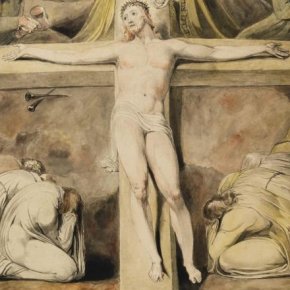
RubensCrucifixion Well, the easy answer is that the reading speaks of Jesus being a king and today is Christ the King Sunday. But this sermon has about seven minutes left in it, so I should probably say more than that, right?

While reading this story may seem strange, no other passage of the Gospel sheds more light on Christ’s reign than this one which recounts his torturous crucifixion. On the cross, Jesus was expected to succumb to the agony of the nails driven through his wrists and feet. He was expected to be ashamed of his nakedness. He was expected to cry out for pity’s sake and beg for mercy even as his breath came short and ragged because of the slow asphyxiation the cross delivers.

The normal and acceptable thing to do on the cross was to whimper your way to your last pitiful breath, all for the pleasure of Rome. But remember, Jesus never did the normal or the acceptable thing.

He was expected to show agony and shame and to cry out for mercy to an empire that never showed any. But instead, in the midst of his torture, he spoke three kind, generous words, words that echo through history and come to us and show us what Christ’s reign is really about. The cross magnifies the power of these three words because they stand in stark contrast to what the cross represents. The cross represents domination, separation, and fear. And yet, while nailed to its wood, Jesus spoke words of forgiveness, relationship, and trust. When we live into the reality dreamt by these three words, we cede our personal territory back to the reign of Christ and the lesser things slink off in defeat.

First, forgiveness. The sound of the hammer’s echo is still reverberating when Jesus speaks his first word. He looks down from the cross, sees his captors gambling for his clothing, grubbing over bloody scraps of cloth, and he says, “Father, forgive them; for they do not know what they are doing.” Forgive them: my betrayers, my torturers, my murderers. Forgive them. I have trouble forgiving the guy who cuts me off in traffic, and here’s Jesus choosing to use his last breaths to forgive those who numbered those breaths. What does he know that we forget all the time? What about forgiveness places it squarely in the center of Christ’s reign?

Jesus knows that forgiveness is a much larger concept than mere pardoning of misdeeds. Forgiveness is both an action and a state of being. When we forgive, we choose not to let anger, isolation, and vengeance reign in our lives. Forgiveness allows us to let go of these lesser things that, in the long run, can damage us irreparably. Writer Anne Lamott puts it this way: “Not forgiving is like drinking rat poison and then waiting for the rat to die.” Forgiveness releases us from the damaging power of brooding malice, of getting even. In their place, we find Christ’s reign, and with it the healing of brokenness and the bestowing of generosity of spirit.

Second, relationship. The sound of the thief’s request hangs hopeful in the air. And Jesus says, “Truly I tell you, today you will be with me in Paradise.” You will be with me. I can’t think of a more wonderful promise for Jesus to make. With these words, he reminds us that the cross, which dominates the scene, is just a passing thing. The separation it stands for is one of those lesser things that tries to rule, but which will ultimately fail.

Death seems so final, the pinnacle of separation, but in Christ’s reign, death is just another passing thing. In his resurrection, Jesus demonstrates the utter lengths he goes to be with us forever. He proclaims this promise to the thief on the cross and he fulfills this promise in our lives when he claims our personal territory as part of his reign. The thief himself speaks of his just condemnation as a criminal, and yet Jesus doesn’t see this as a barrier to relationship. Rather, Jesus sees the thief’s sin as a reason for relationship. In the reign of Christ, our sin separates us from God; but, in a mysterious cosmic paradox, our sin does not separate God from us. We may cede our personal territory to such a lesser thing as sin, but the territory, in the end, belongs to Christ. He’s not going to let passing things like sin and death defeat his presence and relationship in our lives.

Third, trust. With his last breath, Jesus cries out, “Father, into your hands I commend my spirit.” Another translation says, “Father, into your hands I entrust my life.” With these words, Jesus once and for all destroyed the power of the cross, which is a symbol for the power of fear. The Romans used this torture device precisely because it struck fear into the hearts of those living under Roman rule. But Jesus knows that trust is the antidote for fear.

The reign of Christ is a place where fear finds no foothold. Fear reduces us to selfish hoarders, whose lives are scarred always by the thought of “never enough.” But trust expands us, makes us generous givers, and vaults us into the reign of Christ, where the “never” of “never enough” falls away. When we trust God, we let go of the fear that grips us. Indeed, the act of simply attempting to trust God is in itself an act of trust. So even when we are bad at trusting, each attempt is a little skirmish that God wins over fear. Trust allows us to see past the deserted island of fear and view the ocean of God’s presence surrounding it. When we step off the island and into the water, we find ourselves floating in God and trusting God to keep us from sinking.

Forgiveness. Relationship. Trust. These are the words on the lips of Jesus as he hangs on the cross. Forgiveness. Relationship. Trust. These are the ways Jesus invites us to participate in his reign. We might be tempted to cede our personal territory to the lesser things that seek to rule us. But in the end that secession is a mere illusion because our personal territory has never been ours to cede. We belong to Christ. We live in his reign. By the standards of the world, Christ’s reign is neither normal nor acceptable. But Jesus never did the normal or the acceptable thing. And nor should we.

God’s Point of View

(Sermon for Sunday, November 10, 2013 || Proper 27C || Luke 20:27-38)

Today, I’d like to speak with you on a topic I’m entirely unqualified to talk about. No, it’s neither mortgage-backed securities nor the sport of cricket, though I’m definitely unqualified to talk about each. Nor is the topic the mysterious reasons for why my wife’s apple pie is so much more delicious than the ones I used to make. I know that one has something to do with butter, but that’s as far my understanding takes me. No, today I’d like to speak with you on a topic that no one besides Jesus has ever been qualified to talk about. I’d like to speak with you today about God’s point of view.

Because I’m unqualified to talk about this topic, you’ll have to take everything I say with a grain of salt. In the next few minutes I might say something that is true, but if I do, it will have been by accident because what I’m really going to do is talk about Adam’s point of view about God’s point of view. But maybe, just maybe, the Holy Spirit will help us glimpse the corner of the edge of the majesty of how God sees things.

So with those caveats aside, let’s listen in to the end of Jesus’ conversation with those wily Sadducees in today’s Gospel reading. They thought they could embarrass Jesus with a trick question, but in characteristic fashion, Jesus answers the question he wishes they had asked, not the one they’d actually asked. He finishes with these words: “The fact that the dead are raised Moses himself showed, in the story about the bush, where he speaks of the Lord as the God of Abraham, the God of Isaac, and the God of Jacob. Now he is God not of the dead, but of the living; for to him all of them are alive.”

Here Jesus references the third chapter of the book of Exodus, in which God says, “I am the God of your father, the God of Abraham…Isaac, and…Jacob.” Jesus notices that God doesn’t say, “I was the God of your father…” From our limited point of view, Abraham, Isaac, and Jacob are long dead – somewhere in the neighborhood of three thousand years ago, or about a thousand years in Jesus’ day. But God, says Jesus, sees things differently, as his emphatic end to the conversation demonstrates: “Now he is God not of the dead, but of the living; for to him all of them are alive.”

blakesGod
William Blake, Ancient of Days

This is our first glimpse into God’s point of view: “to God all of them are alive.” Can you imagine what that must be like for God? All of creation from the moment that moments began alive all at once. Every star that died billions of years ago, but whose light is just reaching us now; every single-celled organism gliding through the primordial ooze; every person we have ever loved and every person we have never known; all of them alive to God, all of it happening now for God.

I don’t know about you, but I get a little dizzy just trying to comprehend this thought – the riot of color and sound, the collision of what we see as the past and future, the unmeasured light years of space and uncounted eons of time all seen now by God, all spoken into being now by God, all loved and cherished now by God.

We can’t ever hope to comprehend this thought because we live our lives in linear fashion, moving moment to moment. We have memories of the past, and we have hopes for the future. Yesterday happened yesterday. It’s not still happening today. This linear model is like flipping through the pages of a magazine. Once I’ve flipped from page 35 to 36, I’m no longer looking at page 35. But from God’s point of view, the magazine is a collage of all the pages, with each picture cut out and arranged just so, like an elementary school art project.

This thought comforts me. From God’s point of view, I’m not simply Adam as I stand here before you: two months until his 31st birthday, his mother visiting from North Carolina, his sermon moving along apace. No. From God’s point of view, I am the totality of myself: everything that has ever happened, everything that will ever happen, every joy, every regret, every skinned knee, every embrace, every relationship, every failure, every triumph – everything that makes me the person I am, God sees and God speaks into being. This totality of myself includes my death and whatever there is in what we would call “After,” but what God still sees as “Now.”

The apostle Paul understands the difficulty of speaking about God’s point of view, and he says what I’m trying to say much better than I ever could. He says these words to the church in Corinth: “For now we see in a mirror, dimly, but then we will see face to face. Now I know only in part; then I will know fully, even as I have been fully known” (1 Cor. 13:12).

To be fully known. This is how God’s point of view works. God knows us fully. God knows the totality of each of us, just like God sees the entirety of creation happening now.

Speaking about God’s point of view has the unfortunate byproduct of making us feel so small, even insignificant. It’s only natural in the face of the idea that all of creation is always present to God to think that we don’t matter, that in the grand cosmic scale our lives are worthless.

But from God’s point of view, nothing could be farther from the truth. God couldn’t care less about the “grand cosmic scale” because the notion of a “scale” of any kind is meaningless to our eternal and infinite God. God speaks every subatomic particle into being and celebrates it as if it were the only speck in existence. Each speck has God’s full attention; if it didn’t, it would cease to be.

We may look up at the night sky and see ourselves as small, insignificant specks on a small, insignificant planet orbiting a small, insignificant star. But to do so is to deny the truth not just about ourselves, but about all of creation. All of creation is present to all of God. This includes you and me. If God weren’t constantly and continuously speaking each of us into existence, we would cease to be.

So if we are anywhere in the ballpark of the truth of God’s point of view, what does this all mean for us? Too many things, of course, to close this sermon with, so we’ll look at three – what we call past, present, and future, but each of which is always now to God.

First, the past and our grief over people dying: From our perspective, the sun sets below the horizon. But in reality, we are spinning away from the sun. Likewise, we grieve when someone dies because, from our perspective, that loved one is gone. But we know in a place deeper than normal knowing that, in reality, our loved one is still alive to God. Ultimately, grief is a way to express our frustration that we have a severely limited ability to perceive reality. But for anyone who has ever had a loved one die, you know that every now and again, you catch glimpses of true reality when you feel the presence of that loved one alive in a different way.

Second, the present: Since God is fully present to every particle of creation, which includes each of us, we have no business thinking of ourselves or anybody else as insignificant. Everyone matters, so we must affirm this in our actions.

Third, the future: Those we perceive as future generations are as alive to God as we are. Therefore, it is our duty to honor their significance in the same way we are called to honor those we meet today. This means making choices in our personal and communal lives that sustain our world, which, in the end, is another piece of creation fully present to God and therefore worthy of our honor.

So there you have it. I have now talked for more than ten minutes on a topic I’m entirely unqualified to speak about. However, being unqualified does not mean that we shouldn’t strive to see creation through the eyes of God. When we do this, we become better stewards, better servants, better followers. And we see deeper into the heart of what it means to be a child of God.