Trouble in River City

(Sermon for Sunday, January 27, 2013 || Epiphany 3C || 1 Corinthians 12:12-31a)
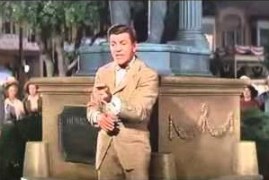
rivercityWe got trouble. Right here in Corinth. With a capital “T” and that rhymes with “P” and that stands for “pool.” Wait a sec. That’s the trouble in River City in The Music Man. Let me try again. We got trouble. Right here in Corinth. With a capital “T” and that rhymes with “G” and that stands for “gifts.” Spiritual gifts, that is. And while the con artist Harold Hill makes up the trouble in River City in order to sell marching band instruments, the Apostle Paul is intensely earnest in his diagnosis of the trouble in Corinth. The trouble in Corinth was certainly Trouble with a capital “T.”

Last week, Margot hinted at this trouble when she mentioned the Corinthians bickering over the dramatic spiritual gifts God had showered on the community. Our second lesson today picks up right where last week’s left off, and now we see Paul lay out the trouble plainly. The new church in Corinth has many problems – rival groups trying to assert dominance, questions about marital relationships, even issues concerning what to wear and what to eat. But none seems as contentious as the trouble Paul addresses in today’s reading.

When you boil Paul’s words down, you find that the trouble he sees is, in the end, the most common trouble of all – people not valuing one another. The very commonness of this trouble wrenches it from the dusty pages of scripture and puts it front and center in our lives. The capital “T” Trouble of people not valuing one another happened back then in Corinth. But just look around this world today – in our society’s discourse, in our communities, even within our own families – and you’ll see the effects of people not valuing one another.

But let’s start with the trouble in Corinth, the trouble that began over their spiritual gifts. Paul goes to great metaphorical lengths to teach the Corinthians that they are all part of the same body. Each part of the body has value, no matter if your part is the hand or the foot, the eye or the ear. Apparently in Corinth, certain people had been made to feel that their contributions to the body just didn’t matter, that because they were “feet” and not “hands” they had nothing to offer. I can only imagine how angry Paul got when he heard about such hurtful nonsense.

Paul first addresses these people who were being denigrated. Don’t believe what they tell you, he says. Just because you don’t fit their exact specifications for membership in the body doesn’t make you any less of a member.

Then Paul addresses the other side. (In certain other letters he doesn’t seek to cover up his anger, but here he manages to keep his indignation just below the surface.) To the ones engaging in the denigration, Paul says: “The eye cannot say to the hand, ‘I have no need of you.’ nor again the head to the feet, ‘I have no need of you.’ On the contrary, the members of the body that seem to be weaker are indispensable, and those members of the body that we think less honorable we clothe with greater honor.”

This has always been the way of God, hasn’t it? To lift up the lowly, to shield the easy targets of denigration and devaluation, to bring people together as one body. But even in those early years of the church, when everything was fresh and new and exciting, even then the brokenness of human nature reared its ugly head. Even then, the forces of division (you might say the forces of evil, of Satan) tried to halt the spread of God’s good news. In today’s lesson, the good news is that all people have value. All people belong to the body. I can think of nothing that the powers of darkness and division would abhor more than this simple truth, which Paul reminds the Corinthians and us.

After Paul speaks to these two sides of the trouble, he circles back to the issue, which sparked the trouble in the first place – the gifts God had showered on the people of Corinth. How utterly broken their community must have been if the forces of division had been able so easily to turn God’s gifts into sources of strife. But that is what they became. So Paul lists a sample of the gifts again and notes that no one has all of the gifts. That’s not how this whole “body” thing works. Each member has a gift to share, he says to the Corinthians, so you will not tell people they have no value just because they don’t display the gifts you think they should.

(Next Paul tells them and us about the greatest gift of all, which is an antidote for the trouble in Corinth, but we won’t read that part until next week. I’ll give you a hint, though. The gift is love, and the passage is one you’ll be familiar with if you’ve ever been to a wedding. But I’ll let Margot tackle that next week.)

For now, let’s stick with the capital “T” Trouble because we haven’t yet seen how this trouble exists now in our society, in our community, and in our homes. Remember, the root of the trouble is the utterly broken human tendency not to value one another. We witness this brokenness in our political discourse when partisan differences degenerate into personal attacks. We witness this brokenness in our community when our children can’t go online without fear that a cyberbully is waiting to tear them down – anonymously. We witness this brokenness in our homes when relationships of trust and respect erode into ones of suspicion and convenience. In each of these instances, the other is not valued for one reason or another and the body is broken.

Let’s dwell for a moment on the example of marriage. With our second anniversary approaching in a few weeks, I’ve had extra cause to thank God for the gift of my wife Leah. But along with this wonderful gift I am also aware of the scary capacity, inherent in my own brokenness, of failing to put in the effort to make sure she knows that she is valued. So many marriages fail because of this kind of inattention, and with God’s help, I am determined never to give her cause to question her value.

Remember, the good news is that all people have value. All people belong to the body. Each of our relationships is a microcosm of this great reality. Our relationships are opportunities to show one another how much we value each other, and by extension, how much God loves us. Being active members of Christ’s body means participating with God in healing the brokenness that keeps us from valuing the other.

So this week, I challenge each of you, and I challenge myself, to act on the reality that we are members of Christ’s body, each with our own inherent value. Seek out your partner – your spouse if you are married; a friend, sibling, or relative if you are not. Sit down with that person. Look her right in the eye. Hold his hand. Dwell in a moment together where nothing at all matters except your connection to one another and your joint connection to God. Say a simple pray of thanks for that person’s presence in your life. And then let her know how much you value her. Tell him how valuable he is – not because of what he has done or not done – but simply because of who he is.

If you are having trouble in this relationship, perhaps this will be the chance for a new start, with God inviting you once again into the reality that each of you has inherent value as a person. If you are not having trouble in this relationship, perhaps this will be the chance to add a recurring practice to your interactions that will confirm your value to each other. Either way, I offer this challenge to you as a way to participate more deeply in your own relationship with God.

As we notice and celebrate the inherent value we see in each other, we will be working with God to heal the brokenness of this world. And we will be helping to fulfill the prayer we prayer every week: “Thy kingdom come, thy will be done on earth as it is in heaven.” Because, is heaven not the place where each of us will finally and forever know in the deepest recesses of our souls that we are truly valued, that we are truly loved.
You are my Child

I wrote this song for part of the sermon last Sunday, January 13, 2013. I based it on the line in the Gospel: “You are my Son, the Beloved, with you I am well pleased.” I believe that because we are God’s children by adoption through the Spirit, God says this to us as much as to Jesus. This song is written from God’s perspective, speaking the truth to us that God delights in us always. (See below for the lyrics.)

“You are my Child” Lyrics

You turned away so they could not see you cry;
Maybe tomorrow you’ll stand up to those guys
`Cause they picked you last for the football team
And made so much fun of your lifelong dream
To become a famous scientist some day.
You want to crawl home and go straight to bed
Because of all the hurtful things the bullies said,
And this is when I hope you hear me say:

Chorus:
You are my child, and I love you (yes, I do).
You might not believe me, but still it’s true,
I will never stop delighting in you
`Cause you are my child.

You slip your dress on and then you turn around;
Reflected back, your smile fades to frown.
You look at the models in the magazine,
And you realize you’ll never be a beauty queen
If you have to make your body look that way.
You stare into the mirror for a day or two,
And you can’t see the beauty staring back at you;
This is when I hope you hear me say: (Chorus)

You’ve gone to church on and off for several years,
But you have never quite shaken all your fears.
You’ve always been afraid you’re not good enough;
That’s why you put your faith in so much other stuff,
And feel a hole inside that grows each day.
But look inside and see me filling up that space
And know I long for you to look and see my face,
So raise your eyes, behold me as I say: (Chorus)

You cannot earn my love, nor can you lose it
I give it freely, all you need do is choose it. (Chorus)

You are my Beloved

 (Sermon for Sunday, January 13, 2013 || Epiphany 1C || Luke 3:15-17, 21-22)

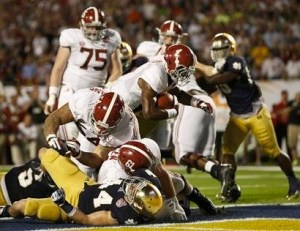
tide2013Last Monday evening, I sat down to watch a very entertaining football game. Now, I know up here is Pats’ country, so many of you probably didn’t even realize the college football championship game was going on. But I grew up in Tuscaloosa, Alabama, so I was ready for my Crimson Tide to take it to the Notre Dame Fighting Irish. (Which they did, by the way.) Because I was watching a live sporting event, I didn’t have the opportunity to fast forward through the commercials. One commercial aired several times, and I became more and more uncomfortable every time I watched it.
The commercial is for a new smartphone, the “Droid DNA.” The thirty-second spot begins with a man being strapped to a chair. A lab-coated technician secures the phone to the man’s chest, and over the thirty seconds of the commercial, the phone “rewrites” the man’s DNA. A mechanical voice announces that the man’s “neural speeds” are increasing and his brain is upgrading to a “quad-core processor.” At the end of the commercial, a voiceover says, “Introducing Droid DNA by HTC. It’s not an upgrade to your phone, it’s an upgrade to yourself.”

Now, perhaps I was uncomfortable with the idea of a phone taking the place of my brain because ever since I wrote Digital Disciple I have been fighting this tendency tooth-and-nail. Or perhaps I was uncomfortable because by the end of the commercial, the man looked like one of the Borg on Star Trek. These two surely played a part. But I think I was uncomfortable mostly because the commercial let me know something about myself that I didn’t know before. According to the commercial, I am due for an upgrade. I am deficient in some way, and only the Droid DNA smartphone will make up for that deficiency.

This is how marketing campaigns work. They tell us ways we are defective, and then they try to sell us products designed to improve those defects. Truck commercials tell men they aren’t manly unless their vehicles can haul a couple tons of dirt. Toy commercials tell kids they won’t be happy unless they receive the hot new toy for Christmas. And don’t get me started on commercials aimed at women. Judging by the ads, women in this country have hair that isn’t shiny enough; bodies that aren’t the right shape; the wrong handbags, clothes, shoes, and earrings; too many wrinkles; and not enough diamonds.

All this must be true, right? I mean, we are bombarded with our supposed deficiencies everywhere we turn: the TV, magazines, Internet ads, the sides of buses. Then we repeat them over and over again until they seem like truth. And pretty soon, it’s not just the marketers, but everyone getting in on the fun. And that’s when the boy feels deficient because he hasn’t played the video game all his friends are talking about. That’s when the girl feels defective because she doesn’t quite fit the clothes her friends have started to buy. That’s when the parents feel substandard because they can’t afford the tuition at the “best” college. At one point or another, our society as a whole started believing in our supposed deficiencies, hence why Americans aren’t very happy people.

But we have been deceived.

Today’s Gospel reading uncovers the deception and offers the supreme truth that has the potential to scrub away all the battering our self-esteem has taken over our supposed deficiencies.

At the beginning of his ministry, Jesus is baptized. After he rises from the water, he prays, Luke tells us, and the heavens open. And the “Holy Spirit descends” on Jesus in “bodily form like a dove.” The voice of God speaks from heaven: “You are my Son, the Beloved; with you I am well pleased.”

Now, you might be wondering what these words have to do with counteracting our supposed deficiencies. After all, God is talking to Jesus, not to us, right? Of course, God would be well pleased in Jesus, who has no deficiencies.

Ah, yes, we who have been programmed to think of ourselves as hopelessly deficient beings wouldn’t possibly presume to think that God might be talking to us as much as God is talking to Jesus. But we would be wrong.

Remember that the Holy Spirit descends on Jesus like a dove. This same Spirit dwells within each one of us, animating us and speaking life into our souls. Thus, we are connected to the God who spoke those words to Jesus. But we are not just connected to God. Hear what Paul says to the church on Rome: “For all who are led by the Spirit of God are children of God. For you did not receive a spirit of slavery to fall back into fear, but you have received a spirit of adoption. When we cry, ‘Abba! Father!’ it is that very Spirit bearing witness with our spirit that we are children of God, and if children, then heirs, heirs of God and joint heirs with Christ” (8:14-17).

Not only are we connected to God, we are God’s children, and not only God’s children, but heirs right alongside Jesus. So God’s words at Jesus’ baptism are not just for Jesus. They are for us, as well. You are my son. You are my daughter. You are my beloved. With you I am well pleased.

With you I am well pleased. Notice that God loves Jesus, God is pleased with Jesus, even though Jesus has done nothing yet to earn God’s love and pleasure. At this point in Luke’s Gospel, we are at the very beginning of Jesus’ ministry. All of his miracles, his sermons, his death and resurrection – they are all ahead of him. Before any of that happens, God showers upon him God’s love and pleasure.

Likewise, you and I who are joint-heirs with Christ have never done anything in our lives, nor will we do anything in our lives, to earn God’s love and pleasure. They are ours intrinsically. They are ours because we are God’s. And because we cannot earn God’s love and pleasure, we cannot do anything to lose them either. They are part of what makes us who we are – the best part of what makes us who we are.

At Jesus’ baptism, God took the opportunity once for all time to tell all of God’s children that we are loved and that we are a delight to God. We can ignore these fundamental truths. We can choose to think they don’t apply to us. But we cannot undo them, no matter what.

That God chose Jesus’ baptism in the River Jordan as the opportunity to reveal these truths to us is simply wonderful. What is the one thing in this world that is more prevalent than advertising targeted at our supposed deficiencies? That’s right. Water.

So the next time you take a shower, the next time you wash your hands, the next time you take a drink or get stuck in the rain, I invite you to feel the water touch your skin. Remember your own baptism. Remember that all of our supposed deficiencies, which teach us to think we are defective or substandard, are no match for the fundamental truth that God has built into the fabric of life. You are God’s children. You are God’s beloved. And with you, God is well pleased.

Magnify the Lord

(Sermon for Sunday, December 23, 2012 || Advent 4C || Luke 1:39-55)

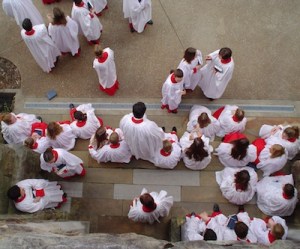
choirWhen I was in college, I never had time to watch TV or play sports or go on wild spur-of-the-moment car trips. I was too busy singing. The University Choir rehearsed four times a week and sang every Sunday morning during the church service. When I joined freshman year, I could barely piece two correctly pitched notes together, but the choir director, God bless him, would take anyone who was willing, including me. Four years and hundreds upon hundreds of hours of singing later, my voice managed to match pitch most of the time, and hey, it didn’t sound too bad.

The choir spent more time on one particular song than any other, a song that has found a special place in my heart. We sang the song once a month at the service of Choral Evensong, and every month we sang a different arrangement. But each arrangement had the same words, and those words always began with “My soul doth magnify the Lord, and my spirit hath rejoiced in God my Savior.”

These are the opening lines of Mary’s song, the Magnificat. We always sang them with the Elizabethan translation (with all the doths and haths) because the best musical versions are set to the old text. I must have sang 20 or 25 different settings during my time at Sewanee, and with each one, a single image from this opening line delved into me and settled deep within. I’d like to share that image with you this morning.

“My soul doth magnify the Lord,” sings Mary. What happens when you use a magnifying glass, like a microscope, perhaps? Say we are back in freshman biology lab and the instructor passes around a tray of slides. You and I (you all are my lab partner for this illustration, by the way)…You and I take one of the slides and pass the tray on to the group beside us. Next you take our pipette and squeeze one tiny drop of clear liquid onto the slide. We hold the slide up to the light and squint. We see nothing but a bit of water on glass.

But then I place the small pane of glass underneath the microscope, and you put your eye to the lens. You click into place the scope marked “30x magnification” and fiddle with the focus dial.  And what was a moment ago just a drop of clear liquid is now a squirming mass of single-celled organisms, each dancing and stroking its way through the ocean that is the drop of water. How could we miss so much life happening in miniature? How could we ever think the drop of water was simply empty, clear liquid?

When we magnify, we take something difficult to see, and we make it more visible. “My soul doth magnify the Lord,” sings Mary. Mary’s soul is the magnifying lens, and she trains her soul on the God who has blessed her with the Christ in her womb. This brings up two questions. First, if God is so big, then why does God need magnification? Second, what is this “soul” Mary uses as her magnifying glass?

Well, to answer the first question, I’ll admit the whole microscope metaphor breaks down when we bring God into it. But the need for magnification persists because, let’s face it, sometimes God is hard to see. How many of us have ever had a time when we looked for God and found next to no evidence of God’s presence? How many of us have cried out to God and felt like our cries have fallen on deaf ears? This past week, in the wake of the Newtown shooting, how many of us have asked the question, “Where is God in all of this?”

It’s so close, so raw that we have no answer for this question—at least, not right now. We have only glimpses. We can only catch God out of the corner of our eye. We can only nibble around the edges of sense. In a month or two, or in a year or ten, I have hope that we will look back on this week and say, “Oh, that’s where you were, God. You were right there all along.” But right now, we have trouble seeing God. And so we need magnification. “My soul doth magnify the Lord,” sings Mary.

The soul is our magnifying glass, which begs the question: what is the soul? Now, this question is a whole other sermon – or possibly a multi-volume dissertation – so we’ll be brief. Please excuse the poetic language I’m about to employ – poetry is really the only way to speak briefly of such things as the soul.

Our souls are the places within us that are continually in contact with God, whether we are aware of the connection or not. The constancy of this connection happens because the soul is the piece of eternity around which God shapes each one of us. Each piece of eternity resonates with the eternal nature of God. The nature of God is also creative, which is why each piece of eternity comes wrapped in a unique, newly created person. The soul, then, is the deepest part of us, the one that makes us who we are and the one that connects us to God. This soul is the lens for our magnification. “My soul doth magnify the Lord,” sings Mary.

When Mary sings this, she signals both her joy that she is in God’s midst and also her willingness to partner with God to make God more fully known. God could easily be fully and visibly present to each of us all the time, but I wonder if the reason God is not lies in God’s desire to make our souls resonate even more fully with God. This resonance happens when we participate in God’s act of making God known, when we make God visible to other people, when we magnify the Lord.

Because the soul is the piece of each of us where our individuality resides, God has given each of us a unique way to magnify God’s presence. Perhaps yours is your passion for ministry with people who have no homes. Perhaps yours is your devotion to your children’s wellbeing. Perhaps yours is your singing voice or your ability to listen to other people’s fears or your overwhelming capacity to see the goodness in all people. Each of these gifts rises up from the cores of our beings, from our souls, and through them we magnify the Lord.

So in the next couple of days, as we celebrate the Incarnation of God’s greatest gift to us, the birth of our Lord Jesus Christ, I invite you to spend some time in conversation with God and perhaps also with a trusted confidant. Ask how your own particular soul might best serve to magnify the Lord. Ask what special gift God packaged with your own unique piece of eternity. Ask how your life can be a reflection of Christ’s Incarnation.

“My soul doth magnify the Lord,” sings Mary. So do each of ours. Thanks be to God.

The Enduring Miracle

(Sermon for Sunday, November 11, 2012 || Proper 27B || 1 Kings 17:8-16)

The widow of Zarephath has come to the end of her rope. I imagine that over the last several weeks, the amount of flour in her jar has diminished at a much faster rate than she hoped, despite careful rationing. She looks at her son, a boy who should be growing big and strong, but lack of nourishment has stunted him. She can count his ribs, and the hollowness of his cheeks shows too much of the skull underneath. She would cry for him, but there’s a drought on; and with a drought on, there’s no water; and with no water, there’s nothing to drink; and with nothing to drink, there can be no tears.

In the early days of the drought, her son whined and cried because he wasn’t used to the pangs of hunger. He didn’t know that emptiness could hurt so much. But with each passing day, the pangs hardened into a constant ache, and his whines and cries hardened into silence. The widow herself would like to whine and cry too, but they wouldn’t do any good, so she is content to cry without tears and watch the flour in the jar dwindle to nothingness.



With one day’s flour left, she leaves town to search for firewood, so that she can make the last of the cakes that have been sustaining them since the drought began. She laughs humorlessly because, while there’s barely anything left to cook, there’s plenty of firewood to choose from, since the dry heat has baked the scrubby trees to kindling. With an armful of sticks and branches, she turns to head back to town, when a man stops her and asks her to do an impossible thing – to bring him a little water and a scrap of bread.

“I have only enough for my son and me to eat a final meal before we die of hunger,” she says to the man, who is Elijah the prophet.

“Don’t be afraid,” says Elijah. “Just believe me: God has promised me that your jar of flour won’t run out.”

“You’re talking miracles,” she says.

“Perhaps I am,” he says, looking her in the eye.

She looks up to meet his gaze. “Miracles don’t happen to people like me.”

Elijah moves to her, takes the sticks from under her arm, and puts his other arm around her. “Yes, they do,” he whispers. “You just have to know where to look.”

I imagine that each one of us here can think of a time or two in our lives when we felt like the widow of Zarephath, when we were in the middle of a personal drought, when we were at the ends of our ropes. I imagine that during those times we stopped looking for miracles because God didn’t seem to be anywhere around.

Now, there’s a common misconception that miracles are these big, flashy events that disrupt the natural flow of existence in order to change things for the better. Perhaps some are. The ones that get the most press definitely are. But this is only one small subset of the miraculous. The miracle like the one that happens to the widow and the ones that happen to us when we are at the ends of our ropes are different, and it is this second type of miracle that I want us to focus on.

When God did the first of the big, flashy miracles (otherwise known as the making of Creation), God built into the very fabric of life this second type of miracle. These enduring miracles never draw attention to themselves, so I would bet that most of us miss them most of the time because we are looking the other way.

So by this point, you’re probably wondering just what this enduring miracle that God built into the very fabric of life is. I’ve been hesitant to tell you thus far because I fear it’s going to sound fairly anticlimactic, even though in truth it’s one of the best things God ever made. But maybe I should just get it over with. Here goes: The enduring miracle that God built into the very fabric of life is that there is always a little more inside of us than we realize.

God made each one of us to be like the jar of the widow of Zarephath. When she is at the end of her rope, when she and her son are nearing death by starvation, she reaches into her flour jar and finds a little more – enough to live another day. The next day there’s a little more – enough to live another day. And the day after that. And the day after that. Each day, she reaches into the jar and finds just a little more life.

God’s enduring miracle is that you and I are like that jar. When we are in the middle of personal droughts, when we are at the ends of our ropes, God’s enduring miracle triggers, and we find that there’s just a little more inside of us to keep us going. Sure, we would like life never to have personal droughts or ends of ropes, but we live in a fallen world. And so God gave us the enduring miracle.

There’s always a little more inside of us than we realize. Think of the soldier up in the mountains of Afghanistan, cowering behind an old rock wall that is quickly disintegrating as bullets eat away at it. His courage has fled him, and all he can think to do is crouch in fear and hope the enemy runs out of ammunition before one of their rounds finds his flesh. His buddy didn’t make it to the makeshift barricade in time, and now he can hear his friend’s soft, agonizing whimpers in between the reports of the AK-47s. Then, from somewhere deep inside of him, from that hidden place that God secreted away within him, a last gasp of courage floods him. He grits his teeth, flings himself from the safety of the old rock wall, and pulls his buddy to safety. That’s God’s enduring miracle: a little more courage than he realized.

Or think of the daughter who is watching her father drift off on the tides of Alzheimer’s. Last year, she and her brothers made the decision to move him to a nursing home after the third time that he left the gas burner on the stove running for more than a day. Her brothers all live out of state, so they rarely visit. But she goes to the home every day to see her father. At first, he called her by name. Then he called her by her long deceased mother’s name. Then he called her no name at all. Now he doesn’t even notice her coming into the room. But still she comes. Every day, she thinks she won’t be able to walk into the room. And every day, she does. That’s God’s enduring miracle: a little more determination, a little more love than she realized.

Inside each of us is a jar like the widow’s. When we are at the end of our ropes, God works a miracle on that jar, filling it with just a little more courage or determination or love or faith or hope or whatever we need to sustain us for today. So when you are feeling empty of the one thing that you need to keep you going, look within and witness God filling your jar with enough of that something, enough of that enduring miracle that God built into the fabric of life. Miracles do happen to people like the widow and to people like us. We just have to know where to look. There’s always a little more inside of us than we realize.

First Fruits

(Sermon for Sunday, September 2, 2012 || Proper 17B || James 1:17-27)

That’s me in 4th or 5th grade. This picture will make more sense when you get near the end of the sermon.

This past Thursday morning at about three minutes to eight, I found myself staring at a blank page on my computer screen. I had been contemplating this sermon since I awoke two hours before, but had yet to type more than a few halting phrases, which I erased as soon as I finished them. Today’s passage from the letter of James had really drawn me in, so I knew that this sermon would spring from James’s words, but I still didn’t know where the sermon was going exactly. Specifically, the first two verses from the reading really sparkled for me, so I focused in on them. Soon, I snatched the theme of this sermon out of the Holy Spirit’s mysterious creative ether. But then the minutes continued to tick by. 8am was approaching, and my page was still blank. I had my theme, but no words. I twiddled my thumbs, discouraged, and resisted the urge to surf the Internet.

Then, at three minutes to eight, I realized something. I realized (much to my chagrin) that I had failed to do the very thing that I’m about to start advocating. I had forgotten to act on the theme for this sermon that had come to me less than a half hour before. I had neglected to give to God the act of preparing the sermon. So I took a moment: I breathed deeply, a tiny prayer detached from within, and I offered my writing to God. And the words that I am now speaking to you began to flow.

That’s the theme, by the way: giving our actions to God – and not just giving them, but offering our actions to God as we get ready to take them. I’m spelling out this theme now so that I don’t forget again before I finish preaching this sermon.

The letter of James says, “Every generous act of giving, every perfect gift, is from above, coming down from the Father of lights… In fulfillment of [God’s] own purpose he gave us birth by the word of truth, so that we would become a kind of first fruits of his creatures.”

Have you ever considered yourself to be part of the first fruits of God’s creatures? Until I read this passage this week, I hadn’t. James borrows this common image from the religious life of Israel and applies the idea of first fruits to Jesus’ followers. Because Israel was an agrarian society, the offerings people made to God most often consisted of crops and livestock. The concept of giving of your first fruits showed your utter dependence on God because, when you gave your offering, you didn’t know if the rest of the crop was going to grow or if the rest of the baby animals would survive. The first fruits went to God, which showed your devotion and your trust in God’s faithfulness.

James takes this idea of first fruits and applies it to people – both his own listeners and you and me. We ourselves are the first fruits of God’s creatures. To be first fruits means to give ourselves to God before we give ourselves to anything else. Now before you all jump out of your seats and head off to the nearest monastery, be assured that giving ourselves to God as first fruits does not usually lead to such an extreme action. Each of us, no matter to what level we are enmeshed in the life of faith, can give ourselves to God as first fruits.

Instead of running off to the monastery, I invite you slowly to build a new practice into your lives. New spiritual practices take a long time to make natural and usually involve quite a few stops and starts, so don’t give up after your first or one hundred and first failure. But over time they do become natural, like breathing or driving a manual transmission. And if you’re worried about not having time or resources to attempt a new practice, then don’t be. This spiritual practice that I’m about to describe takes next to no time out of your day, and you don’t even have to buy any expensive gear. But the practice is tenaciously difficult, one that takes a lifetime (and probably an afterlifetime) to master. However, even simply attempting this practice will help us fulfill our role as first fruits.

This new practice begins by adding a step to each of our actions. Anytime we are about to take an action, we go through several steps. Our minds weigh various outcomes. Then we make a decision. Then our bodies grind into motion. Then we act. Sometimes these steps happen in the blink of an eye, like when reacting to a traffic light changing. Sometimes they are drawn out, especially if the action is some sort of life-altering one, like when you contemplate asking someone to marry you.

Our new spiritual practice adds a step at the beginning of the whole process. Before engaging in the normal series of steps, give to God the action you are contemplating. Say to God, “I give you this action, a first fruits offering of myself.” By giving the beginning of our actions to God, we engage in the same devotion and trust that the ancient Israelites did when they gave the first fruits of their crops to God as offerings. Before we know if our actions are going to succeed or fail, before we know the consequences, if we pause and give them to God, then we actively invite God into the process that leads to the actions being taken. Rather than reporting to God after the fact, we become aware of God all the way through.

Notice how this will affect the kinds of actions we decide to take. Your son strikes out for the third time in the little league game. You could criticize and disparage his baseball ability, or you could stop, give the impending action to God, and realize that criticism and disparagement are not the kind of first fruits you want to offer to God. The tiny moment of offering the impending action to God helps you encourage instead of criticize.

Or you’re getting ready for your third date with a friend of a friend. You’re putting on your eyeliner, and you stop for a moment and offer the date to God as a first fruit of yourself. By giving the date to God, you are more likely to invite God in as you discern whether that friend of a friend is the right person to share your life with.

Or you’re getting ready to write a sermon, but no words come until you give the sermon to God.

Every action we take can be part of the first fruits that we offer to God when we invite God into the action from the outset. When we take on this spiritual practice of mindfully and prayerfully giving our actions to God, we will find that God is so much more present in our lives. God will be no more present than God was before, but our awareness of that presence will be heightened. And our actions will more frequently conform to the life-giving way in which God yearns for us to walk.

Speaking as someone who is still a novice in this spiritual practice, I will tell you that the few and far between times that I do remember to invite God into my actions, I find a peace and a trust that escape me at all other times. No matter if the action itself results in success or failure, the peace and trust linger, letting me know that God was present to me. And for the briefest moment, I was present to God, offering myself as a first fruit. Each of us is a first fruit of God’s creatures; each one of our actions is an opportunity to offer our fruitfulness back to God. And when we do, we will discover that God is always and forever offering God’s own self back to us, sustaining us in every action we take.

Christ be with Me, Christ Within Me

(Sermon for Sunday, August 12, 2012 || Proper 14B || John 6:35, 41-51)

I don’t know about you, but these last two weeks, I have felt afraid. Last week, I was excited to go and see the new Batman movie. But then a self-proclaimed Joker – Batman’s chief enemy – calmly walked into a midnight showing in Aurora, Colorado and filled the theater with tear gas…and then bullets…and then dead bodies. Fear – and grief for the victims and their families – replaced excitement, and I haven’t darkened the door of a movie theater since.

This week, I was excited to come to church to celebrate communion and praise God with all of you. But then a white supremacist calmly walked into a Sikh temple in Oak Creek, Wisconsin and filled the temple with bullets of his own…and more dead bodies. Fear – and shock and more grief – once again replaced excitement, and I would be lying if I told you that I feel completely comfortable right now exposed like I am in this pulpit. I don’t know about you, but these last two weeks, I have felt afraid.

And so, as I sat down to write this sermon, fear was on my mind. And I started wondering just why fear is so debilitating. And as I wondered about that, the words of Jesus from today’s Gospel started seeping into my consciousness. And I found that, while my fear didn’t evaporate just like that, someone had sidled up next to the fear and made the fear seem very small in comparison.

But I get ahead of myself. First, why is fear so debilitating? Well, fear has a way of unmaking us. When God created you and me, God made our default position one of loving and trusting. Think of the toddler who will go up to any stranger and say, “Hello.” Then think of the frantic mother who grabs the child by the wrist and yanks him away. Or here’s another example. While on vacation, I met my two-year-old cousin for the first time (which was a real treat, let me tell you) and within half an hour of meeting me, he was flinging himself into my arms from the top platform of the playground. God programmed us to love and trust, not to fear.

So when fear inevitably takes hold, the fear overrides our initial programming. Love and trust move down the list of conditioned responses, and we are no longer the whole people that God intended us to be. Fear motivates people do all sorts of things, the kind of things that unmake us. Some people hole up in their bedrooms never to venture into the world. Some lie to their parents about where they’ve been. Some never settle into mutual, meaningful relationships. Some cheat. Some bully. Some abuse drugs and alcohol. And some go on shooting rampages through temples containing people who look and think differently than they do.

Fear is so debilitating because fear keeps us from being the people God made us to be. Fear hollows out our identity as God’s children. Fear replaces the loving and trusting identity with one that longs to isolate and control. When our identities are tied up in fear rather than in God, we lose who we are; we lose ourselves because there is nothing sustaining or life-giving about fear.

When we feel fearful, when we feel like we are being unmade, what is really happening is that we are losing our connection to our identity as those loving and trusting children of God. And this where the words of Jesus begin seeping into my mind. This is where we make the turn and place Jesus next to the fear and notice how small the fear seems in comparison.

Jesus spends much of his time in the Gospel according to John telling people who he is. His identity is a subject that crops up every other chapter or so, and Jesus signals to us that he is talking about his identity with a special coded phrase. He says the two simple words: “I Am.” But these two simple words carry a lot of weight. By saying “I Am,” Jesus essentially quotes God’s words to Moses. At the burning bush, God gives Moses the mission to free the people of Israel from bondage in Egypt. Moses wants some insurance to let people know he really met God, so he asks for God’s name. “I Am Who I Am,” says God. When Jesus borrows this phrase, he reveals to his listeners and to us his divine identity.

Jesus uses these “I Am” statements over a dozen times in the Gospel according to John. Two of them happen in the story that runs the length of Chapter Six, a part of which we read this morning. I’ll get to the first one in a moment, but before that, let’s talk about the one in our passage today. “I Am the bread of life,” says Jesus. With these words Jesus reveals a piece of his divine identity.

As followers of Jesus, our identities are wrapped up in his. When he discloses a piece of his identity, we discover a piece of ours. When he says, “I Am the bread of life,” he invites us to imagine what bread can tell us about God. Bread nourishes us, just as being in relationship with Jesus nourishes us. Bread in the wider sense of food sustains life, just as through Jesus (as “the Word made flesh”) all life has come into being.

But this is no normal, everyday metaphor. I might say my wife’s smile is the sun on a rainy day, but we all know her smile is not actually the sun. Jesus doesn’t idly compare himself to bread. Jesus is the “bread of life.” Normal, everyday food and drink will satisfy for a time. But eating the food of the bread of life brings us into relationship with Jesus, who is that bread. One of the Eucharistic prayers says this beautifully, praying that we “may worthily receive the most precious Body and Blood of thy Son Jesus Christ, and [be] made one body with him, that he may dwell in us, and we in him.”

In the Eucharistic meal, which we will share in a few minutes, we take Jesus in, and the Bread of Life opens our eyes to the wonderful reality that his presence surrounds us and penetrates us always. The wonderful hymn known as “St. Patrick’s Breastplate” describes this ever-present reality:

Christ be with me, Christ within me,
Christ behind me, Christ before me,
Christ beside me, Christ to win me,
Christ to comfort and restore me.
Christ beneath me, Christ above me,
Christ in quiet, Christ in danger,
Christ in hearts of all that love me,
Christ in mouth of friend and stranger.

When Jesus reveals that he is “the bread of life,” he invites us into the reality that his presence sustains us wherever we are and whatever has happened. This is part of his divine identity, and our identity finds a home in this sustenance.

Whenever fear debilitates us, whenever fear threatens to unmake us, Jesus Christ is there sustaining us, nourishing us so that we can continue on our way, surrounding us with his steadfast presence. We were not made to fear, but to love and trust. The more we rely on the sustaining presence of the Bread of Life, the less of a foothold will we give to fear.

I told you that I would mention Jesus’ other “I Am” statement from an earlier part of this morning’s story. The night before today’s lesson, the disciples row across the sea in their boat. But a storm comes up and threatens to swamp them. Then they see Jesus coming toward them, walking on the water. And do you know what he says to them? He says: “I Am; do not be afraid.”

The Seeds of the Kingdom

(Sermon for Sunday, June 17, 2012 || Proper 6B || Mark 4:26-34)

When I was nine or ten years old, I walked into the church across the street from our house really early on a particular morning. Ash Wednesday had always been one of my favorite days. I’m not sure why, but I think I liked going to school with the ashes scraped across my forehead – hence me being in church really early. As many of you know, my father is also a priest, and he met me in the church wearing all of his vestments. But no one else came for the service early that morning. However, as Jesus says, “When two or three are gathered in my name, I am there among them.” So we went ahead with the service, just my dad and me.

When the time came for the ashes, he put his thumb in the gritty, black stuff and scraped first a vertical and then a horizontal line across my forehead, making the sign of the cross. “Remember that you are dust and to dust you shall return,” he said. Then he knelt down and offered the little bowl with the ashes to me. I was surprised, but I put my own thumb in the gritty, black stuff and scraped the sign of the cross on his forehead. “Remember that you are dust and to dust you shall return,” I echoed with all the solemnity that my fourth-grade voice could muster.

Then we finished the service, he took me to school, and we went about our days, and we went about our lives. And about a decade later, my father and I realized that on that Ash Wednesday morning, God planted a seed in me, one so small that neither of us noticed the seed until the stalk started poking through the topsoil of my life.

This seed was the mustard seed of God’s kingdom, the one that Jesus talks about in today’s parable from Mark’s account of the Gospel. Before we go any further, however, I want to dispel any notion that you may have that such a seed would only be planted in someone destined to be ordained as a priest. While some of the seeds of the kingdom that God planted in my life have germinated into my call to the priesthood, others have grown into my call to be Leah’s husband and to spread God’s love through our marriage. I hope other seeds that are still hidden in the soil will sprout into a call to parenthood. God sows within each of us, not just we few who wear the collar, the seeds that grow into a panoply of kingdom callings. Together, as our seeds stretch upwards into beautiful flowers and trees, we help God transform this planet once again into a garden of God’s kingdom.

I firmly believe that God has sown seeds so wildly, so expansively, that every person on this planet has the seeds of the kingdom nestled in the soil of their souls. The parable before the ones we heard this morning speaks to this belief. The sower doesn’t seem to mind that his seed lands, not just on the good soil, but on the road and on the rocky ground and among the thorns, as well. The sower doesn’t just plant in nice furrows in the prepared field, but across every surface, no matter how ready the ground is to receive the seed.

Because of God’s unrestrained scattering of seed, each of us surely has the seeds of the kingdom within us. But, as Jesus says, the seeds start out so small that we can barely see them. In fact, until the seeds have grown into visible plants, we won’t have much luck seeing them at all. But this is how the life of faith works – oftentimes, the moments when the seeds of the kingdom drop into our soil are as small as the seeds themselves. We miss these moments all too easily because they tend to be subtle and quiet. Or they tend to happen in the midst of really difficult and challenging circumstances. Or they tend to happen when we least expect them, when our soil is least ready for the seeds.

With God’s help, we can train ourselves to notice the seeds of the kingdom earlier and earlier in their development. Perhaps, you have a mustard seed that has grown into the full-fledged plant or perhaps you have a stalk peaking up from the ground. Move into a space of prayerful reflection and trace that plant back to the subtle, quiet moment when God scattered the seed in you.

Consider this example. God has given you the gift of teaching. Even though some of the students can be pains in the neck, you love going into the classroom everyday to teach. You feel that teaching is certainly a way that you respond to God’s call. Now, work your way back past your first year struggles, past your student teaching, past your high school days, and find yourself back in fifth grade when your favorite teacher in the whole wide world instilled in you a love of learning and a desire to teach. There’s the seed. God used the dedication and love of your fifth-grade teacher to plant the seed of the kingdom in you.

Here’s another example. God has given you the gift of cooking. Recently, you began helping at your church to prepare hundreds of meals every week for a local homeless shelter. You can feel in each stir of the pasta and each pour of the sauce that you are doing something in which God takes great joy. Now, work your way back past your joining the church, past all those experiments in the kitchen trying to perfect your pie dough, past that semester at culinary school, and find yourself in the kitchen with your mother on the day she finally let you spice her world famous chili for the first time. There’s the seed. God used your relationship with your mother, who passed on her culinary secrets to you, to plant the seed of the kingdom in you.

No matter how old or young we are now, God has planted seeds in us. Some have grown into the greatest of shrubs and the birds nest in their branches. These are the places where we can see God’s kingdom blooming into beautiful gardens around and within us. Other seeds are still nascent, still tucked in the soil waiting for the right moments to start their journey toward the sun. By tracing the plants we can see back to when they were invisible seeds, we can train ourselves to recognize the currently hidden seeds even sooner in their development. And when we do, we can join God in more active participation of their cultivation.

Every week in the Lord’s Prayer, we pray, “Thy kingdom come, thy will be done, on earth as it is in heaven.” The kingdom begins as tiny mustard seeds, which God scatters wildly into our very souls. As we live out our lives as followers of Jesus Christ, we become gardens of the kingdom, spreading the beauty of God wherever we go. The seeds are in each of us. The seeds are sprouting and growing and blooming each day. All we need do is notice.

Guitar Lessons

(Sermon for Sunday, June 3, 2012 || Trinity Sunday B || John 3:1-17)

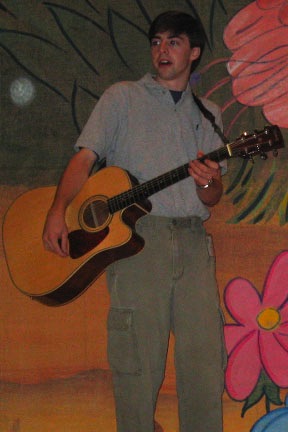
Playing at VBS in 2003 after my sophomore year of college. That was less than three years in to my guitar playing. It would have been seven or eight if I had never quit.

When I was in seventh grade, my parents bought me a three-quarter sized guitar and procured the services of a guitar expert to teach me the basics. At the first lesson, I learned the names of each of the six strings and how to play notes by plucking them. At the second lesson, I learned how to arrange my fingers on the strings so they made special shapes called chords. At the third lesson, I learned that I would have to practice if I wanted to improve my guitar playing. There was no fourth lesson.

You see, I was a bright kid, to whom pretty much everything came quite easily. I was a good athlete, so baseball and soccer were right up my alley. I really didn’t have to work much to make good grades in school. I had next to no challenges in any of my classes. And so when I was confronted with something that I couldn’t immediately master with no effort, I decided not to try. I put the guitar in the case, and the case sat unopened in my closet for years.

Now, as most of you know, I am a guitar player. So what happened? I picked up the instrument again my senior year of high school, and, being a tiny bit wiser than my seventh grade self, started practicing. I’ve been playing for over eleven years now, and I’m not half bad, but a wistful part of me always wonders how much better I would be at the guitar if I had not quit after three lessons back when I was thirteen years old.

My seventh grade self fell victim to a psychological epidemic that affects the vast majority of the population. Exactly one symptom characterizes this epidemic: people have difficulty agreeing to perform tasks that fall outside of their recognized competencies. This is still true for me: you’ve never seen me do ballet or fix the central heating in the church because these are two things that I don’t do very well. I have no training in either of these areas, and so the likelihood that I will agree to pirouette across a stage or put together an HVAC system is next to zero.

I’d be willing to wager that this fact of life is also true for you. I’m sure each of you could come up with a list of things you are unwilling to try because you know that you aren’t going to be good at them. You know that if you tried, failure would be in your future, and who wants to feel like a failure? And so the psychological epidemic keeps us from attempting new things and keeps us safely ensconced within the borders of our comfort zones.

For us this morning, the trouble comes when the list of things we are unwilling to try includes speaking openly about our faith in God. Why should this be any different from playing the guitar or doing anything else, you might ask? The simple answer is this: becoming an expert in guitar playing is possible. Becoming an expert on God is not.

Today’s Gospel reading teaches us this reality, which is an appropriate lesson on a day when we celebrate the mystery of the Holy Trinity. Nicodemus, a Pharisee and member of the Jewish council, fashions himself such a God expert. He comes to Jesus by night, and at the outset of their conversation, tries to display his knowledge of how God operates. “Rabbi,” says Nicodemus, “We know that you are a teacher who has come from God; for no one can do these signs that you do apart from the presence of God.”

Nicodemus’s “we know” sets him up as the so-called expert on God. The irony is that his statement is true. But Jesus isn’t interested in whether or not Nicodemus speaks correctly; Jesus is solely interested in moving this so-called expert into the unfathomable depths of God’s interaction with God’s creation. “No one can see the kingdom of God without being born from above,” says Jesus in response to Nicodemus’s opening remarks. Jesus’ statement is intentionally ambiguous. The words could mean “born from above or born again,” and I think Jesus means both. The very ambiguity of the phrase shows Jesus’ attempt to push Nicodemus out of his comfort zone where “we know” is his default position.

For his part, Nicodemus latches onto the more mundane of the two possibilities: “How can anyone be born after having grown old?” he asks. This response might sound a bit sarcastic, but at least the Pharisee, who has always been the expert answering questions, is now beginning to ask some of his own. The question is the small chink in the armor of Nicodemus’s expertise. Because of Nicodemus’s willingness to ask a question, Jesus sees that there is hope in showing him the expansiveness of all that this so-called expert does not know.

And, boy, does Jesus show him. Jesus opens Nicodemus’s mind and heart to the mystery of how God creates God’s people, and of how God moves in the world like the wind moving through the trees. When Jesus is done, Nicodemus’s opening “we know” now sounds laughably empty in comparison to the mysteries Jesus reveals to him. To begin to walk in and among these mysteries, Nicodemus must change his empty “we know” into an “I don’t know” full of desire and curiosity. And he takes the first tentative steps along this path with the sincerest question in the entire Gospel: “How can these things be?”

In just one conversation, Jesus shows Nicodemus that being an expert on God is not only not possible, but also not the best way to be in relationship with God. Only by acknowledging his lack of understanding can Nicodemus hope to begin to hear the sound of the wind blowing, this wind of the Holy Spirit that breathes life into creation. Nicodemus’s job is no longer to try to explain what makes God tick. Jesus gives him a new job: to bear witness to the mysterious movement of God in his life.

We see Nicodemus twice more over the course of the Gospel. In his next appearance, he puts one tentative foot outside his comfort zone when he reminds the rest of the council about their own rules when they want to put Jesus to death. And in his final appearance, we see that Nicodemus has fully embraced the new life that Jesus revealed to him. In broad daylight on the afternoon of the crucifixion, Nicodemus helps Joseph of Arimethea take Jesus from the cross and bury him in the tomb.

This so-called expert on God had his world turned upside down that night when he went to see Jesus. Jesus showed him that expertise is neither possible nor desired when relationship with God is concerned. There is not a person on this earth who is competent to talk about what makes God tick. While you and I might have difficulty agreeing to perform tasks that fall outside of our recognized competencies, we can take heart in the reality that Jesus released us from needing to be competent in this particular area. We will never be good at talking about God because God is far too glorious, far too mysterious and majestic for our puny words. But that shouldn’t stop us from trying. Releasing us from the need to be competent means that Christ rejoices in even our most halting attempts, in even the simplest expressions of feeling God’s love.

My prayer this morning is that each of us might feel released from the need to be competent when we have the opportunity to speak to someone else about our faith. Don’t be like my seventh grade self who gave up the guitar because he wasn’t an overnight expert. Rather, acknowledge that expertise has no domain where God is concerned. The simple word about how you feel God’s movement, spoken from the heart, is worth more than any treatise on the inner workings of the Holy Trinity. The halting word about not understanding God’s movement is worth more than all the “we knows” like the one Nicodemus speaks when he first encounters Jesus. The good news is that God uses our incompetencies as much, if not more, than our competencies. So I challenge you and I challenge myself: live into our incompetent ability to speak of God’s movement, and perhaps through our witness, someone new might start seeing God’s wind blowing through the trees.