“J” is for Judgment (March 6, 2012)

…Opening To…

So daily dying to the way of self, so daily living to your way of love, we walk the road, Lord Jesus, that you trod, knowing ourselves baptized into your death: so we are dead and live with you in God. (Thomas H. Cain, from The Hymnal 1982)

…Listening In…

God so loved the world that he gave his only Son, so that everyone who believes in him won’t perish but will have eternal life. God didn’t send his Son into the world to judge the world, but that the world might be saved through him. (John 3:16-17; context)

…Filling Up…

This Lent, we are exploring our faith by running through the alphabet. Today, “J” is for judgment. For starters, “judgment” is a scary word in our modern context. None of us wants to be judged because we know in our heart of hearts that we will be found wanting. She doesn’t wear the right shoes. He can’t jump high enough. She has trouble speaking publically. He gets really sweaty when he talks to girls. In each of these cases, we are vulnerable to “judgment,” and the outcome of the judgment is never going our way. Even in church we hear such pious rhetoric as as, “Judge not lest ye be judged.” Sounds bad, right?

Our society hardwires us to think that judgment always means something negative is coming our way. But let’s look at the word again: Judgment – oft misspelled as “judgement.” See the first syllable – judge. There isn’t a judge (or jury) in the land who, case after case, hands down guilty verdicts. The judge is not tasked with finding people guilty. The judge is simply tasked with choosing from alternatives. That’s what “judgment” is at the elementary level: choosing. “Good judgment” means “making beneficial and healthy choices.”

Okay, so let’s bring the word into its church context. We talk about Christ being our judge and about “the last judgment.” This could be really scary (and for much of Christian history, the church traded in on this fear). It could be scary because we are sinners, and thus our judge could could very well find us guilty. But that’s not what happened. Rather than finding us guilty, Christ the judge made a choice. And that choice wasn’t even one of the two alternatives on the table. Christ didn’t let it come to our guilt or innocence. Instead, Christ made the choice to soak all of our sins into himself. Christ made the choice to give us clean hearts and right spirits despite our sinfulness. Christ made the choice save the world rather than condemn it.

So whenever you think about being judged, know that our heavenly judge is full of compassion and abounding in steadfast kindness and mercy. And also know that the judgment has already been made.

…Praying For…

Dear God, you are the source of all wisdom. Help me to make wise judgments in my life, always relying on your Word and guidance to walk down life-giving paths. In Jesus Christ’s name I pray. Amen.

…Sending Out…

I leave this moment with you, God, thankful that you continue to shine your light in my heart and mind, that I may continue to know you better through every way that you choose to reveal yourself.

“I” is for Idolatry (March 5, 2012)

…Opening To…

So daily dying to the way of self, so daily living to your way of love, we walk the road, Lord Jesus, that you trod, knowing ourselves baptized into your death: so we are dead and live with you in God. (Thomas H. Cain, from The Hymnal 1982)

…Listening In…

You shall not make for yourself an idol, whether in the form of anything that is in heaven above, or that is on the earth beneath, or that is in the water under the earth. 9You shall not bow down to them or worship them (Deuteronomy 5:8-9; context)

…Filling Up…

This Lent, we are exploring our faith by running through the alphabet. Today, “I” is for Idolatry. The first four letters of the word “idolatry” tell you what the word is all about. It has something to do with “idols.” But the concept of “idol” has changed very much recently due to a certain piece of pop culture that dominates the programming on the Fox broadcast channel. For nearly a decade the show American Idol has been propagating the notion that being an idol is something to be striven for, and, therefore, praising said idol is also a good thing.

Of course, idols are actually things to be avoided altogether. Historically, idols were representations of gods crafted out of materials. The worshippers imbued with a pseudo-divinity the very things that they themselves had made. In this way, while they paid lip service to some semblance of religious observance, they kept the control of their lives at home. They did not seed their personal sovereignty to any sort of effectual deity.

In this day and age, idols are more subtle, and, I think, more powerful. We practice idolatry any time we worship something that is not God. This may be money or power or fame or any number of a host of abstract idols that pulls us away from focusing first on God. We tend not to use the term “idol” because that word has been co-opted by a television show. But even if we don’t name our worship of other things as such, it is idolatry nonetheless. And when we do put other things ahead of God, then we’re breaking one of the big ones, indeed the first commandment.

…Praying For…

Dear God, you are the only one who inspires me to true worship. Help me cast away all of the things that clamor for that worship so that may turn ever only to you. In Jesus Christ’s name I pray. Amen.

…Sending Out…

I leave this moment with you, God, thankful that you continue to shine your light in my heart and mind, that I may continue to know you better through every way that you choose to reveal yourself.

High Noon

(Sermon for Sunday, March 4, 2012 || Lent 2B || Mark 8:31-38 )
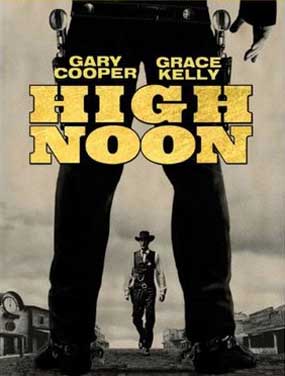
I’m sure we’ve all watched this scene unfold in a film, a Western, perhaps starring John Wayne or Gary Cooper. The sheriff checks the rounds in his six-shooter, puts on his Stetson and shiny, star-shaped badge, and walks bowlegged out of his tin-roofed station. His spurs clink as he walks, and his shoes kick up the dust of the main street running through town. At the same time, the batwing doors of the saloon swing outward, and the gun-slinging outlaw swaggers down the steps into the street. The outlaw wears a black bandana and black chaps and keeps his Colt .45 slung low in his hip, the better to draw quickly. They face each other at high noon out on the street. They are alone, though the whole town is watching from windows and roofs. A tumbleweed skitters across the road between them. There are no shadows. And the sheriff says, “This town ain’t big enough for the both of us.”

With these words, the sheriff gives the outlaw the chance to turn himself in or to leave town before the inevitable shootout. But the shootout is inevitable for two reasons: first, the movie-going public would be disappointed in a Western without a shootout; and second, the outlaw’s very nature and personality won’t let him go quietly. If today’s Gospel reading were staged as a Western, you and I would be cast as the outlaw. And a Stetson-wearing Jesus would be the sheriff, who says to us, “This town ain’t big enough for the both of us.”

But Jesus wouldn’t be talking about a town. He would be talking about us, about our souls, about our lives. “This life ain’t big enough for the both of us” is the Western film version of what Jesus actually says: “If any want to become my followers, let them deny themselves and take up their cross and follow me. For those who want to save their life will lose it, and those who lose their life for my sake, and for the sake of the Gospel, will save it.”

With these words, Jesus gives us the same choice that the sheriff gives the outlaw. We can surrender ourselves to Christ or we can fight in an attempt to keep control of our lives. We cannot, however, do both.

At first glance, the second option seems quite appealing. Who wouldn’t want to remain in control of his or her own life? Is that not the American dream – self-determination, self-preservation, pulling oneself up by one’s own bootstraps? Do we Americans not prize the entrepreneur, the independent thinker, the individual who defies the odds to become someone? Of course we do. In and of themselves, these things are not bad. But they can lead us down some wrong paths.

Let’s take self-preservation, for example. As infants, this is the only thought in our little brains. We cry whenever we perceive that something is being withheld that will help us thrive. We are incapable of taking care of ourselves on our own, so we induce through love and tears others to take care of us. At this stage of our life, self-preservation is not a choice. Keeping ourselves going is a hardwired imperative of our biology. As we grow up and become more self-sustaining, the affinity for self-preservation that we displayed as infants stays with us. The biological imperative keeps us seeking things that will help us survive.

Again, this is not a bad thing at all. The problems begin when the “self” we are trying to preserve starts wandering away from those life-giving things that helped us thrive as infants. Some of those life-giving things – such as family and love – can remain throughout our lives, but other, life-taking things can crowd them out. In middle school, we define ourselves based on the insecure input of our peers and the warped input of the consumer culture. In young adult life, we define ourselves based on our (never quite good enough) physical attractiveness to prospective mates. In adult life, we define ourselves based on our work and our need to be comfortable.

When these definitions lead us down life-taking paths, we humans have a tendency to follow such paths to the extreme. We become addicted to alcohol or drugs or gambling or video games. We pursue what marketing experts define as success. We take on the lone wolf persona, ignoring the welfare of others because we perceive that we are not faring well enough ourselves. Pretty soon, the selves that we have become look so very little like the selves that God created us to be.

The farther down the life-taking paths we go, the deeper the need to preserve these false selves becomes. We know no other way to live. We have no idea what another path would like, and the unknown is the scariest reality of all. So we cling hard. We preserve these so-called lives. And we become outlaws in our own bodies, betrayers of the abundant life that God desires for each of us.

To these outlaws, Jesus says, “This life ain’t big enough for the both of us.” But instead of drawing his six-shooter like the sheriff, Jesus unbuckles his holster and lets the belt drop into the dust. He spreads his arms wide and starts walking toward us. We keep our hands on the hilts of our guns, too bewildered by his behavior to draw and start firing. When he reaches us, he takes the gun from our belts, empties the bullets, and pulls the bandana away from our faces. Then, with his arms once again outstretched as on a cross, he beckons us to him. He calls to us to take one step toward him, one step down a new life-giving path, one step that will find us close enough for his arms to embrace us.

And in that embrace, our need to preserve those false selves starts fighting. But our gun is in the dust. Our arms are pinned to our sides. The only thing left to us is to surrender those false selves into Christ’s care and to begin to let Christ’s life replace the half-lives we were leading. In the embrace, Jesus leans close and whispers, “If you want to become my follower, deny yourself and follow me.”

And so we deny the false selves that we have become, the small, scared people who stubbornly walked down the wrong paths. We lose the half-life we had because we stopped trying to save this old life. And instead, we take on Christ’s life. We step into the life of Christ as Paul says to the Galatians: “I have been crucified with Christ; and it is no longer I who live, but it is Christ who lives in me. And the life I now live in the flesh I live by faith in the Son of God, who loved me and gave himself for me.”

As Christ lives in us, there is no room for the old life to hold sway. This life just ain’t big enough for the both of them. But Christ’s life is big enough to encompass and redeem the old life. The new paths we tread don’t start out new, but as the old, life-taking paths we followed. We just travel them in the opposite direction. And as we journey back up the life-taking path, Christ gives us the opportunity to repair and reconcile with those we’ve hurt and to reject and abandon the system that defines self with stuff. As Christ’s life takes hold in us, we find that this new life is worth preserving, and not only preserving, but rejoicing in and sharing with others.

Surrendering our outlaw lives and living Christ’s life is not easy. That’s why Jesus uses the imagery of the cross – not just because of his own impending execution, but because the cross is a symbol for suffering. Living Christ’s life means sharing in the suffering of the world, and also working to change the world to alleviate some of the suffering. But the good news is this. When we no longer live to preserve our false selves, but allow Christ to live in us, then we are never alone. We never have to face the joys and sorrows of this life alone. We never have to encounter suffering alone. The shootout ended without a shot fired. Our false selves are dead. And Christ is alive in us.


“H” is for Hope (March 2, 2012)

…Opening To…

Now let us all with one accord, in company with ages past, keep vigil with our heavenly Lord in his temptation and his fast. (Gregory the Great, from The Hymnal 1982)

…Listening In…

Therefore, since we have been made righteous through his faithfulness combined with our faith. we have peace with God through our Lord Jesus Christ. We have access by faith into this grace in which we stand through him, and we boast in the hope of God’s glory. But not only that! We even take pride in our problems, because we know that trouble produces endurance, endurance produces character, and character produces hope. This hope doesn’t put us to shame, because the love of God has been poured out in our hearts through the Holy Spirit, who has been given to us. (Romans 5:1-5; context)

…Filling Up…

This Lent, we are exploring our faith by running through the alphabet. Today, “H” is for hope. First things first: hoping and wishing are two different things, though we tend to use the words interchangeably. “I hope it snows tomorrow” really means “I’m wishing for a snow day.” But the kind of hope we are talking about where following Christ is concerned is quite a bit bigger than simply “wishing.”

A wish is single, solitary thing. You wish for something to happen (or not happen). Hope, on the other hand, is the framework that supports the act of wishing. Hope is the expectation that the bounds of possibility are far wider than we can perceive. Hope is the act of trust taken out of the present and projected into the future.

The Outline of the Faith in the back of the Book of Common Prayer defines Christian hope in this way: “The Christian hope is to live with confidence in newness and fullness of life, and to await the coming of Christ in glory, and the completion of God’s purpose for the world.” Confidence here is another word for trust. When we trust, we make ourselves vulnerable. But hope gives us the courage to keep on trusting. Hope does this by wrestling vulnerability into a little box on the corner of the shelf. When trust shines out in our lives undimmed by things like vulnerability, we can invite God to cultivate within us that expectation about the bounds of possibility. We limited humans might perceive boundaries. But hope tells us that in God, the boundaries are so much more expansive than our perception allows us to see.

…Praying For…

Dear God, you are the source of all hope. Help me to trust you in the present so that I can rest assured in the hope that you fulfill all your promises. In Jesus Christ’s name I pray. Amen.

…Sending Out…

I leave this moment with you, God, nourished by your Spirit and willing to open up a larger space within for you to dwell.

“G” is for Grief (March 1, 2012)

…Opening To…

Now let us all with one accord, in company with ages past, keep vigil with our heavenly Lord in his temptation and his fast. (Gregory the Great, from The Hymnal 1982)

…Listening In…

When Mary arrived where Jesus was and saw him, she fell at his feet and said, “Lord, if you had been here, my brother wouldn’t have died.” When Jesus saw her crying and the Jews who had come with her crying also, he was deeply disturbed and troubled. He asked, “Where have you laid him?” They replied, “Lord, come and see.” Jesus began to cry. The Jews said, “See how much he loved him!” (John 11:32-35; context)

…Filling Up…

This Lent, we are exploring our faith by running through the alphabet. Today, “G” is for grief. First off, let me get this out there: no one likes grieving. Grieving is not something we choose to do. Grief happens whether we are ready for it or not, and there’s really no way outside heavy prescription drugs to control it or take the edge off it.

That being said, Charlie Brown is on to something whenever he says his catchphrase: “Good grief.” Grief, in a sense, is good. Grief happens after loss – whether the loss of a loved one or the end of a relationship or a change in what you thought the future would hold. Grief is our body and our spirit’s way of confirming to us that we, in the case of death, truly did love the person who is gone from our sight. Grief can sneak up behind us, catch us off guard, dissolve us into puddles of tears, and then give us the gift of knowing in the depths of our souls that the deceased really did matter to us.

Grief gives us a way to stay connected to the newly deceased while we move to the new normal that our lives will enter sometime after all the events surrounding the death. Grief is love’s tether to the other person. But as grief fades, the tether remains because the relationship did not die with the person. The Resurrection of Jesus Christ points to this reality, the reality that relationships do not die; rather, through the love of God, they only change. Grief is the incubator for the change in relationships as people pass life through death to new life.

Grief is a gift. It may not seem so at the time of piercing, screaming, shattering loss, but in the end, as Charlie Brown says, grief is good.

…Praying For…

Dear God, you infuse every relationship with your presence. Help me to recognize that the love I hold for people who have passed is not negated, but changed. In Jesus Christ’s name I pray. Amen.

…Sending Out…

I leave this moment with you, God, nourished by your Spirit and willing to open up a larger space within for you to dwell.

“F” is for Freedom (February 29, 2012)

…Opening To…

Now let us all with one accord, in company with ages past, keep vigil with our heavenly Lord in his temptation and his fast. (Gregory the Great, from The Hymnal 1982)

…Listening In…

You were called to freedom, brothers and sisters; only don’t let this freedom be an opportunity to indulge your selfish impulses, but serve each other through love. (Galatians 5:13; context)

…Filling Up…

This Lent, we are exploring our faith by running through the alphabet. Today, “F” is for freedom. When you first think about “freedom,” I would hazard to guess that you think about it in its patriotic habitat. We talk about the United States of America being “the land of the free and the home of the brave.” We see bumper stickers that read, “Freedom isn’t free.” To Americans, “freedom” means something akin to “getting to do what I want.”

However, this definition is faulty. If everyone got to do what he or she wanted, we would reach a state of chaos pretty quickly. 17th century political scientist John Locke called this kind of absolute freedom the “state of nature”; in it, he argued, there really is no opportunity to exercise one’s freedom because of the constant need to protect oneself from other people’s exercise of their freedom. And so governments are instituted to protect rights. This paradoxically creates freedom by curtailing it.

In the same way, as followers of Christ, we are at our freest when we surrender our personal freedom to God; when we follow the path Christ walked; when we don’t do what we want but what we discern God wants of us. At first blush, this sounds far from freedom. But the paradox holds – the more we turn away from God and follow our own desires, the more we enslave ourselves to them. The more we allow God to lead us, the more freedom we find.

…Praying For…

Dear God, in your service is perfect freedom. Help me to recognize when I have enslaved myself to the false gods of this world so that I can turn to you, let go the shackles of sin, and be free. In Jesus Christ’s name I pray. Amen.

…Sending Out…

I leave this moment with you, God, nourished by your Spirit and willing to open up a larger space within for you to dwell.

“E” is for Eucharist (February 28, 2012)

…Opening To…

Now let us all with one accord, in company with ages past, keep vigil with our heavenly Lord in his temptation and his fast. (Gregory the Great, from The Hymnal 1982)

…Listening In…

Jesus said, “Have the people sit down.” There was plenty of grass there. They sat down, about five thousand of them. Then Jesus took the bread. When he had given thanks, he distributed it to those who were sitting there. He did the same with the fish, each getting as much as they wanted. (John 6:10-11; context)

…Filling Up…

This Lent, we are exploring our faith by running through the alphabet. Today, “E” is for Eucharist. This word is used in several church contexts and can be a real barrier to entry for newcomers because it doesn’t really look like any other word they might recognize. We use it as a synonym for “Communion,” which is a word that has “union” in it and sort of looks like “common,” so newbies to the faith could get an inkling of what it means. But Eucharist? Yikes! The word just looks tricky.

So if you or someone you know has been wondering about this one, let me break it down to two simple English words: Eucharist means to “give thanks.” It is an ancient Greek word that was essentially ported into English unharmed by the ravages of time and language (which is why it looks a bit funny). When Jesus gives thanks before breaking and sharing the loaves and fishes with five thousand of his closest friends, he is Eucharist-ing.

With this simple meaning under our belts, we can look at how we use this word in church. First, we use it as a name for the service: the “Holy Eucharist,” which encompasses the parts of the service that surround both the Word and the table. We use it as the name of the sacrament of Holy Communion and for the prayers we pray when we consecrate the bread and wine. And we use it to name these two elements after the prayer when they have become for us Christ’s Body and Blood.

Because we use the word “Eucharist” in these several contexts, the definition of the word can get lost. But if we remember that the word means to “give thanks” then those contexts blossom with new meaning. The service as a whole becomes one we enter into with an attitude of thanksgiving. The prayer and the communion become our sacrifice of praise and thanksgiving. The elements of bread and wine become nourishment of God’s abundance, for which we give thanks.

Eucharist is not just an old word that is difficult to understand. It is the entry point to a new outlook on the world – one in which abundance trumps scarcity, generosity defeats greed, and thanksgiving wins the day.

…Praying For…

Dear God, you are the source of every good gift. Help me to nurture within myself a generous heart that is always on the lookout for blessing, for which I can give thanks. In Jesus Christ’s name I pray. Amen.

…Sending Out…

I leave this moment with you, God, nourished by your Spirit and willing to open up a larger space within for you to dwell.

“D” is for Desert (February 27, 2012)

…Opening To…

Now let us all with one accord, in company with ages past, keep vigil with our heavenly Lord in his temptation and his fast. (Gregory the Great, from The Hymnal 1982)

…Listening In…

The desert and the dry land will be glad; the wilderness will rejoice and blossom like the crocus. They will burst into bloom, and rejoice with joy and singing. (Isaiah 35:1-2; context)

…Filling Up…

This Lent, we are exploring our faith by running through the alphabet. Today, “D” is for desert. The desert plays a big role in the Bible. Quite a bit of it is set there, though sometimes our translations use the word “wilderness” interchangeably with desert. The people of Israel wander in the desert for forty years between fleeing Egypt and arriving in the Promised Land. Jesus spends forty days in the desert after his baptism. There he fasts and resists the temptations of the devil.

Perhaps you live near a real desert – out in Arizona or California perhaps. I don’t, so when the Bible talks about the desert or wilderness, I place myself not in a literal desert but a figurative one. You see, the desert is all around us. We live in the desert. Sometimes through our actions and inactions, we contribute to expanding the desert. The desert exists anywhere that we feel isolated or afraid or tempted or lost. And let’s be honest – we are feeling at least one of those most of the time.

But just because we find ourselves in the desert much of the time does not make it simply a place of trial or a proving ground. God does not drop us in the desert just to test our endurance. We simply wander into the wilderness, and we get caught there because the wilderness is vast and tangled. Sometimes, the desert extends its pathless expanse as far as the eye can see.

But when the people of Israel got stuck there for all those years, they made a remarkable discovery. God was in the desert, too. God was everywhere they were, including the wilderness. God doesn’t stop at the desert’s edge. In fact, God can make the desert blossom.

…Praying For…

Dear God, you love all you create and never forsake me to lonely wandering. Help me to let you guide my feet in the pathless desert so that I can follow your lead as we make our way out together. In Jesus Christ’s name I pray. Amen.

…Sending Out…

I leave this moment with you, God, nourished by your Spirit and willing to open up a larger space within for you to dwell.

Three Panels of the Story

(Sermon for Sunday, February 26, 2012 || Lent 1B || Mark 1:9-15)

Every year on the First Sunday of Lent, we hear the story from the Gospel that tells about Jesus’ time in the wilderness. We hear this story on this particular Sunday because Jesus’ forty days off by himself, fasting in the arid austerity of the desert, are a model for our own forty-day Lenten journey. Last year, we heard Matthew’s telling of this tale – an eleven-verse treatment, complete with the devil’s three-pronged attack on a famished Jesus. The year before that, we heard Luke’s version, a full thirteen verses that recount the same story as Matthew does. Now, if Matthew and Luke spend on average a dozen verses on this story, then you might be wondering whether you nodded off during the Gospel reading from Mark a few moments ago and missed something. Where was the dialogue between the seductive devil and the stalwart Jesus? Where were the temptations: the bread from the rock, the leap from the temple, the view from the mountain? The answer is that I didn’t read them because they aren’t there. And I can assure you that you didn’t have time to nod off, no matter how sleepy you are.

Never one to spend his words frivolously, Mark gives us a grand total of two verses on Jesus’ time in the wilderness. “And the Spirit immediately drove him into the wilderness. He was in the wilderness forty days, tempted by Satan; and he was with the wild beasts; and the angels waited on him.” That’s all Mark has to say on the subject. So, to keep you all from feeling gypped by a two-verse Gospel reading, the framers of our lectionary tacked on a few verses before and a few verses after Jesus’ time in the wilderness. And I’m so glad they did.

I’m glad because Mark’s rapid style progresses from scene to scene with such haste that the individual scenes cannot be isolated from one another. Indeed, I don’t think Mark intended for them ever to stand alone. Rather, taken together like the three panels of a comic strip, the three short scenes we read a few minutes ago tell the concise story of our life of faith.

Here’s the first panel: Mark draws Jesus emerging from the waters of the River Jordan. A dove alights on his outstretched arm. A text bubble points out the top of the frame and reads: “You are my Son, the Beloved; with you I am well pleased.” This first panel in the story of our life of faith is “relationship.” Jesus hears God’s voice calling him “Son.” And not just son, but a son whom God loves. And not just a son God loves, but a son God loves, in whom God finds delight and joy. This relationship that God has with Jesus is the same relationship that God initiates with each one of us. Each of us is a son or daughter whom God loves and in whom God delights.

I know this can be hard to accept because most of the time we feel way too messy and unkempt for God to want to know us, let alone to delight in us. Our socks have holes in them. We haven’t vacuumed in a while. We ate that pretzel we found between the couch cushions. And that’s just the surface stuff. Why would God want to have anything to do with such untidy people?

But the wonderful thing about this first panel of our story is that Jesus hasn’t done anything yet. We’re less than a dozen verses into Mark’s account of the Gospel. Jesus hasn’t spoken a word or accomplished anything more remarkable than traveling from Nazareth to the Jordan and coming up for air after John dunked him under the water. Before Jesus has time to win or lose God’s favor, God has already staked out a place in their relationship. Likewise, God tossed God’s lot in with us long before we let God see our untidiness. And God’s not going to cut and run just because of our state of disrepair. God’s knowledge of us, love for us, and delight in us do not depend on our worthiness. In fact, they create our worthiness. Because God is in relationship with us, we are worthy to be in relationship with God. This is the first panel of our story.

In the second panel, Mark draws Jesus walking in the desert. At first glance, he seems to be alone. But then you notice the faint outline of an angelic hand holding one of Jesus’ hands as the other fends off Satan. This second panel in the story of our life of faith is “adversity.” Immediately after God affirms God’s relationship with Jesus, Jesus finds himself in the wilderness with the wild beasts and the temptations of Satan. I always assumed that Jesus had to travel quite far to get to the wilderness, but as I thought about this sermon, I changed my mind. I doubt he went very far at all. The wilderness is all around us. We live in the wilderness. Sometimes through our actions and inactions, we contribute to expanding the wilderness. The wilderness exists anywhere that we feel isolated or afraid or tempted or lost. And let’s be honest – we are feeling at least one of those most of the time.

But the adversity, which brings on these feelings, does not make the wilderness a trial or a proving ground. God does not drop us in the desert just to test our endurance. We simply wander into the wilderness, and we get caught there because the wilderness is vast and tangled. But remember the first panel of our story. The relationship God entered into on our behalf does not end at the desert’s edge. When the people of Israel wandered in the desert for forty years after fleeing Egypt, they made a remarkable discovery. Their God was in the desert, too. The adversity of the wilderness is the second panel of our story, but the relationship of the first panel carries through.

When we discover God’s constant presence even in the midst of the wilderness, we are ready to move to the third panel. Mark draws Jesus striding through Galilee proclaiming a message to everyone who will listen and to some who won’t. A text bubble points to Jesus, saying, “The time is fulfilled, and the kingdom of God has come near; repent, and believe in the good news.” This third panel in the story of our life of faith is “proclamation.” After God has claimed a delight-filled relationship with the beloved Son, and after the Son has wandered in the wilderness, Jesus returns to Galilee with the words of the good news of God on his lips.

Our proclamation of this same good news happens whenever we act on the faith that comes from God’s delighted, loving relationship with us. Our proclamation happens when we come to know, love, and delight in all the messy and unkempt people around us. Our proclamation happens when, even in the midst of the tangled wilderness, we rely on God to show us the path to freedom.

Our life of faith moves from relationship through adversity to proclamation. But this life of faith is not linear; rather, this life is a spiral. As we grow in our faith, we delve more deeply into our side of our relationships with God. As we come ever closer to the God who is always close to us, we can endure greater adversity. And we can proclaim more continuously and more courageously the love and delight God has for all people.

As we enter this holy season of Lent, I invite you to take stock of where you are in this life of faith. Are you nurturing your relationship with God? Or are you wandering through the tangled wilderness of adversity? Or are you reveling in all the ways that you show forth God’s love? Or perhaps, you are living out a little of all three. Wherever you are in this story of the life of faith, trust that God began a relationship with you before you were worthy of one, that God is hacking away at the tangle of wilderness right alongside you, and that God is constantly speaking the words of the good news through your words and deeds into the hearts of those you meet along the way. Thanks be to God.

“C” is for Charisma (February 24, 2012)

…Opening To…

The glory of these forty days we celebrate with songs of praise; for Christ, through whom all things were made, himself has fasted and has prayed. (Hymn from the 6th century; trans. Maurice F. Bell)

…Listening In…

As Jesus passed alongside the Galilee Sea, he saw two brothers, Simon and Andrew, throwing fishing nets into the sea, for they were fishermen. “Come, follow me,” he said, “and I’ll show you how to fish for people.” Right away, they left their nets and followed him. After going a little further, he saw James and John, Zebedee’s sons, in their boat repairing the fishing nets. At that very moment he called them. They followed him, leaving their father Zebedee in the boat with the hired workers. (Mark 1:16-20; context)

…Filling Up…

This Lent, we are exploring our faith by running through the alphabet. Today, “C” is for charisma. There are plenty of other good “C” words that I could have chosen; certainly, that are more “churchy” – well, “church,” for instance. Charisma isn’t really a word that’s used much when talking about following Jesus Christ. Perhaps, you’ve heard a preacher talk about Christ’s own charisma – how he attracted crowds, how people followed him seemingly on a whim.

However, you might see a problem with this use of “charisma.” Perhaps, you’ve heard talking heads on the news talk about the charisma of politicians – some just have it, others don’t. Often, politicians trade on this so-called charisma to make up for deficiencies in their political acumen or their knowledge of the world. In this sense “charisma” becomes the commodity they trade on to win office, and therefore it is seen as insubstantial, as part of a smoke and mirrors campaign to get elected. When we talk about Christ’s charisma winning the crowds, we are dangerously close to this kind of political showmanship.

But the word “charisma” is a really old word, and its longevity can save it from the political scene. “Charisma” comes from the Greek word charis (χαρις), which means “grace.” If we remember this root of our English word, then we remember the root of the “compelling attractiveness” that “charisma” has come to mean. The root is God’s grace – not smoke and mirrors, not showmanship, but the elegance and abundance of God’s freely given gifts stored inside a living being.

If Jesus had charisma, and I’m sure he did, then I bet it was this kind – the kind nourished by the grace of God.

…Praying For…

Dear God, your gift of grace picks me up when I stumble and teaches me to dance to the rhythm of your love. Help me to move with this rhythm in my life. In Jesus Christ’s name I pray. Amen.

…Sending Out…

I leave this moment with you, God, glad that you have given me the strength and the will to reflect on my journey with you.