“S” is for Symbol – or Sacrament (March 19, 2012)

…Opening To…

For me, kind Jesus, was thy incarnation, thy mortal sorrow, and thy life’s oblation; thy death of anguish and thy bitter passion, for my salvation. Therefore, kind Jesus, since I cannot pay thee, I do adore thee, and will ever pray thee, think on thy pity and thy love unswerving, not my deserving. (Johann Heermann, from The Hymnal 1982)

…Listening In…

After taking the bread and giving thanks, he broke it and gave it to them, saying, “This is my body, which is given for you. Do this in remembrance of me.” In the same way, he took the cup after the meal and said, “This cup is the new covenant by my blood, which is poured out for you.” (Luke 22:19-20; context)

…Filling Up…

This Lent, we are exploring our faith by running through the alphabet. Today, “S” is for symbol. We have a lot of symbols in church: the cross, the dove, the living water, the commandments, (fill in the blank here _________ ).

But before we go any further, I want to dispel from your mind any notion of the phrases “it’s only a symbol” or  “it’s merely symbolic.” Symbols are woefully misunderstood things in American culture – like soccer and irony. A symbol is an object that points beyond itself to a deeper truth. Too often, “sign” and “symbol” are used interchangeably, but they are not synonymous. A stop sign lets you know you are supposed to brake at an intersection, but that’s all it tells you. The red octagon doesn’t compel you to ruminate on why you should stop. But a symbol – the cross, for instance – stirs within us all of the historical and theological and emotional resonances of the truth to which it points.

In church, we have a special sort of symbol called a “sacrament.” Take communion for instance. The bread we use is laughably ordinary, but the situation we put it in is not. The juxtaposition between the normal loaf of bread and the strange way it is being treated invest the ordinary with new meaning. The bread connotes the bounty of harvest, the fruits of the earth, the goodness of creation, the nourishment of our bodies. And when we put it on that table, and a priest (in the presence of God’s people) asks God to indwell that bread with the Spirit of Christ, the bread becomes a sacrament. The bread becomes one part of the Eucharistic meal, an outward and visible connection to our inward spiritual lives. Special sacramental symbols take ordinary things – bread, water, even our own actions and personhoods – and set them ablaze with physical and emotive evidence of the presence of God.

…Praying For…

Dear God, you give us sacraments to help us see you in this world. Help me to by a symbol for your love, mercy, and grace to all I meet. In Jesus Christ’s name I pray. Amen.

…Sending Out…

I leave this moment with you, God, counting myself blessed that you would choose to make me the person I am and love me into the person I am becoming.

Choosing the Light

 (Sermon for Sunday, March 18, 2012 || Lent 4B || John 3:14-21)

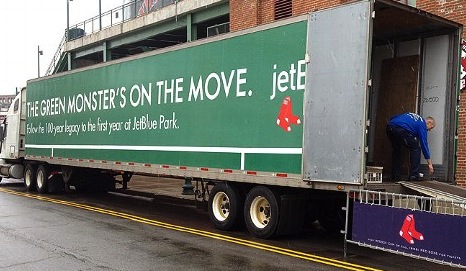
I’d like to go to a Red Sox game and hold up a sign that says, “John 3:17.” Perhaps, a row-mate would ask me why my sign is wrong and I can say that the sign’s not wrong, but a different verse entirely. The verse after the most famous verse of the Bible says, “Indeed, God did not send the Son into the world to condemn the world, but in order that the world might be saved through him.”

Now, before we really get down to the business of this sermon, let’s talk about this “world,” a word John uses three times in this one verse. For John, the world is the creation that rebelled against God – the good works, which God made, but which fell into disrepair because of bad human choices. One of the reasons that John starts his Gospel with, “In the beginning,” is so we readers might make the link back to the story of creation in Genesis, in which God created the heavens and the earth. Three chapters into Genesis, things start to fall apart because of Adam and Eve’s dreadful choices.

Fast-forward to John’s time or even to our own, and the broken state of the world is evident – there’s no need to list all of the broken things in relationships or in society or in the environment (for we know them all too well). Much of the brokenness stems directly from bad choices made over and over again. And because these decisions are made again and again, they become part of the system, the machinery of brokenness, and we feel helpless in the face of a crumbling world. Nevertheless, God so loved this world that God chose to send God’s Son into the brokenness in order that he might show us what is broken. And in showing us, he gave us the gift and duty of helping him restore the broken world to wholeness.

But even though John expands the Son’s salvation to include the whole world (literally the “cosmos” in Greek), the restoration starts taking place in the hearts of God’s children – in us and ever other person who has every walked the earth. The brokenness began in the hearts of Adam and Eve; thus, the healing, the saving of the world takes hold at the origin of the brokenness, in the hearts of all people.

Just like Adam and Eve had the choice to obey or disobey God, each of us has a choice, which Jesus names using the imagery of darkness and light: “The light has come into the world, and people loved darkness rather than light because their deeds were evil,” he says. “For all who do evil hate the light and do not come to the light, so that their deeds may not be exposed. But those who do what is true come to the light, so that it may be clearly seen that their deeds have been done in God.”

We have a choice to stumble in the darkness or to walk in the light, to be part of the problem or part of the solution, to add to the brokenness or to participate in the healing. And we don’t make this choice just once. Rather this choice is part of every single decision we make. Every decision either pulls us back to the darkness or pushes us further into the light. Perhaps you can remember a choice you made that turned out to be the wrong one – failing to stand up to a friend’s bully or taking out your frustration on your spouse or deliberately not noticing the homeless veteran on the street or knowingly purchasing a product that was fabricated under unbearable conditions, or…or…or — the list is endless. I don’t know about you, but when I make a choice the pulls me towards the darkness, I feel just a little bit unmade, like a little bit of me has eroded away. If I continually choose the wrong path, if I continually embrace the darkness, I wonder — will there be anything left of me?

This question points to the condemnation that Jesus talks about. God does not condemn; rather, we condemn ourselves when we choose the darkness over the light. Indeed, each time the verb “condemn” happens in the middle of our passage, the word is passive. God takes no active part in our condemnation, but only patiently and constantly calls us back to the light. And I firmly believe this call is what keeps us from eroding away entirely, what keeps us from total annihilation (which is another way of talking about hell). God’s constant call back to the light gives us a beacon to turn to, a lighthouse, if you will, that can guide us through the darkness and keep us from breaking up on the rocks. God does not force us to choose the light, but rather invites us to steer toward the harbor of God’s radiance.

As we answer God’s call and choose the light over the darkness, we discover that we can be part of the healing of the world. In our own experiences of the darkness, in our own vulnerability, we find the common ground of brokenness that Christ found when he came to earth and when he was lifted up on the cross. When we choose the light, we choose to be partners with Christ in healing the brokenness of the world even as Christ is healing our own brokenness.

So how do we translate the imagery of walking in the light into our everyday lives? What does choosing the light look like on the ground, in our day-to-day lives, at the office or at school or at home? Everything comes back to inviting God into our decisions, about orienting toward the light in each choice so that we do not feel like we are being eroded away to nothingness.

Here’s one practical way to help make decisions. Margot and I have been participating in a Lenten devotional series done by the Society of Saint John the Evangelist in Boston. Each day, a brother of the order talks about a piece of their Rule of Life, and about how each of us can benefit in our walks with God by writing a Rule for ourselves. A personal Rule of Life helps you to figure out how to be the best version of yourself, the version that God created you to be. When faced with a choice, remembering your Rule can help you walk in the light.

Writing out a Rule for yourself could be a simple as praying for clarity about the five things that are most important to you, then writing them on an index card and trying to live with those priorities in mind. Or perhaps, you might feel called to write out a longer, more in-depth set of guidelines for how you relate to yourself, to others, to the world, and to God. I’ve been working on my own Rule, and I’d like to share a few short passages with you so you can see how I am, with God’s help, trying to choose the light.

“I will nurture my relationship with God through praying, listening, serving, and loving.

“I will love my family. I will be loyal, honest, caring, and present to my wife and our (future) children.

“I will live my life with an attitude of thanksgiving, always seeking to choose abundance over scarcity, trust over fear, and relationship over isolation.

“I will live my life with an attitude of invitation, always seeking to choose engagement over apathy, encouragement over criticism, and listening over selling.”

In each of these pieces of my Rule, God has given me guidance for how to choose the light over the darkness. Does this mean I will always choose the light? Of course not, but the Rule will help me see when I have failed and help me turn back to the right paths. I invite you to consider making your own Rule, so that you may more effectively choose light over darkness. Please come see Margot or me if you’d like guidance in doing this incredibly fruitful practice.

Speaking of practice, spring training is going on, which reminds me of my sign from the beginning of this sermon (like that segue?). John 3:17 – “God sent the Son into the world not to condemn the world, but in order that the world might be saved through him.” Christ’s saving of this world began in his life, death, and resurrection, and continues in the hearts of all people. When we choose the light over the darkness, we choose to be part of the healing of this world, we choose to show the world that God is moving in our lives. In this witness, we bring God’s light into the darkness of this world. And do you know what happens when light is introduced into darkness? Darkness flees.


“R” is for Religion (March 16, 2012)

…Opening To…

Therefore, we pray you, Lord, forgive; so when our wanderings here shall cease, we may with you for ever live, in love and unity and peace. (Gregory the Great, from The Hymnal 1982)

…Listening In…

Those who accepted Peter’s message were baptized. God brought about three thousand people into the community on that day. The believers devoted themselves to the apostles’ teaching, to the community, to their shared meals, and to their prayers. A sense of awe came over everyone. God performed many wonders and signs through the apostles. All the believers were united and shared everything. (Acts 2:41-44; context)

…Filling Up…

This Lent, we are exploring our faith by running through the alphabet. Today, “R” is for religion. Finally, you say – a real word! Huzzah! So, the word “religion” gets a bad rap in modern parlance. The idea that it’s groovy to be “spiritual” but totally square to be “religious” is partially to blame. But also to blame are the things people do and say in the name of “religion.” In a recent book, Brian McLaren tries to reclaim the word religion by making up a new word – “de-ligion.” This new word tries to take up all the negative press that “religion” has been getting in recent years because of one thing or another. I think it’s a great new word – but, sadly, I don’t see it catching on.

And this is too bad, because “religion” is a great word for a pretty spectacular concept. (Fair warning: a lot of people have talked about what I’m going to say next, including McLaren, and me in this video. Sorry if this is repetitive.) “Religion” comes from the same Latin root as the word “ligament.” A ligament connects parts of a joint. I’m sure you’ve heard about football players tearing their ACLs – well, the L in ACL is “ligament.” The “lig” in the word comes from the Latin “ligare,” which means “to bind.”

Now look at “religion.” See the “Re-” at the beginning of the word? Yep – that means “again.” So, at the etymological level, religion is about reconnecting or connecting again. Now let’s bring God in. Religion isn’t just about connecting with God, but about re-connecting because God has always been connected with us. The church has discovered that the best way to reconnect with God is to do so in the company of other like-hearted people, thus the gathering of the church comes into being.

So let’s reclaim the word “religion” for its fundamental purpose – that of reconnecting with God. I don’t know about you, but that sounds a lot like “spirituality” to me. Groovy.

…Praying For…

Dear God, you have always been connected to me. Help me deepen my connection to you by reaching out for support from others who are also working to deepen their connections. In Jesus Christ’s name I pray. Amen.

…Sending Out…

I leave this moment with you, God, counting myself blessed that you would choose to make me the person I am and love me into the person I am becoming.

“Q” is for Q (March 15, 2012)

…Opening To…

Therefore, we pray you, Lord, forgive; so when our wanderings here shall cease, we may with you for ever live, in love and unity and peace. (Gregory the Great, from The Hymnal 1982)

…Listening In…

Therefore, you should treat people in the same way that you want people to treat you; this is the Law and the Prophets. (Matthew 7:12; context) (also Luke 6:31) (from Q? perhaps)

…Filling Up…

This Lent, we are exploring our faith by running through the alphabet. Today, “Q” is for Q. I know, I know, I’m cheating again – but there aren’t a lot of “Q” words that have to do with church or discipleship. So, instead of stretching to words like “quest” or “quality” (which I considered doing), I thought I’d talk just a bit about an important theory of Biblical scholarship (called the “two source hypothesis”). This theory is cool because it gives us one way to organize some issues surrounding why the accounts of the Gospel say different things.

It’s called (conveniently) “Q,” which stands for “Quelle,” the German word for “source.” Simply put, the theory behind Q posits that there was a written source of certain things that Jesus said and did, and this source existed well before the accounts of the Gospel (Matthew, Mark, Luke, and John). Scholars call this document Q, and they think that only Matthew and Luke knew about it or used it. They think this because Matthew and Luke share details that do not appear in Mark. (John is usually left out of this discussion because it is so different from the others.) Matthew and Luke used Mark for the basic structure, but then added all sorts of other material that they presumably got from Q.

So why is this important for non-Bible scholars or seminary professors. Well, it isn’t really. Except that Q helps show how the story of Jesus’ life, death, and resurrection spread abroad after his ascension. We don’t know for sure if Q existed, but it’s a safe bet that it did. Reconstructed, Q shows what some very early witnesses wanted to remember most about Jesus. You can find what these early witnesses held on to by reading Matthew, Mark, and Luke, and then figuring out what only Matthew and Luke share in common. Sounds like fun, right?

…Praying For…

Dear God, thank you for the witnesses that proclaimed the good news before the Gospel was written down. Help me to be a herald of the same good news all the days of my life. In Jesus Christ’s name I pray. Amen.

…Sending Out…

I leave this moment with you, God, counting myself blessed that you would choose to make me the person I am and love me into the person I am becoming.

“P” is for Pride (March 14, 2012)

…Opening To…

Therefore, we pray you, Lord, forgive; so when our wanderings here shall cease, we may with you for ever live, in love and unity and peace. (Gregory the Great, from The Hymnal 1982)

…Listening In…

When pride comes, so does shame, but wisdom brings humility. (Proverbs 11:2; context)

…Filling Up…

This Lent, we are exploring our faith by running through the alphabet. Today, “P” is for pride. There are two kinds of pride, the good kind and the bad. Let me get the good kind out of the way with an illustration.

Just now, I watch a mother jogging backwards in the street outside my office. It’s an unexpectedly beautiful day here for the first half of March, and this mother is out taking advantage of it with her small son. The boy is perhaps four or five. He is wearing a helmet and riding a shiny blue bicycle with training wheels. She jogs backwards, keeping her son in front of her, as he pedals to keep up with her. He’s riding a bicycle! Perhaps he got it for his birthday or Christmas and this is the first day that’s warm enough for riding. Don’t tell me she’s not taking pride in the amazing things her son can do. This is the good kind of pride. When people use the word in this context, they are talking about the joy and contentment they feel because of the actions of another.

The bad kind of pride is wholly different and one I, personally, am quite prone to. The bad kind of pride happens when we mistakenly think that we are solely responsible for our own success. This is the pride that makes the quarterback take all the credit for the win or the kind of pride that leads to multi-million dollar bonuses for corporate executives. Or the kind that keeps us from being thankful – to God and to others.

To put it more clinically, the bad kind of pride is the spiritual disease that results in the improper attribution of giftedness. The cure is humility, which is not thinking you’re not good at things, but rather is the proper attribution of your giftedness to God’s grace and generosity.

In Dante’s Divine Comedy, the mountain of Purgatory, which ascends through the seven deadly sins, begins with pride at its base. Pride is the first and great sin, in which we separate the giver from the gift.

…Praying For…

Dear God, you are the giver of all good gifts. Help me to remember that you are the source of my giftedness so that I can remain in relationship with you while I use my gifts to serve you. In Jesus Christ’s name I pray. Amen.

…Sending Out…

I leave this moment with you, God, counting myself blessed that you would choose to make me the person I am and love me into the person I am becoming.

“O” is for Ordo (March 13, 2012)

…Opening To…

Therefore, we pray you, Lord, forgive; so when our wanderings here shall cease, we may with you for ever live, in love and unity and peace. (Gregory the Great, from The Hymnal 1982)

…Listening In…

I received a tradition from the Lord, which I also handed on to you: on the night on which he was betrayed, the Lord Jesus took bread. After giving thanks, he broke it and said, “This is my body, which is for you; do this to remember me.” He did the same thing with the cup, after they had eaten, saying, “This cup is the new covenant in my blood. Every time you drink it, do this to remember me.” Every time you eat this bread and drink this cup, you broadcast the death of the Lord until he comes. (1 Corinthians 11:23-26; context)

…Filling Up…

This Lent, we are exploring our faith by running through the alphabet. Today, “O” is for ordo. I know what you’re thinking. You’re thinking that now I’m just making up words or that “Ordo” sounds like an alien from Star Wars. Rather, ordo roughly translates structure or a pattern. Think of the words “order” and “ordinary.” Something that is “extraordinary” is outside the normal structure or pattern.

Ordo helps us make sense of our lives. Each and every one of us uses the concept of ordo whether we realize it or not. Our personal ordo tells us that it’s time to watch the news or go to bed. It tells us that answering the phone call from mom is more important than finishing the YouTube video. It tells us that looking both ways before crossing the street is a good idea.

Following Jesus Christ adds another layer to our personal ordo, but it isn’t a layer that goes on top of the ones we already had. It goes beneath them. Being disciples of Jesus Christ means structuring and patterning our lives with his path for us as our foundation. In the worship services of the church, we practice a certain kind of ordo, a pattern of worship that goes from greeting to reading to listening to praying to confessing to thanking to sharing to feasting to serving. By sticking with this basic structure, our participation in the worship of God in the church helps us build our own personal ordo in light of our worship.

How does following Jesus Christ influence your ordo? Is being a disciple part of your daily pattern? If not, how could you invite Christ to help you restructure your life with him as a foundation?

…Praying For…

Dear God, you move through every moment of my life. Help me to pattern my life so that I expect your movement and begin to move with you. In Jesus Christ’s name I pray. Amen.

…Sending Out…

I leave this moment with you, God, counting myself blessed that you would choose to make me the person I am and love me into the person I am becoming.

“N” is for Numbers (March 12, 2012)

Oops! Accidentally scheduled this for Tuesday instead of Monday — my apologies for being five hours late!

…Opening To…

Therefore, we pray you, Lord, forgive; so when our wanderings here shall cease, we may with you for ever live, in love and unity and peace. (Gregory the Great, from The Hymnal 1982)

…Listening In…

At that time some of the legal experts and the Pharisees requested of Jesus, “Teacher, we would like to see a sign from you.” But [Jesus] replied, “An evil and unfaithful generation searches for a sign, but it won’t receive any sign except Jonah’s sign. Just as Jonah was in the whale’s belly for three days and three nights, so the Human One will be in the heart of the earth for three days and three nights. The citizens of Nineveh will stand up at the judgment with this generation and condemn it as guilty, because they changed their hearts and lives in response to Jonah’s preaching. And look, someone greater than Jonah is here.” (Matthew 12:38-41; context)

…Filling Up…

This Lent, we are exploring our faith by running through the alphabet. Today, “N” is for numbers. Numbers play an important role in the Bible (and I’m not talking about the Book of Numbers, though that’s important, too). I’m talking about good, old-fashioned numbers like one, three, seven, twelve, and forty.

When you read the books of the Bible, be on the lookout for numbers. Most of the time, if a number is attached to something, then the number is central to understand what the writer is trying to get across. If the number weren’t vital, the writer would just say “a couple” or “some” or “a lot.” Numbers, on the other hand, most often signal a link back to an earlier story.

Let’s quickly take the use of numbers in the New Testament as an example.

3 – number of days Jesus was dead links back to number of days Jonah was in the belly of the great fish.

12 – number disciples in Christ’s inner circle links to the number of tribes of Israel.

40 – number of days Jesus is in the wilderness following his baptism links back to the number of days of the flood and the number of years the people of God were journeying in the wilderness.

The list goes on. Take note of when the writers of the Bible choose to make note of specific numbers. Nearly every time, they will somehow link to another part of the great story that weaves through time, the story of the One God. What other numbers can you think of that can help us interpret the Bible?

…Praying For…

Dear God, you count every member of your creation as special in your sight. Help me to love you with my whole being, so that I may not be divided, but may give myself fully to your service. In Jesus Christ’s name I pray. Amen.

…Sending Out…

I leave this moment with you, God, counting myself blessed that you would choose to make me the person I am and love me into the person I am becoming.

“M” is for Martyr (March 9, 2012)

…Opening To…

So daily dying to the way of self, so daily living to your way of love, we walk the road, Lord Jesus, that you trod, knowing ourselves baptized into your death: so we are dead and live with you in God. (Thomas H. Cain, from The Hymnal 1982)

…Listening In…

As they battered him with stones, Stephen prayed, “Lord Jesus, accept my life!” Falling to his knees, he shouted, “Lord, don’t hold this sin against them!” Then he died. (Acts 7:59-60; context)

…Filling Up…

This Lent, we are exploring our faith by running through the alphabet. Today, “M” is for martyr. This is by far the most misunderstood word in our whole Lenten alphabet this year. Sadly, in our modern context, the word “martyr” crops up most often in connection with two other words: “suicide bomber.” The twisted version of Islam that produces these murderers claims them as “martyrs,” and the media picks up the language. But this is far from what a martyr is.

“Martyr” comes from the Greek word for “witness” or “testimony.” Stephen, the first martyr of the nascent Christian religion talks for the better part of two chapters of the book of Acts before he dies. He tells the religious authorities their own story, he witnesses to Jesus, and he does it all knowing that he would be stoned for it. His death or “martyrdom” was a byproduct and extension of his witness. He was willing to die for what he believed in. And then he did.

Because the linkage with death has been grafted into the word “martyr,” we often forget that the witness in the face of all odds is what makes the martyr truly great. The courage to tell the truth, the faith that God gives strength, the endurance to see things through to the end – these are the marks that make a martyr.

Even we who may not be called to give what Lincoln called “the last full measure of devotion” can learn from the example of the martyrs. In God, we can find the courage, the faith, and the endurance to see our trials through to the end.

In a wonderful episode of The West Wing, President Bartlet says, “We don’t need martyrs, we need heroes. A hero would die for his country, but he’d much rather live for it.” The sentiment is nice, but Bartlet has it wrong. A martyr would die for his faith, but he’d much rather live for it – live and continue to be a witness.

…Praying For…

Dear God, your Son died and rose again to remove the sting of death. Help me to live my faith to the fullest so that, when I come to die, I find that I have served you all my days. In Jesus Christ’s name I pray. Amen.

…Sending Out…

I leave this moment with you, God, thankful that you continue to shine your light in my heart and mind, that I may continue to know you better through every way that you choose to reveal yourself.

“L” is for Love (March 8, 2012)

…Opening To…

So daily dying to the way of self, so daily living to your way of love, we walk the road, Lord Jesus, that you trod, knowing ourselves baptized into your death: so we are dead and live with you in God. (Thomas H. Cain, from The Hymnal 1982)

…Listening In…

If I speak in tongues of human beings and of angels but I don’t have love, I’m a clanging gong or a clashing cymbal. If I have the gift of prophecy and I know all the mysteries and everything else, and if I have such complete faith that I can move mountains but I don’t have love, I’m nothing. If I give away everything that I have and hand over my own body to feel good about what I’ve done but I don’t have love, I receive no benefit whatsoever. (1 Corinthians 13:1-3; context)

…Filling Up…

This Lent, we are exploring our faith by running through the alphabet. Today, “L” is for love. Love is such a hard word to define. Is it an emotion? Is it an ability? Is it a state of being? Is it all of these and more?

First and foremost we get into trouble when we think of “loving” as a more intense version of “liking.” We all fall victim to this line of thought sooner or later, usually at first in high school. “Well, I like her but I don’t love her.” Or perhaps, “I like this top but I love those shoes.” When we mistake “love” for “liking a lot” we remove nearly all of the weight of the word. The Gospel according to John tells us that God so loved the world that he sent his only begotten Son. John doesn’t tell us that God liked the world a whole lot.

When we move past this high school version of love, we can find the deeper territory that love exists in. Far from being a simple emotion, love opens the door to the whole universe of emotion. When we love, we invest ourselves, we become vulnerable, we may become hurt. On the other hand, we may become filled with joy. The ability to love is the ability to look past yourself, to see the heart of God burning in the chest of another and to have that burning move you to trust, to connect, to sacrifice.

Each of us is connected to the other through the love of God, this love that is vulnerable yet full of joy. Because God loves each of us, we each have the ability to love in turn. Shutting the door to love means shutting the door to all emotion and replacing them with indifference and isolation. God does not desire this for us. God desires us to open the door, and, even though it comes attached with the possibility of both pain and joy, embrace God’s love.

…Praying For…

Dear God, you loved your whole universe so much that you sent your Son to bring us into closer relationship with you. Help me to discover your love burning in my chest so I can connect myself even deeper to you and those I meet. In Jesus Christ’s name I pray. Amen.

…Sending Out…

I leave this moment with you, God, thankful that you continue to shine your light in my heart and mind, that I may continue to know you better through every way that you choose to reveal yourself.

“K” is for Kneeling (March 7, 2012)

…Opening To…

So daily dying to the way of self, so daily living to your way of love, we walk the road, Lord Jesus, that you trod, knowing ourselves baptized into your death: so we are dead and live with you in God. (Thomas H. Cain, from The Hymnal 1982)

…Listening In…

Then he went a short distance farther and fell to the ground. He prayed that, if possible, he might be spared the time of suffering. He said, “Abba, Father, for you all things are possible. Take this cup of suffering away from me. However—not what I want but what you want.” (Mark 14:35-36; context)

…Filling Up…

This Lent, we are exploring our faith by running through the alphabet. Today, “K” is for kneeling. To be honest, I picked “kneeling” because I couldn’t think of any other good “K” words (and I used “kingdom” last year”). But then I thought more about it and realized that “kneeling” is a perfectly good word to use in a discussion about following Jesus Christ, especially during Lent.

Kneeling is something we do with our bodies. We bend the knee. We plant it on the ground. This is the position of the vassal before his lord. It is also the position of a parent tying a child’s shoe. And it is a position we sometimes assume when we pray. Think about the first two images in light of prayer.

The first shows displays fealty, the loyalty of a less powerful person to a more powerful person. When we kneel in prayer, we use our bodies to show that we understand our proper relationship to God, who is our sovereign, the one to whom we owe our allegiance.

The second displays service, the loving act of one giving of oneself to another. When we kneel in prayer, we use our bodies to show that our prayer is one way in which we serve God. Our prayer opens us up to God working in our lives. The act of kneeling shows that we are willing to get down in the dirt for God’s sake.

When we kneel, we show our loyalty and our willingness to serve. We don’t kneel in order to show off, but in order to remind ourselves of our right relationship with God.

…Praying For…

Dear God, when I kneel before you in prayer you are always ready to listen. Help me to be as open to listening to you in return and to living my life as if I am always kneeling in your service. In Jesus Christ’s name I pray. Amen.

…Sending Out…

I leave this moment with you, God, thankful that you continue to shine your light in my heart and mind, that I may continue to know you better through every way that you choose to reveal yourself.