Give yourself fully to God. He will use you to accomplish great things on the condition that you believe much more in His love than in your own weakness. (Mother Theresa)
…Listening In…
My very being longs, even yearns, for the LORD ’s courtyards. My heart and my body will rejoice out loud to the living God! Better is a single day in your courtyards than a thousand days anywhere else! (Psalm 84: 2, 10a; context)
…Filling Up…
Remember what I said yesterday: the more specific we are in what we offer to God, the harder it is to give. We started with the notion of giving our entire selves to God, which sounds awesome and momentous and life changing – and it is. But at the same time, it’s also rather vague. I can say, “I give myself to you, Lord,” and I can mean it. But how does the giving change my life?
As it so happens, our lives work out to be a series of days: the single, still frames of animation that make up a motion picture. Looking back, I find it hard to remember individual days, seeing instead the movie of my memory. But those days must have happened, because, after all, this one is happening now.
Since it’s hard to remember individual days, we can fall into the trap of thinking they don’t matter or into the other trap of looking past them to the amorphous future. But God gives us each day as a gift in and of itself. We acknowledge and thank God for the gift by giving the day back to God. When we do that, everything changes. The hours of the day, the activities we choose to do, the words we speak to people are no longer ours. They’re God’s because we gave them back freely. Actually, they are God’s all along, but when we give them back we participate in that reality.
When we enter into this reality, our attitude changes. No longer is it “I’m going to do such and such” or “My time.” Rather, “We’re going to do such and such together.” It’s “Our time,” God’s and mine. What could be more comforting than knowing that we’re not facing this day alone? What could be more challenging than knowing that God yearns for us to act – not next week, not when we’re ready, but today – in ways that bring God’s kingdom closer to earth?
…Praying For…
Dear God, you are my companion even when I do not return that companionship. Help me to welcome you into each of the days that you have given me and show me the paths that we will walk together. In Jesus Christ’s name I pray. Amen.
…Sending Out…
I leave this moment with you, God, hopeful that I will have the desire and grace to give myself to you.
Give yourself fully to God. He will use you to accomplish great things on the condition that you believe much more in His love than in your own weakness. (Mother Theresa)
…Listening In…
You crown the year with your goodness; your paths overflow with rich food. Even the desert pastures drip with it, and the hills are dressed in pure joy. (Psalm 65:11-12; context)
…Filling Up…
Yesterday, we talked about the fact that giving our entire selves to God is actually easier than giving smaller bits of our lives to God. This seems paradoxical, but I think by the end of the week, you’ll see what I mean. The general rule here is this: the more specific we are in what we offer to God, the harder it is to give.
So first we’ll move through something less general than our entire lives but more general than most things – this school year. Giving an entire year of our lives to God is harder, I think, than giving ourselves to God because we can figure out pretty well the trajectory of the next year. We know the basic shape the year will take. Of course, there will be some curveballs, but that always happens. Offering a fairly known quantity to God takes more effort than offering the amorphous series of unknown events we call our lives. The former takes more effort because the offering involves planning.
Whenever you offer something to God (we’ll use “this year” as an example), ask yourself this series of questions. What does God yearn for me to do this year? How would this year look different if I were to offer it to God? At the end of the year, how will I have changed for the better because of God’s presence in my life?
Then bring each of these questions to God in prayer. Search your inner depths for the answers because God most often whispers to us from those depths. Then write them down. Stick them on your mirror or list them on the desktop of your computer screen. Offering this year to God brings with it this series of goals that you will have discerned through prayer. Use those goals to orient and prioritize your life for the next year. And at the start of the following year, do it again.
…Praying For…
Dear God, you are with me through each passing year for you are timeless and eternal. Help me to discern your will for me for the next year and give me the strength to live it out. In Jesus Christ’s name I pray. Amen.
…Sending Out…
I leave this moment with you, God, hopeful that I will have the desire and grace to give myself to you.
Give yourself fully to God. He will use you to accomplish great things on the condition that you believe much more in His love than in your own weakness. (Mother Theresa)
…Listening In…
Every good gift, every perfect gift, comes from above. These gifts come down from the Father, the creator of the heavenly lights, in whose character there is no change at all. He chose to give us birth by his true word, and here is the result: we are like the first crop from the harvest of everything he created. (James 1:17-18; context)
…Filling Up…
Welcome back for the third season of devotiONEighty. It’s been a good run so far, and with God’s help, we’ll make it another school year. If you have a moment, tell a friend to head over the wherethewind.com and subscribe so he or she can start getting devo180 everyday too. Then you’ll have something else to talk about once Jersey Shore finishes its run.
This week we are going to talk about giving ourselves to God. We’ll start big and then go progressively smaller because I think, in some ways, it’s way easier for us to give our entire selves to God than it is to give each moment to God. So we’ll start big. In the quotation above from the letter of James, the writer says that we are “like the first crop from the harvest of everything [God] created.” James takes this image of the first fruits that the ancient Israelites gave to God and says that we (you and me) are that first crop. The offering of first fruits was an exercise in devotion and trust because, when you gave your first bit of crops to God, you had no idea if anything else was going to grow.
So it is with us followers of Jesus, who give ourselves to him. To be a first fruit means to give ourselves to God before we give ourselves to anything else. This is pretty hard because chances are we have already given ourselves to other, lesser things: the desire for money or security, the drive to be popular or successful, the pursuit of stuff.
The good news is that God is always ready to accept our offering of ourselves, whether we are first fruits or ninth fruits. God doesn’t seem to mind how late to the game we come, just so long as we want to play. But in the grand scheme of things, I think it’s rather easy to give ourselves to God. What’s hard is living as if we have done so. But that’s a topic for tomorrow.
…Praying For…
Dear God, thank you for accepting my offering, no matter when in my journey I have given it to you. Help me to continue to offer myself to you, not just one time, but everyday of my life. In Jesus Christ’s name I pray. Amen.
…Sending Out…
I leave this moment with you, God, hopeful that I will have the desire and grace to give myself to you.
(Sermon for Sunday, September 2, 2012 || Proper 17B || James 1:17-27)
That’s me in 4th or 5th grade. This picture will make more sense when you get near the end of the sermon.
This past Thursday morning at about three minutes to eight, I found myself staring at a blank page on my computer screen. I had been contemplating this sermon since I awoke two hours before, but had yet to type more than a few halting phrases, which I erased as soon as I finished them. Today’s passage from the letter of James had really drawn me in, so I knew that this sermon would spring from James’s words, but I still didn’t know where the sermon was going exactly. Specifically, the first two verses from the reading really sparkled for me, so I focused in on them. Soon, I snatched the theme of this sermon out of the Holy Spirit’s mysterious creative ether. But then the minutes continued to tick by. 8am was approaching, and my page was still blank. I had my theme, but no words. I twiddled my thumbs, discouraged, and resisted the urge to surf the Internet.
Then, at three minutes to eight, I realized something. I realized (much to my chagrin) that I had failed to do the very thing that I’m about to start advocating. I had forgotten to act on the theme for this sermon that had come to me less than a half hour before. I had neglected to give to God the act of preparing the sermon. So I took a moment: I breathed deeply, a tiny prayer detached from within, and I offered my writing to God. And the words that I am now speaking to you began to flow.
That’s the theme, by the way: giving our actions to God – and not just giving them, but offering our actions to God as we get ready to take them. I’m spelling out this theme now so that I don’t forget again before I finish preaching this sermon.
The letter of James says, “Every generous act of giving, every perfect gift, is from above, coming down from the Father of lights… In fulfillment of [God’s] own purpose he gave us birth by the word of truth, so that we would become a kind of first fruits of his creatures.”
Have you ever considered yourself to be part of the first fruits of God’s creatures? Until I read this passage this week, I hadn’t. James borrows this common image from the religious life of Israel and applies the idea of first fruits to Jesus’ followers. Because Israel was an agrarian society, the offerings people made to God most often consisted of crops and livestock. The concept of giving of your first fruits showed your utter dependence on God because, when you gave your offering, you didn’t know if the rest of the crop was going to grow or if the rest of the baby animals would survive. The first fruits went to God, which showed your devotion and your trust in God’s faithfulness.
James takes this idea of first fruits and applies it to people – both his own listeners and you and me. We ourselves are the first fruits of God’s creatures. To be first fruits means to give ourselves to God before we give ourselves to anything else. Now before you all jump out of your seats and head off to the nearest monastery, be assured that giving ourselves to God as first fruits does not usually lead to such an extreme action. Each of us, no matter to what level we are enmeshed in the life of faith, can give ourselves to God as first fruits.
Instead of running off to the monastery, I invite you slowly to build a new practice into your lives. New spiritual practices take a long time to make natural and usually involve quite a few stops and starts, so don’t give up after your first or one hundred and first failure. But over time they do become natural, like breathing or driving a manual transmission. And if you’re worried about not having time or resources to attempt a new practice, then don’t be. This spiritual practice that I’m about to describe takes next to no time out of your day, and you don’t even have to buy any expensive gear. But the practice is tenaciously difficult, one that takes a lifetime (and probably an afterlifetime) to master. However, even simply attempting this practice will help us fulfill our role as first fruits.
This new practice begins by adding a step to each of our actions. Anytime we are about to take an action, we go through several steps. Our minds weigh various outcomes. Then we make a decision. Then our bodies grind into motion. Then we act. Sometimes these steps happen in the blink of an eye, like when reacting to a traffic light changing. Sometimes they are drawn out, especially if the action is some sort of life-altering one, like when you contemplate asking someone to marry you.
Our new spiritual practice adds a step at the beginning of the whole process. Before engaging in the normal series of steps, give to God the action you are contemplating. Say to God, “I give you this action, a first fruits offering of myself.” By giving the beginning of our actions to God, we engage in the same devotion and trust that the ancient Israelites did when they gave the first fruits of their crops to God as offerings. Before we know if our actions are going to succeed or fail, before we know the consequences, if we pause and give them to God, then we actively invite God into the process that leads to the actions being taken. Rather than reporting to God after the fact, we become aware of God all the way through.
Notice how this will affect the kinds of actions we decide to take. Your son strikes out for the third time in the little league game. You could criticize and disparage his baseball ability, or you could stop, give the impending action to God, and realize that criticism and disparagement are not the kind of first fruits you want to offer to God. The tiny moment of offering the impending action to God helps you encourage instead of criticize.
Or you’re getting ready for your third date with a friend of a friend. You’re putting on your eyeliner, and you stop for a moment and offer the date to God as a first fruit of yourself. By giving the date to God, you are more likely to invite God in as you discern whether that friend of a friend is the right person to share your life with.
Or you’re getting ready to write a sermon, but no words come until you give the sermon to God.
Every action we take can be part of the first fruits that we offer to God when we invite God into the action from the outset. When we take on this spiritual practice of mindfully and prayerfully giving our actions to God, we will find that God is so much more present in our lives. God will be no more present than God was before, but our awareness of that presence will be heightened. And our actions will more frequently conform to the life-giving way in which God yearns for us to walk.
Speaking as someone who is still a novice in this spiritual practice, I will tell you that the few and far between times that I do remember to invite God into my actions, I find a peace and a trust that escape me at all other times. No matter if the action itself results in success or failure, the peace and trust linger, letting me know that God was present to me. And for the briefest moment, I was present to God, offering myself as a first fruit. Each of us is a first fruit of God’s creatures; each one of our actions is an opportunity to offer our fruitfulness back to God. And when we do, we will discover that God is always and forever offering God’s own self back to us, sustaining us in every action we take.
(Sermon for Sunday, August 19, 2012 || Proper 15B || John 6:51-58 )
“What’s the matter, Colonel Sandurz? Chicken?” –Dark Helmet, Spaceballs (1987)
The trouble with being human is that most of us aren’t very good at it. We are way better at being couch potatoes or social butterflies or chickens. We explain the very act of making more humans by referring to birds and bees. A frightened human is a scaredy cat; an insufferable one is a less polite term for donkey. We may exist as homo sapiens, but we spend a lot of time acting like other species.
And I can understand why. Who really wants to be human? Our skin isn’t very well adapted to our climates. Our young can’t fend for themselves for at least twenty-two years. Our bodies break down with alarming frequency. And to top it off, I can’t think of another species on this planet that kills its own kind with as much regularity and proficiency as we humans.
But somehow we have survived down through the ages amidst the dangers of saber-toothed tigers, drought, pestilence, and war. We have survived, but, as the poet Alfred Lord Tennyson writes, “We are not now that strength which in old days / Moved earth and heaven.” I’m not convinced that we’ve ever been that old strength. I don’t think that we’ve ever lived into our humanity to the greatest extent possible.
Except for one of us. Except for the one whose life, death, and resurrection brought us all here this morning. Except for Jesus. Jesus’ life was miraculous, yes, but perhaps not for the reason we might suspect at first. We believe that Jesus was fully human and fully divine, 100 percent of both without either being diminished or destroyed. This is a great, inexplicable mystery, so I’m not going to try to explain how this full humanity, full divinity thing works. I will say that down through the centuries the “full divinity” side has gotten the majority of the press. But have you ever stopped to think just what we claim when we say that Jesus was “fully human?”
Jesus was fully awake, fully alive – more awake and alive than any person had ever been or has been since. Human potential has always been so vast, so untapped, but until Jesus no one had lived up to that potential. We have always had the capacity to see clearer, to love deeper, to shine brighter, but Jesus is the only person in history who has seen the clearest, loved the deepest, and shined the brightest. And the good news is that he dedicated his life and his death to showing us the way to that full humanity, to the abundance of life that he himself embodied.
In today’s Gospel reading, Jesus says, “Very truly, I tell you, unless you eat the flesh of the Son of Man and drink his blood, you have no life in you.” Last week, we talked about Jesus being the “bread of life,” the most foundational source of nourishment and sustenance for us. Of course, when Jesus talks about being bread, he doesn’t mean physical bread made of flour and other ingredients. Likewise, when Jesus speaks of eating his flesh and drinking his blood, he moves past the literal and invites us to bring his life into ourselves. If we were to eat his flesh, he would travel down to our bellies, the literal middle of our bodies. That’s where Jesus desires to reside in us: in our guts, in the very core of our beings, in the center of what makes us, us.
When we gather to receive Christ in the Holy Communion, we invite him once again to take up residence within us. He has been there all along, but he knows that we need to participate in the action of taking him in again and again so that we remember his life is growing in us. Jesus was fully human, fully alive. As we come closer and closer to him, we too discover our lives expanding, becoming fuller, more abundant. As followers of Jesus, we believe that participating in his way, in his example, in his life will make us more fully alive. And the more fully alive we are, the more life we can bring to those around us.
So what does being “more fully alive” look like? If we aren’t even close to being fully human during our normal, humdrum lives, then how does participating in the fullness of Jesus’ life make any difference?
Perhaps you come home late one night from work and your husband didn’t even think to make dinner and your son decided that his smelly practice clothes were best displayed in the middle of the living room floor and your daughter is having a minor anxiety attack because of all her algebra homework. You and your husband launch into the same old fight about responsibilities; at the same time, you try to tear your son away from the computer so he’ll clean up his mess. Your daughter starts crying because of her homework and hormones and everyone yelling and you tell her to take a few deep breaths: “Everything will be okay, sweetheart.”
And as you say those words to your daughter, you hear another voice saying them to you, a voice that rises up from your gut, from your core, from the center of what makes you, you. And you realize, not for the last time, that life is messy, but there is more to life than mess. You remember that none of you is fully human yet, not like Jesus, at least. None of you is fully alive, not like you will be one day when God completes God’s work in you. And so you ask Jesus to live in you during that moment of stress and failed expectations. And for a little while at least you see clearer, love deeper, and shine brighter than you did before.
Perhaps you visit the Long Island Homeless Shelter, as some are doing later today, and for the first hour you put bread on trays but you can’t quite bring yourself to make eye contact with the guests. They are too foreign, too dirty, too sad. Then you hear one of them laugh – a deep bass laugh that rattles the silverware – and you remember how your grandfather laughed. And when you steal a glance at the man, you see Grandpa for a split second. Then you make eye contact and realize that you are related to this man, if not by blood than by the fact that the Christ dwelling within you and the Christ dwelling within him are the same Christ. And the fullness of the life of Jesus rises up from your gut, from your core, from the center of what makes you, you. The bread you hand to this man will be more than bread.
When we participate in the fullness of the life of Jesus, we discover our own human capacity to love expand. We might not be very good at being human, but Jesus was. When we allow his life to permeate ours, then we can reach toward that full humanity that made him the unique, shining being that he was and is. When we share Holy Communion with one another in a few minutes, we will participate in the act of taking Jesus into ourselves where he resides already. And in that participation, we will become more fully alive, more fully human than we were before. And the more fully alive we are, the more life we can bring to those around us. Thanks be to God.
(Sermon for Sunday, August 12, 2012 || Proper 14B || John 6:35, 41-51)
I don’t know about you, but these last two weeks, I have felt afraid. Last week, I was excited to go and see the new Batman movie. But then a self-proclaimed Joker – Batman’s chief enemy – calmly walked into a midnight showing in Aurora, Colorado and filled the theater with tear gas…and then bullets…and then dead bodies. Fear – and grief for the victims and their families – replaced excitement, and I haven’t darkened the door of a movie theater since.
This week, I was excited to come to church to celebrate communion and praise God with all of you. But then a white supremacist calmly walked into a Sikh temple in Oak Creek, Wisconsin and filled the temple with bullets of his own…and more dead bodies. Fear – and shock and more grief – once again replaced excitement, and I would be lying if I told you that I feel completely comfortable right now exposed like I am in this pulpit. I don’t know about you, but these last two weeks, I have felt afraid.
And so, as I sat down to write this sermon, fear was on my mind. And I started wondering just why fear is so debilitating. And as I wondered about that, the words of Jesus from today’s Gospel started seeping into my consciousness. And I found that, while my fear didn’t evaporate just like that, someone had sidled up next to the fear and made the fear seem very small in comparison.
But I get ahead of myself. First, why is fear so debilitating? Well, fear has a way of unmaking us. When God created you and me, God made our default position one of loving and trusting. Think of the toddler who will go up to any stranger and say, “Hello.” Then think of the frantic mother who grabs the child by the wrist and yanks him away. Or here’s another example. While on vacation, I met my two-year-old cousin for the first time (which was a real treat, let me tell you) and within half an hour of meeting me, he was flinging himself into my arms from the top platform of the playground. God programmed us to love and trust, not to fear.
So when fear inevitably takes hold, the fear overrides our initial programming. Love and trust move down the list of conditioned responses, and we are no longer the whole people that God intended us to be. Fear motivates people do all sorts of things, the kind of things that unmake us. Some people hole up in their bedrooms never to venture into the world. Some lie to their parents about where they’ve been. Some never settle into mutual, meaningful relationships. Some cheat. Some bully. Some abuse drugs and alcohol. And some go on shooting rampages through temples containing people who look and think differently than they do.
Fear is so debilitating because fear keeps us from being the people God made us to be. Fear hollows out our identity as God’s children. Fear replaces the loving and trusting identity with one that longs to isolate and control. When our identities are tied up in fear rather than in God, we lose who we are; we lose ourselves because there is nothing sustaining or life-giving about fear.
When we feel fearful, when we feel like we are being unmade, what is really happening is that we are losing our connection to our identity as those loving and trusting children of God. And this where the words of Jesus begin seeping into my mind. This is where we make the turn and place Jesus next to the fear and notice how small the fear seems in comparison.
Jesus spends much of his time in the Gospel according to John telling people who he is. His identity is a subject that crops up every other chapter or so, and Jesus signals to us that he is talking about his identity with a special coded phrase. He says the two simple words: “I Am.” But these two simple words carry a lot of weight. By saying “I Am,” Jesus essentially quotes God’s words to Moses. At the burning bush, God gives Moses the mission to free the people of Israel from bondage in Egypt. Moses wants some insurance to let people know he really met God, so he asks for God’s name. “I Am Who I Am,” says God. When Jesus borrows this phrase, he reveals to his listeners and to us his divine identity.
Jesus uses these “I Am” statements over a dozen times in the Gospel according to John. Two of them happen in the story that runs the length of Chapter Six, a part of which we read this morning. I’ll get to the first one in a moment, but before that, let’s talk about the one in our passage today. “I Am the bread of life,” says Jesus. With these words Jesus reveals a piece of his divine identity.
As followers of Jesus, our identities are wrapped up in his. When he discloses a piece of his identity, we discover a piece of ours. When he says, “I Am the bread of life,” he invites us to imagine what bread can tell us about God. Bread nourishes us, just as being in relationship with Jesus nourishes us. Bread in the wider sense of food sustains life, just as through Jesus (as “the Word made flesh”) all life has come into being.
But this is no normal, everyday metaphor. I might say my wife’s smile is the sun on a rainy day, but we all know her smile is not actually the sun. Jesus doesn’t idly compare himself to bread. Jesus is the “bread of life.” Normal, everyday food and drink will satisfy for a time. But eating the food of the bread of life brings us into relationship with Jesus, who is that bread. One of the Eucharistic prayers says this beautifully, praying that we “may worthily receive the most precious Body and Blood of thy Son Jesus Christ, and [be] made one body with him, that he may dwell in us, and we in him.”
In the Eucharistic meal, which we will share in a few minutes, we take Jesus in, and the Bread of Life opens our eyes to the wonderful reality that his presence surrounds us and penetrates us always. The wonderful hymn known as “St. Patrick’s Breastplate” describes this ever-present reality:
Christ be with me, Christ within me,
Christ behind me, Christ before me,
Christ beside me, Christ to win me,
Christ to comfort and restore me.
Christ beneath me, Christ above me,
Christ in quiet, Christ in danger,
Christ in hearts of all that love me,
Christ in mouth of friend and stranger.
When Jesus reveals that he is “the bread of life,” he invites us into the reality that his presence sustains us wherever we are and whatever has happened. This is part of his divine identity, and our identity finds a home in this sustenance.
Whenever fear debilitates us, whenever fear threatens to unmake us, Jesus Christ is there sustaining us, nourishing us so that we can continue on our way, surrounding us with his steadfast presence. We were not made to fear, but to love and trust. The more we rely on the sustaining presence of the Bread of Life, the less of a foothold will we give to fear.
I told you that I would mention Jesus’ other “I Am” statement from an earlier part of this morning’s story. The night before today’s lesson, the disciples row across the sea in their boat. But a storm comes up and threatens to swamp them. Then they see Jesus coming toward them, walking on the water. And do you know what he says to them? He says: “I Am; do not be afraid.”
(Sermon for Sunday, July 15, 2012 || Proper 10B || Mark 6:14-29)
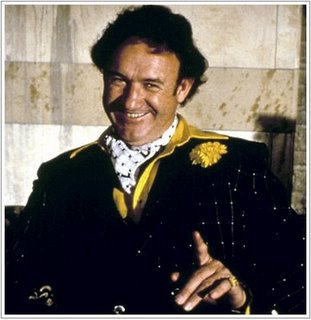
Today’s Gospel reading gives us an entire story about one of the antagonists of the Gospel. Antagonist. This is a tricky word because often in current culture “antagonist” is simply synonymous with villain, enemy, or bad guy. Famous antagonists – a Jeopardy category, perhaps? Darth Vader. Javert. Lex Luthor. Vader wears black, breathes heavily, and uses the “Dark Side” of the Force – definitely a villain. Javert hunts for a man whose crime doesn’t warrant such obsessive and destructive investigation – a perfect enemy for Jean Valjean. And in the first Superman movie, Lex Luthor attempts to destroy California in order to raise his land’s property value – total bad guy.
Gene Hackman as Lex Luthor.
But dismissing these fellows as mere villains ignores their roles as the antagonists of their respective stories. A good antagonist doesn’t simply serve as the proverbial immovable object against which the hero’s unstoppable force must contend. A well-drawn antagonist helps reveal the good things about the protagonist. Often, facets of the main character remain in shadow until a skeptical or adversarial or malevolent character brings them to the light. Lex Luthor’s greed stands in contrast with Superman’s selflessness and so on and so forth.
The antagonist in our story today falls into the same Jeopardy category as Vader, Javert, and Lex Luthor. He is none other than King Herod, to whom Mark dedicates a precious fifteen verses of his short account of the Gospel. If you thought today’s reading felt a bit weird and out of place, then you’re not alone. The Gospel writer Matthew greatly abridges the tale, and Luke and John give the story a miss entirely. But Mark, who usually barrels his narrative ahead at a breakneck speed, oddly stops for a massive chunk of Chapter 6 and treats us to a banquet with one of the bad guys. So, my question is, “Why?”
Well, I think that Mark is a good storyteller, and good storytellers understand what antagonists are for. If antagonists exist to shed light on the good things about the protagonist, then we can ask ourselves, “What does Herod teach us about Jesus?” The easy answer is without Jesus, innocent people get beheaded at dinner. But I think we can go a little deeper than that. Jesus’ absence in this passage is truly conspicuous. Indeed, if the Gospel of Mark were cut up into a season-long television series, the actor playing Jesus would get this episode off. But still, I’m pretty excited because for one week, we get to look at the story from the other side. We get to see the actions of the bad guy and contrast them with the actions of the good guy. And boy, do we have some contrasts to make.
What Mark gives us is really a flashback to an earlier event. Herod thinks that Jesus is John the Baptist come back from the dead, which is bad news for our bad guy because Herod wound up signing John’s death sentence in the first place. Mark tells the tale of why Herod found himself in such a predicament.
The story begins at dinner. And at dinner is where we make our first contrast between the good guy and the bad. This isn’t just any dinner, either. This is Herod’s birthday dinner, and when you’re a puppet king of the Roman Empire – a lackey, really – you don’t have much power beyond spending your citizens hard-earned tax dollars on extravagant banquets for you and your friends. Mark describes these friends in detail: Herod’s guests are “his courtiers and officers and the leaders of Galilee.” Not a bad turnout for the red carpet. You can see them in your mind’s eye, right? There they are reclining at table and congratulating each other for being part of such an impressive coterie.
Of course, if Jesus had been hosting such a banquet, whom would he have invited? That’s right: the outcasts, the sinners, the tax collectors – those people who wouldn’t have a chance in a million years to be on Herod’s guest list. The very people at Herod’s banquet are more than likely the ones who excoriate Jesus for eating with the unwashed poor, the street urchins usually labeled as “bad.” And yet, we know who the good guy in this story is.
So the who’s who of society arrives for Herod’s birthday, and his little daughter dances for the assembly. Her acclaim is so great that Herod swears to her, “Whatever you ask me, I will give you, even half of my kingdom.” With the girl’s conniving mother in the background, we know this cannot go well. Swearing an oath was a big deal back then, akin to a legal contract today, but with more honor at stake. And swearing a blind oath was like writing a blank check.
Of course, if Jesus had watched the little girl’s ballet, what would he have done? Joyfully praised her for her creative expression, no doubt, but he sure wouldn’t have sworn an oath. In the Sermon on the Mount, Jesus says, “Do not swear at all… Let your word be ‘Yes, Yes’ or ‘No, No’; anything more than this comes from the evil one.” In other words, there’s no need to swear an oath; just be trustworthy all the time and you won’t need to make guarantees.
And still, we have one more contrast to make – the biggest one yet between the good guy and the bad. On her mother’s prompting, the girl asks for John the Baptist’s head on a platter. Herod is deeply grieved, Mark tells us, but apparently not too deeply grieved because he goes through with his oath anyway. In order to save his honor, his pride, his standing in society, Herod has an innocent man killed.
Of course, when Jesus was in a similar situation, what did he do? When he could have saved himself from public humiliation, scorn, pain, and death, what did he do? He gave himself up willingly. He gave no regard to his own honor and pride, but emptied himself and humbly chose the road that led to the cross. Society mocked him, the empire killed him, and yet he won in the end, and yet he won in the end when God raised him from the dead on the third day.
Our antagonist today, foolhardy and power-drunk King Herod, shows us the other side of the story, the shadow side, the side that exists in the darkness when the light of the world is offstage. He prizes his standing, his honor, and his pride above all else, even to the point of committing homicide.
I don’t know about you, but I suspect that all too often I place myself on the wrong side of the story. I look at myself in the mirror, and I wonder when the good guy decided to take the episode off and let the bad guy take center stage. I ignore Jesus’ dinner guests because they are so much easier to ignore than to include. I swear oaths to myself about how I will live my life, and then I fail to live up to them. I let my pride stand in the way of doing the right thing. If you’re anything like me, then we all occupy the antagonist’s role in our own lives far too much of the time.
But the good news is this: even when we occupy the bad guy’s role in our own stories, there is always and forever someone occupying the role of the good guy. Our protagonist is Jesus Christ, and as any good guy would, he calls us to come to him, to shed ourselves of our antagonism, and to live our lives as his followers. When we confess our sins in a few minutes, when we once again give up to God our villainy, we will be ready to recognize Jesus as the protagonist of our stories. And as he nourishes us with his Body and Blood at his dinner banquet, we will be strengthened to go out as the good guys and serve the world in his name.
If any animated studio besides Pixar had made Brave, then the stitched up tapestry would have been enough. I don’t think I’m giving anything away with that sentence, but perhaps I will with this next one. Brave is a film about reconciliation. Check that. Brave is a wonderful film about reconciliation.
So many of the films that arrive at our movie theaters these days aren’t really about anything at all. They deliver pulse-pounding action or knee-slapping laughs, sure, but they are the cinematic equivalent of what MacBeth thinks of Life near the end of his Shakespearean tragedy. They are “tales told by…idiot[s], full of sound and fury, signifying nothing.”
Perhaps we want our films to signify nothing because we don’t want to be forced to think about them when we leave. Give us enough explosions or bare flesh or bathroom jokes and we’ll be happy. But wallop us with thematic content that encourages us to reflect on our own lives? That’s the property of indie films or documentaries or — gasp — sermons.
Of course, over the last 17 years, we have come to expect more from Pixar. And the amazing thing is that the company delivers again and again. While I’ll admit that Pixar has fallen prey to some of the sequelitis that has reached epidemic proportions in Hollywood, every one of their original properties is about something more than generating revenue for Disney.
The one that started it all, Toy Story, is about unselfishness and making friends. Finding Nemo shows the values of perseverance and never giving up. The Incredibles touts the importance of family. Wall-E is a scathing indictment of the negative trends of modern society. UP teaches that letting go of grief does not mean you let go of the love that activated the grief in the first place.
I know I skipped a bunch, but I’m writing this off the top of my head and it’s been a while since I’ve seen some of the others. I will say that every Pixar movie I’ve ever seen (and I think I’ve seen them all except for Cars 2) made me reflect on some aspect of my life in a way that a good sermon does.
And that brings us back to Brave. First, the film is gorgeous. Digital animation has reached such heights that I could have sworn that Pixar just flew a helicopter around the Scottish highlands to generate their backgrounds. Wow. Second, the story is at the same time fresh and original while being one of the oldest tales in the book. It starts as a straight up story about a princess who doesn’t want to get married to one of the icky suitors. But that’s just the jumping off point. Pretty soon into the movie, the story pivots into a tale of reconciliation between an estranged mother and daughter.
In a brilliant scene near the beginning of the film, the wizards at Pixar highlight the disconnect between the mother, Elinor, and daughter, Merida. Each has one side of the same conversation, but each is speaking their dialogue to someone else. After the inevitable big blowup between the two of them, Merida turns her mother into a bear using an ambiguous spell that a less-than-evil witch/entrepreneur concocts to change the mother’s fate. Over the course of the rest of the film, Elinor can’t speak because she’s a bear (a prim, proper bear, but a bear nonetheless). This allows her to listen and learn from the daughter she is always trying to teach. And Merida realizes that all of things that Elinor has taught her, which she has rebelled against, are truly for her (Merida’s) benefit.
And still Merida hangs all her hopes on stitching up the family tapestry. She thinks that simple gesture will break the spell. But as is the case with reconciliation, the gesture is less important than the exchange of confession and forgiveness. I don’t want to spoil the end of the film, but I left the theater reveling in the awesome power of reconciliation.
Thank you Pixar for another stellar film about something, and about something important. I hope everyone finds the hour and forty minutes it will take to sit through this one because it is worth it. Perhaps at the end of the film you will reflect on a relationship in your life that has become estranged. And you’ll find that the film has bucked the Hollywood trend and helped you take a first step in healing a rift in your own life.
(Sermon for Sunday, June 17, 2012 || Proper 6B || Mark 4:26-34)
When I was nine or ten years old, I walked into the church across the street from our house really early on a particular morning. Ash Wednesday had always been one of my favorite days. I’m not sure why, but I think I liked going to school with the ashes scraped across my forehead – hence me being in church really early. As many of you know, my father is also a priest, and he met me in the church wearing all of his vestments. But no one else came for the service early that morning. However, as Jesus says, “When two or three are gathered in my name, I am there among them.” So we went ahead with the service, just my dad and me.
When the time came for the ashes, he put his thumb in the gritty, black stuff and scraped first a vertical and then a horizontal line across my forehead, making the sign of the cross. “Remember that you are dust and to dust you shall return,” he said. Then he knelt down and offered the little bowl with the ashes to me. I was surprised, but I put my own thumb in the gritty, black stuff and scraped the sign of the cross on his forehead. “Remember that you are dust and to dust you shall return,” I echoed with all the solemnity that my fourth-grade voice could muster.
Then we finished the service, he took me to school, and we went about our days, and we went about our lives. And about a decade later, my father and I realized that on that Ash Wednesday morning, God planted a seed in me, one so small that neither of us noticed the seed until the stalk started poking through the topsoil of my life.
This seed was the mustard seed of God’s kingdom, the one that Jesus talks about in today’s parable from Mark’s account of the Gospel. Before we go any further, however, I want to dispel any notion that you may have that such a seed would only be planted in someone destined to be ordained as a priest. While some of the seeds of the kingdom that God planted in my life have germinated into my call to the priesthood, others have grown into my call to be Leah’s husband and to spread God’s love through our marriage. I hope other seeds that are still hidden in the soil will sprout into a call to parenthood. God sows within each of us, not just we few who wear the collar, the seeds that grow into a panoply of kingdom callings. Together, as our seeds stretch upwards into beautiful flowers and trees, we help God transform this planet once again into a garden of God’s kingdom.
I firmly believe that God has sown seeds so wildly, so expansively, that every person on this planet has the seeds of the kingdom nestled in the soil of their souls. The parable before the ones we heard this morning speaks to this belief. The sower doesn’t seem to mind that his seed lands, not just on the good soil, but on the road and on the rocky ground and among the thorns, as well. The sower doesn’t just plant in nice furrows in the prepared field, but across every surface, no matter how ready the ground is to receive the seed.
Because of God’s unrestrained scattering of seed, each of us surely has the seeds of the kingdom within us. But, as Jesus says, the seeds start out so small that we can barely see them. In fact, until the seeds have grown into visible plants, we won’t have much luck seeing them at all. But this is how the life of faith works – oftentimes, the moments when the seeds of the kingdom drop into our soil are as small as the seeds themselves. We miss these moments all too easily because they tend to be subtle and quiet. Or they tend to happen in the midst of really difficult and challenging circumstances. Or they tend to happen when we least expect them, when our soil is least ready for the seeds.
With God’s help, we can train ourselves to notice the seeds of the kingdom earlier and earlier in their development. Perhaps, you have a mustard seed that has grown into the full-fledged plant or perhaps you have a stalk peaking up from the ground. Move into a space of prayerful reflection and trace that plant back to the subtle, quiet moment when God scattered the seed in you.
Consider this example. God has given you the gift of teaching. Even though some of the students can be pains in the neck, you love going into the classroom everyday to teach. You feel that teaching is certainly a way that you respond to God’s call. Now, work your way back past your first year struggles, past your student teaching, past your high school days, and find yourself back in fifth grade when your favorite teacher in the whole wide world instilled in you a love of learning and a desire to teach. There’s the seed. God used the dedication and love of your fifth-grade teacher to plant the seed of the kingdom in you.
Here’s another example. God has given you the gift of cooking. Recently, you began helping at your church to prepare hundreds of meals every week for a local homeless shelter. You can feel in each stir of the pasta and each pour of the sauce that you are doing something in which God takes great joy. Now, work your way back past your joining the church, past all those experiments in the kitchen trying to perfect your pie dough, past that semester at culinary school, and find yourself in the kitchen with your mother on the day she finally let you spice her world famous chili for the first time. There’s the seed. God used your relationship with your mother, who passed on her culinary secrets to you, to plant the seed of the kingdom in you.
No matter how old or young we are now, God has planted seeds in us. Some have grown into the greatest of shrubs and the birds nest in their branches. These are the places where we can see God’s kingdom blooming into beautiful gardens around and within us. Other seeds are still nascent, still tucked in the soil waiting for the right moments to start their journey toward the sun. By tracing the plants we can see back to when they were invisible seeds, we can train ourselves to recognize the currently hidden seeds even sooner in their development. And when we do, we can join God in more active participation of their cultivation.
Every week in the Lord’s Prayer, we pray, “Thy kingdom come, thy will be done, on earth as it is in heaven.” The kingdom begins as tiny mustard seeds, which God scatters wildly into our very souls. As we live out our lives as followers of Jesus Christ, we become gardens of the kingdom, spreading the beauty of God wherever we go. The seeds are in each of us. The seeds are sprouting and growing and blooming each day. All we need do is notice.
(Sermon for Sunday, June 3, 2012 || Trinity Sunday B || John 3:1-17)
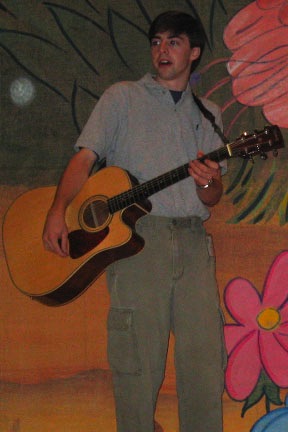
Playing at VBS in 2003 after my sophomore year of college. That was less than three years in to my guitar playing. It would have been seven or eight if I had never quit.
When I was in seventh grade, my parents bought me a three-quarter sized guitar and procured the services of a guitar expert to teach me the basics. At the first lesson, I learned the names of each of the six strings and how to play notes by plucking them. At the second lesson, I learned how to arrange my fingers on the strings so they made special shapes called chords. At the third lesson, I learned that I would have to practice if I wanted to improve my guitar playing. There was no fourth lesson.
You see, I was a bright kid, to whom pretty much everything came quite easily. I was a good athlete, so baseball and soccer were right up my alley. I really didn’t have to work much to make good grades in school. I had next to no challenges in any of my classes. And so when I was confronted with something that I couldn’t immediately master with no effort, I decided not to try. I put the guitar in the case, and the case sat unopened in my closet for years.
Now, as most of you know, I am a guitar player. So what happened? I picked up the instrument again my senior year of high school, and, being a tiny bit wiser than my seventh grade self, started practicing. I’ve been playing for over eleven years now, and I’m not half bad, but a wistful part of me always wonders how much better I would be at the guitar if I had not quit after three lessons back when I was thirteen years old.
My seventh grade self fell victim to a psychological epidemic that affects the vast majority of the population. Exactly one symptom characterizes this epidemic: people have difficulty agreeing to perform tasks that fall outside of their recognized competencies. This is still true for me: you’ve never seen me do ballet or fix the central heating in the church because these are two things that I don’t do very well. I have no training in either of these areas, and so the likelihood that I will agree to pirouette across a stage or put together an HVAC system is next to zero.
I’d be willing to wager that this fact of life is also true for you. I’m sure each of you could come up with a list of things you are unwilling to try because you know that you aren’t going to be good at them. You know that if you tried, failure would be in your future, and who wants to feel like a failure? And so the psychological epidemic keeps us from attempting new things and keeps us safely ensconced within the borders of our comfort zones.
For us this morning, the trouble comes when the list of things we are unwilling to try includes speaking openly about our faith in God. Why should this be any different from playing the guitar or doing anything else, you might ask? The simple answer is this: becoming an expert in guitar playing is possible. Becoming an expert on God is not.
Today’s Gospel reading teaches us this reality, which is an appropriate lesson on a day when we celebrate the mystery of the Holy Trinity. Nicodemus, a Pharisee and member of the Jewish council, fashions himself such a God expert. He comes to Jesus by night, and at the outset of their conversation, tries to display his knowledge of how God operates. “Rabbi,” says Nicodemus, “We know that you are a teacher who has come from God; for no one can do these signs that you do apart from the presence of God.”
Nicodemus’s “we know” sets him up as the so-called expert on God. The irony is that his statement is true. But Jesus isn’t interested in whether or not Nicodemus speaks correctly; Jesus is solely interested in moving this so-called expert into the unfathomable depths of God’s interaction with God’s creation. “No one can see the kingdom of God without being born from above,” says Jesus in response to Nicodemus’s opening remarks. Jesus’ statement is intentionally ambiguous. The words could mean “born from above or born again,” and I think Jesus means both. The very ambiguity of the phrase shows Jesus’ attempt to push Nicodemus out of his comfort zone where “we know” is his default position.
For his part, Nicodemus latches onto the more mundane of the two possibilities: “How can anyone be born after having grown old?” he asks. This response might sound a bit sarcastic, but at least the Pharisee, who has always been the expert answering questions, is now beginning to ask some of his own. The question is the small chink in the armor of Nicodemus’s expertise. Because of Nicodemus’s willingness to ask a question, Jesus sees that there is hope in showing him the expansiveness of all that this so-called expert does not know.
And, boy, does Jesus show him. Jesus opens Nicodemus’s mind and heart to the mystery of how God creates God’s people, and of how God moves in the world like the wind moving through the trees. When Jesus is done, Nicodemus’s opening “we know” now sounds laughably empty in comparison to the mysteries Jesus reveals to him. To begin to walk in and among these mysteries, Nicodemus must change his empty “we know” into an “I don’t know” full of desire and curiosity. And he takes the first tentative steps along this path with the sincerest question in the entire Gospel: “How can these things be?”
In just one conversation, Jesus shows Nicodemus that being an expert on God is not only not possible, but also not the best way to be in relationship with God. Only by acknowledging his lack of understanding can Nicodemus hope to begin to hear the sound of the wind blowing, this wind of the Holy Spirit that breathes life into creation. Nicodemus’s job is no longer to try to explain what makes God tick. Jesus gives him a new job: to bear witness to the mysterious movement of God in his life.
We see Nicodemus twice more over the course of the Gospel. In his next appearance, he puts one tentative foot outside his comfort zone when he reminds the rest of the council about their own rules when they want to put Jesus to death. And in his final appearance, we see that Nicodemus has fully embraced the new life that Jesus revealed to him. In broad daylight on the afternoon of the crucifixion, Nicodemus helps Joseph of Arimethea take Jesus from the cross and bury him in the tomb.
This so-called expert on God had his world turned upside down that night when he went to see Jesus. Jesus showed him that expertise is neither possible nor desired when relationship with God is concerned. There is not a person on this earth who is competent to talk about what makes God tick. While you and I might have difficulty agreeing to perform tasks that fall outside of our recognized competencies, we can take heart in the reality that Jesus released us from needing to be competent in this particular area. We will never be good at talking about God because God is far too glorious, far too mysterious and majestic for our puny words. But that shouldn’t stop us from trying. Releasing us from the need to be competent means that Christ rejoices in even our most halting attempts, in even the simplest expressions of feeling God’s love.
My prayer this morning is that each of us might feel released from the need to be competent when we have the opportunity to speak to someone else about our faith. Don’t be like my seventh grade self who gave up the guitar because he wasn’t an overnight expert. Rather, acknowledge that expertise has no domain where God is concerned. The simple word about how you feel God’s movement, spoken from the heart, is worth more than any treatise on the inner workings of the Holy Trinity. The halting word about not understanding God’s movement is worth more than all the “we knows” like the one Nicodemus speaks when he first encounters Jesus. The good news is that God uses our incompetencies as much, if not more, than our competencies. So I challenge you and I challenge myself: live into our incompetent ability to speak of God’s movement, and perhaps through our witness, someone new might start seeing God’s wind blowing through the trees.

 …Opening To…





 Where the Wind...