In the first installment of this series, we looked at how the phrase “separation of church and state” fails to comprehend the complex relationship that those two broad entities share. Fealty to such a misunderstood doctrine can blind us to the influence our faith in God should have on our political decisions. No decision is made in a vacuum. Acknowledging this, each person chooses which voices to distinguish from the cacophony clamoring for attention. She contemplates what her context values as true. As the cacophony and the context press upon her, the faithful person attempts to attend to that still small fluttering within, which is the deep intersection between her consciousness and God’s movement.
Just as decisions (political or otherwise) are not made in a vacuum, the Gospel does not take place outside of a specific context. Indeed, the dusty realism of the Gospel makes for compelling reading and even more compelling living. When Jesus of Nazareth steps onstage, the scene is set, the players chosen. The first words out of Jesus’ mouth (according to Mark) intentionally borrow the political language of the day: “The time is fulfilled, and the kingdom of God has come near; repent, and believe in the good news.” Jesus imagines a new definition for that word euangelion (Gospel, good news). No longer is “good news” to be proclaimed for another Roman military victory or another birthday of a Roman emperor. No. The kingdom of God has come near! This is the Good News of Jesus.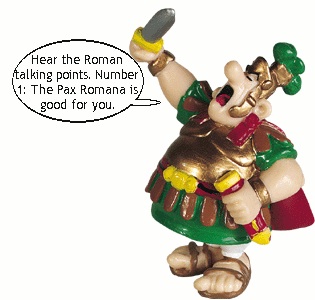
If Jesus is redefining Roman talking points, the political nature of his message would be hard for his contemporaries to miss. Their difficulty came from another angle: to whom does this nobody from a backwater like Nazareth belong? Is he a Pharisee? A Zealot? A Herodian? An Essene? He can’t be an Essene because he would’ve never left the desert. He can’t be a Herodian because he is speaking out against the Romans, and those Herodians are living just fine as Roman stooges. He can’t be a Zealot because he keeps talking about peace and seems not to have the stomach for gutting the odd centurion. And he can’t be a Pharisee — just look at the company he keeps!*
These groups made up the political landscape of early first century Israel, a land which had been under one foreign regime or other for several centuries. The current occupier, the Romans, governed with both the carrot and the stick. You could get very rich or very dead depending on how you interacted with Rome. Most got very enslaved or at least intimidated into meek submission. But Jesus, who fit no known political category of the day, spoke out in the politically charged atmosphere, spoke out with no fear and people listened.**
People listened. People watched. They saw the eyes of the blind opened and the legs of the lame strengthened. Could this Jesus possibly be the One they were expecting, the son of David who would lead them out from under the yoke of Rome — the Messiah? Peter thought so, but when Jesus told him what was to happen, Peter couldn’t handle it. The Messiah wasn’t supposed to die on a cross. The Messiah was supposed to lead the nation in an uprising and sweep all enemies from the land. To hear the people of Israel tell it, the Messiah was a political office — a judge/prophet/king, a conflation of all the powerful figures from the past.
But in a further re-imagining, Jesus took the messianic expectation and turned it on its head. He would have no part perpetuating the cycle of violence. After his death and resurrection, his followers began seeing Jesus’ understanding of the Messiah in different parts of the same Hebrew scriptures — the Messiah as the suffering servant, the one who demonstrated the utter necessity in beating swords to ploughshares.
Jesus stepped into a world dominated by the politics of fear and division and blame and hate. He immersed himself in the grimy, bloody mess of that world, but did not succumb to its tactics. In the end, that world killed him, but not before he proclaimed and lived out a new way, the way of the kingdom of God. It is to the political implications of this kingdom that we turn in the conclusion of this series, “The two things you’re not supposed to talk about.”
Footnotes
*Thanks to Brian McLaren’s concise description of the political nature of Jesus’ context. Read more in his The Secret Message of Jesus. Also, if you read just one more book this year, read his Everything Must Change for the best discussion of faith and our lives as citizens of the planet earth I’ve ever read.
** Of course, Jesus also got very dead. But happily for all of us, the dead bit is only part of the story.
 place. But Paul knows this doesn’t have to be the whole story: be transformed, he says. Allow change and grow. Remember that we are a living sacrifice, and living things continue to renew, to grow new skin, to flower again next year. Our transformation takes place in the renewing of our minds, in the reorienting of our priorities so they resonate with the will of God. The transformation is possible because we are living. The transformation happens when we realize we are a sacrifice. And the transformation affects the world when we present our bodies to God for action.