
During the summer between his first and second years of seminary, Aidan Davies grew up all at once. The summer began with a breakup and ended with a baptism, but those are pieces of a larger story. This story is about a baby boy.
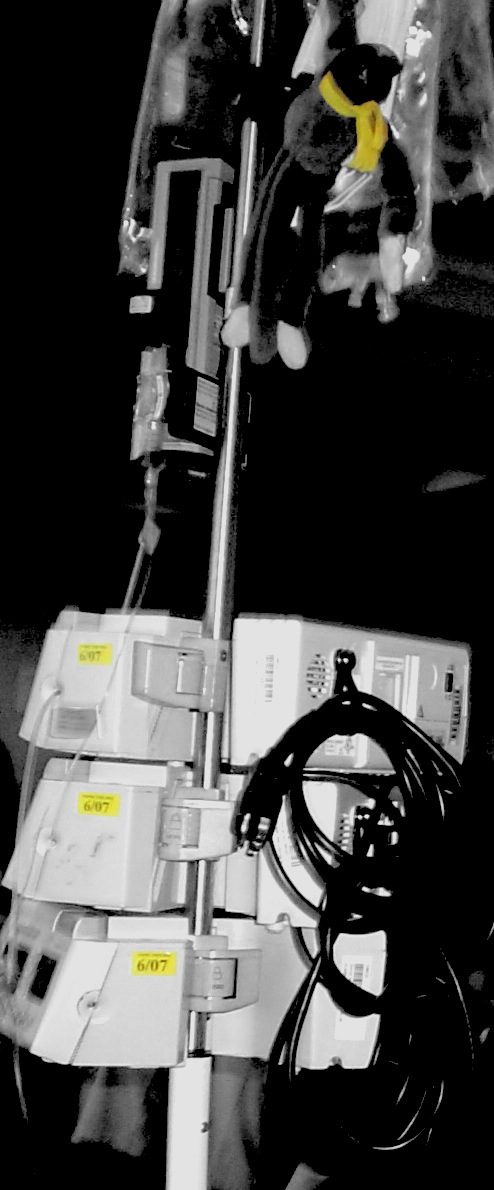 Davies was a chaplain only because his badge said he was. For that first month, he didn’t particularly feel like one. I’m not a chaplain, but I play one at this hospital, he often thought. His clinical pastoral educators – the hospital’s professional chaplains – had borrowed their teaching style from mother birds. On the third day of the summer, they pushed Davies and the seven other interns out of the nest and watched as eight pairs of arms, flapping wildly, disappeared in a downward spiral. The wingless interns crashed into the rocky bottom, and, miraculously, found their patients there.
Rock bottom was on the top floor of the hospital, but Davies had no patients on that level considering another intern had chosen the ICU as his normal beat. However, that night, Davies was on-call, and the on-call pager had beckoned him to Intensive Care, and he stared at the message on the little screen the whole elevator ride to the twelfth story.
From the moment he stepped off the elevator, the next several hours blurred together in Davies’s mind. Attending physician speaking…parents deciding to take their baby off the machines…Baby Boy Rodriguez breathing on his own…and then not…wailing…holding…silence. Davies walked the parents to their car. He had very little Spanish, so no one spoke. But grief, it turns out, is a universal language. The car pulled away, with fewer passengers than it should have been carrying, and Davies watched it turn a corner to the lower levels of the parking deck.
He arrived back in the ICU room to find Mary Ann, one of the baby’s nurses, silently wiping down a machine. Cords lay in neat stacks on a rolling table, and a small pile of dirt and bits of candy wrapper filled a dustpan near the door. Davies allowed his gaze to find the tiny bed, upon which the body of Baby Boy Rodriguez still lay. He walked over and looked down at the baby – a perfect porcelain sculpture in a clown-adorned onesie. “He looks so peaceful,” said Davies.
“Yeah,” said Mary Ann, and she came to stand by Davies at the bed.
“When I first saw him this evening, he had all these tubes in him. He looked like he was…but now…” Davies’s voice trailed off.
“He was in a lot of pain,” said Mary Ann, and Davies suddenly realized that this nurse had known the Baby Boy as long as his parents had. Three months in this room, but never alone.
“I’m glad that he was able to take a few breaths on his own,” said Davies. Mary Ann continued as if finishing his sentence, “And his mother could hold him while he was still alive.”
Davies stayed by the bed while Mary Ann continued cleaning the equipment, and the silence renewed. Davies stared down at Baby Boy Rodriguez. He reached out a hand, and with the lightest pressure, placed it on the baby’s forehead. He tried to pray. He moved his hand and took the little balled up fist into his own palm. He imagined God holding the Baby Boy and his parents and Mary Ann and Davies himself in the same way.
A noise made him look up. A small machine had fallen to the floor. “What does that do?” Davies asked.
“It helps with respiration,” said Mary Ann.
It kind of looks like a belt sander, thought Davies. And they were quiet again. Theirs, however, was not a conversation broken by silence, but a silence broken by conversation. The noises of the padding of feet, the pulse of machines, the typing on computers all happened in the obscurity outside the room. But this room was a different world, an in-between world. Between Baby Boy Rodriguez’s own anguished writhing and that of the next patient was peace and stillness and silence.
Davies’s tears traced pathways down his cheeks and fell to the floor. Mary Ann looked up from her cleaning. “The first time is hard,” she said.
“It doesn’t get any easier though, does it?”
“No, it doesn’t. Every time is hard.”
Davies wiped his eyes on his sleeve. “It would be easier if you didn’t care for these children so much.”
Mary Ann looked down at Baby Boy Rodriguez. Davies realized that before she started cleaning the room, she had cleaned and dressed his body. “The moment you stop caring is the moment you have to stop doing this job,” she said.
And the silence renewed. Mary Ann finished her cleaning. Davies continued to hold the hand of the dead Baby Boy. A few minutes passed, and then the glass door slid open. Another nurse carried a folded piece of plastic with a zipper running through it. “I didn’t realize it would be white,” Davies said, as he watched the nurses unfold the body bag. Mary Ann affixed a toe tag to Baby Boy Rodriguez’s ankle and then gently lifted him, as the other nurse slid the bag underneath. Davies touched the baby’s forehead once more, and then the nurse zipped the bag closed. Mary Ann covered it with a sheet, and picked it up, like any mother carrying her child.
Davies and Mary Ann processed to the elevator and rode down to the main level. Several turns through labyrinthine passages brought them to a nondescript door. Davies punched in the code, which only pathologists and chaplains knew. The morgue had four cold chambers. Davies opened one. Mary Ann laid the bag containing the body of Baby Boy Rodriguez on the metal shelf. Davies shut the freezer door and mouthed a whisper of gratitude to Mary Ann. She placed a hand on Davies’s arm for a moment, echoed his thanks, and walked from the morgue – back to the living and the dying. Davies turned and saw his fuzzy reflection in the four, shining metal doors.
And the silence renewed.

 Where the Wind...