The Sense of Smell (January 17, 2012)

…Opening To…

“A man should hear a little music, read a little poetry, and see a fine picture every day of his life, in order that worldly cares may not obliterate the sense of the beautiful which God has implanted in the human soul.” (Johann Wolfgang von Goethe)

…Listening In…

Let my prayer stand before you like incense; let my uplifted hands be like the evening offering. (Psalm 141:2; context)

…Filling Up…

Yesterday, we began a week of devotions based on the senses. When I got to the point of writing the “Sending Out” section for the week, I listed the five senses, finished the sentence, and then read back over it. Next I laughed out loud. What does the sense of smell really have to do with noticing God’s presence?

So let’s go ahead and tackle “smell” today and then move on tomorrow with a sense that seems to fit better with finding God’s presence. Not so fast, you might say. Perhaps “smell” has more to show us than you, Adam, originally thought. Maybe you’re right. Let’s see. I’m not sure I’ve ever thought to myself, “Wow, that smells like the presence of God.” Incense during church services (if you’re into that kind of thing) might give you a fragrant association with the holy, but that’s all I can come up with.

But here’s where the sense of smell has something to offer. Of the five senses, the sense of smell is the one most strongly associated with memory. Perhaps when you smell chocolate chip cookies in the oven, you are suddenly seven years old again and sitting at your grandmother’s kitchen table with your legs dangling over the side of your chair. Perhaps when you smell your gym bag, you are suddenly back on the field at the end of the big game.

What association, smell or otherwise, brings you more fully into God’s presence? Is it opening your Bible? Or stepping into church? Or smelling the incense? If you are finding it difficult to train yourself to notice God’s movement, try associating it with a memory or a smell. If I thought of God every time I smelled chocolate chip cookies, I think I would be quite excited indeed.

…Praying For…

Dear God, you have given me a sense of smell to experience more fully the world you have created. Help me to seek your presence with all my senses and to associate you with all that is good in my life. In Jesus Christ’s name I pray. Amen.

…Sending Out…

I leave this moment with you, God, ready to see, hear, taste, touch, and smell your presence, that I may be more aware of your movement in my life.

The Sense of Sight (January 16, 2012)

…Opening To…

“A man should hear a little music, read a little poetry, and see a fine picture every day of his life, in order that worldly cares may not obliterate the sense of the beautiful which God has implanted in the human soul.” (Johann Wolfgang von Goethe)

…Listening In…

Jesus replied, “Do you believe because you see me? Happy are those who don’t see and yet believe.” (John 20:29; context)

…Filling Up…

In a Bible study yesterday at church, I led a group that discussed all of the visual and auditory language in a reading from 1 Samuel 3. It was a very cool discussion, and now I have the senses on the mind. So this week, I’d like to talk about how God encounters us through our senses. And coincidentally enough, we have five of them, which is perfect to fill a week! We’ll start with sight.

First off, sight is problematic. There are too many Biblical passages that run along the lines of the quotation above: whenever Jesus talks about others believing because they have seen something or need to see something, he seems just a little bit disappointed. This would naturally make us suspicious of the sense of sight where encountering God is concerned. Sight is linked to the need for proof. For some reason, whenever we talk about proof, sight is our sense of choice.

However, there’s another way of looking at sight, and we need not be suspicious of it. Rather than looking for proof of God’s presence, let’s use our vision to see what at first glance seems like proof against that presence. Let’s use of vision to notice deprivations in our communities to which we might normally keep ourselves willingly blind. It’s easy to ignore the homeless man on the street city or the starving child on the TV commercial. We ignore them because they make us feel uncomfortable. But we can’t respond to needs that we don’t see.

So let’s use our eyes, not to prove to ourselves that God is present, but to prove to God that we can be present to others.

…Praying For…

Dear God, you have give me eyes to see your wonders in this world. Help me to be a part of that wonder in the lives of those around me. In Jesus Christ’s name I pray. Amen.

…Sending Out…

I leave this moment with you, God, ready to see, hear, taste, touch, and smell your presence, that I may be more aware of your movement in my life.

A Deep Breath

(Sermon for Sunday, January 15, 2012 || Epiphany 2B || 1 Samuel 1:1-20 )

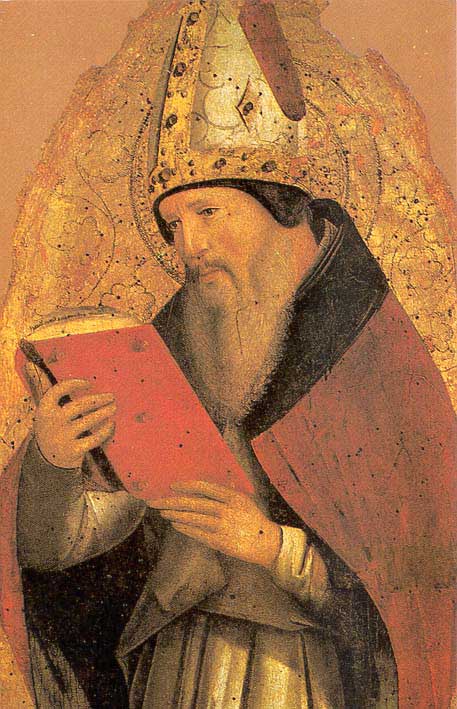
People, including many of you, often ask me how I knew that God was calling me to be a priest. Here’s the story. This week ten years ago, I began the second semester of my freshman year of college. At that time, I was enrolled in a four-semester Humanities class that took a holistic approach to studying Western civilization. The second semester of the class moved from the end of the ancient world through the Middle Ages, so we began around the time of the fall of Rome. The first book we read was The Confessions of Saint Augustine. Now, many of my classmates couldn’t stand Augustine’s introspective, theological memoir, but for some reason, I couldn’t put the book down. What I didn’t realize at the time was that Augustine was teaching me to look deep within myself as he had done all those centuries ago. For me, this book turned out to be much more than an assignment in a four-semester Humanities class.

As I slowly, hesitantly began to look deep within, I began to notice a glowing ember. This ember was the source of the blaze that would become my heart’s fire, but at first the ember was nothing more than the tiniest of flames, the mustard seed of flames. With St. Augustine’s help, I caught sight of that tiny flame. And without realizing what I was doing, I took a deep breath, and when I exhaled, the Holy Spirit rode the wind of my breath into that ember. And the fire began – slowly, hesitantly – this fire that was my call to serve God as a priest in God’s church.

In today’s lesson from the Hebrew Scripture, the boy Samuel is fast asleep on the floor of the temple of the LORD. And God calls to him, “Samuel! Samuel!” This is Samuel’s own glowing ember, the first phase of his call.

The spark, the glimmer that St. Augustine made me aware of was Phase One of mine. Well, from God’s perspective, what I thought was Phase One was probably closer to Phase 23. But to me, the ember was just the beginning. By the end of my freshman year of college, I knew something was going on in the recesses of my being. I knew a flame had been kindled, but I didn’t know yet on what the flame was shedding light. However, if I had been alone, if I had been the only one to notice and nurture the glowing ember, I am convinced there would never have been a Phase Two.

Enter the Reverend Tom Ward, the chaplain at the University of the South in Sewanee, Tennessee. Once a month for my entire sophomore year, I met with Tom Ward, and we just talked. We talked about my hopes and dreams, my fears and doubts, my past and future. And then one day – the day was so ordinary that I don’t even have a clear memory of the meeting – I told him about the glowing ember. I told him about reading St. Augustine and looking within and being surprised to find the glowing. And then, fully realizing what he was doing, Tom took a deep breath, and when he exhaled, the Holy Spirit rode the wind of his breath. And the fire spread out from my gut and into every corner of my being.

In today’s lesson, the boy Samuel is fast asleep on the floor of the temple of the LORD. And God calls to him, “Samuel! Samuel!” Samuel cries out, “Here I am!” And then he runs to Eli, the priest under whom he serves, thinking that Eli had called out to him. “I did not call; lie down again,” says a confused Eli. Samuel does so, but God calls again and then again. Each time, Samuel runs to Eli, thinking that Eli has called out to him. Finally, the third time, Eli realizes that the LORD has been the one calling out to Samuel. So Eli instructs his young charge: “If [God] calls you, you shall say, ‘Speak, LORD, for your servant is listening.’ ” Eli understands Samuel’s call, and Eli teaches Samuel how to respond to that call. Elis is Samuel’s Tom Ward, the mentor who teaches the student how to respond to God.

During my junior year of college, Tom Ward gathered a group of six people from the community of Sewanee to meet with me about the fire that God had kindled two years before. Every week, we met and shared stories about ourselves: not just me, but each of us sharing. Some stories had to do with God’s movement in our lives, others not, though you come to realize that every story has something to do with God’s movement. This group tested the fire, attempting to discern if the fire was from God. Through listening and sharing and praying, we decided God was in the flame.

In today’s lesson, Eli sends the boy Samuel back to his bed with a response to God. The LORD stands before Samuel and calls his name. Samuel responds, “Speak, for your servant is listening.” The group that Tom Ward formed for my discernment taught me how to listen – how to listen to their voices and stories, and within them how to listen for the voice of God speaking God’s story for my life.

During my senior year of college, I went before a scary committee in the diocese of West Virginia. We talked through four one-hour meetings, and at the end of the day, they decided to recommend me for postulancy for Holy Orders. Two years of seminary later, I went before the same committee again, though they were less scary this time. We talked more, and at the end of the day, they recommended me for candidacy for Holy Orders. Six months later, the bishop of West Virginia ordained me to be a deacon. And six months after that, he ordained me to be a priest. Of course, discernment of God’s call is never over, so don’t take away from this that my call story ended that day in June, 2008.

Rather, reflect back on these stories I’ve been telling you these last few minutes. Notice how my story and Samuel’s story overlap. In neither case, can we classify these stories as just mine or just Samuel’s. These stories also belong to Eli and Tom Ward, to the group at Sewanee and the scary committee. And these stories belong to you, for you here at St. Stephen’s have always been a part of God’s call in my life. We just didn’t know that a decade ago.

Notice also that nothing in these stories is all that mysterious. Save for the glowing ember and God’s first call of “Samuel! Samuel!” every phase of these stories involves the simple act of talking with other people. God has built this need for conversation, for communion really, into the very fabric of God’s call in our lives. No call from God exists in solitary confinement. No call from God can ignite into full flame without many people blowing on the embers. We need each other to tease out and discover and nurture God’s call because God’s voice most often comes to us in the voices of other people. Why else would Samuel think Eli was calling to him over and over again?

When you are wondering what God might be calling you to, I offer you this guidance. Find a friend whom you trust more than you trust yourself. This person could be a parent or a spouse or another person whose soul is somehow mingled with yours. Ask this person these two simple questions:

“What do you think the world needs?”

and

“What do you think I’m good at?”

As you and your friend talk, listen to her words. At the same time, watch for the glowing ember deep within you. Sooner or later the answers to those two questions will intersect, and the ember will glow just a little bit brighter. And without realizing what you are doing, you will both take a deep breath, and when you exhale, the Holy Spirit will ride the wind of your collective breath and ignite a fire in your heart.


A Little Head Jiggle (January 13, 2012)

…Opening To…

Sonny, true love is the greatest thing in the world — except for a nice MLT — mutton, lettuce and tomato sandwich, where the mutton is nice and lean and the tomato is ripe. They’re so perky, I love that. (Miracle Max, The Princess Bride)

…Listening In…

Fezzik: You just shook your head… doesn’t that make you happy?
Westley: My brains, his steel, and your strength against sixty men, and you think a little head jiggle is supposed to make me happy?

…Filling Up…

Westley has been mostly dead all day, but the chocolate-coated pill Miracle Max made to bring him back to life has worked – almost. The former Man in Black can talk and move his eyes and wiggle his finger, but those are the extent of his physical abilities. Inigo and Fezzik bring him back so he could plan a way to break into the castle guarded by sixty men. Needless to say, things look bleak.

Westley indicates the fact that things, indeed, do look bleak by shaking his head, although it comes off as more of a loll back and forth. This is when Fezzik quips the line above. It seems that Fezzik is looking on the bright side, while Westley, who has been mostly dead all day and now must think his way past a gate guarded by sixty men, is seeing no reason for optimism.

He calls it a head-jiggle. How is a little head jiggle supposed to make him happy? We can ask the same question about our lives. The little head jiggles in our lives are those tiniest of blessings that we more than likely miss because we are busy calculating how to get into the castle (thanks for riding this metaphor with me, by the way). But it is these blessings that make up the great majority of the blessings God bestows on our lives. Not every blessing is flashy. Not every one has neon sign that points to itself and says, “Hey I’m a blessing.” Most blessings are like the plankton whales eat. You wonder how a great, big whale can survive on microscopic organisms. Well, it’s because each whale eats about a million a day.

So remember the little head jiggles that make you happy. Write them down. You might be faced with a castle gate and five-dozen armed swordsmen, but each head jiggle is just as important.

…Praying For…

Dear God, thank you for blessing me with the abundance of gifts, both that I see and never notice. Help me to appreciate the blessings in my life so that I can remember them when times are tough. In Jesus Christ’s name I pray. Amen.

…Sending Out…

I leave this moment with you, God, knowing that yours is the truest love in the world and that not even death can stop true love.

One of the Classic Blunders (January 12, 2012)

…Opening To…

Sonny, true love is the greatest thing in the world — except for a nice MLT — mutton, lettuce and tomato sandwich, where the mutton is nice and lean and the tomato is ripe. They’re so perky, I love that. (Miracle Max, The Princess Bride)

…Listening In…

Buttercup: And to think, all that time it was your cup that was poisoned.
Man in Black: They were both poisoned. I spent the last few years building up an immunity to iocane powder.

…Filling Up…

The two lines above conclude one of the two most famous scenes in The Princess Bride. (The other is the fight that begins with, “Hello, my name is Inigo Montoya…”). Of course, I’m talking about the “Battle of Wits.” The Man in Black has already bested Inigo at fencing and Fezzik at hand fighting, and now he comes upon Vizzini sitting calmly with a picnic spread before him and a knife at Buttercup’s throat. The Man in Black and Vizzini find themselves at an impasse, so they have the Battle of Wits, in which Vizzini must discover which cup of wine contains the poison.

His dizzying intellect whirs into high gear, and even though he cheats by switching the glasses, he ends up laughing until he suddenly dies. He never makes the mental leap that the Man in Black might have poisoned both cups in order to ensure that Vizzini doesn’t end up killing Buttercup. He doesn’t think that the Man in Black might sacrifice himself so that Buttercup could be safe. Of course, the Man in Black has an immunity to the poison, so he’s not quite as noble as I’m making him out to be. But still.

Vizzini operates under an assumption – that the Man in Black wants to kidnap what he (Vizzini) has rightfully stolen. And this assumption kills Vizzini. He thinks he knows everything or can deduce everything. He is wrong. Sometimes, especially in my low moments, I make assumptions about God. I assume that God can’t possibly be in this situation or that crisis. And it kills me – not physically, mind you, or else I wouldn’t be typing this, but spiritually. The minute I assume God hasn’t or isn’t going to show up is the minute I stop looking for God’s presence.

Perhaps you’ve had similar times in your life. It’s at these times that I have to remember that both cups of wine were poisoned. I have to remember that God is in every situation. And I have to remember never to get involved in a land war in Asia.

…Praying For…

Dear God, you permeate all of existence, including mine, even when I don’t acknowledge you. Help me to practice seeking your presence so that I may get better at finding it. In Jesus Christ’s name I pray. Amen.

…Sending Out…

I leave this moment with you, God, knowing that yours is the truest love in the world and that not even death can stop true love.

Get Some Rest (January 11, 2012)

…Opening To…

Sonny, true love is the greatest thing in the world — except for a nice MLT — mutton, lettuce and tomato sandwich, where the mutton is nice and lean and the tomato is ripe. They’re so perky, I love that. (Miracle Max, The Princess Bride)

…Listening In…

Prince Humperdinck: Tyrone, you know how much I love watching you work, but I’ve got my country’s five hundredth anniversary to plan, my wedding to arrange, my wife to murder, and Guilder to frame for it: I’m swamped.
Count Rugen: Get some rest. If you haven’t got your health, then you haven’t got anything.

…Filling Up…

Just in case you haven’t see The Princess Bride, you should know that the two people quoted above are the bad guys. Even so, Count Rugen gives the prince some good advice. The count has just invited Humperdinck to watch him torture Westley on “The Machine,” but the prince just has too much on his plate. So Rugen (also known as the six-fingered man, for those of you keeping score) councils his liege to “get some rest.”

How often do you just go Go GO without any thought of what this go Go GOING is doing to your body? I often tell myself: “Okay, next week – next week you can get some rest.” And then next week rolls around and guess what I say. Yep. Same thing. In college, I had to schedule time off from studying because I had a tendency to tell myself that I would take time off when I was done. And you know what happened. I was never done. So I never “got some rest.”

Each one of us is built to serve God – that is the primary purpose of our existence. But God didn’t create us to be androids that can function with no food or rest. God didn’t create us to be nonstop creatures. In fact, God built the very concept of “rest” into the fabric of Creation. Do you think God stopped creating on Day Six? No sir. God created rest on Day Seven. That’s the whole point behind Sabbath – to rest in the arms of God and by doing so attune yourself to God’s movement in Creation.

So, even though Count Rugen is the bad guy, please take his advice when you’re overwhelmed. Heck, take it before you’re overwhelmed. God will sustain you no matter what, but there will be more of you to sustain if you “get some rest.”

…Praying For…

Dear God, you instituted a time for rest from the very foundation of Creation. Help me to slow down and rest my restless heart in you. In Jesus Christ’s name I pray. Amen.

…Sending Out…

I leave this moment with you, God, knowing that yours is the truest love in the world and that not even death can stop true love.

As You Wish (January 10, 2012)

…Opening To…

Sonny, true love is the greatest thing in the world — except for a nice MLT — mutton, lettuce and tomato sandwich, where the mutton is nice and lean and the tomato is ripe. They’re so perky, I love that. (Miracle Max, The Princess Bride)

…Listening In…

Grandpa: [voiceover] That day, she was amazed to discover that when he was saying “As you wish,” what he meant was, “I love you.” And even more amazing was the day she realized she truly loved him back.
Buttercup: Farm boy… fetch me that pitcher.
Westley: As you wish.

…Filling Up…

At the beginning of The Princess Bride, Buttercup commands the farm boy, Westley, to do several menial tasks – polish her horse’s saddle, fill buckets with water, fetch a pitcher. Each time, he responds, “As you wish.” In time, Buttercup realizes that “As you wish” is Westley’s way of saying “I love you.” This discovery, of course, leads to a sunset kiss, a leave-taking to seek fortune across the sea, a supposed death, and (eventually) a harrowing reunion, a second separation, another supposed death, a rescue, and (finally) an escape together from the homicidal schemes of the evil prince.

“As you wish,” says Westley before doing Buttercup’s bidding. Too remove any mystery from where this is going, let me put it bluntly: his actions display his love. He serves Buttercup, and the love that prompts this service stirs in her, as well, though the words “I love you” are never uttered. You may be tempted to say that action is needed to prove that a spoken “I love you” is real. But the film argues for the opposite. Active service is a spontaneous symptom of love, and one that often removes the necessity of speaking the words aloud.

Loving and serving – we really mustn’t separate the two. Love expresses itself not in poetic protestations, but in holding the beloved’s hair back when she’s bent over the toilet with stomach flu. Love waits all night in the hospital room, visits the prisoner, builds affordable housing, donates mac & cheese. Love gets its uniform dirty.

God has given gifts to each of us so that we might enrich the lives of those around us. The ability to love is one such gift. The desire to serve is another. Paired with these gifts are those sets of talents unique to each one of us. When we combine our unique giftedness into that sacred body of which Christ is the head, there are no limits to what God can accomplish through us.

…Praying For…

Dear God, because you love me you give me the ability to love. Help me turn my love into the desire to serve others in your name; through Jesus Christ I pray. Amen.

…Sending Out…

I leave this moment with you, God, knowing that yours is the truest love in the world and that not even death can stop true love.

We’ll Never Survive (January 9, 2012)

…Opening To…

Sonny, true love is the greatest thing in the world — except for a nice MLT — mutton, lettuce and tomato sandwich, where the mutton is nice and lean and the tomato is ripe. They’re so perky, I love that. (Miracle Max, The Princess Bride)

…Listening In…

Buttercup: We’ll never survive.
Westley: Nonsense. You’re only saying that because no one ever has.

…Filling Up…

Devo180 returns after a two-hiatus, and you might have noticed that the trappings have changed. Devo180 is now a section of WheretheWind.com rather than its own website. You can check the final post on Devo180.com if you want to know why, but to suffice it say I wanted to get all my chickens in one coop.

One of the youth at my church has been bugging me for months to do a week of Devos about the film The Princess Bride (1987), which is one of my favorite movies. So here we go. Perhaps this will be the first in a series of Devos using movies as a reference. We’ll see. I’ve preached several times using The Princess Bride, so I’ve got some ammunition here. If you haven’t seen the film, I highly recommend it.

The quotation above comes as Buttercup and Westley are fleeing into the fire swamp as Prince Humperdinck and his soldiers close in. The fire swamp is legendary for its three dangers: the flame spurts, the lightning sand, and the R.O.U.S’s (Rodents of Unusual Size, which may or may not exist). No one has ever made it out of the fire swamp alive, hence Buttercup’s concern.

Westley’s response is the sort of thing that I think God hopes we will say when confronted with situations that appear overwhelming. “Nonsense,” says Westley. Just because no one has ever survived the fire swamp doesn’t mean we won’t, he tells Buttercup. Likewise, just because the situation you are facing is overwhelming you doesn’t mean you won’t survive. Just because you can’t see your way out right now doesn’t mean that no way out exists.

The bottom line is this: God says, “Nonsense,” whenever we say, “Impossible.”

…Praying For…

Dear God, thank you for believing in me even when I don’t believe in myself. Help me to trust that you are with me when I am overwhelmed. In Jesus Christ’s name I pray. Amen.

…Sending Out…

I leave this moment with you, God, knowing that yours is the truest love in the world and that not even death can stop true love.

The Heart’s Square Footage

(Sermon for Sunday, January 1, 2012 || Feast of the Holy Name || Luke 2:15-21; Philippians 2:5-11)

At the end of this sermon, I’m going to invite you to make a New Year’s resolution, but don’t worry because you only have to fulfill the resolution for a week, which I think is the standard longevity of such things anyway.

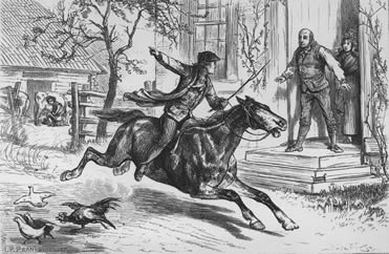
But first I have a couple of wondering questions that this morning’s Gospel calls to mind. We read that the shepherds “made known what had been told them about this child.” I’m wondering to whom did they make this known? I’m really curious. Did they run through Bethlehem Paul Revere style (“The messiah is coming! The messiah is coming!”)? Did they go to the local census bureau and tell them to add another Israelite to the rolls? Did they go to the religious leaders and tell them that their hopes had been fulfilled?

In fine Godly Play style, I’m just going to let that first question hang in the air while I pose a second one. I’m wondering what kind of reaction the shepherds received. Luke tells us “all who heard [the shepherds’ testimony] were amazed at what the shepherds told them.” But “amazed” is neither a positive nor a negative word. As far as the shepherds are concerned, I suspect that they received quite a few responses that went along the lines of: “That’s amazing; ridiculous, but amazing.” Others probably said, “Get off my front stoop, you mangy shepherds.”

In the end, the narrative gives us single answers to both these wondering questions. While the shepherds surely told a wide array of people and received a wide array of amazed responses, we are privy to only one, and that is Mary’s. The shepherds burst in on the exhausted new parents with their witness to the angel’s words about the infant. The angel had said, “I am bringing you good news of great joy for all the people: to you is born this day in the city of David a Savior, who is the Messiah, the Lord.” The shepherds proclaim this good news to Mary and Joseph. And “Mary treasure[s] all these words and ponder[s] them in her heart.”

Notice what is happening here with Mary’s response to the shepherds’ news. For nine months, since the angel appeared to her on that fateful day, Mary has carried within her the Incarnate Word. She has nurtured in her womb the physical embodiment of God’s good news to the world. She has felt the Son of God kick. Then, on the night we celebrated last week, she delivers him. Jesus is born to the rest of the world, and Mary’s womb is empty once again.

And yet, even though her womb is now empty, is her body void of the Word of God? Thanks to the shepherds: No. They bring the first message of the Gospel back to Mary, and she fills herself with the good news. She treasures their words in her heart as she had so recently treasured the Word in her womb.

Each of us bears the Gospel inside of us. The good news of Jesus Christ is treasure hidden in our hearts waiting to be shared. But our hearts are also home to all of the boxes and baggage and bulk that accumulate over lifetimes of focusing our attention away from the things that really matter, away from God and loving relationships. Our hearts are storage units for all of our misplaced priorities, inflated egos, broken promises, habituated distrust, forgotten loyalty, and shackling fears. These things clutter our hearts and leave less room for the good news of Jesus Christ to dwell.

Mary’s brave agreement to carry the Christ child makes a space within her, and God fills her emptiness with the embodiment of this good news. In today’s passage from the Letter to the Philippians, Paul tells us of another emptying, one that the Word made flesh accomplished in order to inhabit Mary’s womb. Paul says of Jesus: “Though he was in the form of God, [he] did not regard equality with God as something to be exploited, but emptied himself, taking the form of a slave, being born in human likeness.”

The Greek word translated “something to be exploited” might be better translated as “something to be grasped” or even “something to be hoarded.” Even though he was in the form of God, Jesus let go of his station. Even though he was part of all the might and majesty and magnificence of God, he did not hoard them. Even though he shared the most precious thing in the universe — equality with God — he shared himself with us by emptying himself; by taking on the form of a slave; by filling Mary’s empty womb and being born in human likeness.

All this happened because Jesus was willing to let go of his grasp on his divine form. All this happened because Jesus refused to hoard the incomprehensible harmony of light and love and grace that is our God. All this happened because Jesus emptied himself. And Jesus emptied himself to fill Mary’s emptiness, to fill our emptiness.

So the question is: how empty are we? How much space within our hearts is left for the good news of Jesus Christ to fill?

If you’re anything like me, then the boxes and baggage and bulk take up a majority of your heart’s square footage. But we can begin to clear away this accumulation by resonating with Jesus’ own self-emptying and echoing Mary’s assent to be filled with God. The resulting emptiness is unlike any other instance of emptiness out there. This is not the emptiness of a bare pantry or a sock drawer on laundry day. This is purposeful emptiness, holy emptiness. This holy emptiness makes room for the grace of God to expand within us. Our internal storage units, once the depositories for those misplaced priorities and shackling fears, transform into the sanctuaries they were always meant to be. The emptier we become, the greater is our opportunity to discover true fullness.

This wonderful paradox is at the heart of our life of faith. As we begin the slow process of self-emptying, we realize that God has been at work in us all along: breaking down the boxes, removing the baggage, and shaving off the bulk. When we, like Mary and Jesus, empty ourselves, we find ourselves ready to respond to God. We are eager to serve others. We are prepared to give of ourselves because we know the fullness of God expanding within us has no bounds.

I invite you to join me in a New Year’s resolution this week. Each night before you go to sleep, focus your mind and heart in prayer. Identify something in your life that is taking up too much square footage within you, that is cluttering your heart. Perhaps this something is trouble at work or doubt about your financial future or concern for a loved one. Give this something to God in prayer. Ask God to inhabit the space vacated by this offering. Do this every night. Each time give something else to God. Practicing this holy emptiness will allow more space for the good news of Jesus Christ to breathe and move and dance within you. Soon you will empty yourself of enough clutter to notice that God has been at work in you from the beginning, and you will be able to dance along.

The Beginning of the Beginning

(Sermon for Sunday, December 4, 2011 || Advent 2B || Mark 1:1-8 )

The Gospel writer Mark wastes no time telling us what the story he is writing is about. The very first words of his account of the Gospel proclaim without hesitation: “The beginning of the good news of Jesus Christ, the Son of God.” Whereas Matthew begins with a genealogy that links Jesus back to Abraham; whereas Luke begins with a short address about his research methodology; whereas John begins with a mysterious poem about creation, Mark just hits the ground running and never looks back. “The beginning of the good news of Jesus Christ, the Son of God.”

Now, until I started thinking about this sermon, I had always taken this verse at face value. The “beginning” that Mark is talking about is simply the launch of the story he is telling. The “good news” is the marvelous effect of the life, death, and resurrection of the main character, whose name and identity Mark helpfully provides at the end of the verse: “Jesus Christ, the Son of God.” The immediate, no frills manner, in which Mark relates the rest of the Gospel, makes this face value interpretation of the opening verse quite attractive. However, just because Mark’s narrative tends to hurtle forward from one encounter to the next, doesn’t mean that the narrative has no depth or intricacy. With that in mind, and because Advent is upon us, let’s slow down for a few minutes and really digest this first verse: “The beginning of the good news of Jesus Christ, the Son of God.”

In today’s parlance, when we hear the term “good news,” the two words are usually embedded in the sentence: “Well, I’ve got some good news and some bad news.” We’ve all used this conversational staple.

“The good news is the Patriots won their game; the bad news is so-and-so outside linebacker broke his leg and is out for the season.”

“The good news is no one was seriously hurt in the accident; the bad news is the car was totaled.”

“The good news is I found the recipe; the bad news is we’re out of eggs.”

In meetings, around kitchen tables, on the bus, we use the words “good news” to talk about the sometimes funny, sometimes bland, sometimes serious details of our lives. These two words are so ordinary, so normal. Because they sound so common, I wonder how we encounter the words “good news” when we hear them right at the beginning of Mark’s account of the Gospel. Perhaps Mark is really excited about the story he is going to tell. Perhaps Mark is employing a specific term that Jesus’ himself or his first followers used to describe his message. Either way, Mark is almost certainly doing something that we 21st century citizens would miss entirely because of our modern connotation of “good news.”

You see, in the first century Roman Empire, of which Israel was an occupied region, the term “good news” had a special connotation. The word was used exclusively for propaganda about the empire and usually about the Roman emperor himself.

“Good News: the Emperor won a victory in Gaul!”

“Good News: the Emperor’s wife has given birth to a strapping infant boy!”

“Good News: the Emperor has had another birthday!”

The Roman propaganda machine churned out these ancient press releases, and the strong arm of the military bade the cowed citizenry of occupied countries to celebrate. This was one small way that the Empire kept control of all that conquered land.

So when Jesus and later Mark proclaim their own “Good News,” they are tacitly setting their story, their message, their view of who’s really in charge squarely in the face of the Roman establishment. The “Good News,” which Jesus and his followers proclaim, is a stark challenge to ruling order of the day. Indeed, Mark shows his faith and his gutsiness in the simple act of writing those two words on the page.

Okay, file the challenge away for just a minute and let’s back up to the first two words in the verse: “The beginning of the good news of Jesus Christ, the Son of God.” The beginning. I’ll confess, until this week, I never thought there was something odd about these two words, which open Mark’s account of the Gospel. But think about them for a second: the beginning. The two words obviously start the story. They’re on page one. They would have been at the top of the scroll in Mark’s day. Why does Mark need to tell us that we are reading the beginning of the story when we are obviously reading the beginning of the story?

Perhaps Mark isn’t just stating the obvious. Perhaps this “beginning” is greater than “the opening verses of Chapter One.” Perhaps the “beginning” that Mark has in mind encompasses the entirety of his sixteen-chapter Gospel. Now we’re on to something.

If the whole, entire Gospel is the “beginning of the good news,” then the natural question becomes, “What is the middle and end of the good news?” And this is where followers of Jesus Christ down through the centuries come in. Jesus lived the beginning of the Good News. Mark, along with Matthew, Luke, and John, wrote down the story of that beginning. And you and I are characters in the middle of that same story begun two thousand years ago. You and I are players in the unfolding drama of the Good News. You and I have taken up the narrative of the Gospel that God continues to tell in our lives.

Alright, go ahead and un-file the challenge we talked about a minute ago. Remember that Mark’s usage of the term “Good News” was a gutsy, implicit challenge to the ruling order of the day. This ruling order touted their empire as the “Pax Romana,” the “peace of Rome.” Of course, this “peace” was accomplished through conquest, coercion, occupation, and fear. But Jesus Christ replaced this so-called “peace” with a peace of his own invention. Jesus’ own Good News, his own triumph was accomplished through welcome, healing, sacrifice, and love.

Of course, when these two versions of “peace” clashed, the broken, imperial establishment utterly crushed Jesus. However, by not fighting back, by sacrificing himself to halt the cycle of violence, Jesus succeeded in his challenge, even though he died. But even then, the story was just beginning. With his resurrection, Jesus demonstrated that his version of the Good News is truly the Good one. As characters who have now appeared later in this same narrative, we have the opportunity to take up the same challenge that Jesus and Mark after him championed. The Pax Romana of our day rules through apathy, self-centeredness, greed, and (as then) fear. But when find ourselves in the middle of the story begun in the Gospel, we find the strength and courage to combat those evils with Jesus’ own arsenal of welcome, healing, sacrifice, and love.

Now, I’ll end this sermon with some good news and some bad news. Which do you want first? The bad news. Sure. The bad news is there is still so much brokenness in this world, so many places where God’s Kingdom seems so far away. The good news is that with God’s help, we can challenge the ruling order of our day and bring the wholeness of the Kingdom to those broken places. The good news is that we are the current characters in the story begun in the Gospel. The good news is that the story isn’t over yet.