
Sermon for Sunday, March 29, 2026 || Palm/Passion Sunday A || Matthew 21:1-11
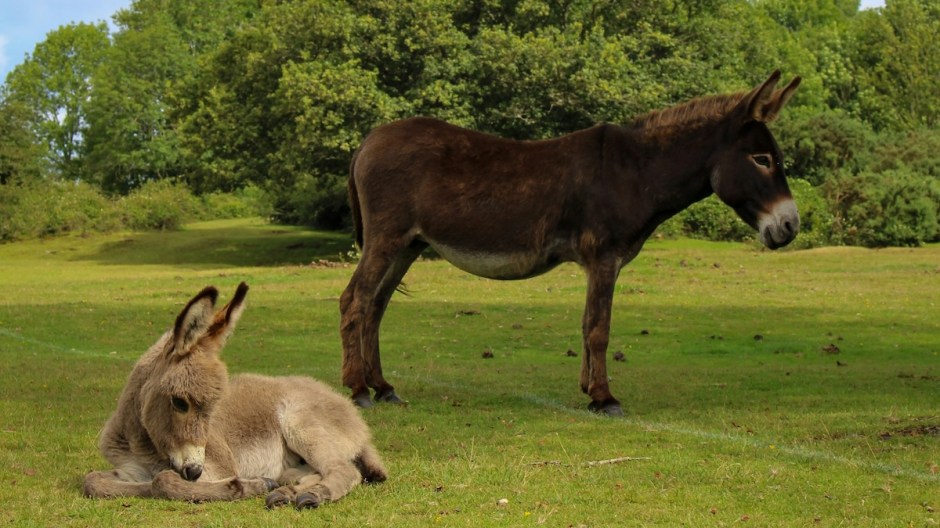
This is a sermon about baby donkeys. Well, really it’s a sermon about peace, but the thing you probably will remember about it is the baby donkey. Today, we celebrate an event in the life of Jesus, an event that was so momentous that it appears in all four accounts of the Gospel. At the beginning of the service, we read Matthew’s version of this event: Jesus’ triumphant ride into Jerusalem at the beginning of the week leading up to Passover. The way Jesus decides to enter the city demonstrates to the people of his own time and for people of all time Jesus’ conscious and dedicated embrace of nonviolence. And it all comes down to a baby donkey.
Let’s set the scene. Jesus and his disciples arrive at the Mount of Olives. He sends two of them off to fetch his ride: a momma donkey and her baby. They find the beasts of burden just as he said and bring them to Jesus. Matthew then reminds us of some words from the Prophet Zechariah:
“Tell the daughter of Zion,
Look, your king is coming to you,
humble, and mounted on a donkey,
and on a colt, the foal of a donkey.”
Jesus then, according to Matthew, sits on both donkeys: “They brought the donkey and the colt, and put their cloaks on them, and he sat on them.” This visual has always been really funny to me. I don’t know how you sit on two donkeys at the same time, especially if one is quite a bit smaller than the other.
But this is where Matthew misses the poetry of Zechariah’s prophecy. The poetry of the Hebrew scriptures employs a particular literary device hundreds and hundreds of times. This literary device is the duplication of an idea or image as a way of intensifying the thought. We can see this device in the Psalms, the Proverbs, the Prophets, everywhere in the Old Testament. Here’s an example from today’s psalm:
“I have become a reproach to all my enemies and even to my neighbors,
a dismay to those of my acquaintance.”
Do you see the repetitive intensification in these two lines? “A reproach…to my neighbors / a dismay to those of my acquaintance.” The second line says about the same thing as the first line as a way of underlining the idea of becoming an outcast to those who use to be friendly.
The same thing happens in Zechariah’s poetry about the donkeys:
“Look, your king is coming to you,
humble, and mounted on a donkey,
and on a colt, the foal of a donkey.”
This isn’t supposed to be two separate animals. The image of the colt, the baby donkey, intensifies the humility of riding a donkey instead of a horse. The other Gospel writers appreciate this poetic device and have Jesus riding the colt only. But for some reason, Matthew misses the poetry and sets Jesus on two donkeys at once.
I have now spent nearly 500 words belaboring this point about the baby donkey because it is so very important for our understanding of Jesus’ triumphant entry into Jerusalem. As is often the case in the Gospel, the writer quotes the prophet from memory, and the quote is not complete. Reading the full verse from Zechariah illuminates for us the true fulfillment of the Zechariah’s prophetic vision:
Rejoice greatly, Daughter Zion.
Sing aloud, Daughter Jerusalem.
Look, your king will come to you.
He is righteous and victorious.
He is humble and riding on [a donkey],
on a colt, the offspring of a donkey.
He will cut off the chariot from Ephraim
and the warhorse from Jerusalem.
The bow used in battle will be cut off;
he will speak peace to the nations. (9:9-10 CEB)
This beautiful vision of the prophet turns the scenario of a triumphant procession upside down. This is not a military parade, not a celebration of violence and war. The king is riding a baby donkey because the warhorses are gone. The chariots are gone. The bows of battle are gone. And what’s left are words of peace spoken to all the nations.
In our Lenten forums about biblical prophecy, we studied parts of Richard Rohr’s new book The Tears of Things. The sentence that most captivated me in this book perfectly describes the importance of Jesus’ embrace of Zechariah’s prophecy. Rohr says this about the reordering of Creation that the prophets envision: “We can recognize [the] new order…when it is less violent and more universal than the previous arrangement.”
Less violent and more universal. In other words, the new order that we, as followers of the Prince of Peace, strive for envisions a place for all people, respecting dignity and promoting freedom beyond tribal and national boundaries. And this new order promotes peace, conversation, and a commitment to nonviolence.
We are, obviously, far from this vision right now. But abandoning the vision because it has grown fuzzy and distant is not the answer. Just the opposite. The farther the world spins away from Zechariah’s prophecy the more people of faith like you and me need to lay our cloaks on the path before that baby donkey, upon which sits the Prince of Peace; the more we need to shout, “Hosanna,” a cry of help to the One who saves us from our desire for violence and revenge. Because entering Jerusalem from another gate is Pontius Pilate, riding a warhorse, flanked by armed and armored soldiers. We have to choose one of the two parades to attend. And our choice is clear. We will attend the parade with a baby donkey at its center.
Photo by Ellen Kerbey on Unsplash.
 Where the Wind...