
Sermon for Sunday, September 28, 2025 || Proper 21C || Jeremiah 32:1-3a, 6-15
This sermon is about hope. More specifically, this sermon is about what we do when the world is falling apart. And we’re going to start today with the Prophet Jeremiah, who lived at a time when the world as he knew it was ending. Centuries earlier, the Assyrians had conquered the northern kingdom of Israel. But the southern kingdom of Judah held on, thanks in part to the geographical impregnability of Jerusalem. Now, in the early sixth century BCE, the Babylonians were the conquerors, and they were laying siege to Jerusalem. Jeremiah, like the Prophet Isaiah before him, told the truth about the present circumstances: that divisions in his society, a widening gap between rich and poor, and a lack of care for the most vulnerable were all signs of Judah crumbling from within. This only emboldened aggressors like Babylon, and here they were, at the very gates of the city. Indeed, in 587 BCE, the Babylonians succeeded in conquering Judah. In the process, they destroyed the temple and took a host of prominent Judeans into exile.

Click here for Apple Podcasts or search
“WheretheWind.com Sermon” on your podcast app of choice.
The Prophet Jeremiah was active throughout this fraught period in the history of the people of Israel. While those in power either exacerbated Judah’s injustices or stuck their heads in the sand, Jeremiah lived a life of truth-telling, which is another word for prophecy. He listened for God’s word happening all around him, and he spoke that word to those who needed to hear and heed it. Because of the direness of his country’s situation, much of Jeremiah’s prophecy reads as doom and gloom. Wow, Jeremiah was a downer, we might say. He probably didn’t get invited to many parties.
But Jeremiah had something many of his contemporaries lacked. Jeremiah had a combination of integrity and conviction, both born from his intense prophetic communion with God, that would never allow him to shirk his responsibility as a truth-teller. Wonderfully, amidst all the doom and gloom, Jeremiah still manages to hold onto the deepest and most vital truths of all: the truth that God is present in the most desperate times and the truth that what feels like an end to us is never the final end of the story. (By the way, these two truths add up to Hope. We’ll get there in a minute.)
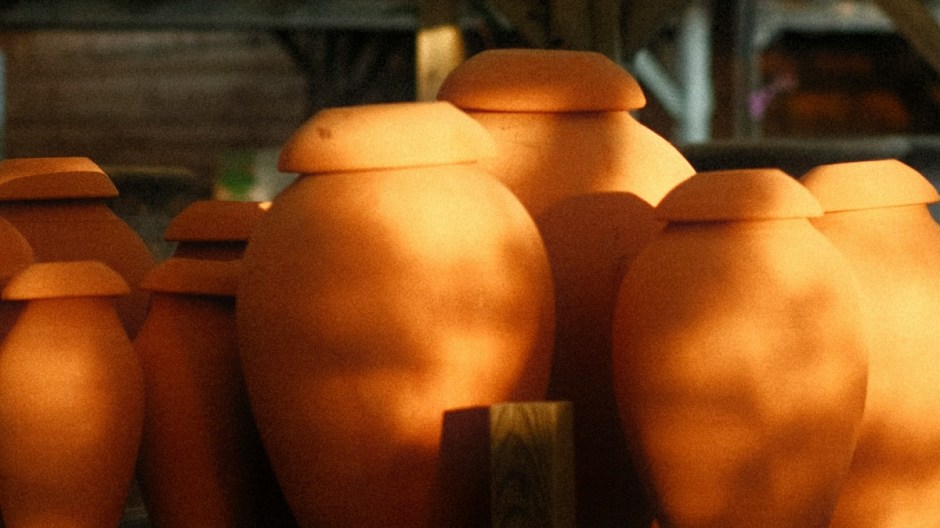
But first, today’s passage from Jeremiah, which might seem to us like a strange excursion about real estate management, is actually a powerful demonstration of the hope that Jeremiah still sees for his people. With the Babylonians literally battering down the gates of Jerusalem, Jeremiah buys the field at Anathoth from his cousin Hanamel. They go through all the correct procedures to transfer the deeds. Next Jeremiah charges an official named Baruch: “Take these deeds, both this sealed deed of purchase and this open deed, and put them in an earthenware jar, in order that they may last for a long time.”
Then Jeremiah shares the importance of this prophetic action, saying: “For thus says the Lord of hosts, the God of Israel: Houses and fields and vineyards shall again be bought in this land.”
Houses and fields and vineyards shall again be bought in this land. This is far from Jeremiah’s normal doom and gloom. Here Jeremiah looks ahead, decades in the future, and sees the return from exile, sees the opportunity to begin again, sees the day when the earthenware jar will be opened and the purchase of the land realized.
Jeremiah had no idea how long a time documents could last in earthenware jars in the arid region where he lived. In the 1940s and 50s, thousands of documents from just a few centuries after Jeremiah’s time were found in the Qumran Caves on the northern shore of the Dead Sea. You know what we call those documents, right? The Dead Sea Scrolls. They were found in earthenware jars just like the one Jeremiah has his deeds placed in. Think about how incredible that is! If Jeremiah’s people hadn’t been able to return to Jerusalem some forty years after the beginning of the exile, those deeds could have been discovered intact nearly 2,500 years later. Jeremiah’s hope in the God who makes all things new compelled him to buy the field at Anathoth even though he himself would not be able to live there.
Hope is a gift from God that we exercise just like we exercise our physical bodies. Hope is not something we have; it’s something we do, something we practice. There’s a famous apocryphal quotation attributed to Martin Luther that says: “If I knew the world were ending tomorrow, I would still plant an apple tree today.” You might say, “Well, that’s stupid. The world is ending. Why plant a tree?” The hopeful response to such naysaying is this: “Well, the world hasn’t ended yet.” And the even more hopeful response is this: “Not planting the apple tree just contributes to the ending of the world.”
And so in these days of division, discord, violence, and war, God calls us to live as hopeful people – as hope-full people, people filled with hope, animated by hope, people like Jeremiah who bought a field that only a future generation would be able to inhabit. In our own day, our practice of hope takes on myriad forms, each practice as unique as the constellation of God-given gifts that spurs it. And yet all our practices of hope add together to be the light shining in the darkness that the darkness cannot comprehend or extinguish.
This week, I invite you to pray about how God is urging you to practice hope. Perhaps you will work with Swords to Plowshares, taking apart one gun at a time and beating its metal into garden tools. Perhaps you will sit with your grandchildren and tell them all about your fullness of years, sharing with them the wisdom of previous generations so they can share such wisdom with future ones. Perhaps you will literally plant apple trees. Or go to a rally. Or write to your senator. Or learn how to paint. Or live your one wild and precious life as loudly as you can.
Whatever your practice of hope, know that every hope-filled action is like lighting a candle against the darkness. One candle shares its light with another and another and another. At long last, the night ends, and – thanks be to God – the sun rises again.
Photo by Mathias Reding on Unsplash.
 Where the Wind...