Sermon for Sunday, May 11, 2025 || Easter 4C || Psalm 23
Today, on this beautiful Sunday morning in springtime, when plants are growing and animals are having babies, we’re going to talk about…death. Now, as you can probably tell, I am not dead. So I have no special information to impart to you about what happens after we die. I have only my hope in the resurrection, that the essence of who God created us to be embraces new and abundant life in a way that we cannot even imagine in the midst of our physical existence. I have only this hope in the resurrection and my faith in the promise that Jesus makes to prepare a place for us and bring us to himself, so that where Christ is, we may also be.

“WheretheWind.com Sermon” on your podcast app of choice.
With this hope and faith as the backdrop of our discussion about death, let’s press on. While I may not be qualified to talk about what happens after we die, I am, along with every single one of you, very much qualified to talk about why we fear death. Humans fear death even though it is the only certainty out there, the only thing that binds us all together in mutual expectation. As the saying goes: “No one gets out of this life alive.”
So why do we fear death? I think the answers fall under four broad categories. The first three are fairly intuitive, so we’ll touch on them only briefly.
Number One: We fear things we do not and cannot understand. We fear the unknown, and death is the greatest of all unknowns. When we get ready for a trip, we pack, map our travel, check the traffic. We do everything we can to prepare for what’s to come. And with death, there is no possible preparation, no map, no nothing. And this terrifies us because we spend our lives planning, figuring stuff out, checking all the angles. And it turns out that the one inevitable thing is also the one thing that resists our ability to plan.
Number Two: We fear that we will not fulfill our work or relationships. We want to watch our grandkids grow up. We want to walk our daughters down the aisle. We want to finish the research or write the book or run the marathon or climb Kilimanjaro or whatever. And knowing that our lives have an expiration date, we’re afraid that we won’t get to do everything we desire to do. We’re afraid we will leave our relationships unfulfilled, especially ones that have become estranged over time.
Number Three: We fear the pain we will cause upon our departure. We have experienced the death of loved ones before. We know the feeling of the jagged gashes their absence leaves inside us. We know the heartbreak, the unending grief. And if there’s one thing we would like to do for our loved ones, it is to spare them such pain when we die. But just like the inevitability of death, pain is also inevitable. Grief is inevitable. Because if our lives ever touch others with even the lightest hint of love, then that love will transform into grief when we’re gone.
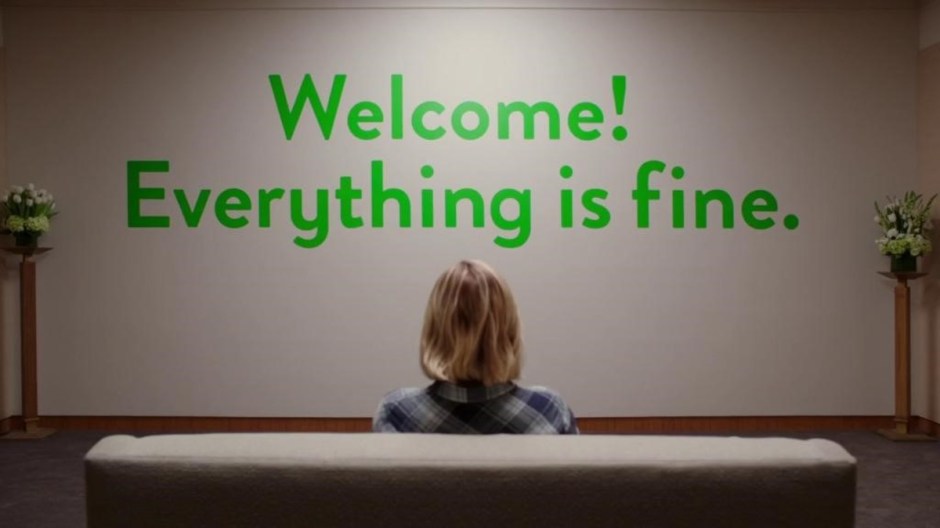
Those are the first three reasons we fear death: the unknown, unfulfilled desires, and being the source of pain. We’ll need to spend a few more minutes on the fourth reason. Number Four: we fear punishment. We…fear…punishment. We fear that once we die we will stand before St. Peter at the Pearly Gates, and he will look down his long list of names and not find ours on the list and we will fall through a trapdoor in a cloud and end up in the Bad Place. We fear that those Pearly Gates will be closed to us because we did something bad in our lives or because we did not do enough good things in our lives. We fear that death is the immovable date when our assignment is due: no rewrites, no extensions, no extenuating circumstances.
The first three reasons to fear death are absolutely understandable. They spring either from our a natural fear that comes from our ancestors delving into unknown jungles full of saber-toothed tigers or from our natural desire not to want to cause pain or lose a relationship. Those reasons make so much sense.
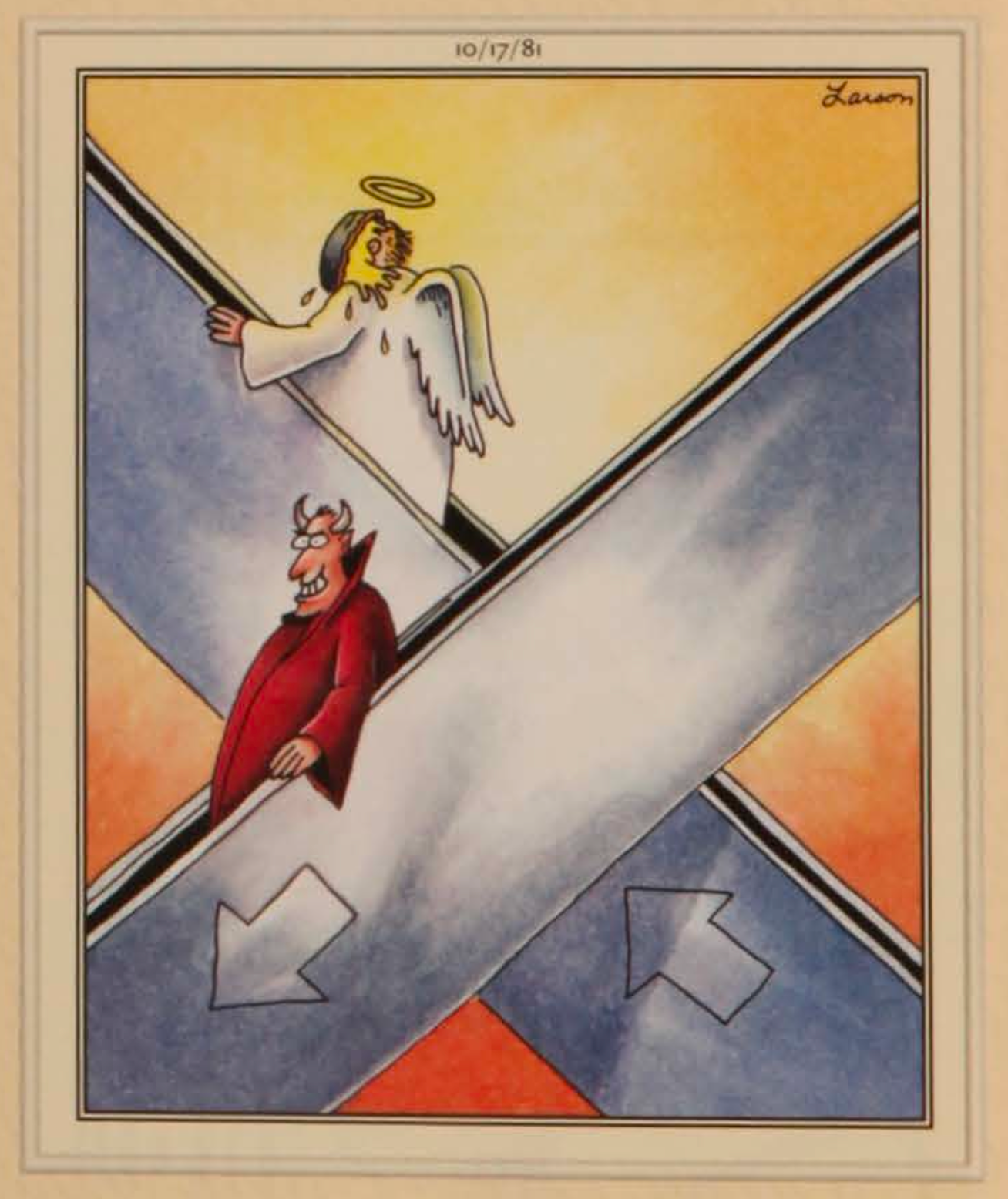
But the fear of punishment makes no sense. If we peel back some layers of history and biblical interpretation, we’ll see this. The Christian Church has built up over the millennia a specific vision of the Beyond that causes fear. The vision springs more from Dante’s Divine Comedy than it does from Holy Scripture, and the popular images of heaven and hell derived from that epic poem are so ingrained in our culture that we taken them as a given. Every one of us can conjure up an image in our minds of that scene at the Pearly Gates I mentioned earlier, right? Perhaps alongside the Divine Comedy we can thank Gary Larson’s cartoon The Far Side for its many one-panel comics about the Beyond. (Do you remember the one with the escalator? An angel is going up and a devil is going down, and the angel has a pie in the face.)
So let’s spend the last third of the sermon unpacking the image of the Pearly Gates and then touch on our psalm today, Psalm 23. In a couple of weeks we will read the end of the Book of Revelation during our Sunday service. The last bit of Revelation offers a stirring vision of the heavenly Jerusalem with its twelve gates of different precious gems. The vision also tells us that the city’s “gates will never be shut by day – and there will be no night there” because God’s glory shines brighter than the sun or moon. So, if the gates are never shut at day and there is no night, then are the gates ever shut? No! So, is St. Peter out of job? Maybe he’s not the gatekeeper. Maybe he’s the greeter.
The proverbial Pearly Gates are always open because the Kingdom of God is not a reward given to those with the fewest demerits. The Kingdom of God is the reality of God’s love, grace, and eternal relationship, a reality we can participate in on this side of paradise and when we die. When we help God build God’s reality during our earthly lives, we’re not scoring heaven points and we’re not side-stepping the fires of hell. We are living as terminal outposts of eternity. We are living as a community that reflects the welcome, love, and grace of the shining Heavenly City.
Psalm 23 begins with our earthly lives and ends with our eternal lives. The Lord who is our Shepherd leads us to sustenance and revival. The Shepherd leads us through the valley of the shadow of death and out the other side into the eternity of new and abundant life in God’s eternally loving presence. This abundance happens as an overflowing cup, as a banquet spread before us. The fear of punishment upon death is nothing compared to the final verse of the psalm: “Surely your goodness and mercy shall follow me all the days of my life, and I will dwell in the house of the Lord for ever.”
This is the promise of God to us today and every day. Death comes for us all, yes. And yes, there are natural reasons to fear this. But the fear of punishment is not one of them. For the Lord is our shepherd, with us to comfort us and restore us, now and into eternity.
 Where the Wind...