
Sermon for Sunday, January 19, 2025 || Epiphany 2C || 1 Corinthians 12:1-11
Today’s sermon is about the Holy Spirit inspiring us to work for the common good. The word “common” is a word we use a lot in the Episcopal Church. Since the year 1549, our worship book has been called “The Book of Common Prayer.” This use of the adjective “common” embraces both of the word’s meanings. First, our prayer is “common” in that it is an everyday thing, a normal part of our routine. Walking to the bus is common. Eating a bowl of oatmeal is common. Washing the dishes is common. Second, our prayer is “common” in the sense of “shared together.” We hold things in common among people, like a shared fridge in an office.

“WheretheWind.com Sermon” on your podcast app of choice.
The Book of Common Prayer is common because its presents a routine of prayer, and it is common because we share that prayer together. Go to any Episcopal Church in the country on a given Sunday and you will hear the same readings and say the same prayers. Because our faith community is built on the foundation of common-ness, we Episcopalians should be well-versed in living out the intentional and loving practice of togetherness that knits us one to another across many types of difference. You might call this our common cause.
Over the course of my lifetime, we have experienced a disintegration of the common causes that have held our country together like tree roots keeping soil erosion at bay. Every metric of membership across civic groups, social clubs, and faith communities has shrunk. Common news sources have given way to individualized news feeds that cater to the partisan bend of each person. We live in an age characterized by an epidemic of loneliness for elders and young people alike, which feeds into and is exacerbated by mental health issues, opiate addiction, and suicidal ideation. And with the rise of Artificial Intelligence, deep fake technology, and Big Tech oligarchs curating our social ecosystems, we no longer have a steady reality from which to build commonality. All of these forces have fed the disintegration of common cause in our public life.
From the earliest days of the United States, the concept of common cause was alive in public discourse. Fresh off the victory in the Revolutionary War, representatives from the thirteen states tried to figure out what kind of government would best fit this new country. The first thing they tried was a loose “confederation” in which the states retained near-sovereignty over their affairs. But the Articles of Confederation failed because there wasn’t enough common cause inherent in them. The states had begun contemplating separate trade agreements with foreign nations, taxes on goods crossing state lines, the retraction of commitments to pay collective debts, among other signs of disintegration.
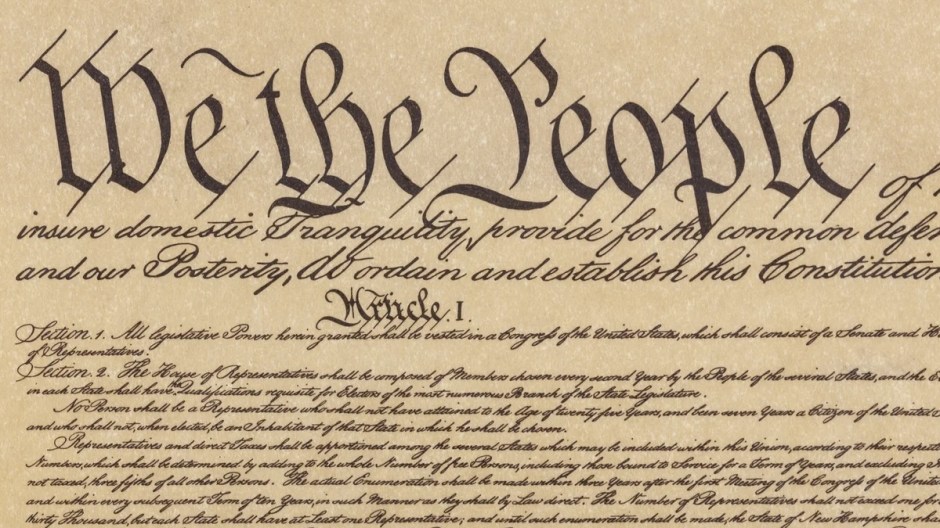
The Founders recognized that the Articles would never lead to prosperity, and so they set about the hard work of drafting the Constitution. The word “common” appears in the preamble in speaking about “providing for the common defence.” The Founders decided a federal system, in which the shared government was responsible for items that no one state could handle on its own, was the best way forward. Thus, the Constitution gave the various branches of the federal government the power to raise an army, declare war, make treaties with foreign governments, and regulate interstate commerce. One of the ways of framing the scope of American history is through the struggle over what should be the purview of the federal government and what should be left up to the states; in other words, the struggle to define what is common in our shared life.
We hear echoes of the disintegration, which the Founders fought against, in the current rhetoric over disaster relief funding, over which states should qualify for aid due to ideology rather than due to the severity of the disaster. Adding this to the fraying of our social fabric during the last few generations, we find ourselves in a moment when the concept of “common cause” is nearly extinct.
Thankfully, the word “nearly” is an all-important adverb here. For this is our moment to shine. This is our moment for faith communities in general and the Episcopal Church in particular to rekindle the fires of commonality. We Christians have been practicing the sharing of common cause since the very beginning of the Church. The Acts of the Apostles records, “Now the whole group of those who believed were of one heart and soul, and no one claimed private ownership of any possessions, but everything they owned was held in common. With great power the apostles gave their testimony to the resurrection of the Lord Jesus, and great grace was upon them all” (4:32-33).
Over the next few hundred years, the Christian church emerged from the shadows of persecution and began to convert Imperial Rome. During this time, non-Christians were amazed that plagues and hardships hit Christian communities less severely. They attributed this to a miracle of intervention by the Christians’ God, and perhaps it was. But the true miracles were more mundane: the Christians took care of one another, they did not abandon their sick companions, they made sure everyone had enough to eat.
These experiences in Acts and in the early church spring from the words of St. Paul in today’s reading from First Corinthians. “Now there are varieties of gifts, but the same Spirit; and there are varieties of services, but the same Lord; and there are varieties of activities, but it is the same God who activates all of them in everyone. To each is given the manifestation of the Spirit for the common good.”
To each is given the manifestation of the Spirit for the common good. Paul goes on to describe many spiritual gifts: wisdom, knowledge, faith, healing, and more. Instead of complaining that someone else got the spiritual gift that they wanted, the early followers of Jesus pooled their giftedness for the common good. And the Holy Spirit inspired them to do this, to seek common cause across their differences.
The Holy Spirit still inspires this same witness in the Church today. We come together, across our differences of political ideology and social identity, to seek common cause just as we worship with common prayer. We stand as a lighthouse amidst the crashing waves of social disintegration that are eroding our common life. The Holy Spirit shows us another way, a common, lifegiving way: the way of open dialogue that rebuilds shared reality; the way of deep relationship that transcends partisan rancor; the way of justice and peace that fights against violence, hate, and the demonization of the other; the way of Jesus, who stretched out his arms of love on the hard wood of the cross so that everyone might come with the reach of his saving embrace.
The Holy Spirit invites us to embrace our spiritual gifts in the cause of the common good. Now, more than ever, our common-ness as Episcopalians is not just the way we share our faith with one another. Our common-ness is the thing we need to share. I pray we heed the Spirit’s call and, with God’s help, share together in this common cause.
 Where the Wind...