Faithful Thomas

(Sermon for April 11, 2010 || Easter 2, Year C, RCL || John 20:19-31)

I’ve always had a special affinity for Thomas. Perhaps, because we share a name, I feel fraternally responsible for defending him against those who label him with one of the most enduring epithets of all time: Doubting Thomas. (Curiously enough, I’ve never felt much like defending Adam for his stupidity in the garden, but that’s another tale.) So, we have this fellow uncharitably nicknamed Doubting Thomas. We remember him for exactly one reason: he doesn’t trust the words of his fellow disciples when they tell him that they have seen the Risen Lord. Their witness is not enough for Thomas. He needs to see and touch Jesus, just as the other disciples had done when Jesus came to them the first time in that fearful room behind a locked door. Thomas needs the visual and tactile proof of the resurrection for himself. And for this one, simple reason, Thomas has been stricken with his unfortunate nickname, much maligned for his obstinacy, and readily dismissed for his doubt.

But this caricature misses the subtle interplay between doubt and faith that we are going to explore the next few minutes. Notice that Thomas never actually follows through with his stubborn ultimatum. He tells the other disciples, “Unless…I put my finger in the mark of the nails and my hand in his side, I will not believe.” The next weekend, Thomas is with the other disciples when Jesus comes to them again. And when Jesus invites Thomas to fulfill his requirement for belief, Thomas no longer needs to. Rather than reaching out his hand to touch Jesus’ side, Thomas lets loose from his lips the highest affirmation of Jesus’ divinity in the entire Gospel: “My Lord and my God!” Thomas is a man of deep faith.

This is the same Thomas who, when Jesus decides to travel near Jerusalem to raise Lazarus, says to the other disciples, “Let us go with him, that we might die with him.” Thomas is a man of deep conviction. This is the same Thomas who, when Jesus tells the disciples he goes to prepare a place for them, asks of his Lord, “How will we know the way?” Thomas is a man of deep questions.

When you add faith, conviction, and questions together, oftentimes doubt results, at least for a time. Faith gives you the reason to ask questions, and conviction gives you the perseverance to allow doubt to temper faith into a stronger whole. Too frequently, trouble happens when we mistake doubt for the opposite of faith, and therefore as something to be avoided at all costs.

One of the reasons for the persistent mistake of thinking that doubt is the opposite of faith comes from this very Gospel text (and indeed, this particular English translation of the Gospel text). When Jesus invites Thomas to touch his wounds, Jesus says, “Do not doubt but believe.” This sets up a dichotomy between doubt and belief and puts the two in opposition to one another. You can either doubt or believe, but you can’t do both. However, “Do not doubt but believe” is not actually what Jesus says. I don’t say this very often, but the English translation we read in church gets this sentence horribly wrong.

Because the New Revised Standard Version messes this verse up so badly, we need to have a short lesson in ancient Greek, the language in which the Gospel was written. I promise that I won’t make a habit of giving these lessons from the pulpit. But I also promise that you already know more Greek than you realize.

You're probably wondering why this picture makes sense in this context. I promise it does. Go watch the recently cancelled Dollhouse to find out why.

In Greek, to turn a word into its opposite, you add an alpha, which is really just an  “a,” to the front of the word. We do the same thing for English words that come from Greek. Try this one: Bios is a Greek word that means “life.” We get the English words “biology” and “biotic” from it. “Biotic” means “relating to living things.” If we add an “a” to the front, we get “abiotic,” which mean “relating to non-living things.” Or how about this one: Theos is the Greek word for “God.” In English, “theism” is the generic word for belief in God. So, add the “a” prefix and we get “atheism,” which is the belief that there is no God. We could come up with a dozen more examples, but I think you get the point.

Now let’s go back to our verse, which, if you recall, this morning’s reading translates as “Do not doubt but believe.” The Greek word translated “believe” comes from the word pistis, which means “faith.” The word that is translated as “doubt” is simply the word pistis with the “a” prefix – apistis. Therefore, the word should really just mean “unfaith” or “unbelief,” rather than “doubt.” With this new translation, the verse becomes, “Do not be unbelieving but believing.”

“Do not be unbelieving but believing.” This is a far cry from “Do not doubt but believe.” Jesus never tells Thomas not to doubt. Rather, Jesus tells Thomas not to jettison his belief all in one go. There is a huge difference between the two. This supposed “Doubting Thomas” is still incredibly faithful, even in the midst of his doubts. Remember, Thomas is a man of deep faith and conviction, who has the nerve to ask tough questions. Doubt arises in such a chemical makeup. But having doubts does not signal the loss of belief. Having doubts does not signal the abandonment of faith.

Doubt happens when you have enough conviction about your faith to question it. Thus, doubt gives you a reason to reexamine your faith and to sign up with Jesus Christ over and over again. Of course, too much doubt can lead to unbelief, just as, conversely, too much certainty can lead to stagnant faith.

Okay, now that we’ve established that doubt is not something to be avoided at all costs, let’s use our Easter celebration to bring the power of the resurrection into this discussion. Our faith finds its home in Jesus’ resurrection. Jesus triumphed over death in order to keep his promise that he would be with us always, despite the end of our physical existence. Resurrection happens with eternally vaster scope than death ever could. Because of this, death exists within the power of the resurrection. The resurrection subsumes death into itself, making death a piece of the reality of eternal life. In the same way, belief is so much more expansive than doubt; belief subsumes doubt into itself, making doubt a part of the pathway of faith.

Jesus tells Thomas, “Do not be unbelieving but believing.” And Thomas responds with such grand words to express his belief: “My Lord and my God!” Rather than dismissing Thomas as that good-for-nothing doubter, embrace Thomas as a faithful, thoughtful, courageous follower of Christ whose doubts ultimately lead him to a wondrous confession of faith.

God knows that we, too, have our doubts. We wouldn’t be human without them. But belief in God gives our doubts purpose, shape, and context. Do not be ashamed of your doubts. Shame only works to erode faith. Rather, see doubt as a sign of your conviction, as a sign of the fact that you care enough to ask tough questions. Then use that conviction, that perseverance to push through the doubt to the deeper faith beyond. And with those five glorious words of Faithful Thomas, praise the Risen One who is the beginning and end of our belief: “My Lord and My God.”

Forgetting the groceries

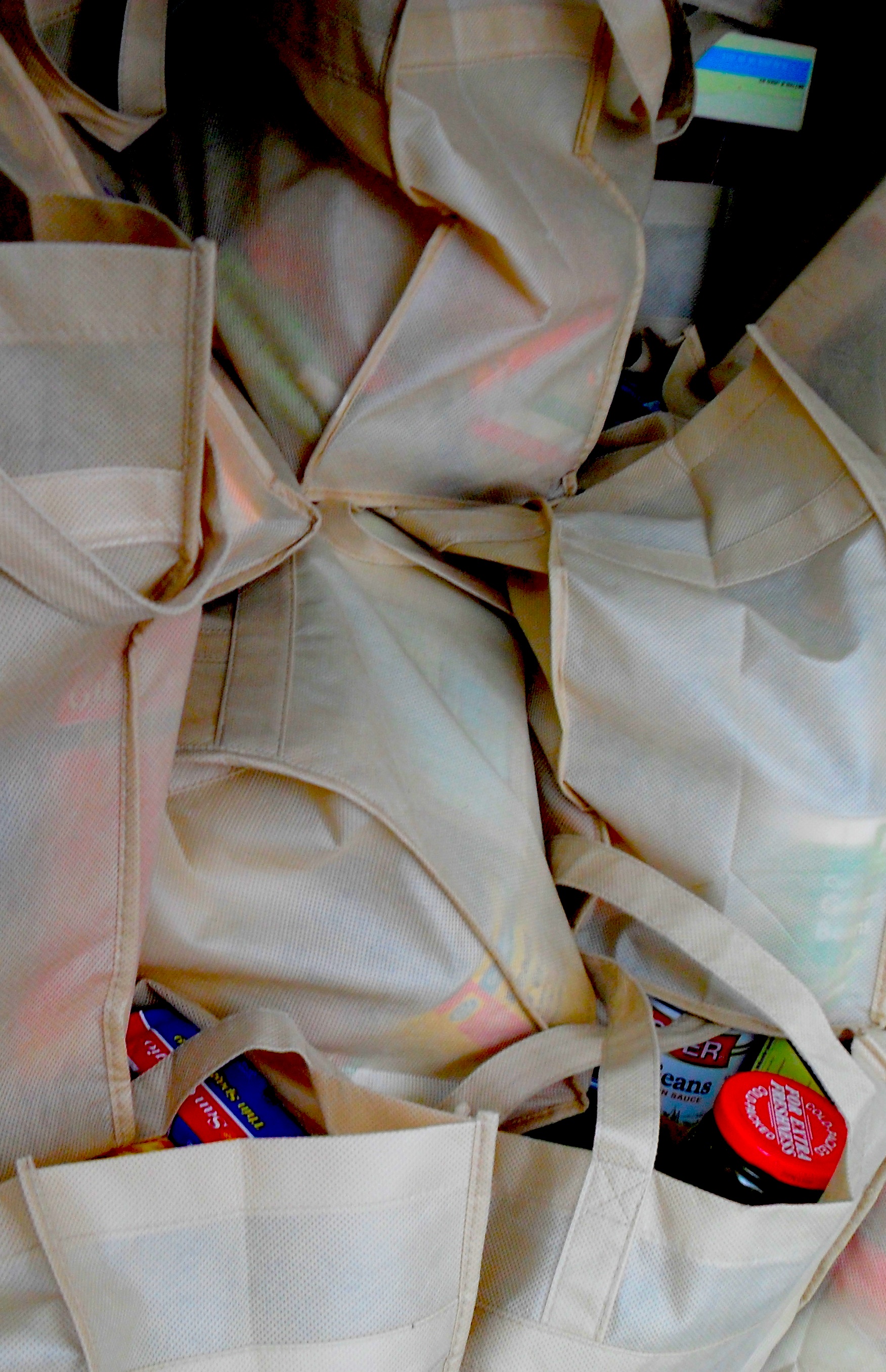
Practicality often gets in the way of noticing the glory of God. Don’t misunderstand, there is nothing wrong with being “down to earth”; indeed, a healthy dose of practicality is downright necessary. If my practical side didn’t assert itself, I don’t think I’d ever remember to buy groceries. groceriesBut a life governed by “the practical” misses the better portion of what makes life worth living—that is, rejoicing in the glory of God that perpetually surrounds me. This Sunday is All Saints’ Day, and I’m really excited that I get to preach because the Gospel text comes from perhaps my favorite chapter of the Bible. I talked about the first half of the chapter a few weeks ago on Episcopalcafe.com. Go read the second part of John 11 before continuing this post.

Jesus commands the onlookers to remove the stone, but before they can start rolling, Martha jumps in. Notice that the narrator, with odd redundancy, reminds the reader that Martha is the sister of the dead man. The oddity of this reminder makes it stand out. Martha, who had just made one of the strongest statements of Jesus’ divinity in the entire Gospel, once again has her mind on the practicalities of death. And this is made clear in her comment, which the NRSV makes slightly more sanitary than it is. The NRSV translation sounds rather like a member of the British House of Lords: Already there is a stench. Another reading gives this statement the earthier quality of, say, a West Texas ranch hand: It’s been four days; he stinks! With unpolished directness, her practical side asserts itself and comments on the absurdity of the scene that’s taking place.

Before coming to the tomb, Martha was ready to believe everything that Jesus said to her. But, now, confronted with the stone covering her brother’s tomb, this belief seems so small and silly compared to the reality of Lazarus’s death. The practical notion that the dead body of Lazarus smells is so much more palpable than the rather dodgy notion that Jesus can possibly bring him back to life. For a moment, she clings to this practicality because the alternative drove past the exit for Impracticality miles back and is stopping at a rest area over the border in Impossibility.

But Jesus turns the car around: “Did I not tell you that if you believed you would see the glory of God,” he says to Martha. In other words, don’t focus on reasons why what I’m about to do won’t work. Instead, remember that you believe in me, which gives you the ability to discover the one reason why it will work—because I AM. There are plenty of practical reasons why Lazarus’s stench, rather than Lazarus himself, will come out. But Jesus trumps all these reasons with a helping of delightful divine unreasonableness, which reminds me of some of Paul’s words: “For God’s foolishness is wiser than human wisdom, and God’s weakness is stronger than human strength” (1 Corinthians 1:25). When Jesus calls for the stone to be rolled away, the olfactory practicality of human decomposition is insignificant compared to the divine impracticality of raising someone from the dead.

Belief in God is impractical because (unlike my groceries) it can’t be seen or touched or bought or sold.  However, when God integrates belief into my practical life, I notice the incompleteness of a life full of practicalities. The unreasonableness of belief in God becomes my reason to live. And the impracticality of putting my faith in an impalpable being infuses all parts of my practical life. Martha’s probably right in the end: when Lazarus comes out of the tomb, I doubt he smells like one of those little trees you put on your rearview mirror. But he comes out all the same.