Grace and Disgrace (December 3, 2012)

…Opening To…

Speech of an angel shines in the waters of her thought like diamonds,
Rides like a sunburst on the hillsides of her heart.
And is brought home like harvests,
Hid in her house, and stored
Like the sweet summer’s riches in our peaceful barns. (Thomas Merton)

…Listening In…

Meanwhile, the people were waiting for Zechariah, and they wondered why he was in the sanctuary for such a long time. When he came out, he was unable to speak to them. They realized he had seen a vision in the temple, for he gestured to them and couldn’t speak. When he completed the days of his priestly service, he returned home. Afterward, his wife Elizabeth became pregnant. She kept to herself for five months, saying, “This is the Lord’s doing. He has shown his favor to me by removing my disgrace among other people.” (Luke 1:21-25; context)

…Filling Up…

The verses above close this portion of Zechariah’s and Elizabeth’s story, but their story intertwines with Mary’s for the rest of Chapter One so, we’re not quite through with them yet. According to Luke, Zechariah was in the sanctuary longer than normal, considering the folks outside seem to be getting antsy. When he comes out unable to speak, their suspicions are confirmed: something has detained him. Something powerful enough to strike him dumb.

The power of God that takes Zechariah’s words away gives he and his wife something so much more wonderful. Elizabeth becomes pregnant. Until now she has been unable to bear children, and she has felt disgraced because of this inability. In her society, her barrenness meant being shunned. Indeed, I can hear other women whispering behind her back in the marketplace. When she becomes pregnant, her ignominy vanishes.

All of this happens on a personal level. Elizabeth feels vindicated, heard by God. On a larger, thematic level, Elizabeth’s statement speaks to the thesis of Luke’s entire account of the Gospel. “The Lord is working,” she says. “I can see the evidence in my own life.” The Lord works by removing her disgrace among other people. To turn this negative statement into a positive one, God shows her grace, which is another way of saying that God makes God’s presence known in her life. Isn’t that what the Gospel is about? And aren’t our lives about this same thing: being present to God even as God is present to us through grace.

…Praying For…

Dear God, you showed your power in the lives of Zechariah and Elizabeth. Send your grace upon me so that I may help to reveal your grace in the lives of those around me. In Jesus Christ’s name I pray. Amen.

…Sending Out…

I leave this moment with you, God, thankful that I, too, am a player in the continued narrative of the Good News of your Son Jesus Christ.

A Most Ingenious Paradox

(Sermon for Sunday, December 2, 2012 || Advent 1C || Jeremiah 33:14-16)

I’ve never been good at staying up until midnight on New Year’s Eve. I always seem to nod off at about 11:35, or in recent years, much earlier. There was one year back in my wild college days when I managed to keep my eyes open for Dick Clark’s countdown, but now that he’s gone, I won’t ever have that pleasure again. So maybe some of you can fill me in on last night’s frivolities. Who took Dick Clark’s place? It was Ryan Seacrest, wasn’t it? Show of hands – how many of you stayed up until midnight last night to watch the ball drop in Times Square?

No one?

Did I print the wrong sermon?

No, I didn’t. The world at large won’t celebrate the New Year for another month. And the world at large is already celebrating Christmas, or to be more precise, perpetual Christmas Eve, with all the hustle and bustle of shopping and the butchered covers of  “O Holy Night” playing in the mall, and the newspaper circulars I could weight train with. The world at large, as it so often does, has everything backward.

For us followers of Jesus Christ, today is New Year’s Day, and Christmas doesn’t happen until we tick the next four Sundays off the calendar. Today begins a period of deep-breathing, of collective Lamaze, if you will, while we wait and watch with the Virgin Mary as she comes to full term. This is the kind of breathing that the world at large can’t participate in, because the world at large never stops to catch its breath. So what is today, this New Year’s Day, this Day of Deep Breath? Today is the first Sunday of Advent, the beginning of the church year. Over the next three and a half weeks, we have the wonderful opportunity to breathe into the quiet spaces within ourselves and allow God to fill those cavities with the perpetual hope that marks this pre-Christmas season.

That’s what this sermon is about, by the way: hope. Advent is about anticipation, expectancy, keeping our eyes open, and hope fuels these things. But hope has always been a tricky concept to convey, so we’ll try to tease out its meaning a bit in the next few minutes as we talk about what this wonderful season of Advent, this season of deep breathing, has in store for us.
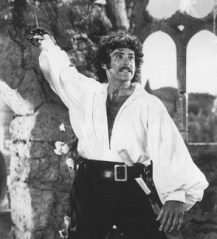
piratesWhen discussing hope, we first must acknowledge the fundamental paradox of our lives as followers of Christ. This is, as the Pirates of Penzance sing, a “most ingenious paradox.” [“A paradox, a paradox, a most ingenious paradox. Haha haha…”] The pirates’ response to the paradox is to laugh, which isn’t a bad place for us to start either because laughter keeps things light, and this sermon could easily get very, very heavy.

So what is this most ingenious paradox of the Advent season and of our lives as followers of Christ? Well, rather than tell you straight out, I think I’ll illustrate by using the most beloved of Advent songs, which we won’t actually be singing until next week. “O come, O come, Emmanuel, and ransom captive Israel, that mourns in lowly exile here until the Son of God appear…”

The name “Emmanuel” is a special one. First appearing in Isaiah’s prophecy, the angel who comes to Joseph in a dream gives this name to the unborn child in Mary’s womb. Emmanuel means “God with us.” Do you see the paradox yet?

O come, O come, Emmanuel. O come, O come, God with us. O come, O come, One who is already here, One who is closer to us than we are to ourselves. O come, O come. This is the paradox – we wait for and anticipate the One who is already and forever with us. My father has often said, “The best way to prepare for the coming of Christ is never to forget the presence of Christ.” This is the paradox that we live into as followers of Jesus and celebrate especially in this Advent season.

And this paradox shows us why hope is such a difficult concept for us to get our heads around. You see, hope is faith projected into the future. Hope is the willing expectation that the bounds of possibility are far wider than we can perceive. The trouble is that the times when we most need to be hopeful, the times when hope really is the only thing that can sustain us, are often the same times that faith is in short supply or when those boundaries of possibility feel impossibly narrow.

Today’s reading from the prophet Jeremiah comes during one of those narrow times. Things are looking bleak for the people of God because they haven’t been acting like the people of God for some time. By coincidence, I actually just finished reading the entirety of Jeremiah last week, and man, is it a depressing book. One tragedy after another befalls the people of Jerusalem: siege, famine, betrayal, assassination, murder, all culminating in the worst tragedy of all – being carted off en masse to Bablyon and the desolation of exile from their homeland.

But in the midst of this darkest of dark periods in the history of God’s people, the Word of the Lord comes to Jeremiah and says, “The days are surely coming when I will fulfill the promise I made to the house of Israel and the house of Judah. In those days and at that time I will cause a righteous Branch to spring up for David…In those days Judah will be saved and Jerusalem will live in safety.”

In the midst of the darkest of dark days, through Jeremiah God affirms God’s promise. There isn’t much hope in the book of Jeremiah, but here, in these few verses in the middle, we get a tiny whiff of hope.

But even a tiny whiff of hope is still hope. Hope of any size or strength is still hope – full, effective hope. Here again, is our paradox. Hope sustains us with the promises of God fulfilled at some future time that we cannot see in the midst of desolation. But at the same time, God is the One catalyzing the hope within us, the tiny whiff of hope, which is all we can manage right now. And so we pray, “O come, O come, God with us. You are here, O God, but come just the same because this tiny whiff of hope is wavering. O Come, O come, Emmanuel.”

How many of us have found ourselves in this situation, in this dark day of desolation? Perhaps yours happened on the day your mother died and you realized that you would never again hear her voice on the telephone? Perhaps yours happened when your son was diagnosed with severe autism and the life you had mapped out for your family took a sharp turn? Perhaps yours happened when you lost your job, or when you didn’t get accepted to the college you had your heart set on, or when you had sunk so low into depression that your bed became an island in a vast sea of nothing. Perhaps today, New Year’s Day for the Church, you are in the midst of your dark day, your time of exile.

Whether you are or whether you are remembering when you were or whether you are dreading when you will be again in that dark day, I invite you on this First Sunday of Advent, to take a deep, cleansing breath. Let that breath fill the quiet spaces within you. Feel God breathing into you that tiny whiff of hope, an embryonic hope, as small as those cells coalescing in Mary’s womb. The hope growing in Mary’s womb will be with us soon, in three and a half short weeks. But, as our most ingenious paradox goes, Jesus Christ, our Emmanuel, is forever with us, and he’s breathing hope into our desolation, he’s breathing vastness into our narrowness, he’s breathing promise into our faith. Rejoice. Rejoice. Emmanuel comes. Rejoice. Rejoice. God-with-us is here.


Skepticism (November 30, 2012)

…Opening To…

Hills, stars,
White stars that stand above the eastern stable.
Look down and offer Him.
The dim adoring light of your belief.
Whose small Heart bleeds with infinite fire.
Shall not this Child
(When we shall hear the bells of His amazing voice)
Conquer the winter of our hateful century? (Thomas Merton)

…Listening In…

Zechariah said to the angel, “How can I be sure of this? My wife and I are very old.” The angel replied, “I am Gabriel. I stand in God’s presence. I was sent to speak to you and to bring this good news to you. Know this: What I have spoken will come true at the proper time. But because you didn’t believe, you will remain silent, unable to speak until the day when these things happen.” (Luke 1:18-20; context)

…Filling Up…

With Gabriel’s speech done, Zechariah now has a chance to respond. And his response is so utterly human and familiar that I can be sure that I would have said the exact same thing. Basically, Zechariah says: “Oh, yeah? Prove it.”

This skepticism is so natural. But it is a skepticism born out of a tendency that I think we all have, a tendency to equate God’s trustworthiness with our own. The creation story in the book of Genesis tells us that God made us in God’s image. But when we submit to this tendency, we remake God in our own image. We know our own limitations, our own inability to keep promises or maintain healthy relationships for long, and we subconsciously decide that God must follow the same pattern. We bring God down to our level rather than allowing God to bring us up to God’s (or at least, a tiny bit closer).

I imagine that Gabriel has received this behavior before. Indeed, the angel doesn’t miss a beat: “I am Gabriel. I stand in God’s presence.” With these words, Gabriel provides a response to Zechariah’s skepticism. Rather than show him proof, Gabriel tries to bring Zechariah to the angel’s level so that Zechariah relinquishes the tendency to remake God in his own image. Gabriel stands in God’s presence. Zechariah stands in Gabriel’s presence. Therefore, by the transitive property (or one of those basic math operations) Zechariah stands in God’s presence. And that’s all the proof he is going to get.

We, too, stand in God’s presence, whether or not we have an angel reminding us of this fact. So let’s make a pact to try to remember this the next time we grow skeptical about God’s promises. Deal?

…Praying For…

Dear God, your trustworthiness is above and beyond anything I can conceive or imagine. Help me always to trust you, so that I can grow in faith and reliance on you. In Jesus Christ’s name I pray. Amen.

…Sending Out…

I leave this moment with you, God, keeping awake and alert for the revelation of your love for this world.

The Arrow (November 29, 2012)

…Opening To…

Hills, stars,
White stars that stand above the eastern stable.
Look down and offer Him.
The dim adoring light of your belief.
Whose small Heart bleeds with infinite fire.
Shall not this Child
(When we shall hear the bells of His amazing voice)
Conquer the winter of our hateful century? (Thomas Merton)

…Listening In…

“He will be a joy and delight to you, and many people will rejoice at his birth, for he will be great in the Lord’s eyes. He must not drink wine and liquor. He will be filled with the Holy Spirit even before his birth. He will bring many Israelites back to the Lord their God. He will go forth before the Lord, equipped with the spirit and power of Elijah. He will turn the hearts of fathers back to their children, and he will turn the disobedient to righteous patterns of thinking. He will make ready a people prepared for the Lord.” (Luke 1:14-17; context)

…Filling Up…

Today’s passage continues Gabriel’s speech to Zechariah begun in yesterday’s reading. Again, we could compare what Gabriel says about John with what the angel says about Jesus to Mary, but I think I will resist today. (But you could go for it yourself, you overachiever! Just read ahead a few verses in Luke 1.)

With these words, Gabriel describes John’s role as the story unfolds. While we might be tempted to skip John’s part in the story to get to the “real” story about Jesus, we do so to our detriment. It would be like skipping the opening act of a concert only to find out later that the opening band was really good. But John is more than Jesus’ opening act. Get ready for a flurry of metaphors. Ready? Okay, here goes:

John is the arrow that points to Jesus. John is the moon to Jesus’ sun, reflecting the light of the one to come. John gets the soil ready to be planted with Jesus’ words. John is the harbinger of the coming messiah. John is the advance scout, the voice, the witness.

While Jesus teaches us how to be more like him, the person we, as followers of Christ, really end up being more like is John. We are witness to Christ’s presence in the world. We are advance scouts for the in-breaking of God’s kingdom. We are arrows pointing to God. I’m not saying that we should put on hairy shirts and eat locusts. But we could all take a page from John’s book and do as Gabriel predicts: “Be filled with the Holy Spirit…go forth before the Lord…make ready a people prepared for the Lord.”

…Praying For…

Dear God, you shine with all the brilliance of your glory. Help me to reflect some of your light, that others may see you shining in me. In Jesus Christ’s name I pray. Amen.

…Sending Out…

I leave this moment with you, God, keeping awake and alert for the revelation of your love for this world.

Don’t be Afraid (November 28, 2012)

…Opening To…

Hills, stars,
White stars that stand above the eastern stable.
Look down and offer Him.
The dim adoring light of your belief.
Whose small Heart bleeds with infinite fire.
Shall not this Child
(When we shall hear the bells of His amazing voice)
Conquer the winter of our hateful century? (Thomas Merton)

…Listening In…

One day Zechariah was serving as a priest before God because his priestly division was on duty. Following the customs of priestly service, he was chosen by lottery to go into the Lord’s sanctuary and burn incense. All the people who gathered to worship were praying outside during this hour of incense offering. An angel from the Lord appeared to him, standing to the right of the altar of incense. When Zechariah saw the angel, he was startled and overcome with fear. The angel said, “Don’t be afraid, Zechariah. Your prayers have been heard. Your wife Elizabeth will give birth to your son and you must name him John.” (Luke 1:8-13; context)

…Filling Up…

In yesterday’s passage, Luke set up the idea that God was about to fulfill a promise. In today’s passage, Luke gives us the details of Zechariah’s encounter with an angel from the Lord. The angel is Gabriel, the same angel that visits Mary, so I’m having trouble resisting comparing the two encounters. ::resists a bit::  ::gives up::  Okay, so let’s compare them. (Note that we’ll go more in depth into Mary’s encounter next week).

First, notice Zechariah’s position. He is a priest actively serving in the house of God. The angel actually comes to him in the midst of worship. When Gabriel appears to Mary, we assume she is alone in her house. (Luke doesn’t give us those details.) Besides being an amazingly faithful, brave, and courageous woman, we know next to nothing about her. Over the course of Christian history, a picture of Mary as a teen-aged maiden still living with her parents has become the norm. And that’s probably not too far off.

When you put these two encounter stories in conversation with each other, two things jump out immediately. First, God encounters both pious religious professionals and everyone else, as well. Second, God encounters us in the midst of worship and in our everyday lives, while we are doing things too mundane to be remembered in the story. Thus, the possibility for encounter expands to include every moment of our lives.

The angel comes to Zechariah and to Mary and begins with the same salutation: “Don’t be afraid!” We can infer that the angel’s appearance wouldn’t be good for those who are a bit dodgy in the heart. But taken at a deeper level, isn’t this one of God’s most fundamental messages to each and every one of us? You have nothing to fear because you are with me. I absolutely love the fact that the very first line of dialogue in Luke’s Gospel brings this message.

…Praying For…

Dear God, I have nothing to fear because you are with me at all times in my life. Help me be aware of your presence so that I can be with you, even as you are here with me. In Jesus Christ’s name I pray. Amen.

…Sending Out…

I leave this moment with you, God, keeping awake and alert for the revelation of your love for this world.

Deep Background (November 27, 2012)

…Opening To…

Hills, stars,
White stars that stand above the eastern stable.
Look down and offer Him.
The dim adoring light of your belief.
Whose small Heart bleeds with infinite fire.
Shall not this Child
(When we shall hear the bells of His amazing voice)
Conquer the winter of our hateful century? (Thomas Merton)

…Listening In…

During the rule of King Herod of Judea there was a priest named Zechariah who belonged to the priestly division of Abijah. His wife Elizabeth was a descendant of Aaron. They were both righteous before God, blameless in their observance of all the Lord’s commandments and regulations. They had no children because Elizabeth was unable to become pregnant and they both were very old. (Luke 1:5-7; context)

…Filling Up…

Yesterday, I said that this Advent (and this pre-Advent week), we’d be looking in depth at Jesus’ birth narrative as found in the Gospel according to Luke. Each day, we’d take a few more verses and by Christmas, we’d have finished the whole thing. Now, you probably know the story pretty well: there’s a star and shepherds and angels and magi and Mary and Joseph and no room in the inn. Oh, yes, and the baby Jesus. (At least, that’s one way to tell the story, and we’ll discover in a few weeks that some of those elements aren’t in Luke’s story.)

But first, we’ll begin with a few people who are in Luke’s story, people you may have never heard of. In fact, you just might be wondering who the heck these Zechariah and Elizabeth people are. Why does Luke start with them? They certainly aren’t main characters, so why are they the first we meet?

Luke is doing here what might nowadays be called “deep background” on his main subject, Jesus. Before we meet Jesus, we meet his mother, Mary, and his earthly father, Joseph. Before we meet them, we meet Mary’s cousin Elizabeth and her husband Zechariah, the parents of John the baptizer. Luke knows that later in the story, John will be an integral character in pointing toward Jesus’ messiah-ship. So, being the good scholar he is, Luke digs into John’s past and finds a story nearly as miraculous as Jesus’ own.

You know right away that the story is miraculous by the way Luke sets it up: “They had no children because Elizabeth was unable to become pregnant and they both were very old.” Sound familiar? It should because it’s almost exactly what Genesis says about Abraham and Sarah before they become pregnant with Isaac. The birth of Isaac was the beginning of the fulfillment of God’s sweeping promise to Abraham. By putting the birth of John in line with this tradition, Luke is signalling to us that God is getting ready to make good on another promise – the coming of the messiah.

…Praying For…

Dear God, you always fulfill your promises. Help me to put my whole trust in you so that you can use me to continue carrying out those promises. In Jesus Christ’s name I pray. Amen.

…Sending Out…

I leave this moment with you, God, keeping awake and alert for the revelation of your love for this world.

Theophilus (November 26, 2012)

…Opening To…

Hills, stars,
White stars that stand above the eastern stable.
Look down and offer Him.
The dim adoring light of your belief.
Whose small Heart bleeds with infinite fire.
Shall not this Child
(When we shall hear the bells of His amazing voice)
Conquer the winter of our hateful century? (Thomas Merton)

…Listening In…

Many people have already applied themselves to the task of compiling an account of the events that have been fulfilled among us. They used what the original eyewitnesses and servants of the word handed down to us. Now, after having investigated everything carefully from the beginning, I have also decided to write a carefully ordered account for you, most honorable Theophilus. I want you to have confidence in the soundness of the instruction you have received. (Luke 1:1-4: context)

…Filling Up…

Because of the way the calendar falls this year, Advent doesn’t start until next Sunday, which is weird because it usually starts the Sunday after Thanksgiving. That means there are only 15 weekdays during the season, which is not enough to do what I plan to do. So I hope that you’ll forgive me for starting an Advent series a week early. Remember that Advent is the season of the church year during which we prepare for the coming of Christ – both as the infant in the manger and as the one coming once again in great power and glory.

This Advent, we are going to work slowly – very slowly – through Jesus’ birth narrative as found in the Gospel according to Luke. During church, we read the scriptures that will appear in the “Listening In” section over the course of just two or three Sundays. Here during devo180, we are going to cover the same material over 20 days – the entirety of Advent plus this week! We will look at just two to four verses a day, and who knows, perhaps you will find pieces of the story that you’ve never heard before or that strike you in a new way. That is my hope and prayer for myself and for you.

For today I have chosen the very beginning of Luke’s account of the Gospel. While not strictly part of the birth narrative, the opening lines of the Gospel give us a clue as to what Luke is attempting to do. Luke is a scholar. He tells us that he has tried as best he could to present an accurate account of the life and message of Jesus Christ. While first century scholarship differs a great deal from today’s, we can be assured that Luke has put his whole self into his endeavor. Writing this Gospel was his passion. Reading it can be ours.

Notice that he addresses his Gospel to “Theophilus.” While this might have been a real person, it is more likely that Luke is addressing this to all of God’s people, for “Theophilus” means “beloved of God.” And that means Luke’s Gospel is addressed to you.

…Praying For…

Dear God, because you love your creation, you sent your son to us in great humility. Help me to live my life with the passion you have instilled in me, following the example of your son. In Jesus Christ’s name I pray. Amen.

…Sending Out…

I leave this moment with you, God, keeping awake and alert for the revelation of your love for this world.

The Birthplace of Hope (November 23, 2012)

…Opening To…

If the only prayer you said in your whole life was, “thank you,” that would suffice. (Meister Eckhart)

…Listening In…

Therefore, go and make disciples of all nations, baptizing them in the name of the Father and of the Son and of the Holy Spirit,teaching them to obey everything that I’ve commanded you. Look, I myself will be with you every day until the end of this present age.” (Matthew 28:19-20; context)

…Filling Up…

When we take the long view of events in our pasts, we find the ability to thank God for difficult and challenging times that have led our lives in directions we never imagined. This sort of gratitude accomplishes more than simple thanks to God. By acknowledging that we have no idea whatsoever how our lives are going to turn out, we practice humility in the face of the expansive unknown that we benignly call “future.”

When my heart was broken in the summer of 2006, my life seemed pretty much over from that point on. But you know what? It wasn’t. Try as I might to hold on to the recent past, when I thought things were so good, I kept slipping and sliding into the future no matter what I did. And six years later, I must say that the future I was attempting to avoid is so much better than the future into which I had shoehorned myself and the woman who broke my heart.

So today, I invite you to give thanks for the vast expanse of possibility that the future holds. This sort of thanksgiving is the birthplace of hope – which is the willing expectation that the boundaries of possibility are far wider than we perceive. So give thanks to God for possibility, for newness, for adventure. And then take a step with God into the untamed wilderness that is tomorrow, knowing all the while that God has already explored this jungle and will lead you through.

…Praying For…

Dear God, you know our pasts, our presents, and our futures. Help me to open myself up to the future you have designed for me, and help me to invite you on the journey, exploring that future with me. In Jesus Christ’s name I pray. Amen.

…Sending Out…

I leave this moment with you, God, eager to look for your blessing in my life and eager to be a reason that others give thanks to you.

Collages (November 22, 2012)

…Opening To…

If the only prayer you said in your whole life was, “thank you,” that would suffice. (Meister Eckhart)

…Listening In…

After he took his seat at the table with them, he took the bread, blessed and broke it, and gave it to them. Their eyes were opened and they recognized him, but he disappeared from their sight. They said to each other, “Weren’t our hearts on fire when he spoke to us along the road and when he explained the scriptures for us?” (Luke 24:30-32; context)

…Filling Up…

About six years ago a woman broke my heart, thus spiraling me into the worst year of my life: I sunk into myself, hardly spoke to my friends, and rarely left my futon. I couldn’t let go of the vision of the future life that I had invented for myself. I couldn’t understand why God would take away the person that I thought was going to be my wife.

What I didn’t realize at the time is that God doesn’t comprehend our lives in the limited linear fashion that we do. When this woman broke up with me, my vision of the future became firmly cemented in the past. My future was empty, or so I thought. But I think that God comprehends our lives as a whole – not as a series of events. We view our lives as though flipping through the pages of a magazine, one to the next. God sees our lives as collages, in which all the pages are pasted together.

So today, I invite you to give thanks for something in your past that didn’t seem like a cause for gratitude at the time. Reflect on how this event fits into the overarching narrative of your live. I give thanks now that I didn’t marry this woman, because the person I would go on to marry was living in another state at the time. I just hadn’t met her yet. But God already knew her. God had already pasted her page into my collage. I would reach her in time. Thanks be to God!

…Praying For…

Dear God, you know our pasts, our presents, and our futures. Help me to take the long view of my own life, trusting in your directing creativity to lead me on the best paths, even when they seem difficult at the time. In Jesus Christ’s name I pray. Amen.

…Sending Out…

I leave this moment with you, God, eager to look for your blessing in my life and eager to be a reason that others give thanks to you.

Things that have Never Been (November 21, 2012)

…Opening To…

If the only prayer you said in your whole life was, “thank you,” that would suffice. (Meister Eckhart)

…Listening In…

Atticus was right. One time he said you never really know a man until you stand in his shoes and walk around in them. Just standing on the Radley porch was enough. (To Kill a Mockingbird, Harper Lee)

…Filling Up…

Yesterday, we talked about thanking God for something you’ve always known and had never realized you should be thankful for because it never pinged your radar. Today, we’ll take a look at the opposite – thanking God for things that have never been. This type of gratitude is possibly even more difficult than yesterday’s because it involves stepping into other people’s shoes in order to appreciate your gifts and blessings.

When we stand in another’s shoes, we gain the capacity for perspective. Sometimes, it’s difficult to see things when you’re right up close to them and seeing them from the same angle you always do. To give thanks for something you’ve never had, you might need to view your life from that other perspective. Perhaps you’ll give thanks because diseases that have affected people all over the world for hundreds of years won’t affect you because you were inoculated as a baby. Perhaps you’ll give thanks because you’ve never known a time when your stomach was so empty for so long that you forgot how to be hungry. Perhaps you’ll give thanks because every time you slept outside in your life, you did so because you chose to – and you always had s’mores as the campfire died down.

Today, think of something you’ve never experienced, something you don’t want to experience because it is unhealthy or degrading or worse. Now thank God that this thing has never happened to you. But don’t stop there. Recognize that this thing that has never been always is happening somewhere in the world – maybe next door, or a few blocks away, or across an ocean. How can you help make that thing change from an always is to a never again?

…Praying For…

Dear God, you never abandon people when they suffer. Help me to realize the gifts you have given me, and give me the strength and the imagination to use those gifts to address the brokenness of the world. In Jesus Christ’s name I pray. Amen.

…Sending Out…

I leave this moment with you, God, eager to look for your blessing in my life and eager to be a reason that others give thanks to you.