The Creative Voice Within (January 29, 2013)

…Opening To…

We say we read to “escape.” …A book so excites our imagination that we “consume” it… What would it feel like to consume the sacred book? Or to be consumed by it? To eat it, chew it, swallow it, digest it, to make it a part of you? (Roger Ferlo)

…Listening In…

[The Ethiopian eunuch] was reading the prophet Isaiah while sitting in his carriage. The Spirit told Philip, “Approach this carriage and stay with it.” (Acts 8:28-29; context)

…Filling Up…

The second thing you should do when you read the Bible is to read it aloud. In the passage above, Philip knew that the Ethiopian eunuch was reading from the prophet Isaiah because the eunuch wasn’t reading silently to himself. He was reading aloud – to himself. This may seem strange to you and me, but this was the way people read in the ancient world. There was no such thing as “silent” reading.

So read your passage out loud. I know you are reading a translation, but the beauty and rhetorical power of the Biblical texts do not necessarily suffer in an English treatment. When you read aloud, you will notice oratorical patterns and cadences that the Biblical writers employed to make recitation easier and listening more captivating.

Besides appreciating the oratorical flair of Biblical writers, reading aloud gives you the opportunity to engage the drama of the Bible. A good chunk of the text is narrative and a good chunk of the narrative is dialogue. Now, we have no audiovisual documentation of the conversations recorded in the narrative, so it falls to us to interpret how the dialogue sounds.

A trained musician may be able to “hear the music” when she looks at a score, but most of us cannot comprehend music’s beauty and power without hearing it played. Similarly, the Biblical text soars when it is read aloud. In Genesis, God speaks creation into being. When we read the Bible aloud, we access that creative voice within ourselves and use the breath and the bodies that God created.

So, read the Bible, yes. But don’t just read it. Speak it. And don’t just speak the Bible. Proclaim it.

…Praying For…

Dear God, you spoke and creation happened. Help me to breathe my life into the Bible just as you breathe your life into me. In Jesus Christ’s name I pray. Amen.

…Sending Out…

I leave this moment with you, God, gladdened by the prospect of meeting you in the Bible.

Greek to Me (January 28, 2013)

…Opening To…

We say we read to “escape.” …A book so excites our imagination that we “consume” it… What would it feel like to consume the sacred book? Or to be consumed by it? To eat it, chew it, swallow it, digest it, to make it a part of you? (Roger Ferlo)

…Listening In…

One of the two disciples who heard what John said and followed Jesus was Andrew, the brother of Simon Peter. He first found his own brother Simon and said to him, “We have found the Messiah” (which is translated Christ). He led him to Jesus.  Jesus looked at him and said, “You are Simon, son of John. You will be called Cephas” (which is translated Peter). (John 1:40-42; context)

…Filling Up…

Last week, we discussed five things you shouldn’t do when you read the Bible. You can probably guess what we are doing this week. You’re right! We are going to discuss five things you should do when you read the Bible. I’m not saying you must do these things, of course, but I think your Bible study will benefit from them.

First, you should probably read the Bible in its original languages.

Woah, wait a minute, you say. I don’t know Greek, Hebrew, or Aramaic.

That’s okay. I don’t really know them that well, either (and good for you for knowing all three languages the Bible is written in). Barring your extensive study of ancient languages, how can you approximate studying the Bible as it originally was? For most of us, this approximation lies quite far from the original, and that’s okay, too.

Rather than taking several graduate level courses in ancient Greek, I’d suggest either amassing several English translations of the Bible or logging on to a website that has several translations on file (like this one or this one). Then, when you begin studying a passage, read it in several versions. Note the important words that versions translate differently. What do you suppose accounts for the variation? What are the shades of meaning of a word of the original language that you notice when three or four different English words are used to translate it? Which makes the most sense to you? These are great questions to ask when studying the Bible because they can help deepen your understanding of the text.

Adding this step to your Bible study will also help you avoid one major pitfall – forgetting that the Bible was not written in English. This seems like a silly thing to warn against, but it’s a remarkably easy thing to forget. You don’t need to read in Greek to know that English-speaking scholars funneled the text into our language. But always keep in mind that what you are reading is not the original. Remembering this can keep us humble as we seek to understand the English text, just as the translators sought to understand the original languages.

…Praying For…

Dear God, you speak your words of life to people of all languages. Help me to interpret the Bible in ways that lead me to accept of your life-expanding grace. In Jesus Christ’s name I pray. Amen.

…Sending Out…

I leave this moment with you, God, gladdened by the prospect of meeting you in the Bible.

Trouble in River City

(Sermon for Sunday, January 27, 2013 || Epiphany 3C || 1 Corinthians 12:12-31a)
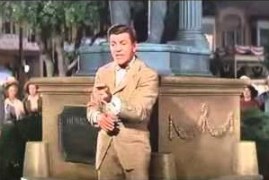
rivercityWe got trouble. Right here in Corinth. With a capital “T” and that rhymes with “P” and that stands for “pool.” Wait a sec. That’s the trouble in River City in The Music Man. Let me try again. We got trouble. Right here in Corinth. With a capital “T” and that rhymes with “G” and that stands for “gifts.” Spiritual gifts, that is. And while the con artist Harold Hill makes up the trouble in River City in order to sell marching band instruments, the Apostle Paul is intensely earnest in his diagnosis of the trouble in Corinth. The trouble in Corinth was certainly Trouble with a capital “T.”

Last week, Margot hinted at this trouble when she mentioned the Corinthians bickering over the dramatic spiritual gifts God had showered on the community. Our second lesson today picks up right where last week’s left off, and now we see Paul lay out the trouble plainly. The new church in Corinth has many problems – rival groups trying to assert dominance, questions about marital relationships, even issues concerning what to wear and what to eat. But none seems as contentious as the trouble Paul addresses in today’s reading.

When you boil Paul’s words down, you find that the trouble he sees is, in the end, the most common trouble of all – people not valuing one another. The very commonness of this trouble wrenches it from the dusty pages of scripture and puts it front and center in our lives. The capital “T” Trouble of people not valuing one another happened back then in Corinth. But just look around this world today – in our society’s discourse, in our communities, even within our own families – and you’ll see the effects of people not valuing one another.

But let’s start with the trouble in Corinth, the trouble that began over their spiritual gifts. Paul goes to great metaphorical lengths to teach the Corinthians that they are all part of the same body. Each part of the body has value, no matter if your part is the hand or the foot, the eye or the ear. Apparently in Corinth, certain people had been made to feel that their contributions to the body just didn’t matter, that because they were “feet” and not “hands” they had nothing to offer. I can only imagine how angry Paul got when he heard about such hurtful nonsense.

Paul first addresses these people who were being denigrated. Don’t believe what they tell you, he says. Just because you don’t fit their exact specifications for membership in the body doesn’t make you any less of a member.

Then Paul addresses the other side. (In certain other letters he doesn’t seek to cover up his anger, but here he manages to keep his indignation just below the surface.) To the ones engaging in the denigration, Paul says: “The eye cannot say to the hand, ‘I have no need of you.’ nor again the head to the feet, ‘I have no need of you.’ On the contrary, the members of the body that seem to be weaker are indispensable, and those members of the body that we think less honorable we clothe with greater honor.”

This has always been the way of God, hasn’t it? To lift up the lowly, to shield the easy targets of denigration and devaluation, to bring people together as one body. But even in those early years of the church, when everything was fresh and new and exciting, even then the brokenness of human nature reared its ugly head. Even then, the forces of division (you might say the forces of evil, of Satan) tried to halt the spread of God’s good news. In today’s lesson, the good news is that all people have value. All people belong to the body. I can think of nothing that the powers of darkness and division would abhor more than this simple truth, which Paul reminds the Corinthians and us.

After Paul speaks to these two sides of the trouble, he circles back to the issue, which sparked the trouble in the first place – the gifts God had showered on the people of Corinth. How utterly broken their community must have been if the forces of division had been able so easily to turn God’s gifts into sources of strife. But that is what they became. So Paul lists a sample of the gifts again and notes that no one has all of the gifts. That’s not how this whole “body” thing works. Each member has a gift to share, he says to the Corinthians, so you will not tell people they have no value just because they don’t display the gifts you think they should.

(Next Paul tells them and us about the greatest gift of all, which is an antidote for the trouble in Corinth, but we won’t read that part until next week. I’ll give you a hint, though. The gift is love, and the passage is one you’ll be familiar with if you’ve ever been to a wedding. But I’ll let Margot tackle that next week.)

For now, let’s stick with the capital “T” Trouble because we haven’t yet seen how this trouble exists now in our society, in our community, and in our homes. Remember, the root of the trouble is the utterly broken human tendency not to value one another. We witness this brokenness in our political discourse when partisan differences degenerate into personal attacks. We witness this brokenness in our community when our children can’t go online without fear that a cyberbully is waiting to tear them down – anonymously. We witness this brokenness in our homes when relationships of trust and respect erode into ones of suspicion and convenience. In each of these instances, the other is not valued for one reason or another and the body is broken.

Let’s dwell for a moment on the example of marriage. With our second anniversary approaching in a few weeks, I’ve had extra cause to thank God for the gift of my wife Leah. But along with this wonderful gift I am also aware of the scary capacity, inherent in my own brokenness, of failing to put in the effort to make sure she knows that she is valued. So many marriages fail because of this kind of inattention, and with God’s help, I am determined never to give her cause to question her value.

Remember, the good news is that all people have value. All people belong to the body. Each of our relationships is a microcosm of this great reality. Our relationships are opportunities to show one another how much we value each other, and by extension, how much God loves us. Being active members of Christ’s body means participating with God in healing the brokenness that keeps us from valuing the other.

So this week, I challenge each of you, and I challenge myself, to act on the reality that we are members of Christ’s body, each with our own inherent value. Seek out your partner – your spouse if you are married; a friend, sibling, or relative if you are not. Sit down with that person. Look her right in the eye. Hold his hand. Dwell in a moment together where nothing at all matters except your connection to one another and your joint connection to God. Say a simple pray of thanks for that person’s presence in your life. And then let her know how much you value her. Tell him how valuable he is – not because of what he has done or not done – but simply because of who he is.

If you are having trouble in this relationship, perhaps this will be the chance for a new start, with God inviting you once again into the reality that each of you has inherent value as a person. If you are not having trouble in this relationship, perhaps this will be the chance to add a recurring practice to your interactions that will confirm your value to each other. Either way, I offer this challenge to you as a way to participate more deeply in your own relationship with God.

As we notice and celebrate the inherent value we see in each other, we will be working with God to heal the brokenness of this world. And we will be helping to fulfill the prayer we prayer every week: “Thy kingdom come, thy will be done on earth as it is in heaven.” Because, is heaven not the place where each of us will finally and forever know in the deepest recesses of our souls that we are truly valued, that we are truly loved.


Read it Again (Jan. 25, 2013)

…Opening To…

No man ever believes that the Bible means what it says: He is always convinced that it says what he means. (George Bernard Shaw)

…Listening In…

The Lord is my shepherd. I lack nothing. He lets me rest in grassy meadows; he leads me to restful waters; he keeps me alive. He guides me in proper paths for the sake of his good name. (Psalm 23:1-3; context)

…Filling Up…

The fifth thing not to do when you read the Bible is to skip over things you’ve read before. You may know a passage backward and forward. You may have heard the nativity story every year for fifty years. You may have read Psalm 23 a hundred times. The next time you come upon it, don’t pass it by. Read it again.

You can probably get away with reading the latest bestseller a single time. You might want to read through Harry Potter twice. But when it comes to the Bible, multiple readings is always the best way to go. Back when the accounts of the Gospel were newly written, some scholars tell us, a reader performed the text every Sunday. The entire Gospel. Every week. In certain prayerful Bible study methods, you might read the same passage three times in a half hour period. These multiple readings help us to savor the words we find in the Bible. They help us to place ourselves inside the text, and they help us to place the text inside ourselves. They make us familiar, like old friends who pick up right where they left off even after years with no contact.

You see, the Bible will be the same every time you read it. But you will be different. And therefore, your encounter with God, even in the same familiar text, will be different and new, as well.

…Praying For…

Dear God, you make yourself known to me in the pages of the Bible. Help me to seek you whenever I read it and to bring my whole self to the reading of scripture. In Jesus Christ’s name I pray. Amen.

…Sending Out…

I leave this moment with you, God, trusting that you will grant me the patience to study the Bible slowly and keep my eyes and heart open for your presence in my life.

Two Guarantees (Jan. 24, 2013)

…Opening To…

No man ever believes that the Bible means what it says: He is always convinced that it says what he means. (George Bernard Shaw)

…Listening In…

Examine the scriptures, since you think that in them you have eternal life. They also testify about me, yet you don’t want to come to me so that you can have life. (John 5:39-40; context)

…Filling Up…

The second thing not to do when you read the Bible is to think you already know what it says. Going into Bible study with a clear picture of what you want to find when you read will guarantee two things. First, you will find what you are looking for. And second, you will miss what is looking for you.

You’ll find what you’re looking for because the Bible is a compendium of human experience stretching thousands of years. If you are trying to prove a point, some verse in the Bible will help you out. It may be a single verse tucked into the corner of an obscure chapter or a famous verse from a well-read book, but you will be able to appropriate it for your own ends. This, of course, is not a very good way to read the Bible.

Unlike other books out there, the Bible is special because when we read it, we encounter the Holy Spirit breathing life into its pages. That life flows into and out of us in the ongoing dance of God’s movement throughout history. And so, when we think we know what the Bible says, we will often miss what’s looking for us in the text. When we come to the text, we should come with open minds and open hearts. We should open ourselves up to the possibility for God to surprise us when we read.

…Praying For…

Dear God, you are the source of life that weaves its way through the library of the faith. Help me to be open to the possibilities in store for me when I delve into that library. In Jesus Christ’s name I pray. Amen.

…Sending Out…

I leave this moment with you, God, trusting that you will grant me the patience to study the Bible slowly and keep my eyes and heart open for your presence in my life.

More Things in Heaven and Earth (Jan. 23, 2013)

…Opening To…

No man ever believes that the Bible means what it says: He is always convinced that it says what he means. (George Bernard Shaw)

…Listening In…

When they had plenty to eat, he said to his disciples, “Gather up the leftover pieces, so that nothing will be wasted.” So they gathered them and filled twelve baskets with the pieces of the five barley loaves that had been left over by those who had eaten. When the people saw that he had done a miraculous sign, they said, “This is truly the prophet who is coming into the world.” (John 6:12-14; context)

…Filling Up…

The fourth thing not to do when you read the Bible is to read only the “ordinary parts.” This practice is similar to the third in that it warns against removing parts of the text. But rather than removing the parts that make us feel uncomfortable because of violent imagery (like Psalm 137), this practice removes the things that we can’t understand. It removes the “miraculous” stuff from the Bible. Thomas Jefferson did this when he published an edition of the Bible. His Gospel was full of holes because every one of Jesus’ miracles was missing.

The trouble with this approach is that it lacks humility. When we edit out the parts that we can’t understand simply because they don’t fit into the way we think the world works, we set ourselves up as the final judges of that world. But as Hamlet reminds his friend, “There are more things in heaven and earth, Horatio, than are dreamt of in your philosophy” (Act 1, Scene V). When we decide on our own that miracles can’t happen, then we will automatically miss the miracles that do happen everyday. Truly, miracles aren’t aberrations in the natural order: they are part the natural order, just a part that we can’t explain except through faith.

So don’t excise the miraculous from your Bible like Thomas Jefferson did. You may have trouble believing that they happened, and that’s okay. Just don’t get rid of them. Over time, let the miracles wash over you and fill you with hope. Let them open you up to all the possibilities that God has for this world, all the things that have yet to be dreamt of in our philosophy.

…Praying For…

Dear God, you infuse the natural order with your miraculous presence. Help me to be humble in the face of the unknown and unexplainable. Help me to locate all of my answers in you. In Jesus Christ’s name I pray. Amen.

…Sending Out…

I leave this moment with you, God, trusting that you will grant me the patience to study the Bible slowly and keep my eyes and heart open for your presence in my life.

The Good Parts Version (Jan. 22, 2013)

…Opening To…

No man ever believes that the Bible means what it says: He is always convinced that it says what he means. (George Bernard Shaw)

…Listening In…

Daughter Babylon, you destroyer, a blessing on the one who pays you back the very deed you did to us! A blessing on the one who seizes your children and smashes them against the rock! (Psalm 137:8-9; context)

…Filling Up…

The third thing not to do when you read the Bible is to read only the “good parts.” The practice of selecting only certain parts of the Bible is so widespread that we regularly do it in our churches when we read passages aloud. Sometimes, we edit parts out for brevity, but in many cases, we edit parts out to censor the “bad” stuff in the Bible. Take Psalm 137 for instance, the final two verses of which are quoted above. There’s a good chance you’ve never heard them because they always get edited out in church.

These verses and other difficult passages in the Psalms and elsewhere (the slaughter at Jericho in the book of Joshua comes to mind) make my stomach turn. How can we keep ourselves from excising these parts from our Bibles? How can we integrate even these hard parts into our lives of faith?

Let’s keep Psalm 137 as our example. This psalm is written from a place of desolation and utter grief as the writer remembers the captivity in Babylon. In 586 bce, God’s people in the land of Judah were taken into captivity in Babylon, victims of conquest and expansion; they lost homes and lives and loved ones. The captivity lasted for decades. The writer remembers the sorrow and hopelessness of those years, in which the captors mocked the people, commanding them to sing their old songs. The writer grieves the loss of Zion, vows never to forget Jerusalem, and then rages at the Babylonian captors.

But the writer expresses rage in the context of a prayer to God. The writer gives the grief and rage to God because they are unbearable. If we remove this passage from our Bibles because it is difficult, we may never discover that God is available, able, and willing to bear our grief and rage. We may never realize that those feelings are natural. If the passage remains, however, we will know that we may not be able to move past these natural feelings right away. We may not be able to forgive or hope just yet. But God will forgive and hope in our stead until we are ready to move past those feelings. This is just one example why editing the Bible to just the “good parts” is a bad idea.

…Praying For…

Dear God, I pray that I can trust you enough to know that you will be with me as I struggle with the difficult parts of the Bible and will hold them in trust until I am ready to integrate them into my life of faith. In Jesus Christ’s name I pray. Amen.

…Sending Out…

I leave this moment with you, God, trusting that you will grant me the patience to study the Bible slowly and keep my eyes and heart open for your presence in my life.

Fortune Cookie Faith (Jan. 21, 2013)

…Opening To…

No man ever believes that the Bible means what it says: He is always convinced that it says what he means. (George Bernard Shaw)

…Listening In…

God didn’t send his Son into the world to judge the world, but that the world might be saved through him. (John 3:17; context)

…Filling Up…

Last week, we discussed a few things you may not have known about the Bible. Continuing in our Biblical theme, this week we are going to discuss five things not to do when you read the Bible. The practices we are going to talk about lead to (a) poor interpretations of the Bible, (b) ungracious and uncharitable opinions of other people, and (c) misunderstandings both of the texts of the Bible and misunderstandings among people who read the Bible in different ways.

The first thing not to do when you read the Bible is the act of reading it a single verse at a time. As I mentioned last week, the verse numbers were added less than five hundred years ago. They artificially divide texts that were always meant to be read each in its entirety. Bumper stickers, signs at ball games, magnets, and greeting cards that point to or quote a specific verse do a disservice to the rest of the text, from which the verse comes. Take John 3:16 for example. Most folks know what it says: “For God so loved the world…” But do you know John 3:15 or John 3:17? What about the beginning of chapter three, which builds to a climax at 16 and 17 before transitioning into another passage? Reading the rest of the story helps us interpret John 3:16 as a part of a larger dialogue between Jesus and the Pharisee Nicodemus. The verse was never meant to be taken by itself.

When we read verses individually, we run into the tendency of stringing together all of our favorite single verses until we have a fortune cookie faith. The Bible was never meant to be tweeted. The books of the Bible were meant to be heard and read, pored over and digested. Single verses out of context might go down easily, but they will never fill you up.

…Praying For…

Dear God, you infuse the Bible with your presence and give me the opportunity to encounter you whenever I read it. Help me to find the patience to read the Bible as it was written. Help me to resist the urge to boil down the Bible into tiny pieces that are easy to recall but tell little of the story. In Jesus Christ’s name I pray. Amen.

…Sending Out…

I leave this moment with you, God, trusting that you will grant me the patience to study the Bible slowly and keep my eyes and heart open for your presence in my life.

You are my Child

I wrote this song for part of the sermon last Sunday, January 13, 2013. I based it on the line in the Gospel: “You are my Son, the Beloved, with you I am well pleased.” I believe that because we are God’s children by adoption through the Spirit, God says this to us as much as to Jesus. This song is written from God’s perspective, speaking the truth to us that God delights in us always. (See below for the lyrics.)

“You are my Child” Lyrics

You turned away so they could not see you cry;
Maybe tomorrow you’ll stand up to those guys
`Cause they picked you last for the football team
And made so much fun of your lifelong dream
To become a famous scientist some day.
You want to crawl home and go straight to bed
Because of all the hurtful things the bullies said,
And this is when I hope you hear me say:

Chorus:
You are my child, and I love you (yes, I do).
You might not believe me, but still it’s true,
I will never stop delighting in you
`Cause you are my child.

You slip your dress on and then you turn around;
Reflected back, your smile fades to frown.
You look at the models in the magazine,
And you realize you’ll never be a beauty queen
If you have to make your body look that way.
You stare into the mirror for a day or two,
And you can’t see the beauty staring back at you;
This is when I hope you hear me say: (Chorus)

You’ve gone to church on and off for several years,
But you have never quite shaken all your fears.
You’ve always been afraid you’re not good enough;
That’s why you put your faith in so much other stuff,
And feel a hole inside that grows each day.
But look inside and see me filling up that space
And know I long for you to look and see my face,
So raise your eyes, behold me as I say: (Chorus)

You cannot earn my love, nor can you lose it
I give it freely, all you need do is choose it. (Chorus)

27 Pieces (January 18, 2013)

…Opening To…

When you read God’s Word, you must constantly be saying to yourself, “It is talking to me, and about me.” (Søren Kierkegaard)

…Listening In…

From Paul, Silvanus, and Timothy. To the Thessalonians’ church that is in God the Father and the Lord Jesus Christ. Grace and peace to all of you. (1 Thessalonians 1:1; context)*

…Filling Up…

The fourth thing you might not know about the Bible (and again, primarily about the New Testament) is the fact that the 27 texts, which make up the second bookcase of the Bible’s library, are not the only texts that were written because of Jesus in the couple hundred years following his death and Resurrection. There were countless other letters, revelations, sermons, and accounts of the Gospel floating around Greece and Asia Minor in the first few centuries after everyone had to get a new calendar.

The church settled on the 27 we have (bonus points if you can name them without looking!) based largely on three criteria: attribution to a first or second generation follower of Jesus, widespread use throughout the church (so the letters that went viral made it in), and sound theological doctrine. Of course, this last one was open to more interpretation than the first two because the church itself was concurrently attempting to establish sound theological doctrine. (Remember the chicken-and-egg thing from yesterday.) Indeed, folks were skeptical of the Gospel according to John for a long time because some fairly whacky people really loved it. (The church called them “heretics.”) But in the end, the group who set the canon needed this account of the Gospel to settle a dispute with another heretical (but much better funded) group.

My intention here is not to despiritualize the Bible by presenting some of the nitty-gritty pieces of history behind its formation. Far from it. I find great hope in the fact that real, fallible human beings cobbled together such an amazing library of texts about God. Clearly, God was moving in that process. And I firmly believe that God moves in our lives, as well, whether we read the Bible or not. But our reading and our study of God’s movement in the lives of others helps us see and participate in that movement in our lives.

I pray that, if you are not already doing so, you pick up your Bible and read. In doing so, your imagination and your heart will open, and you will be ready for an encounter with God.

…Praying For…

Dear God, you were the constant presence in the lives of those who wrote and compiled the Bible, and you always called them back when they strayed from you. Help me to hear your voice calling me back to you, both in the words of the Bible and in the words you write across the sky of my life. In Jesus Christ’s name I pray. Amen.

…Sending Out…

I leave this moment with you, God, hoping for an encounter with you as I read about your presence in the lives of your people.

* This is first verse of perhaps the very first extant Christian text.