
Sermon for Sunday, August 23, 2026 || Proper 16A || Exodus 1:8 – 2:10
Today we’re going to talk about the past, specifically about how the past is a story continually being written and rewritten. We’ll start with a few famous sayings about the past in order to ground us, and then we’ll look at the most ominous sentence in the entire Bible, which begins our reading from the book of Exodus this morning. By the end of this sermon, I hope we will all have a new appreciation for our roles in ensuring access to a story of the past that is as accurate to the events of history as possible.
We’ll start with the famous sayings. I’m sure you’ve all heard the maxim: “Those who cannot remember the past are condemned to repeat it.” Spanish philosopher George Santayana wrote these words in 1905, and they became immortalized on a plaque at the Auschwitz concentration camp after World War II. Linking this maxim to the Holocaust demonstrates the dire consequences of not remembering the past. And if you can’t remember the past, you can’t learn its lessons which were paid for so dearly with the blood of millions.
But when I think about this famous maxim, another one always comes along for the ride. In his 1949 novel 1984, George Orwell’s main character Winston thinks, “Who controls the past, controls the future: who controls the present, controls the past.” The totalitarian party of 1984’s dystopian future controls the populace by carefully curating a history of the past that supports whatever version of the present best promotes the Party’s current vision.
Winston goes on to think: “The mutability of the past is the central tenet of [the Party’s philosophy]. Past events, it is argued, have no objective existence, but survive only in written records and in human memories. The past is whatever the records and the memories agree upon. And since the Party is in full control of all records, and in equally full control of the minds of its members, it follows that the past is whatever the Party chooses to make it.”
The government department Winston works for spends all its time conforming old newspaper stories to the current version of events that the Party is pushing. If their country switches who it’s at war with, all of the old stories that talked about war with a different country have to be revised. This is necessary because it creates a veneer of eternity and omniscience about the Party that keeps people from questioning the Party’s ultimate authority. Within one generation of the Party’s rule, no one is left who remembers what the world was like before the Party took over. Thus the Party achieves complete and total power – the ability to shape reality by turning the past simultaneously into a ghostly figment and strong-armed propaganda.
“Who controls the past, controls the future: who controls the present, controls the past.”
These words echo in my mind whenever I read the most ominous sentence in the Bible: “Now a new king arose over Egypt, who did not know Joseph.” Joseph was the favored son of Jacob, whom his jealous brothers sold into slavery in Egypt. But God was with Joseph. His fine managerial skills, coupled with this ability to interpret dreams, propelled him all the way up the ladder to become Pharaoh’s second in command. Joseph was the first ever supply chain specialist. He gathered grain during seven years of plenty in order to survive a seven year famine. In doing so, he greatly expanded Pharaoh’s power and saved his own family from starvation. Joseph’s father Jacob, along with all of Joseph’s siblings and their families, moved to Egypt and settled in the fertile land of Goshen. There they grew into a great nation in the midst of the people of Egypt.
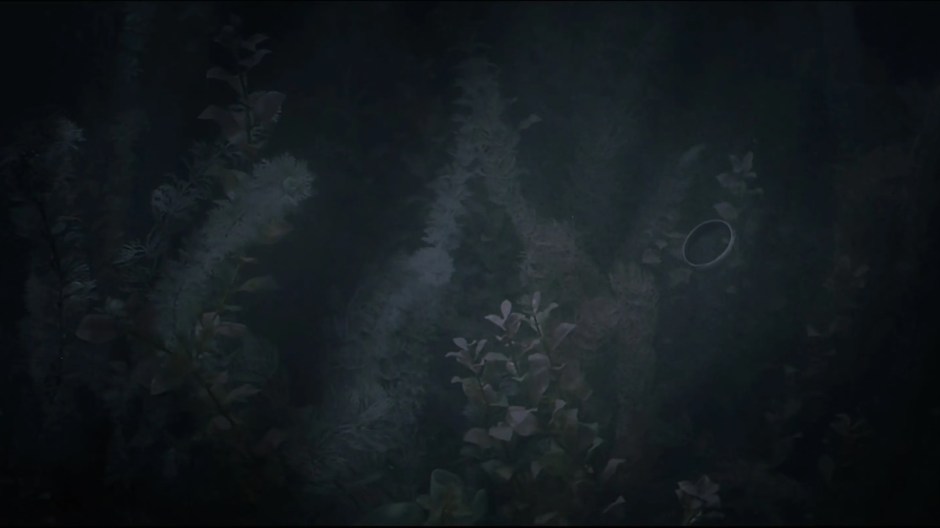
But as the prologue to The Lord of the Rings movies says, “Some things that should not have been forgotten were lost.” Now a new king arose over Egypt, who did not know Joseph. This new king looked upon the people of Israel not as the descendants of a savior, but as potential enemies. They were foreigners, aliens, immigrants, despite having lived in Goshen for generations. And the moment the new king gave in to a phantom fear of the foreign other, he began to commit atrocities against them: oppression, forced labor, and a slow-moving genocide that started with the deaths of baby boys. The new king controlled the present, and he had no memory of the past to assuage his fear, so he created a future for the Israelites that would make them cry out to God on account of their taskmasters.
Over the next few weeks, we will continue to hear the story of Moses and the Exodus. As we listen to this story, we will once again step into the river of storytelling that stretches all the way back to the Bible’s oral tradition. This storytelling informs the Passover Seder, during which the youngest child asks, “Why is this night different from every other night?” The meal itself then shares the story of God’s deliverance of the people of Israel. The long Psalm 78 tells the same story, and its beginning tells us why:
We will recount to generations to come
the praiseworthy deeds and the power of the LORD,
and the wonderful works he has done.
He gave his decrees to Jacob
and established a law for Israel,
which he commanded them to teach their children;
That the generations to come might know,
and the children yet unborn;
that they in their turn might tell it to their children.
Indeed, the downfall of Israel later in the Bible has much to do with the people forgetting their story. Some things that should not have been forgotten were lost.
And that brings us to today, to the present and to all the versions of the past competing for airtime. AI-generated versions of the Founding Fathers can be made to support any stance or policy. Political ideology rather than historical fidelity is setting curricula. Innocent people are dying in detention centers while a country built by immigrants can’t muster the collective courage to say, “Enough!” In the midst of all of this, a war of information is raging. The glut of misinformation and disinformation achieves the same result as the Party’s revision of old newspapers: an inability to think critically about the present, and a subsequent ceding of one’s own cognitive sovereignty into the hands of the powers engaged in systematic gaslighting.
As people of faith, we combat this by staking claims to our own cognitive sovereignty. Like the people who shared Psalm 78, we keep telling our stories again and again so an alternate narrative exists to compete against the one being pushed by those in power. Our stories are stories of community, of caring and sharing, of reaching out to neighbors, of welcoming the stranger into our midst, of assuring all people have access to those things they need to thrive. These stories are compelling because they spring from the story God has been telling since God said, “Let there be light.” We are living these stories in the present, inspired by those who lived them in the past and determined to make a future where our descendants will keep God’s story alive.
This week, I invite you to commit yourselves to learning and relearning our past. Don’t flinch away from the atrocities, but learn their lessons so we aren’t condemned to repeat them. Push back against those who are trying to rewrite the past by making us unsure of the present. Within all of this, practice the difficult but necessary spiritual discipline of locating God in the midst of both the past and the present. When has God spoken a word of truth and life in the past? How might we listen for such a word being spoken now? The most important step is to keep sharing God’s story, because we are the current characters in that story. And that means the God of the past, the present, and the future is acting through us.


Wow, Adam, this is powerful and right on target! My wife also preached yesterday and you both shared similar thoughts about storytelling and remembering our story. Thank you for sharing this with us.