
Sermon for Wednesday, March 5, 2025 || Ash Wednesday || 2 Corinthians 5:20b-6:10; Matthew 6:1-6, 16-21
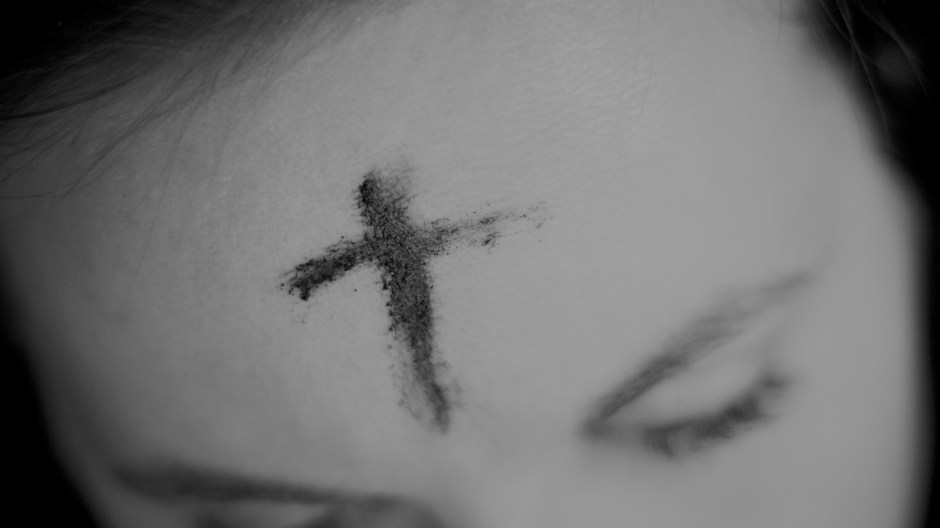
In just a few minutes we will participate in a ritual that we do exactly once a year. On Ash Wednesday, we come to the altar rail, kneel like we do for Holy Communion, and receive the “imposition of ashes.” I will scrape two lines of soot on your foreheads, making the sign of the cross. And I will say, “Remember that you are dust, and to dust you shall return.” Admittedly, this is a strange ritual, but its weirdness gives it power. Today’s service is one of the more memorable liturgies of the church year specifically because the imposition of ashes is so strange and potentially off-putting.

“WheretheWind.com Sermon” on your podcast app of choice.
The word “imposition” is key here, and it comes from the rubrics (that’s a fancy church word for “stage directions”) in the Book of Common Prayer: “The ashes are imposed with the following words…”
“Impose” is such an odd choice of verb here, isn’t it? When we think of an imposition, we think of a house guest that overstays their welcome. An “imposing” figure might feel like a threat. So why that particular verb? Why are the ashes “imposed?” The word comes from the Latin “imponere,” which means “to inflict.” And we never use the word “inflict” when talking about something good. When something is inflicted, it is always associated with injury or suffering. So today, you willingly allow me to inflict something upon you. I told you – this is strange. You allow me to inflict upon you these two lines of soot. I am marring your faces for the rest of day.
Or it might seem like a marring. It might seem like a disfigurement. But could it possibly be something else? Could the imposition of ashes actually be an adornment? For all of my growing up years and many of my adult ones too I never saw the ashes as anything besides a disfigurement. And so I could never square the liturgical action of Ash Wednesday with the words Jesus says in today’s Gospel lesson.
In the middle of the Sermon on the Mount, Jesus takes to task those who do things merely for show rather than for dedicated spiritual discipline. “Beware of practicing your piety before others in order to be seen by them,” he says. Don’t sound a trumpet when you give alms. Don’t pray ostentatiously on street corners so others will see you. Don’t disfigure your face when you fast. Give alms, pray, and fast in secret, “and your father who sees in secret will reward you.”
Don’t disfigure your face. Ash Wednesday after Ash Wednesday, these words stuck in my mind while walking to the altar rail, while watching the priest’s thumb touch the powder, while feeling the gritty scrape first vertical then horizontal on my forehead. And all the while my mind screamed: why are we disfiguring our faces when Jesus just told us not to?
Thankfully, early in my days as a priest, I was given the joyful task of talking to a bunch of little kids about Ash Wednesday. And I realized that the ashes, while they feel like an imposition because they remind us of our death and transience, are actually a revelation. I told those kids that they had an invisible cross on their foreheads, and of course they started looking at each other to check if they could see those hidden crosses. No, you can’t see them until we put this special dust on them, I said.
Special dust got their attention. The special dust revealed the crosses placed on their heads at another ritual of the church. The ashy cross is a revealing of our true identity, an identity that we celebrate with the sacrament of Baptism. After we baptize with water in the name of the Father, Son, and Holy Spirit, we take blessed oil and make the sign of the cross on the forehead. And we say, “You are sealed by the Holy Spirit in Baptism and marked as Christ’s own forever.”
This is our true identity: God’s beloved children who bear the signature of Christ’s love on our bodies. The mark of the cross is a reminder of the utter lengths to which God goes to bring us back into right relationship with God and one another. This is what St. Paul means when he says in today’s reading: “We entreat you on behalf of Christ, be reconciled to God.”
The mark of the cross is also our marching orders as we follow the loving, liberating, and life-giving Way of Jesus Christ. The vertical line of the cross links us to the God of love, who strengthens and enlivens us to be part of God’s mission. The horizontal line of the cross is that mission. The arms of love reach out in saving embrace, compelling us to work for justice, reconciliation, and peace.
Ever since the day of our Baptism, the cross has been on our foreheads – invisible. On Ash Wednesday, we use this special dust to make the cross visible again. This imposition is both joyful and indicting. By making visible the Baptismal cross, we acknowledge our failure to live like the cross is visible all the time. We ask forgiveness for our lethargy in following the Way of Jesus, our apathy when evil abounds but doesn’t seem to touch us directly, and our complicity in the great sins of the world.
When the cross is visible, we look in the mirror and remember our Baptismal promises: to continue in the apostles’ teaching, the breaking of bread, and the prayers; to repent and return to the Lord whenever we fall into sin; to seek and serve Christ in all persons, loving our neighbors as ourselves; to proclaim by word and example the good news of God in Christ; to respect the dignity of all people while we work for justice and peace; and to protect and cherish the integrity of all creation.
We look in the mirror and see a pair of lines, crude charcoal calligraphy. And we remember what it means to be a follower of Christ, to be sealed by the Holy Spirit and marked as Christ’s own forever. We remember that we have only a limited time on this earth to make a difference in the lives of those we meet, to show forth the love and light of God to a world too familiar with darkness.
In a few minutes, you will allow me to impose the ashes upon your foreheads. And your baptismal crosses will be revealed. Once you wipe the ashes away, the invisible cross will remain, for even though we are merely dust, we are still marked as Christ’s own forever.
Photo by Ahna Ziegler on Unsplash.
 Where the Wind...