
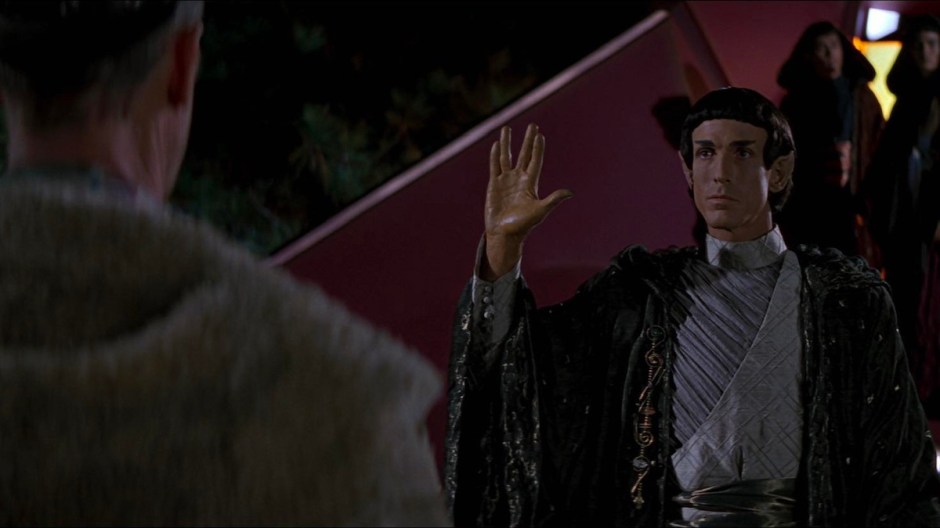
Sermon for Sunday, November 5, 2023 || All Saints A || Revelation 7:9-17; Matthew 5:1-12
All of this morning’s readings from Holy Scripture point us towards a vision of a better world: a world of mutual understanding, equal justice, and creative peace, all knit together by the God who brings all things back into right relationship with each other. I see this vision in scripture and it brings me, weeping, to my knees at the knowledge that fulfillment of this vision is simultaneously so close – as close as God’s presence in our midst – and seemingly so far, as we humans choose again and again paths that lead away from understanding, justice, and peace. Today, as we celebrate the lives of all the saints who have led humanity towards fulfillment of God’s dream for creation, I’d like to talk about this vision because only by proclaiming it from the rooftops will we ever be able to help make God’s dream a reality.
Of course, to enter into this discussion, I’m going to start with something intensely nerdy. Star Trek.
In the sweeping narrative of the future as told in the various Star Trek shows and movies over the last sixty years, we spend most of our time in the distant future where humanity is united, at peace on earth. The systemic sins of the past have been eradicated. No one goes without. Creator of Star Trek Gene Roddenberry cast this vision of the future because he so desired humanity to have something to strive for.
So, how did humanity reach that utopian vision within the narrative of Star Trek? We only have to go forty years into our own future to get there. World War III has devastated the planet, leaving 600 million people dead. National governments have fallen. Factions have risen up with only one directive on their minds: to survive. It is the sadly logical outcome of a world fractured by violence, greed, and the desire to dominate.
The villainous Borg go back in time three hundred years to this calamitous point in the timeline in order to assimilate earth at its most vulnerable. The crew of Star Trek: The Next Generation follow the Borg back in time to April 4, 2063. Why that particular date? It’s one day before the first successful test of warp drive technology. At 11am the next morning, a Vulcan ship on a survey mission will pass close enough to earth to detect the warp signature of the test flight.
“It’s one of the most pivotal moments in human history,” Commander Riker says to the reluctant inventor of the warp ship. “You get to make first contact with an alien race, and after you do everything begins to change.”
Counselor Troi picks up the story: “It unites humanity in a way that no one ever thought possible, when they realize they’re not alone in the universe. Poverty, disease, war, they’ll all be gone within the next fifty years.”
Did you catch that? In the Star Trek narrative, it takes humanity receiving definitive proof of intelligent life beyond earth for people to band together and remake the world. Once they know they’re not alone, they cease the death-dealing behaviors that lead to domination and isolation.
The thing is – in the real world, we do know we’re not alone. We have each other, and that should be enough. The only exterior influence we need in order to connect is actually an interior influence. The connecting power of God’s love pours forth from the heart of every human being on this planet. The forces of violence, greed, and dominance seek to dam up that outpouring, but they can’t cut love off at its source because its source is limitless. Okay: we know we’re not alone, and we know we feel better when we’re together, so why do humans spend so much time fighting?
Because we’ve convinced ourselves that resources are scarce, and we’ve broken up into groups that seek to amass as many resources as possible. It’s pretty much that simple. Star Trek can’t imagine the end of this tribalism until an outside force intervenes to show us our tiny-ness in a vast universe. But again, we know – we already know – how small we are. And it seems the only way we’ve figured out how to feel bigger is to make sure someone else is smaller.
But our reading from the Book of Revelation shows us another way, shows us that vision of God’s dream I talked about at the beginning of this sermon. “I, John, looked, and there was a great multitude that no one could count, from every nation, from all tribes and peoples and languages, standing before the throne and before the Lamb, robed in white, with palm branches in their hands.”
The Book of Revelation is a strange piece of writing, full of things that could best be described as horror or science fiction, but this – this vision right here of the great multitude – is the strangest vision of them all. We don’t have to cast our minds back to John’s day to understand the world in which he lived. It’s similar to ours: groups large and small vying for power, empires rising and falling on the backs of conquered peoples, everyone living in fear.
And yet somehow, this person who wrote Revelation is able to imagine a world where people from every nation and tribe and language can come together in a place without hunger or thirst, where they can all raise their voices as one, singing in different tongues the same song. How else could John have dreamed this impossible dream if our God of love and connection had not revealed it to him? For that’s what the Book of Revelation is – a revealing, a drawing back of the curtain of our distorted reality to see God’s reality shining beneath it.
Jesus’ words in the Beatitudes that we just read show us the way to this reality. Jesus invites us to live into God’s reality where mercy reigns, where those who mourn find solace, where seeking right relationship fills us up, where those who tread lightly upon the earth inherit its bounty, and where peace is made among all of God’s children.
In a few minutes, we will recite our baptismal promises, saying again all the things we will do with God’s help in order to live our way into the vision of a better world. As you say these promises, pay attention to the stirring of the Spirit inside you. Which promise kindles a fire inside you today? That is the particular way that God calls you – right here, right now, in this place, in this moment – to bear witness to a better world of mutual understanding, equal justice, and creative peace.
We don’t need the Vulcans to come down in a spaceship in order to find unity among humanity. We need only to recognize all the sinful systems of the world for what they are: barriers to living the lives of fruitful connection that all people long for. As we look out at a world on the brink of the calamity that Star Trek predicts, may God grant us the grace, the imagination, and the perseverance to work for God’s dream of a better world.
 Where the Wind...
Dear Adam, thank you for the excellent reference to both Star Trek and “the great multitude”. One occasionally hears reference to the 144000 (or however many it is) of the house of Israel who are going to get invited to the banquet, but rarely, if ever to the great multitude from